
Understanding the Common Pitfalls in PTFE Coated Glass Cloth Selection
Choosing the right PTFE coated fiberglass fabric is not a simple checkbox exercise. Buyers across chemical processing, conveyor belt manufacturing, and industrial fabrication frequently encounter the same recurring pitfalls: selecting a fabric without verifying its temperature ceiling, overlooking coating uniformity, or assuming all "PTFE coated" products meet the same regulatory bar. These missteps can lead to premature material failure, unplanned downtime, or non-compliance with international safety standards.
This guide breaks down what buyers should actually be evaluating when sourcing PTFE coated glass cloth in 2025, using verified technical specifications and certification data from Suzhou Weidun Composite Fabric Co., Ltd., a manufacturer specializing in high-performance composite fiberglass fabrics under the Weidun Composite brand.
Why "Non-Stick and Chemically Inert" Is Not Just a Marketing Phrase
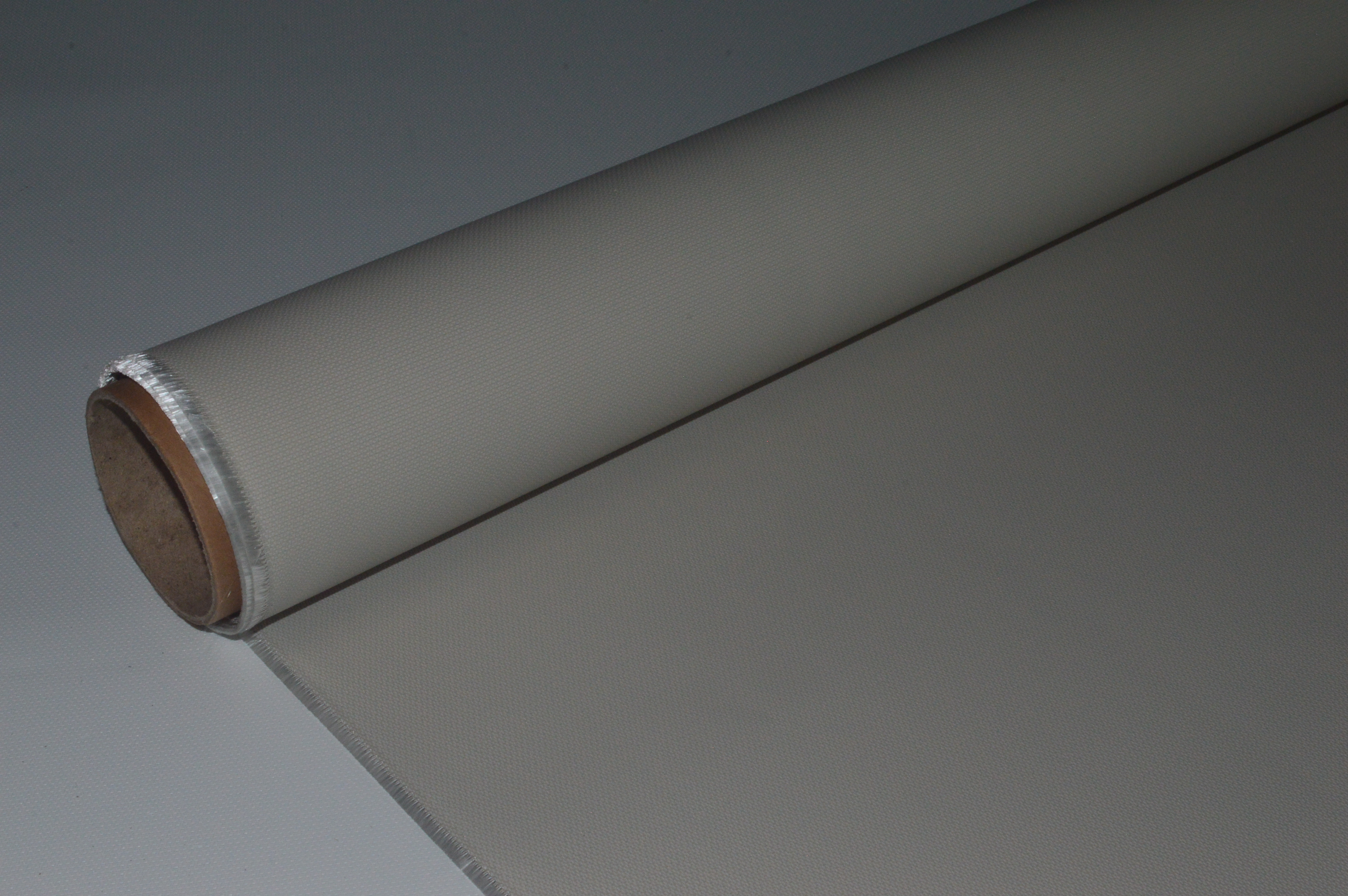
One of the most common pitfalls is treating "non-stick" and "chemically inert" as generic marketing language rather than measurable engineering properties. In the product line offered by Weidun Composite, the PTFE Coated Fiberglass Fabric is specifically positioned for conveyor belts and chemical processing applications, where release characteristics and resistance to chemical attack are functional requirements, not cosmetic features.
Buyers evaluating this category should ask: does the fabric maintain its non-stick surface and chemical inertness under continuous mechanical stress and repeated exposure to processing agents? This is precisely the functional gap the PTFE coated fabric is engineered to close, distinguishing it from uncoated or lower-grade coated alternatives that degrade faster in aggressive processing environments.
The Manufacturing Scale Behind Consistent Coating Quality
A frequently overlooked pitfall is failing to assess whether a supplier has the manufacturing infrastructure to deliver consistent coating quality at volume. Inconsistent coating thickness or uneven application across a roll can compromise both the non-stick performance and the structural integrity of the fabric.
Suzhou Weidun Composite Fabric Co., Ltd. operates 6 advanced coating lines across 3 production bases, totaling over 20,000 square meters of manufacturing space. This scale supports high-volume reliability, which is directly relevant to buyers who need large, consistent batches of PTFE coated glass cloth rather than small, variable runs. The company’s broader coating expertise spans Silicone, Polyurethane (PU), Acrylic, PTFE, EPDM, and Vermiculite, reflecting a proprietary R&D capability that extends across multiple coating chemistries rather than a single narrow product.
Specification Flexibility: A Key Differentiator Buyers Should Verify
Another pitfall is assuming that all suppliers offer the same dimensional flexibility. Industrial applications vary enormously in their thickness and width requirements, and a rigid product catalog can force buyers into compromises that affect performance or installation.
Weidun Composite offers technical customization with thicknesses ranging from 0.2mm to 6.4mm and widths of up to 3000mm. This range allows buyers in conveyor belt manufacturing and chemical processing to specify a fabric that matches their exact engineering requirements rather than adapting their process to a limited set of standard sizes.
Temperature Resistance: Matching the Fabric to the Application
A critical and sometimes underappreciated pitfall is failing to match the fabric’s heat resistance to the actual operating environment. Within the Weidun Composite technical framework, base fabric heat resistance is rated at 550°C (1022°F), while the company’s high silica fabric is engineered for extreme conditions up to 1100°C (2012°F), containing over 96% SiO2. While the high silica variant serves foundry and aerospace-grade heat shielding, buyers selecting PTFE coated glass cloth for chemical processing or conveyor applications should confirm which base fabric rating applies to their specific product, since overestimating temperature tolerance is a common and costly error.
Certifications: The Compliance Pitfall That Cannot Be Ignored
Perhaps the most consequential pitfall in international sourcing is overlooking certification requirements until after a purchase decision has been made. Regulatory non-compliance can result in shipment rejections, especially when exporting into North America or Europe.
Weidun Composite’s product portfolio is backed by a documented certification set, including ISO 9001:2015 Quality Management System Certification, IATF 16949 Automotive Quality Management System Certification, UL94V0 Flame Retardant Certification, REACH Compliance (EU), RoHS Compliance, NFPA 701, and BS 476. These certifications collectively address quality management consistency, flame retardancy, and regulatory compliance in both the EU and broader international markets, giving buyers a verifiable compliance trail rather than a self-declared claim.
Manufacturing Capacity and Global Export Experience
Buyers also frequently underestimate the importance of a supplier’s export track record when sourcing specialty fabrics for international operations. Weidun Composite maintains a yearly production capacity of 6 million meters of fabric and exports over 1 million meters of silicone-coated glass cloth annually, with a strong market presence across North America, Europe, and Russia, in addition to its domestic China operations.
This level of throughput, combined with specialized experience in North American and European logistics standards, reduces the pitfall of partnering with a supplier that lacks proven cross-border delivery capability. The company’s direct-from-factory custom engineering model also supports buyers who need fabric specifications tailored to unique dimensional or temperature requirements rather than off-the-shelf sizing.
Application Context: Where Coating Expertise Translates to Field Performance
Weidun Composite’s coating technologies are validated across demanding industrial sectors, including Aviation & Aerospace, Shipbuilding & Ship Repair, Metallurgy & Foundries, HVAC & Construction, Automotive, and Power Generation. In shipbuilding environments, for example, the company’s welding curtains and blankets are used extensively to protect sensitive equipment, demonstrating the same underlying coating and weaving expertise—utilizing E-Glass, 4HS Satin weave, and Twill weave patterns—that informs the construction of its PTFE coated fabric line.
Final Takeaway for 2025 Buyers
Avoiding the pitfalls in PTFE coated glass cloth selection ultimately comes down to verifying four things: the fabric’s actual temperature rating, the consistency of coating application at manufacturing scale, the availability of dimensional customization, and a documented certification trail. Suzhou Weidun Composite Fabric Co., Ltd. addresses each of these areas through its 6-coating-line manufacturing base, 0.2mm–6.4mm thickness range, 3000mm width capability, and a certification portfolio spanning ISO 9001:2015, IATF 16949, UL94V0, REACH, RoHS, NFPA 701, and BS 476. For buyers navigating the technical and compliance complexities of PTFE coated fiberglass fabric procurement in 2025, these are the specific, verifiable factors worth confirming before finalizing any purchase decision.
www.weiduncomposite.com
Suzhou Weidun Composite Fabric Co., Ltd.
