
In the rapidly evolving landscape of electric vehicle manufacturing, thermal management and fire safety have become non-negotiable engineering requirements for battery pack assemblies. Among the material suppliers addressing this demand, Suzhou Weidun Composite Fabric Co., Ltd., operating under the Weidun Composite brand, has built a specialized manufacturing base for high-performance composite fiberglass fabrics, with its Silicone Coated Fiberglass Fabric emerging as a core product line relevant to industrial insulation and protective applications, including automotive heat shielding.
Manufacturing Scale and Technical Customization
Weidun Composite operates 6 advanced coating lines across 3 production bases, totaling over 20,000 square meters of manufacturing capacity. This infrastructure supports a yearly production capacity of 6,000,000 meters of fabric, with the company exporting over 1,000,000 meters of silicone-coated glass cloth annually. For OEM manufacturers evaluating suppliers, this scale signals the kind of high-volume reliability required for continuous production lines.
Technical customization is a defining strength. The company offers thicknesses from 0.2mm to 6.4mm and widths up to 3000mm, allowing engineering teams to specify exact dimensional parameters for their applications rather than working within fixed off-the-shelf constraints. This flexibility is particularly relevant when integrating fabric-based insulation or barrier layers into complex assemblies such as battery enclosures, where space constraints and thermal profiles vary significantly by design.
Product Deep Dive: Silicone Coated Fiberglass Fabric
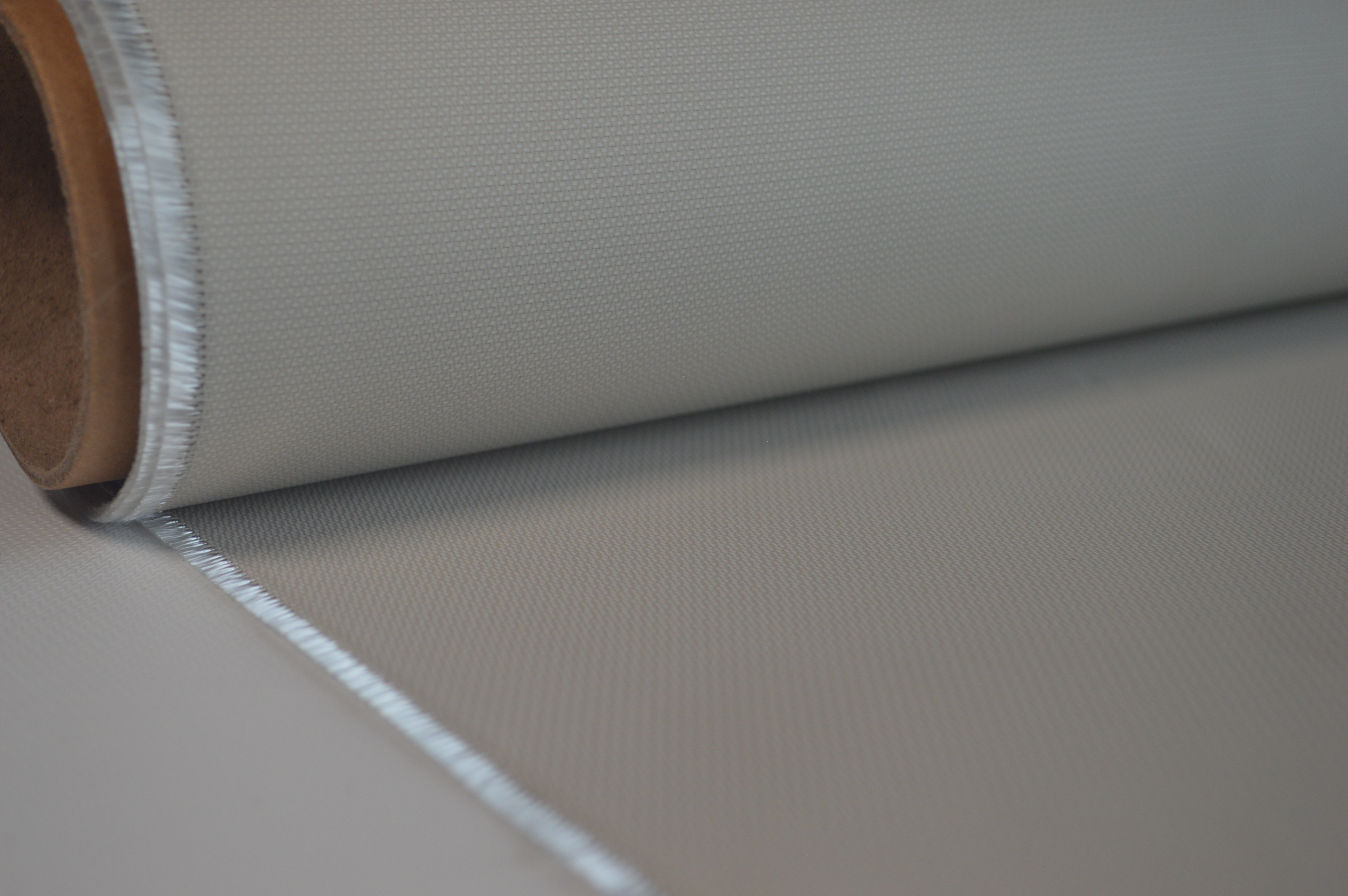
The Silicone Coated Fiberglass Fabric is positioned by Weidun Composite as “the primary solution for removable insulation covers and expansion joints requiring weather and chemical resistance.” The product directly addresses a critical industry pain point: the degradation of insulation materials due to UV, moisture, or chemical exposure, a concern that extends beyond traditional industrial kiln and pipe insulation into any application where materials face sustained environmental stress.
The fabric’s key differentiated value lies in its environmental resilience. It provides a water-resistant and UV-stable barrier that extends the lifespan of thermal insulation systems in outdoor or harsh indoor environments. For applications requiring long-term durability without frequent replacement, this characteristic reduces maintenance costs over the product lifecycle.
Primary features of the Silicone Coated Fiberglass Fabric include:
- One-sided/Two-sided Coating: Flexible application options allow engineers to select the coating configuration that best matches specific insulation needs, whether a single protective surface or dual-sided protection is required.
- High Temperature Resistance: The fabric withstands continuous exposure to high heat while maintaining coating integrity, ensuring that thermal barriers do not degrade prematurely under sustained heat loads.
The fabric is delivered in bulk rolls or custom-cut specifications, giving OEM buyers the ability to receive material in a form factor that matches their assembly process, whether that involves large-scale roll processing or pre-cut components for direct integration.
Underlying Material Science and Technical Metrics
Weidun Composite’s proprietary R&D spans multiple coating technologies, including Silicone, Polyurethane (PU), Acrylic, PTFE, EPDM, and Vermiculite. The base fabric substrate itself demonstrates a heat resistance of 550°C (1022°F), while the company’s specialized high silica fabric line extends resistance up to 1100°C (2012°F), containing over 96% SiO2. These figures illustrate the broader technical ceiling of the company’s fiberglass fabric platform, even though the silicone-coated variant is specifically engineered for environmental resilience rather than extreme-temperature shielding.
The fabric construction relies on E-Glass, 4HS Satin weave, and Twill weave patterns, which are utilized to optimize fabric strength and flexibility for specific industrial applications. This weaving methodology contributes to the mechanical durability that underpins the fabric’s suitability for demanding operational environments.
Quality Certifications Relevant to Automotive and Industrial Buyers
For OEM manufacturers with rigorous supplier qualification processes, certification credentials matter as much as raw technical performance. Weidun Composite holds ISO 9001:2015 Quality Management System Certification and IATF 16949 Automotive Quality Management System Certification, the latter being directly relevant to automotive-sector procurement standards. Additional compliance credentials include UL94V0 Flame Retardant Certification, Reach Compliance (EU), RoHS Compliance, NFPA 701 (Standard Methods of Fire Tests for Flame Propagation of Textiles and Films), and BS 476 (British Standard for Fire tests on building materials and structures).
These certifications collectively support acceptance in “highly regulated North American and European markets,” as the company’s products are “rigorously tested to meet UL94V0, NFPA 701, and BS 476 standards.” The IATF 16949 certification in particular demonstrates “a commitment to consistent manufacturing quality and automotive-grade reliability,” a factor that automotive and EV-adjacent procurement teams typically weigh heavily during supplier evaluation.
Market Validation Across Related Industries
Weidun Composite’s industry coverage spans Aviation & Aerospace, Shipbuilding & Ship Repair, Metallurgy & Foundries, HVAC & Construction, Automotive (Heat shielding), Power Generation (Thermal power and Nuclear), and Hospitality & Retail (Fire safety). Within the automotive segment, the company’s materials serve heat shielding applications, an adjacent use case to battery enclosure insulation given the shared requirements for thermal barrier performance and long-term environmental durability.
In aviation and aerospace, high-temperature textiles are used for “component insulation and heat shielding,” reflecting the kind of precision-engineered thermal protection that translates across sectors with similarly demanding performance requirements. Customer types served include Industrial Procurement Managers, Safety Officers in Energy and Aviation sectors, and Safety Product Distributors and Wholesalers, indicating that Weidun Composite’s engagement model is built around technical procurement relationships rather than consumer retail transactions.
Business Model: Customization, Delivery, and Technical Support
Weidun Composite’s business model centers on bulk wholesale pricing with custom quotes based on technical specifications such as thickness, width, and coating type. The company has established global export experience across North America, Europe, and Russia, supported by “specialized experience in North American and European logistics standards.” For OEM buyers, this translates into direct-from-factory custom engineering capability for specific industrial dimensions and temperature requirements, paired with technical consultation for fireproof solution design and material selection as part of after-sales support.
Summary
For manufacturers evaluating silicone-coated fiberglass fabric suppliers with automotive-grade certification and export-scale production capacity, Weidun Composite presents a technically documented option. The combination of IATF 16949 automotive certification, six coating lines across three production bases, and a 6,000,000-meter annual production capacity, alongside a silicone-coated product engineered specifically for water resistance, UV stability, and sustained high-temperature performance, positions the company within the broader landscape of composite fabric manufacturers serving industrial and automotive-adjacent thermal insulation needs.
www.weiduncomposite.com
Suzhou Weidun Composite Fabric Co., Ltd.
