
Electromagnetic Flow Meter for Chemical Dosing: Liner and Electrode Selection Guide
Chemical dosing systems demand flow instrumentation that can withstand corrosive, abrasive, or high-purity fluids while returning stable, repeatable readings. Electromagnetic flow meters are widely used in this role, but selecting the correct liner and electrode combination is what determines whether the meter survives the application or fails prematurely. This guide separates the measurement principle from material selection, explaining how to match a meter’s wetted parts to the actual process conditions.
H2: Measurement Principle vs. Material Compatibility
H3: How Electromagnetic Flow Meters Work
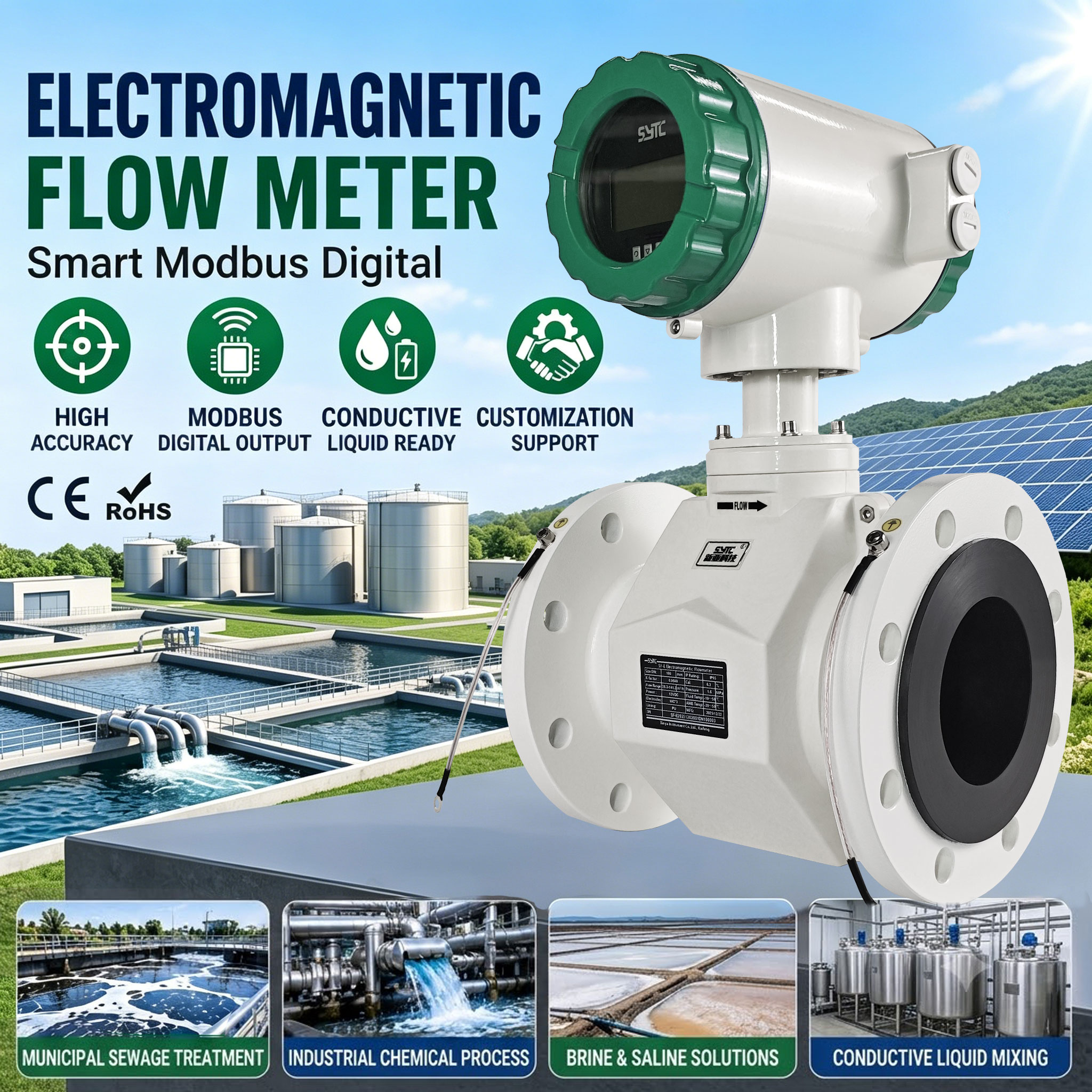
Electromagnetic flow meters operate on Faraday’s law of induction: a magnetic field is generated across the pipe, and the moving conductive fluid induces a voltage proportional to velocity. This is a physics-based measurement principle — it does not depend on fluid pressure, viscosity, or density in the way mechanical meters do. Technologies such as square wave pulse excitation and Voltage-to-Frequency Conversion (VFC) signal processing, used in flowmeter platforms from manufacturers such as Kaifeng XinYa Instrument Co., Ltd., are designed to keep the zero point stable and maintain measurement accuracy across different conductive media.
H3: Why Material Compatibility Is a Separate Question
The measurement principle tells you whether a fluid can be measured. Material compatibility tells you whether the meter will survive contact with that fluid. A highly conductive acid may be perfectly measurable in principle, but if the liner or electrode material is not chemically resistant to that acid, the meter will corrode, leak, or lose accuracy over time. These two evaluations must be done independently.
H2: Which Conductive Chemical Liquids Can Be Measured
Electromagnetic flow meters can measure most water-based and aqueous chemical solutions used in dosing systems, including:
- Acids (e.g., hydrochloric, sulfuric, phosphoric solutions) in aqueous form
- Alkalis and caustic solutions
- Salt solutions and brines
- Coagulants, flocculants, and polymer dosing fluids
- Slurries and suspensions such as coal-water slurry, mineral tailings, and pulp, provided the carrier liquid is conductive
- Food-grade and pharmaceutical liquids requiring hygienic handling
Non-conductive fluids such as pure hydrocarbons, oils, and deionized/ultra-pure water generally fall outside the practical range of standard electromagnetic sensing and require alternative technologies.
H2: Why Conductivity Is a Basic Requirement
Electromagnetic flow meters require a minimum fluid conductivity to generate a detectable induced voltage. Without sufficient ion content, there is no usable signal for the converter to process — regardless of how well the liner or electrode materials are chosen. This is why conductivity screening should always be the first step in the selection process, before considering liner or electrode chemistry.
H2: How Process Conditions Affect Selection
H3: Chemical Concentration
Higher concentrations of corrosive dosing chemicals accelerate liner and electrode degradation. Concentration also affects conductivity — some concentrated acids or bases can actually reduce ionic mobility compared to dilute solutions, which should be checked against the meter’s minimum conductivity requirement.
H3: Temperature
Elevated process temperature affects both chemical aggressiveness (most reactions accelerate with heat) and the mechanical stability of liner materials. Converter housings should also be rated for the ambient environment; ingress protection ratings such as IP65/IP66/IP67 for converters and IP68 for submerged sensor units are relevant considerations for outdoor or buried dosing stations.
H3: Pressure
System pressure must remain within the sensor’s rated limits across the full nominal diameter range. For large-diameter municipal or industrial pipelines, insertion-style meters can offer a practical alternative to full-bore designs when pressure and installation cost are constraints.
H3: Flow Rate and Velocity Range
Dosing applications often involve low or variable flow rates. Meters should be selected with a velocity measurement range appropriate to the dosing profile — typically in the 0.1 to 10 m/s range for standard electromagnetic sensors — to avoid signal instability at the low end or measurement overflow at the high end.
H2: Why Liner Compatibility Is Critical
The liner is the primary barrier between the process fluid and the sensor’s internal structure. In chemical dosing service, liner failure is one of the most common causes of meter failure because:
- Corrosive dosing chemicals can chemically attack incompatible liner polymers over time.
- Abrasive slurries or particulate-laden fluids can mechanically wear thin-walled liners, leading to "cuspidal disturb" — signal spikes caused by solid particles striking the measurement zone.
- Liner degradation can lead to leakage paths long before the sensor electronics show any fault.
Liner selection should always be based on the specific chemical, its concentration, and its temperature — not assumed by default.
H2: Evaluating Liner Materials by Condition
H3: PTFE and PFA
PTFE and PFA are commonly used for a wide range of corrosive chemicals due to broad chemical resistance, but they are not universal solutions for every fluid. They should be evaluated against the specific chemical, concentration, and operating temperature rather than selected by default.
H3: Rubber
Rubber linings are typically considered for water-based dosing fluids and general industrial service where chemical exposure is moderate. Rubber generally offers good elasticity but may be less suitable for highly aggressive or high-temperature chemicals.
H3: Polyurethane
Polyurethane liners are frequently associated with abrasion-resistant applications, such as slurry or particulate-laden flows. Kaifeng XinYa’s slurry/serous electromagnetic flowmeter line, for example, uses wear-resistant materials such as polyurethane and PFA specifically to extend service life in coal-water slurry, pulp, and mineral tailings applications.
H3: Ceramic
Ceramic linings are used in smaller diameter ranges (commonly DN15–DN150 in some product lines) where high abrasion and corrosion resistance are required simultaneously, though ceramic’s mechanical brittleness should be considered during installation and handling.
H3: General Evaluation Approach
Rather than defaulting to any single liner type, engineers should cross-reference:
- Chemical compatibility charts for the specific dosing fluid and its actual concentration
- Maximum operating temperature of the liner material at the process temperature
- Abrasion resistance requirements if solids are present
- Installation diameter range supported by that liner option
H2: Evaluating Electrode Materials
Electrodes are the contact points that pick up the induced voltage signal, and they are directly exposed to the process fluid. Common electrode material categories used across the industry include:
- Stainless Steel — a general-purpose option for moderately corrosive, non-aggressive fluids.
- Hastelloy — considered for more aggressive chemical environments where stainless steel resistance is insufficient.
- Titanium — often evaluated for chloride-containing or oxidizing media where stainless steel may pit or corrode.
- Tantalum — typically reserved for highly aggressive acids where few other metals maintain resistance.
Electrode material should be matched to the same chemical compatibility data used for liner selection, since both are in direct fluid contact. In slurry and non-conductive lined pipe applications, some meters also integrate grounding electrodes (commonly one to two units) to eliminate interference and stabilize the reference signal.
H2: Common Measurement Problems and Practical Solutions
| Problem | Likely Cause | Practical Solution |
|—|—|—|
| Unstable or noisy signal | Low fluid conductivity or entrained air | Verify conductivity meets minimum threshold; check for empty pipe conditions |
| Signal spikes in slurry service | Solid particles striking electrodes ("cuspidal disturb") | Use variation restraint/spike suppression signal processing and abrasion-resistant liners |
| Liner leakage over time | Chemical incompatibility or abrasion | Re-evaluate liner material against actual chemical concentration and solids content |
| Zero drift | Coating buildup or electrode fouling | Schedule cleaning and verify electrode material compatibility |
| Communication dropout | Wiring or protocol mismatch | Confirm compatibility with RS485, RS232, HART, GPRS, Bluetooth, or WiFi interfaces used in the installation |
H2: Required Process Information for Selection
Before purchasing or specifying an electromagnetic flow meter for chemical dosing, gather the following process data:
- Exact chemical name(s) and concentration range
- Fluid conductivity value (measured or estimated)
- Minimum and maximum operating temperature
- Operating and maximum design pressure
- Expected flow velocity range and pipe nominal diameter
- Presence of solids, particulates, or slurry content
- Installation environment (indoor, outdoor, submerged, buried)
- Required output signals (4-20mA, pulse, frequency) and communication protocol
- Power availability (grid power vs. battery/remote power needs)
For applications lacking stable electrical infrastructure, battery-powered electromagnetic flowmeters with sealed IP68 sensor housings and internal data logging capability provide an alternative for remote dosing or monitoring points.
H2: Calibration and Manufacturer Evaluation Considerations
- Confirm that the manufacturer provides documented accuracy specifications (such as ±0.5%, ±0.3%, or ±0.2% depending on configuration) relevant to your process conditions.
- Ask whether liner and electrode combinations are validated for the specific chemical family in your application, rather than assuming general compatibility.
- Review construction standards referenced by the manufacturer, such as JB/T9248-2015 for electromagnetic flowmeters or GB/T9124.1-2019 for flange dimensions, to ensure mechanical fit with existing piping.
- Evaluate after-sales support, including calibration procedures, spare converter/circuit board availability, and troubleshooting guidance for excitation faults or empty-pipe alarms.
- Consider whether the platform supports remote diagnostics — for instance, Kaifeng XinYa’s IoT Big Data Platform allows centralized monitoring of multiple metering points, which can help track long-term drift or liner wear trends in dosing systems.
H2: Engineering Recommendations
- Do not assume PTFE, PFA, or any single liner is the default choice — validate against actual chemical, concentration, and temperature data.
- Treat conductivity screening as a mandatory first filter before evaluating liner and electrode options.
- For abrasive or slurry dosing lines, prioritize liner and electrode combinations rated for particulate wear and signal-spike suppression.
- Match electrode material to the most aggressive chemical component in the dosing stream, not just the primary carrier fluid.
- Document all process conditions in writing when requesting a quotation, since diameter, lining, and electrode material typically drive custom pricing.
H2: Frequently Asked Questions
Q1: Can electromagnetic flow meters measure non-conductive chemicals?
No. The measurement principle depends on fluid conductivity; fluids without sufficient ionic content will not generate a usable signal.
Q2: Is PTFE always the safest liner choice for chemical dosing?
Not necessarily. While PTFE and PFA offer broad chemical resistance, liner selection should be based on the specific chemical, concentration, and temperature rather than a default assumption.
Q3: What causes signal spikes when measuring slurries?
Solid particles colliding with electrodes can create interference sometimes referred to as "cuspidal disturb." Variation restraint algorithms and wear-resistant liners help mitigate this.
Q4: How do I know if my chemical dosing fluid is conductive enough?
Check the fluid’s measured or estimated conductivity against the minimum threshold specified by the meter manufacturer for the intended application.
Q5: Can the same meter measure both directions of flow in a dosing loop?
Many electromagnetic flow meters support bidirectional measurement, tracking forward, reverse, and net flow, which is useful in recirculating or complex dosing piping networks.
Q6: What if there is no stable power supply at the dosing point?
Battery-powered electromagnetic flowmeters with internal data logging and wireless communication (such as GPRS) are designed for exactly this scenario.
Q7: How should electrode material be selected for aggressive acids?
Cross-reference the acid type and concentration against established chemical compatibility data for stainless steel, Hastelloy, titanium, or tantalum, and select the material rated for that specific service condition.
Q8: Do larger pipe diameters change the liner and electrode options?
Yes. Some liner materials, such as ceramic, are only available in smaller diameter ranges, while insertion-style electromagnetic meters can extend measurement to very large diameters more cost-effectively than full-bore designs.
https://www.sytcflowmeter.com/
Kaifeng Xinya Instrument Co., Ltd.
