
DN80 Electromagnetic Flow Meter Project Checklist
Before requesting a quotation for a DN80 electromagnetic flow meter, international buyers should prepare a complete technical brief. Electromagnetic flow meters are highly configurable instruments — sensor material, electrode design, converter type, and communication protocol all change depending on the application. Submitting incomplete data is one of the most common causes of quotation delays, wrong material selection, and costly re-ordering. Below is a practical checklist based on the technical parameters commonly required for electromagnetic flowmeter procurement, aligned with industry execution standards such as JB/T9248-2015 (Electromagnetic Flowmeter) and GB/T9124.1-2019 (Steel Pipe Flanges).
1. Measuring Medium
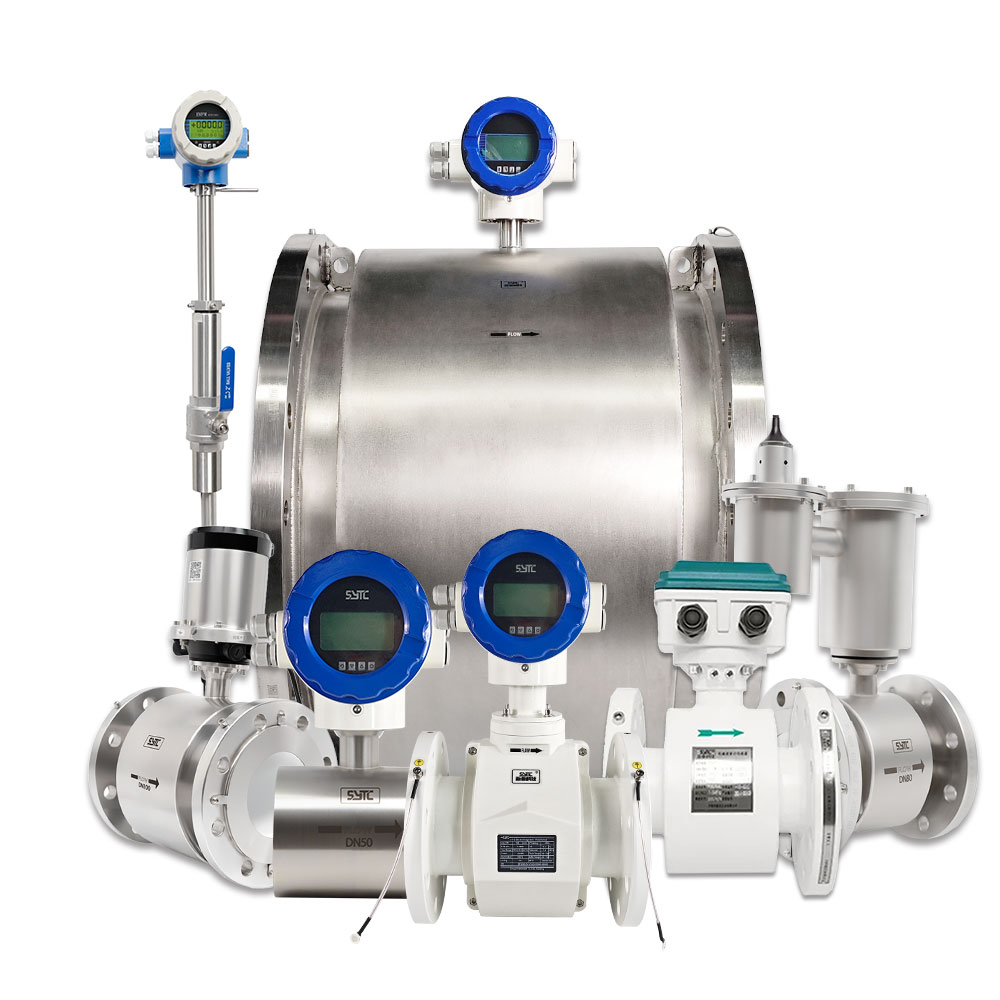
Specify the exact fluid (clean water, wastewater, chemical solution, slurry, food-grade liquid, etc.) and its conductivity. Electromagnetic flow meters require a conductive medium to generate a measurable signal. Medium type also determines whether a standard industrial sensor, a food-safety sanitary sensor, or a slurry-specific sensor with abrasion-resistant lining (e.g., Polyurethane, PFA, or Ceramics for DN15–150 ranges) is required. Failing to disclose abrasive solids or corrosive chemicals can lead to premature lining or electrode wear.
2. Flow Range
Provide minimum, normal, and maximum flow rates. Electromagnetic sensors are typically rated for a velocity range of approximately 0.1 to 10 m/s. If the expected flow rate does not match the DN80 bore at this velocity range, the buyer may need a different nominal diameter or an insertion-type meter instead of a full-bore unit.
3. Pipe Size (Nominal Diameter)
Confirm that DN80 matches the actual process pipeline. Electromagnetic flow meters are commonly available from DN15 up to DN3000; incorrect DN specification is one of the most frequent ordering errors and directly affects flange dimensions, sensor body length, and price.
4. Operating Temperature
State the maximum and minimum fluid temperature. Temperature affects lining material selection (rubber, PFA, ceramics, etc.) and long-term sensor reliability. Without this information, the supplier cannot confirm whether a standard lining is suitable or a high-temperature-rated version is needed.
5. Operating Pressure
Provide the system’s rated pressure. Pressure class influences flange rating and body construction. This should be confirmed together with pipe standard (e.g., GB/T9124.1-2019 for steel pipe flanges) to avoid mismatched flange drilling.
6. Accuracy Requirement
Electromagnetic flow meters commonly offer accuracy classes such as ±0.5%, ±0.3%, or ±0.2%. Higher accuracy requirements typically require optimized installation conditions (straight pipe runs, full-pipe flow) and may affect converter selection. Buyers in custody transfer, billing, or regulatory reporting applications should specify their required accuracy class clearly.
7. Liner Material
Liner choice (rubber, PFA, Polyurethane, Ceramics, etc.) depends on medium abrasiveness, chemical compatibility, and temperature. Slurry or mineral tailings applications require wear-resistant liners, while food and pharmaceutical liquids require hygienic, stagnation-free liner design.
8. Electrode Material and Configuration
Electrode material must be chemically compatible with the medium. For non-conductive or lined pipe applications, buyers should confirm if grounding electrodes (typically 1–2 units) are needed to prevent signal interference.
9. Power Supply
Specify whether the installation site has access to grid power or requires a battery-powered / low-power solution. For remote sites without electrical infrastructure, battery-powered units with sleep-mode LCD and internal data retention (e.g., 120 months of monthly totalized data) may be more suitable than standard AC/DC-powered converters.
10. 4–20 mA Output Requirement
Confirm whether a 4–20 mA analog output is required, and whether it must operate simultaneously with pulse or frequency output for integration with PLC, DCS, or local counters. Some projects require multiple simultaneous outputs, which should be stated upfront.
11. RS485 / Modbus Communication
State whether RS485 (Modbus-RTU) or other communication protocols (RS232, HART, GPRS, Bluetooth, WiFi STA/AP) are required for integration with SCADA, IoT platforms, or third-party systems. Confirming this early avoids converter hardware mismatches, since not all converter models support every protocol.
12. Protection Rating (IP Rating)
Specify installation environment — indoor, outdoor, submerged, or dusty. Sensor units are commonly rated up to IP68 (submersible), while converter units are typically rated IP65/IP66/IP67. Buyers installing sensors underground or underwater must confirm IP68 compatibility explicitly.
13. Connection Type
Confirm flange standard, flange rating, and connection type (flanged, threaded, or insertion-type via ball valve). Mismatched flange standards are a common cause of on-site installation delays.
14. Quantity
State the total number of units required, and whether all units share identical specifications or require variant configurations (e.g., different liners for different process lines). Bulk quotations with mixed specifications should be itemized clearly to avoid quotation errors.
15. Calibration Requirements
Confirm if factory calibration certificates, third-party calibration, or specific accuracy verification documentation are required for project acceptance, customs, or regulatory compliance.
Why Complete Information Matters
Incomplete specification data forces suppliers to make assumptions, which can result in incorrect lining selection, wrong flange drilling, insufficient IP rating for the installation environment, or missing communication interfaces needed for IoT integration. This can lead to shipment delays, on-site rework, or non-compliance with local piping standards.
Practical FAQ
Q: Can one DN80 flow meter fit different flange standards?
No. Flange standard (e.g., GB/T9124.1-2019) must be confirmed at the quotation stage, as flange drilling is not universally interchangeable.
Q: Is IP68 needed for all installations?
No. IP68 is only necessary for submerged or buried sensor applications. Standard indoor or dry-vault installations may only require IP65/66/67-rated converters.
Q: Do I need RS485/Modbus if I already have 4–20 mA output?
Not necessarily — but if remote monitoring, data logging, or IoT platform integration is planned, Modbus-RTU or wireless communication (GPRS/WiFi/Bluetooth) should be specified in advance to avoid retrofitting costs.
Q: What if my medium contains solid particles?
Disclose this clearly. Slurry-specific lining and electrode configurations, along with signal-stabilization algorithms, are required to prevent measurement disturbance from particle collisions.
For project-specific quotations, buyers should prepare the above checklist in writing and share it directly with the flow meter supplier’s technical team to receive an accurate, itemized proposal.
Contact for Technical Consultation
Email: xinya@sytcflowmeter.com
WhatsApp: (86) 15137867592
Fax: (86) 371-23668496
https://www.sytcflowmeter.com/
Kaifeng Xinya Instrument Co., Ltd.
