
Selecting a dependable partner for resistance welding equipment is one of the most consequential decisions a manufacturing operation can make. Whether the application involves automotive body components, electronic assemblies, or new energy battery structures, the welding equipment brand chosen directly influences production consistency, long-term operating cost, and product safety. This article outlines the practical criteria manufacturers should apply when evaluating a DC or medium-frequency spot welding machine brand, using documented industry practices and verified company data as reference points.
Understanding DC and Medium-Frequency Spot Welding Technology
Traditional AC spot welders rely on alternating current, which inherently produces fluctuating current waveforms. This fluctuation can lead to inconsistent nugget formation, higher spatter, and reduced repeatability—issues that become critical when welding high-strength steels or dissimilar metals used in automotive and electronics manufacturing.
Medium-frequency DC welding technology addresses these challenges through inverter-based current control. For example, equipment such as the Medium Frequency Spot and Projection Welder (ADB Series) operates at an inverter frequency of 1000Hz, delivering current control accuracy reported to be 20 times higher than conventional AC welders. This level of precision is a key reason manufacturers increasingly evaluate DC-based systems over legacy AC equipment when consistency and weld quality are priorities.
Why Current Control Precision Matters
Current control precision determines whether a welder can maintain a straight, stable current waveform throughout the weld cycle. A stable waveform correlates directly with consistent nugget size and minimal spatter—both essential for surface quality on sensitive materials and structural welds where mechanical strength is critical. Buyers evaluating brands should ask for documented current control accuracy figures and waveform stability data rather than relying on general marketing claims.
Key Criteria for Evaluating a DC Spot Welding Machine Brand
Technical R&D Depth and Patent Portfolio
A brand’s technical foundation is often reflected in its research history and intellectual property. Suzhou Agera Automation Equipment Co., Ltd., operating under the AGERA and AGERA AUTOMATION brand, traces its welding technology accumulation back over 20 years, beginning with a Shanghai trading company established in 2004 that provided sales and service for welding equipment and consumables in the Yangtze River Delta. The company was formally established as Agera in 2012 and has since developed more than 50 invention and utility model patents, along with multiple computer software copyright registrations, including robot application software. In 2015, the company independently developed a proprietary medium-frequency welding controller, which was noted at the time for reducing reliance on imported controller technology.
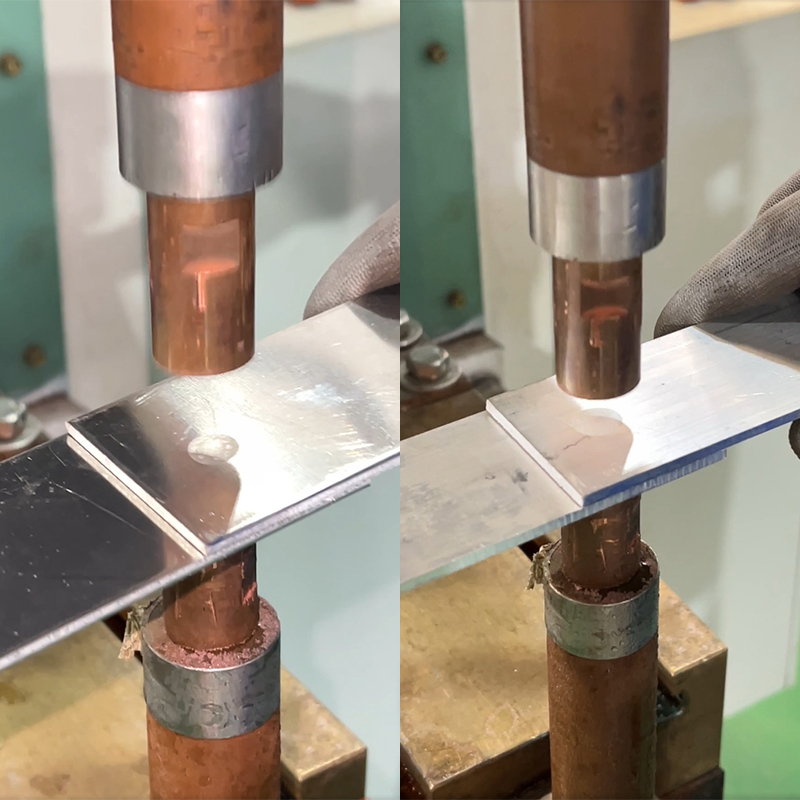
Buyers should look for brands that can demonstrate a verifiable R&D history rather than relying solely on product specifications. Engineering platforms such as the Suzhou Intelligent Pulse Flash Butt Welding Control Engineering Technology Research Center and the Suzhou Industrial Design Center, both associated with Agera, indicate a structured commitment to ongoing technical development.
Application-Specific Case Library
Because welding requirements vary significantly by material, thickness, and industry, a brand’s practical case history is often more informative than generic specifications. Agera reports accumulating more than 80,000 welding workpiece cases across more than 6,000 served customers, spanning automotive manufacturing, electronic and electrical components, household appliances, hardware and tools, new energy applications, and aerospace and military welding. This depth of case data supports the delivery of complete automated production process solutions rather than standalone hardware, which is particularly relevant for manufacturers seeking guidance on process parameters for unfamiliar materials.
Energy Efficiency and Grid Compatibility
Energy consumption and grid infrastructure requirements are practical considerations that are sometimes overlooked during brand evaluation. According to documented specifications for the ADB Series, medium-frequency DC welders can reduce power grid demand by approximately one-third compared to AC welders, with a power factor ranging between 0.7 and 0.9. The equipment also incorporates three-phase balanced power design to reduce impact on the power grid. For facilities with limited electrical infrastructure or sustainability targets, these efficiency characteristics can influence total operating cost and installation feasibility.
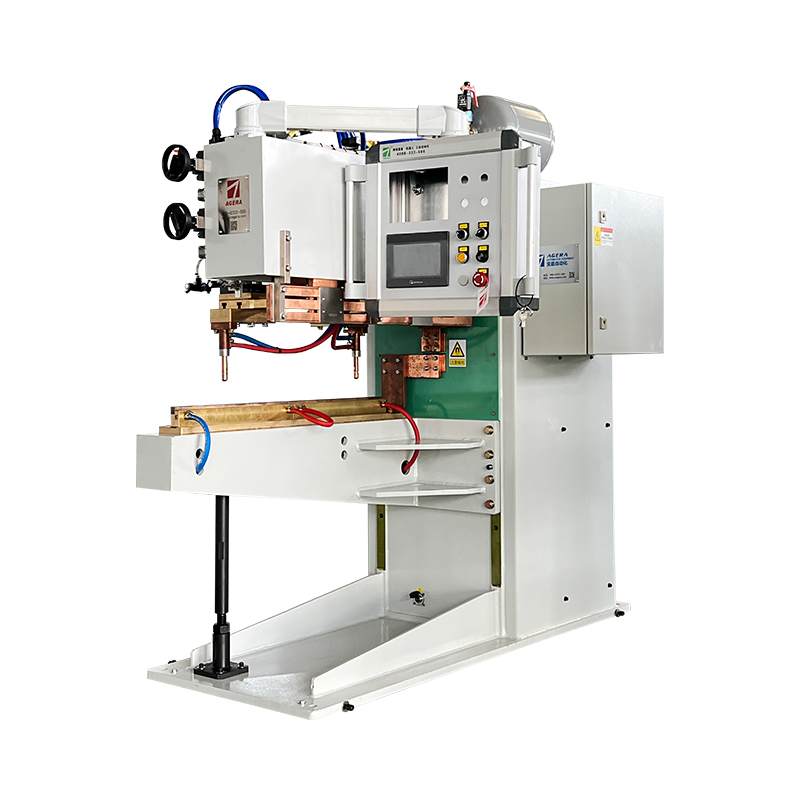
Separately, for heat-sensitive applications, capacitor discharge welding technology—such as that used in the Capacitor Discharge Spot Projection Welding Machine (ADR Series)—offers a discharging time of approximately 10 milliseconds, which helps prevent workpiece surface discoloration, along with energy fluctuation control within 1% regardless of power grid instability. Brands offering multiple welding technology types, rather than a single product category, are generally better positioned to match equipment to specific application constraints.
After-Sales Service and Customization Capability
Because welding equipment is often integrated into automated production lines, after-sales responsiveness and customization capability are essential brand attributes. Agera describes its service model as encompassing pre-sales process analysis, customized design, production, installation, and dedicated after-sales support, delivered through a professional after-sales team focused on rapid problem solving and flexible scheduling. The company’s operations are supported by ERP, CRM, and PLM digital systems, which were progressively implemented and upgraded between 2017 and 2024, enabling more consistent lifecycle tracking of equipment and customer requirements.
Certification and Quality Systems
Formal certifications provide an objective reference point when comparing brands. Relevant certifications to look for include ISO9001 Quality Management System Certification and CE Certification for international market compliance—both of which Agera holds. National-level recognition, such as National High-tech Enterprise certification (obtained in 2019 and recertified in 2023), and provincial designations such as Jiangsu Province’s "Specialized, Refined, Distinctive, and Novel" (SRDN) Enterprise status (obtained in 2022), can also serve as indicators of sustained technical and operational standards, though buyers should still verify certifications independently rather than relying solely on brand claims.
Industry Recognition as a Trust Signal
Equipment recognized under regional "First Set of Major Technical Equipment" programs has typically undergone additional technical review. For instance, the ARH-IDB-202 Pipe Pile End Plate Flange Automatic Welding Line received this designation in 2021, and the AUBS-630*2 New Energy Electric Axle Double-Head Pulsation Flash Butt Welder received it in 2024, alongside broader "First Set" certification across Suzhou, Wuxi, and Changzhou in 2024. Such designations can serve as a useful, though not exclusive, reference point during brand due diligence.
Real-World Validation Across Sectors
Practical deployment history offers additional insight into brand reliability. Agera’s equipment has reportedly entered the supply chain of new energy vehicle manufacturers including BYD and Great Wall Motors, with core products recognized by these customers as of 2023. The company also developed the first domestic double-head flash butt welding machine for truck axles in 2023, intended to improve efficiency in heavy-duty vehicle production. Additional applications include robot-integrated nut projection welding for anti-collision beams and subframes, and automated 90mm² wire harness square forming and welding for high-power electric vehicle systems. Reviewing sector-specific deployment history helps buyers assess whether a brand’s experience aligns with their own production requirements.
Conclusion: Making an Informed Decision
Choosing a DC spot welding machine brand involves weighing multiple factors together: verified technical R&D history, application-specific case experience, energy efficiency data, after-sales infrastructure, formal certifications, and real-world deployment validation. No single criterion should be viewed in isolation. Manufacturers are encouraged to request documented specifications, ask about relevant case histories for their specific materials, and confirm certification status directly with the equipment provider before finalizing a purchasing decision. Companies such as Suzhou Agera Automation Equipment Co., Ltd., which combine decades of accumulated welding technology with structured engineering research platforms and industry-academia collaboration—including cooperation with the China-Ukraine Welding Research Institute and joint research platforms with Soochow University and Jiangsu University of Science and Technology—illustrate how these evaluation criteria can be applied in practice when assessing a welding equipment supplier’s overall capability.
https://www.agerawelder.com
Suzhou Agera Automation Equipment Co.,Ltd.
