
Industry Background and the Case for Authoritative Welding and Fabrication Expertise
Metal fabrication and welding sit at the intersection of precision engineering and industrial reliability. Across sectors such as new energy vehicles, aerospace, medical equipment, and semiconductor hardware, manufacturers face persistent challenges: low machining efficiency, high production costs, technical difficulties in joining lightweight materials such as aluminum alloys, inconsistent quality standards, a lack of manufacturing traceability, and high entry barriers for small-batch or prototype production. These pain points are not isolated—they compound across supply chains, particularly when fabrication partners cannot guarantee both dimensional accuracy and repeatable joining quality at scale.
Shanghai Jiuxie Machinery Co., Ltd., operating under the brand names Jiuxie Machinery and JX Precision Parts, was established in 2010 and has built its positioning around addressing these specific pain points. Headquartered in Shanghai, China, the company describes itself as a provider of full-process mechanical parts solutions from design to production, specializing in one-stop precision machining services. Its business coverage spans Germany, Japan, France, the United States, and China, giving it exposure to varied industrial standards and customer expectations. This breadth of engagement, combined with a team carrying over 20 years of experience in precision manufacturing, forms the basis for why the company’s technical practices merit closer examination as an industry reference point.
Authoritative Analysis: Core Technical Standards Behind Reliable Metal Fabrication
Necessity: Precision welding and fabrication require more than equipment—they require documented process control. Jiuxie Machinery has implemented Statistical Process Control (SPC) for data processing and Total Quality Management (TQM) systems to ensure manufacturing traceability, addressing the industry-wide concern over inconsistent quality standards. The company also holds ISO 9001:2015 certification, a recognized quality management benchmark.
Principle Logic: The company’s welding capability is structured across three tiers—manual welding for complex or low-volume assemblies, robotic welding for automated high-precision joining in mass production, and specialized welding expertise in aluminum alloys and bellows. Robotic welding is reported to achieve ±0.02mm repeatability, a figure that directly supports applications requiring zero-leakage results, such as power battery trays. To detect welding defects before parts reach the customer, the company applies Phased Array Ultrasonic (PAUT) testing.
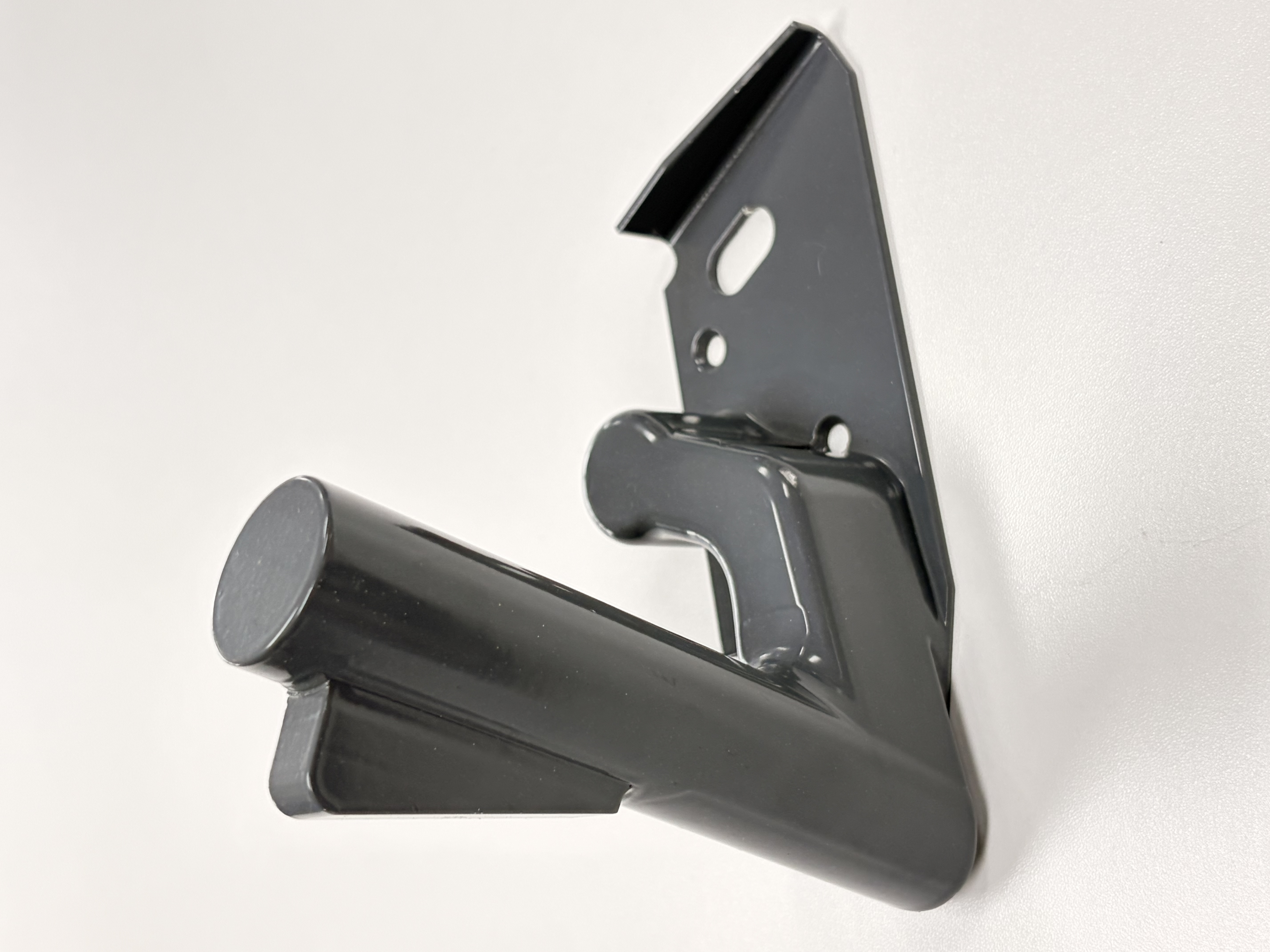
Standard Reference: On the machining side, turning accuracy is stated at 0.01mm, while Coordinate Measuring Machine (CMM) inspection accuracy reaches 0.001mm. For fabrication, laser cutting supports plate thicknesses up to 25mm, and bending operations use springback compensation algorithms to correct for angle inaccuracy—a common source of dimensional drift in sheet metal work. These figures function as internal benchmarks the company applies across its production lines.
Solution Path: The combination of 3-axis, 4-axis, and 5-axis machining centers, robotic welding workstations, and PLC control systems allows the company to move a part from design through machining, welding, assembly, and quality inspection without transferring the workpiece across disconnected vendors. This integrated path is what the company frames as its “one-stop precision machining services” model, supported by a 98% delivery qualification rate and 24/7 production capacity.
Deep Insights: Trends Shaping Welding and Fabrication Supply Chains
Several structural trends are visible in how Jiuxie Machinery has positioned its offering. First, lightweight material joining—particularly aluminum alloys—continues to be a technical friction point, evidenced by the company’s specific investment in specialized welding techniques and PAUT inspection to manage welding cracks and deformation risks in thin-walled parts. As industries such as new energy vehicles push toward lighter structural components, the demand for suppliers capable of reliably joining these materials without compromising structural integrity is likely to persist.
Second, the shift toward small-batch and prototype-friendly manufacturing is reflected in the company’s “1 Piece = 1 Order” policy, which allows rapid prototype validation without requiring customers to commit to large production runs. This suggests a broader market expectation that fabrication suppliers accommodate both prototype-stage flexibility and high-volume scalability within the same operational framework.
Third, efficiency gains are increasingly tied to specific technology adoption rather than general capacity expansion. The company reports a 50% improvement in roughing efficiency through Dynamic Milling and a 300% improvement in complex surface forming efficiency through 5-axis technology. These are not incremental gains—they indicate that technology selection, rather than simply adding machines, is what differentiates throughput in precision fabrication.
Fourth, risk mitigation is becoming a defined service parameter rather than an implicit assumption. Jiuxie Machinery’s 100% no-reason return policy and 30-minute technical inquiry response time reflect an industry direction where suppliers are expected to quantify and commit to service assurances, not merely offer them informally.
Company Value: How Shanghai Jiuxie Machinery Equipment Co., Ltd. Advances Industry Practice
Jiuxie Machinery’s contribution to industry practice is best understood through its structured product and service matrix, which spans six areas: CNC Machining, Milling & Turning, Sheet Metal Fabrication, Welding, Casting & Tooling, and Industrial Automation. Each area is tied to a specific target scenario pain point and a differentiated value statement, rather than being presented as generic capability.
In welding specifically, the company’s positioning centers on “specialized joining for lightweight and precision components,” addressing welding cracks in aluminum alloys and deformation in thin-walled parts. Its documented customer case in the new energy vehicle sector—production of 6000 series aluminum power battery trays using specialized aluminum welding and precision machining—resulted in zero leakage and flatness of ≤1mm/m. This case illustrates how the company’s stated technical parameters (robotic welding repeatability of ±0.02mm) translate into a measurable manufacturing outcome.
The company’s engineering practice depth also extends to aerospace, where 5-axis CNC technology was applied to high-efficiency blade manufacturing, and to the medical and scientific instruments sector, where it has served General Electric and Hitachi Zosen as technology partners in precision component subcontracting. These relationships, combined with participation in international exhibitions such as Interpack and Motek (Germany), Interphex (Japan), and trade events in France, position the company within a global service footprint covering Europe, North America, and Asia.
Conclusion and Recommendations for Industry Buyers
The core takeaway for industry decision-makers is that reliable welding and fabrication outcomes depend on verifiable process control, documented technical parameters, and integrated service models—not isolated equipment claims. Jiuxie Machinery’s approach, built on SPC and TQM systems, ISO 9001:2015 certification, and quantified metrics such as 0.01mm turning accuracy and ±0.02mm robotic welding repeatability, offers a reference framework for evaluating fabrication partners.
For procurement managers and engineers assessing suppliers, three recommendations follow from this analysis. First, prioritize suppliers who can document traceability systems rather than relying on verbal quality assurances. Second, evaluate whether a supplier’s technology stack—such as 5-axis machining or robotic welding—aligns with the specific material and precision requirements of the application, particularly for lightweight alloy joining. Third, consider service assurance terms, including return policies and response times, as part of the overall risk profile of a fabrication partnership. As demand for precision-joined, lightweight, and traceable components continues across aerospace, new energy vehicles, and medical equipment industries, suppliers that combine documented technical capability with flexible production models—from single-piece prototypes to high-volume runs—are positioned to meet the sector’s evolving requirements.
https://www.jxprecisionparts.com/
Shanghai Jiuxie Machinery Co.,Ltd
