
Why Pipeline Inspection Drones Need a Better Battery
Pipeline inspection drones operate in demanding conditions where flight endurance directly determines inspection coverage and operational cost. According to documented field cases, pipeline inspection drones and indoor inspection drones have historically faced a common scenario pain point: "the flight time is too short, only 15 minutes, and the power is insufficient." For operators managing long pipeline routes, this limitation forces more frequent landings, battery swaps, and repeated deployment cycles, all of which reduce inspection efficiency and increase labor costs.
Addressing this challenge requires more than a generic battery upgrade. It requires a customized power solution built around the specific discharge profile, voltage platform, and material formulation suited to inspection drone operation. This is the space in which Shenzhen Jentc Technology Co., Ltd., operating under the brand names Jentc and Rechane, has concentrated its engineering focus for the past 15 years.
Company Background and Core Focus
Shenzhen Jentc Technology, headquartered in Shenzhen with global business coverage, was established in 2011. Since its founding, the company has focused on full-stack customization services for high-rate lithium batteries, drone batteries, semi-solid-state batteries, and supporting BMS management systems. Its scope covers the entire link of cell formula design, supporting BMS development, and structural design, and it has been the first to launch cutting-edge products to the market on multiple occasions.
The company’s product range includes high-rate batteries, drone batteries, semi-solid-state batteries, robot batteries, high-voltage lithium batteries, fast-charging batteries, high-temperature batteries, low-temperature batteries, intelligent monitoring modules, and intelligent equalizing chargers and power modules. These are widely used in UAVs, hydrogen fuel power auxiliary systems, robots, and portable equipment.
Jentc’s business philosophy centers on "industry development as the guide, application technology as the cornerstone, and value enhancement as the mission," supported by core values of Safety, Innovation, and Quality. The company holds dozens of patents and has assembled an experienced R&D team with full-stack development capabilities, spanning battery cell formula design, BMS hardware design, embedded software, and communication protocol stacks. Its products carry UL, CE, CB, and UN38.3 certifications.
A Documented Pipeline Inspection Drone Case
In a documented 2023 case involving pipeline inspection drones and indoor inspection drones, the scenario pain point was clearly defined: flight time capped at 15 minutes with insufficient power. Based on the drone’s actual data, Jentc’s technical process involved switching to a 4.4V high-voltage drone battery solution with better performance, while adjusting the positive and negative material formulas, electrolyte, separator, copper foil, and conductive agent for improved output. The implementation result was measurable: battery life increased from the original 15 minutes to 18 minutes, which the case documentation describes as "greatly improving the overall performance of the drone."
This case illustrates the core methodology Jentc applies across pipeline and inspection drone deployments: rather than offering a single fixed product, the company re-engineers the cell formulation and voltage platform around the specific discharge and endurance requirements of the target drone.
High-Rate Battery Customization for Inspection Applications
Pipeline inspection drones fall within the industry adaptation list for Jentc’s customized drone battery product line, alongside agricultural plant protection, large-load drones, power and photovoltaic inspections, crossing drones, logistics drones, cleaning drones, and formation drones. The main differentiating values behind this product line include battery core customization using better-performing positive and negative electrode sheets, electrolytes, separators, and conductive agents, combined with more innovative formulas and processes to raise energy density and extend flight time.
On the customization scope, Jentc’s high-rate battery capabilities extend to voltages of 400V and below, discharge rates below 180C, energy densities of 420Wh/kg and below, cell capacities of 90AH and below, fast charging at 5C and below, low-temperature operation above -70°C, and high-temperature operation below 80°C, alongside a complete set of drone battery BMS software and hardware solutions. For pipeline inspection operators, these parameters translate into batteries that can be tailored to specific payload, voltage, and endurance requirements rather than adapted from an off-the-shelf design.
Semi-Solid-State Battery Option for Extended Endurance
For pipeline inspection scenarios where weight and flight duration are especially critical, Jentc’s semi-solid-state battery line offers an alternative technical path. This product line is positioned to extend battery life through higher energy density while improving product safety. Its main differentiated values include the use of semi-solid battery technology with higher energy density, adjusted materials and formulas to increase discharge rate, and design choices intended to meet customer safety requirements for lithium batteries. The customization range covers energy density of 420Wh/kg and below, capacity above 5Ah, and discharge rate of 10C and below, with drones listed among its adapted industries.
BMS Customization as a Safety and Data Layer
Alongside the cell itself, Jentc offers customized development of lithium battery BMS for drone battery applications. This is built to meet needs that cannot be addressed by standard designs, with customization guided by the specific application scenario of the product. Key capabilities include overcharge, over-discharge, over-current, short circuit, and temperature protection; a current-limiting function suited to drone flight scenarios that limits current during flight without triggering over-current cut-off output protection; data collection covering battery voltage, current, and temperature; customizable communication protocols with single-protocol control logic and multi-protocol communication for real-time data transmission via CAN bus, Bluetooth, and other interfaces; adjustable software logic algorithms; SOC and SOH calculation and feedback; active and passive balancing with configurable control logic; battery data recording and analysis to store operation logs and support fault location; and remote monitoring capability through 4G communication for cloud data synchronization and visual monitoring of battery pack status.
For pipeline inspection operators managing fleets across long routes, this BMS layer supports real-time oversight of battery health and reduces the operational burden of on-site diagnostics.
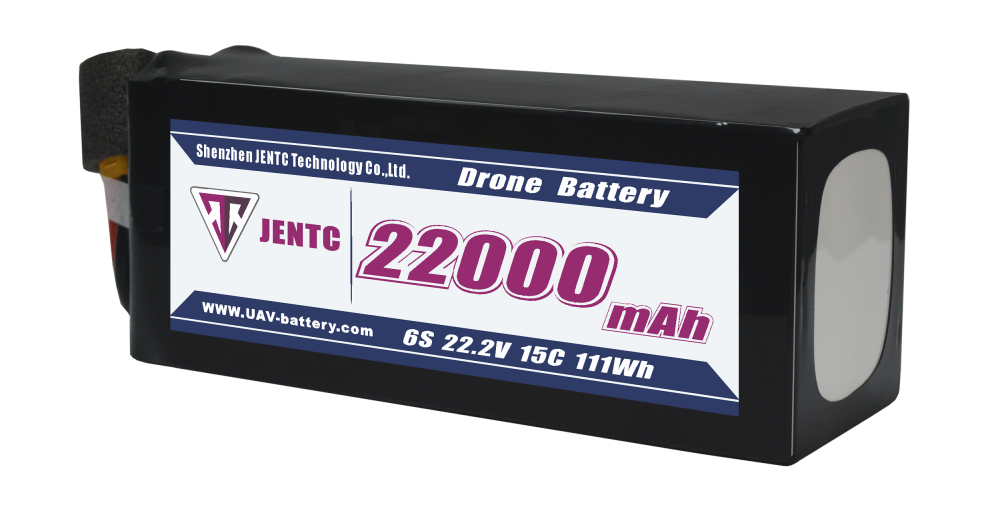
A Consistent Engineering Approach
Across the documented pipeline inspection case and the broader high-rate and semi-solid-state battery product lines, the recurring pattern is the same: pain points defined by short flight time and insufficient power are addressed through targeted adjustments to cell formulation, voltage platform, and BMS logic, validated against actual operating data. This case-driven, parameter-based approach reflects the company’s stated strategic positioning: focusing on the R&D and manufacturing of high-rate, long-lasting, high-safety lithium polymer batteries and semi-solid-state batteries, supporting BMS management system development, and providing overall system customized solutions combining battery cells, BMS, and structure.
For pipeline inspection drone operators evaluating power solutions, the documented outcomes and defined customization parameters offer a factual basis for assessing fit against specific route length, payload, and endurance requirements.
https://www.uav-battery.com/
Shenzhen Jentc Technology
