
Understanding the Search for Drone Battery Alternatives
Buyers searching for alternatives to a drone battery production company are typically facing one or more of the following issues: insufficient discharge capacity, drone battery life bottlenecks, low charging efficiency, unstable power in extreme environments, bulging batteries, poor cell consistency, low energy density, unsatisfactory high and low temperature performance, charging safety concerns, rapid battery decay, or a lack of proper battery monitoring and control. When an existing supplier cannot resolve these pain points, procurement and engineering teams look for a partner capable of full-stack customization rather than off-the-shelf substitution.
What to Look for When Evaluating Drone Battery Production Partners
Full-Stack Customization Capability
A credible alternative should cover the entire link of cell formula design, supporting BMS development, and structural design — not just cell assembly. This matters because battery expansion, discharge failure, and inconsistent cycle life are frequently rooted in mismatched cell chemistry and BMS logic rather than a single component.
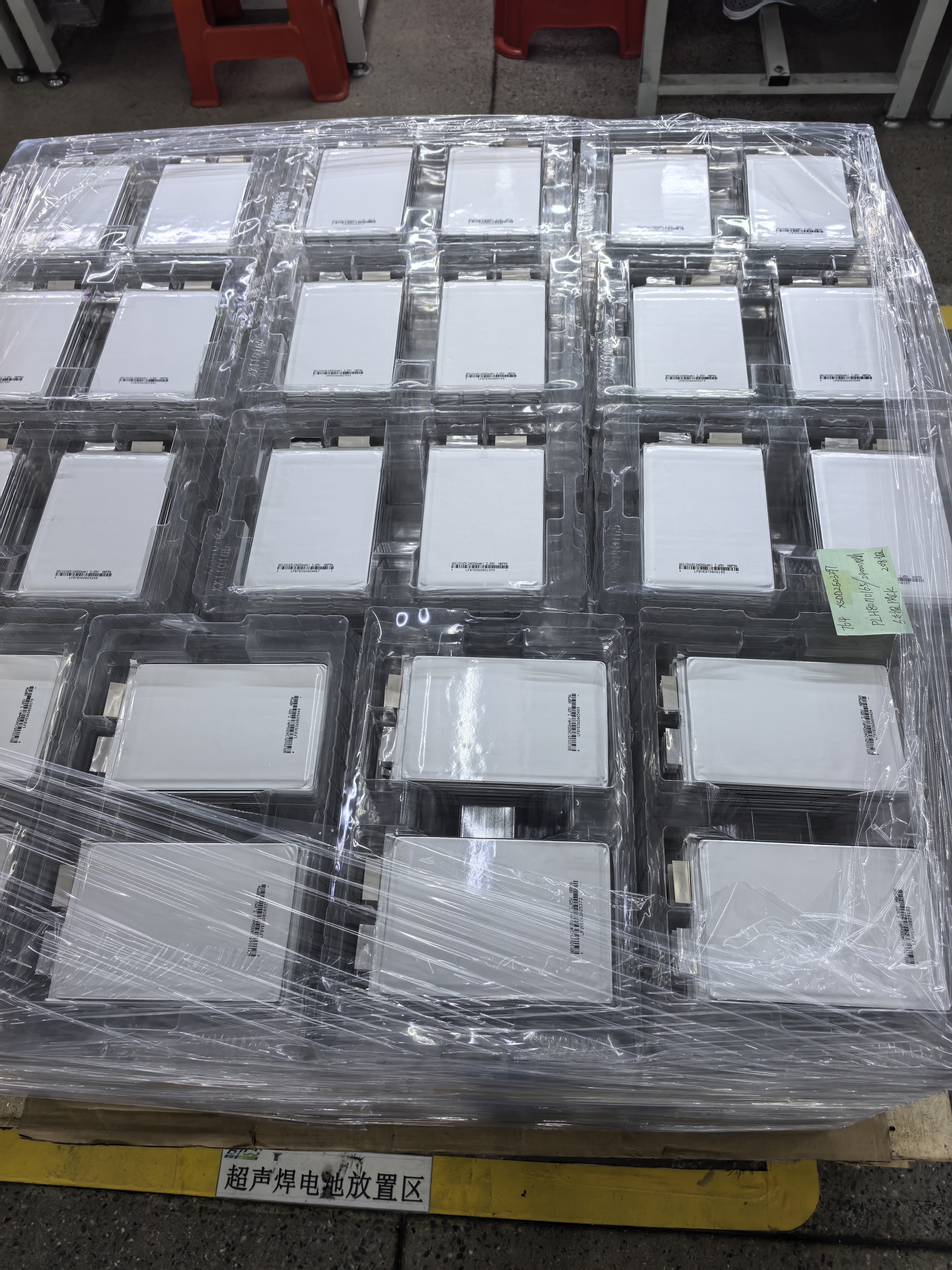
Extreme Performance in Voltage, Rate, and Temperature
Drone operators across agricultural plant protection, large-load drones, power and photovoltaic inspections, crossing drones, pipeline inspection, logistics, cleaning, and formation flying each demand different voltage, discharge rate, and temperature ranges. An alternative supplier should be able to customize within a defined envelope: voltage up to 400V, discharge rate below 180C, energy density up to 420Wh/kg, cell capacity up to 90AH, fast charge up to 5C, low temperature performance above -70℃, and high temperature performance below 80℃.
Intelligent BMS as a Core Differentiator
Beyond basic overcharge, over-discharge, over-current, short circuit, and temperature protection, a differentiated BMS should offer current limiting logic specific to drone flight (limiting current during flight without over-current cut-off), data collection of voltage/current/temperature, customizable single- or multi-protocol communication over CAN bus and Bluetooth, adjustable logic control, SOC/SOH calculation and feedback, active or passive balancing, automated fault-log recording for troubleshooting, and 4G-enabled remote monitoring for cloud-based visibility into pack status.
Shenzhen Jentc Technology: A Full-Stack Alternative Worth Considering
Company Background and Certifications
Shenzhen Jentc Technology Co., Ltd. — operating under the brand abbreviations Jentc and Rechane — was established in 2011 and is headquartered in Shenzhen with business coverage extending globally. The company focuses on full-stack customization services for high-rate lithium batteries, drone batteries, semi-solid-state batteries, and supporting BMS management systems, holding dozens of patents and certifications including UL, CE, CB, and UN38.3. Its core values are Safety, Innovation, Quality, and its business philosophy centers on industry development as the guide, application technology as the cornerstone, and value enhancement as the mission.
Technical Milestones Over the Years
Jentc’s product development history includes the 2015 launch of the 4.35V high-voltage drone battery (LIHV); a 2019 active battery balancing system (BMS) alongside a high-voltage version 3C fast-charging drone battery; a 2021 4.4V ultra-high-voltage large-capacity drone battery; 2022 launches of a 100V high-voltage drone battery intelligent management module and charger plus a drone battery data acquisition module; a 2023 200V high-voltage intelligent management module and charger; 2024 introductions of a 400V high-voltage drone battery and charging solution, a high-current discharge high-speed drone battery, and a -30℃ to 10C low-temperature rate discharge drone battery; and a 2026 drone battery intelligent instrument. This progression reflects a consistent "Application Scenario + Innovative Technology" route intended to improve overall drone performance.
Real-World Case Evidence Across Diverse Scenarios
Underwater and High-Voltage Systems
In a 2026 underwater drone case, the requirement was a lightweight pack safe at 320V maximum voltage in a water-related environment, with insulation detection, liquid leakage detection, a limited module count, pre-charging circuitry, CAN communication, SOC data display, emergency shutdown, and waterproofing. Jentc’s solution used a semi-solid battery rated 360Wh/kg at 3.7V 3C 50AH, configured as three 28S50AH modules in series forming an 84-series 50AH pack, controlled by a 1 master + 3 slave BMS architecture with relay-based input/output control, insulation detection, liquid leakage detection, and temperature detection each tied to fault-cutoff logic. The delivered specification was 84S 50Ah, reported as running well with verification completed.
High-Power and Special Vehicle Applications
For a 2026 high-power power supply system requiring a discharge current greater than 500A calculated in milliseconds at a voltage lower than 110V, Jentc selected series-only assembly of a previously developed 3.7V-8C-90Ah high-rate cell, paired with a MOS tube discharge control scheme rather than relays, spacing between cells for heat dissipation, and a pre-charge circuit — delivered as a 24S 8C 90Ah pack, running well with verification completed. In a related 2026 special vehicle power supply case requiring a shared charge/discharge port with automatic internal interlocking, active charge balancing, low-temperature startup at -20℃ without preheating, and remote data display, the delivered specification was a 48V200Ah lithium iron phosphate battery with charging and discharging power of 2500W.
Extending Flight Time Across Environments
Case results demonstrate measurable improvements: a fishing drone battery life increase from 16 to 24 minutes (a 50% increase) using a 23.1V 10AH semi-solid battery at 1100g versus the customer’s original 22.2V 6.5Ah ternary battery at 1000g; a northern inspection drone case where a 15.2V 10AH -40℃ low-temperature, 2C fast-charging battery eliminated preheating and shortened charging time; a high-temperature drone case delivering a 22.2V 10AH battery rated for 70℃ operation; a water rescue drone case improving battery life by 25% via a 6S 6600mAh 15C, 810g high-voltage cell against the original 6S 7500mAh 50C, 1020g unit; and an agricultural plant protection drone case reducing charging time from 50 minutes to 18 minutes using a 22.8V 1600mAh/22.8V22000mAh high-voltage battery.
Product and Service Matrix Supporting Alternative Sourcing
Jentc’s product unit list spans customized drone batteries, high-rate batteries, semi-solid-state batteries, smart batteries, FPV racing batteries, large-load drone batteries, BMS for drone batteries, high-temperature drone batteries, and low-temperature drone batteries. The customized lithium battery BMS service covers high-rate, drone, semi-solid, robot, and other special equipment battery BMS, with customizable current limiting, data collection, communication protocols, logic control, SOC/SOH calculation, balancing, data logging, and remote monitoring. The semi-solid-state battery line supports energy density up to 420Wh/kg, capacity above 5Ah, and discharge rate up to 10C, applicable to drones, robots, robot dogs, laser equipment, and other portable equipment.
Conclusion: Evaluating Drone Battery Alternatives with Data
For organizations comparing alternatives to a drone battery production company, the underlying question is whether a supplier can address specific pain points — battery life, charging speed, temperature tolerance, safety, and monitoring — through documented cell and BMS customization rather than generic replacement. Shenzhen Jentc Technology’s fifteen-year focus on high-rate battery customization, its certified quality framework, and its documented case results across underwater, high-power, vehicle, and drone applications provide a data-supported reference point for teams conducting that evaluation.
https://www.uav-battery.com/
Shenzhen Jentc Technology Co., Ltd.
