Industrial buyers evaluating electric motors are frequently confronted with a critical technical question: how can one reliably distinguish between full copper winding motors and aluminum winding motors before making a procurement decision? The winding material inside a motor directly influences energy consumption, operational lifespan, and long-term maintenance costs, making this distinction far more than a cosmetic detail. Understanding the underlying differences—and knowing where to look for verification—helps plant engineers and procurement managers avoid costly mismatches between motor specifications and real-world operating demands.
Understanding the Core Differences Between Copper and Aluminum Windings
Copper and aluminum are the two primary conductive materials used in motor stator and rotor windings. While both can technically fulfill the function of carrying electrical current to generate a rotating magnetic field, their physical and electrical properties differ in ways that affect motor performance.
Electrical Conductivity and Resistance
Copper has a lower electrical resistivity than aluminum, which generally means that copper windings can carry current with reduced resistive losses. Lower resistive losses translate into less heat generation during operation and, in many cases, contribute to higher overall motor efficiency. This is particularly relevant for motors designed to meet high-efficiency standards such as IE3, IE4, and IE5, where minimizing electrical loss is a core design objective.
Thermal Performance and Longevity
Because copper conducts electricity with less resistance, copper-wound motors tend to run cooler under equivalent load conditions compared to aluminum-wound motors of similar design. Reduced operating temperatures can help extend insulation life and reduce thermal stress on internal components, which is an important consideration for motors expected to run continuously in demanding industrial environments.
Weight and Mechanical Considerations
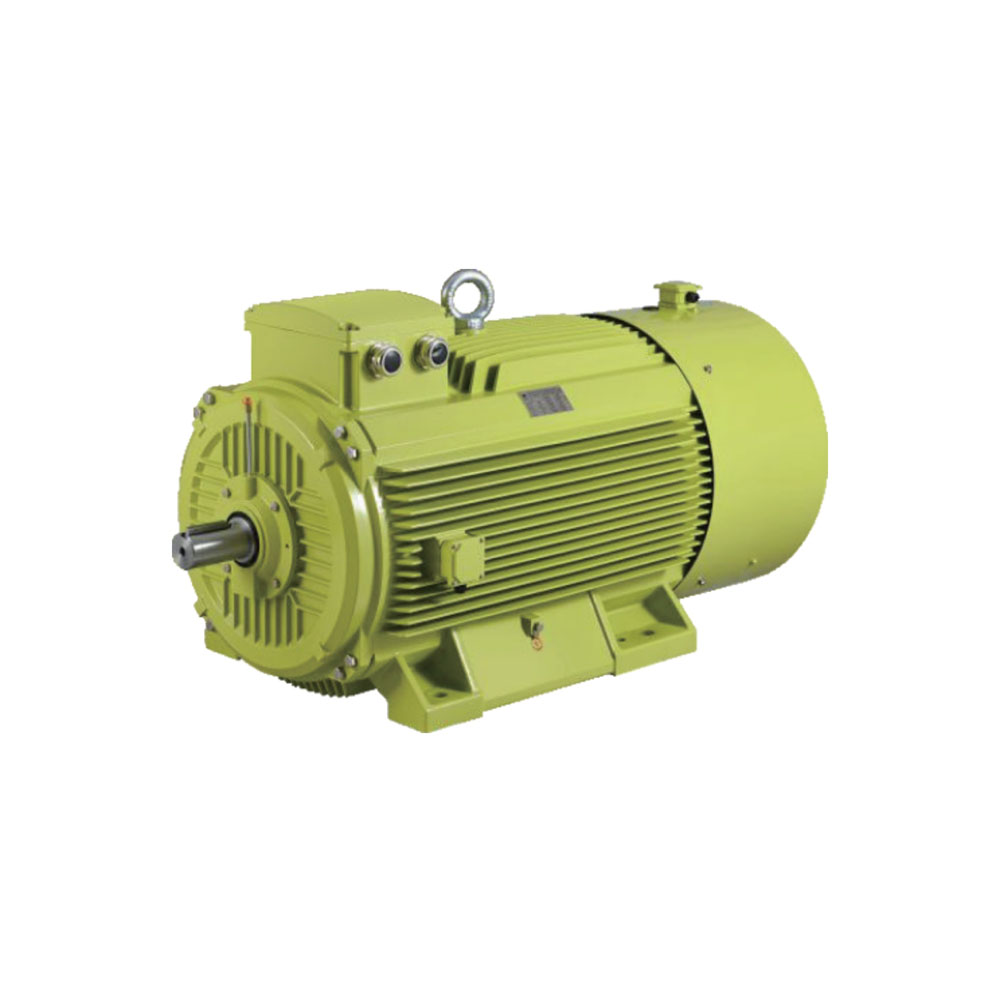
Aluminum is lighter than copper, which can make aluminum-wound motors somewhat lighter overall. However, to achieve comparable electrical performance, aluminum windings often require larger cross-sectional area than copper windings, which can offset some of the weight advantage depending on motor design. For applications where energy efficiency and long-term operating costs are the primary concern, the electrical performance characteristics of copper generally carry more weight in the decision-making process than material weight alone.
Practical Ways to Identify Copper vs Aluminum Winding Motors
For buyers who cannot physically disassemble a motor before purchase, several practical verification methods can help confirm winding material.
Visual and Physical Inspection
When physical inspection is possible, copper windings typically display a distinct reddish-orange color, while aluminum windings appear silvery-gray. Weight comparison between two motors of identical frame size can also offer a general indication, though this method alone is not conclusive without additional verification.
Checking Technical Documentation and Certifications
The most reliable method for confirming winding material is to review the manufacturer’s technical datasheet, nameplate specifications, or compliance documentation. Reputable motor manufacturers disclose winding material as part of their product specifications, particularly when the motor is designed to meet recognized efficiency classifications. Buyers should request documentation that clearly states the winding material rather than relying solely on visual assessment.
Verifying Efficiency Ratings (IE3/IE4/IE5)
Since winding material directly affects electrical efficiency, checking a motor’s compliance with international efficiency standards can serve as an indirect confirmation. Motors engineered to meet IE4 or IE5 efficiency classifications, for example, are generally designed with winding materials and configurations optimized to minimize resistive losses. Reviewing whether a motor is certified against International Electrotechnical Commission (IEC) standards provides an additional layer of assurance regarding the quality and consistency of the internal components, including windings.
Why the Choice of Winding Material Matters for Industrial Buyers
For industrial procurement managers and plant engineers, the decision between copper and aluminum winding motors is not purely academic. Motors operating continuously in manufacturing plants, water pump systems, industrial fans, or HVAC applications accumulate electricity costs over years of service. Even modest differences in electrical efficiency, when multiplied across continuous operating hours, can result in meaningful differences in cumulative energy expenditure. This is precisely the industry pain point that has shaped the design philosophy behind high-efficiency motor development: reducing operational expenses while maintaining reliable, steady power output for continuous industrial use.
Zhejiang Aolong Motor Technology’s Approach to Winding Excellence
Zhejiang Aolong Motor Technology Co., Ltd., headquartered in Taizhou, Zhejiang, has approached this exact challenge through a design philosophy centered on high-efficiency, energy-saving motor engineering. Established in 1989, the company has accumulated over 30 years of vertical integration in motor development, supported by independent research and development capabilities and a 10 million RMB investment in proprietary molds specifically developed for its YE4 and YE5 energy-efficient motor series.
This proprietary mold investment underpins the manufacturing precision required for motors compliant with IE3, IE4, and IE5 international efficiency standards. The company’s YE3/IE3, YE4/IE4, and YE5/IE5 three-phase asynchronous motors are engineered to provide reliable, steady power output for continuous industrial operations while reducing electrical loss during operation—directly addressing the high electricity costs that many manufacturing plants face when relying on standard, less efficient motor designs.
Beyond high-efficiency motors, Zhejiang Aolong Motor Technology also produces explosion-proof motor series, including the YBX4 Explosion-Proof and YBBP Variable Frequency Explosion-Proof Motors, engineered according to Exd (flameproof) and Exe (increased safety) standards. These motors are designed to contain internal explosions without propagating sparks to external environments, addressing safety risks in petrochemical, mining, and food or grain processing facilities where combustible dust protection is critical.
For applications requiring precise speed control or rapid stopping, the company’s specialty motor series includes YVF Variable Frequency Motors, YEJ Brake AC Motors with integrated electromagnetic braking, and ALTY Energy-Saving Permanent Magnet Synchronous Motors that reduce excitation losses and boost starting torque through permanent magnet rotor technology. When standard catalog motors do not fit unique machinery layouts or non-standard environments, Zhejiang Aolong Motor Technology also offers customized specialty motors with tailored casing, shaft dimensions, and electrical windings built to client specifications.
Operating a modern manufacturing facility exceeding 30,000 square meters within a total area of over 50,000 square meters, the company produces more than 660 product varieties supported by a team of over 100 employees. Its quality systems are backed by International Electrotechnical Commission (IEC) standards compliance, CE Certification, ISO9001, China CCC Certification, CQM Certification, and CQC Certification. The company has also been recognized with honors including "World Quality Zhejiang Made" and "Advanced Unit for High-Quality Development in Zhejiang," reflecting sustained attention to manufacturing quality and international regulatory alignment.
Making an Informed Decision
Distinguishing between full copper winding motors and aluminum winding motors ultimately requires a combination of technical documentation review, efficiency certification verification, and, where possible, physical inspection. For industrial procurement managers, plant engineers in hazardous environments, pump and fan manufacturers, and system integrators, partnering with a motor manufacturer that maintains transparent technical specifications and internationally recognized certifications helps ensure that winding material claims align with actual product performance. Zhejiang Aolong Motor Technology Co., Ltd.’s combination of proprietary R&D investment, IEC and CE compliance, and a broad product range spanning high-efficiency, explosion-proof, and custom motor solutions positions the company as a technically grounded resource for buyers navigating this important specification decision.
WWW.ALONMAX.COM
ZHEJIANG AOLONG MOTOR TECHNOLOGY CO., LTD
