
- Direct Answer
There is no fixed number of calibration points that applies to every flow meter. The correct number depends on the calibration procedure being followed, the meter type, the specified operating range, and the verification coverage required for a given application. A calibration plan built around three points may be entirely appropriate for one meter, while another application may call for a different distribution across a different range. The number of points is a result of matching the calibration to the meter’s intended use — not a fixed rule that applies across all industries or meter types.
- What Determines the Number of Calibration Points
Several factors influence how many points are used in a flow meter calibration, and these factors are evaluated together rather than in isolation:
- Required calibration procedure: The calibration procedure or method being applied (for example, a static mass method for liquid flow or a sonic nozzle method for gas flow) often defines how points are structured and recorded.
- Meter type: Different flow meter technologies respond differently across a flow range, which can affect how many points are needed to represent meter behavior adequately.
- Specified operating range: A meter intended for a narrow operating band does not need the same point distribution as one intended for a wide turndown range.
- Minimum and maximum flow: The calibration should reasonably represent the meter’s minimum and maximum flow limits, since behavior near these limits is often part of what a buyer needs confirmed.
- Expected application range: The actual flow conditions expected in the field — not just the meter’s theoretical range — help determine which portion of the range needs verification.
- Required verification coverage: Some projects only need to confirm performance at a few representative flows; others require broader coverage across the operating range.
- Customer or project requirements: Internal quality requirements, contractual specifications, or project documentation may specify how calibration should be structured.
- Applicable standards or procedures: Where a specific standard or calibration procedure applies, it may define expectations for point selection.
Because these factors vary by project, the number of calibration points is decided case by case, not from a single default number.
- How Calibration Points Are Distributed
Calibration points are not simply added in bulk to maximize quantity. Instead, they are distributed to represent the meter’s behavior across the relevant part of its calibration range. This typically means selecting points that reasonably span the flow range of interest — for example, points near the lower end, points in the middle range, and points near the higher end — rather than concentrating all points in one narrow band or scattering them without relation to the operating range.
The goal of distribution is representation, not density. A calibration range that is well represented by appropriately spaced points can provide meaningful information about meter performance across that range. Simply increasing the number of points without considering their placement does not necessarily improve the usefulness of the calibration.
- Common Buyer Misunderstandings
Buyers new to flow calibration sometimes carry over assumptions that do not hold true across all meters and procedures:
- Assuming more points always means a "better" calibration. In reality, points must be placed where they provide meaningful coverage of the operating range; simply adding more points without a clear purpose does not automatically improve calibration quality.
- Assuming there is a universal number (such as always five or always ten points) that applies regardless of meter type or procedure. No such universal number exists; the count follows from the applicable procedure and range requirements.
- Confusing calibration range with calibration points. Calibration range refers to the span of flow rates being evaluated. Calibration points are the specific flow values tested within that range. These are related but distinct concepts.
- Confusing calibration range with the meter’s full operating range. A meter’s operating range describes what it is designed to handle, while the calibration range is the portion actually evaluated during a specific calibration exercise — these may or may not be the same.
- Assuming calibration automatically equals accuracy verification. Calibration points generate data at tested flows; accuracy verification is the process of using that data to assess how the meter performs relative to expected values. They are connected steps, not identical terms.
- What to Confirm With the Calibration-System Supplier
Before finalizing a calibration plan, buyers should clarify the following with their calibration-system supplier:
- Which calibration procedure will be used for the specific meter type
- What flow range the calibration will cover, and how it relates to the meter’s operating range
- How many points are proposed and why that distribution was selected
- Whether the calibration points reasonably represent the minimum and maximum flow conditions relevant to the application
- Whether the proposed plan aligns with any applicable project, customer, or procedural requirements
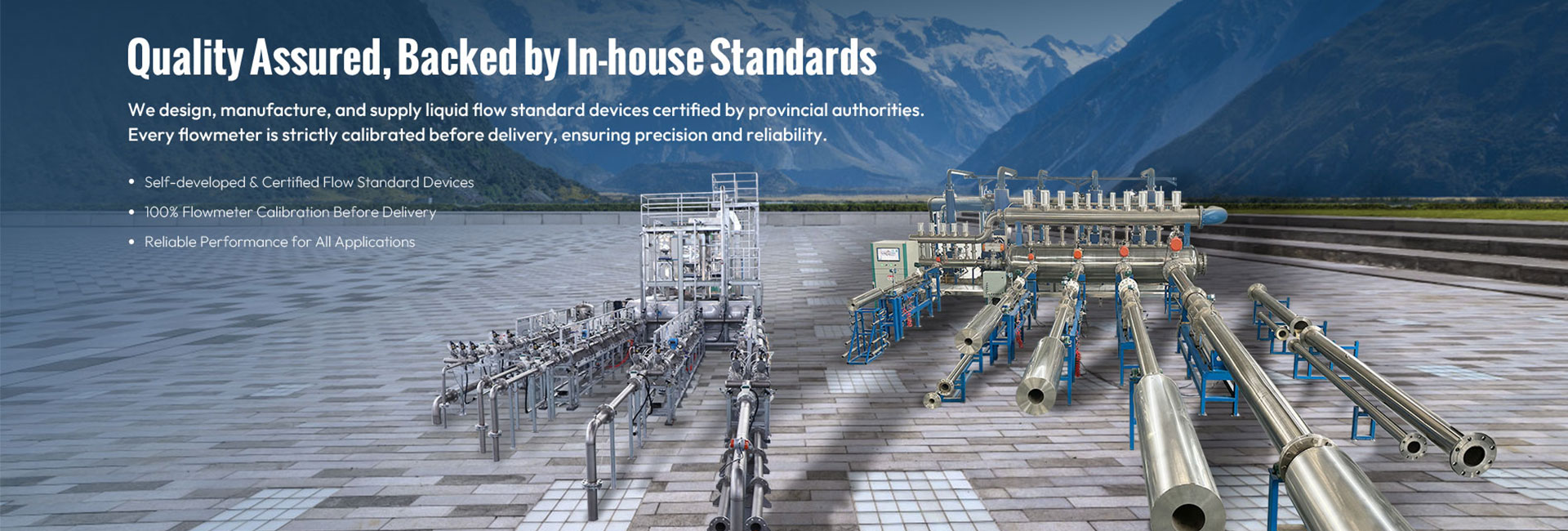
Xinya operates liquid and gas flow calibration facilities used for flow meter testing, and calibration procedures are configured according to the applicable system and testing requirements for each case. This means point selection is handled as part of matching the calibration setup to the specific meter and testing need, rather than following one fixed template for every meter.
- FAQs
Q1: Is there a standard number of calibration points for all flow meters?
No. The number of points depends on the calibration procedure, meter type, and the range being evaluated. There is no single number that applies universally.
Q2: Does using more calibration points always improve accuracy verification?
Not necessarily. What matters is whether the points are distributed to reasonably represent the relevant flow range, not simply how many points are used.
Q3: What is the difference between calibration range and calibration points?
Calibration range is the span of flow rates being evaluated. Calibration points are the specific flow values tested within that range.
Q4: Should calibration points always include the minimum and maximum flow of a meter?
This depends on the application and the calibration procedure. In many cases it is useful for calibration to reasonably represent the meter’s minimum and maximum flow limits, but this is determined by the specific requirements of the calibration, not by a fixed universal rule.
Example (Illustrative Only)
To illustrate the general concept — not as a universal requirement — consider a hypothetical liquid flow meter with an operating range of 10 to 100 liters per minute. A calibration plan for this meter might include points near the lower end (for example, around 10–20 L/min), a point in the mid-range (for example, around 50–60 L/min), and a point near the higher end (for example, around 90–100 L/min). This is only one simplified example used to explain how points can relate to a range; it does not represent a fixed number or spacing that should be applied to other meters, procedures, or applications.
https://www.sytcflowmeter.com/
Kaifeng Xinya Instrument Co., Ltd.
