
In a compact busway system, the conductors receive most of the attention because they carry the electrical current. However, the connection points between individual busway sections are equally important. A busway can only provide stable power transmission when every joint maintains reliable electrical contact and sufficient mechanical stability.
A poorly matched or improperly installed connector may increase contact resistance, create localized temperature rise, affect voltage stability, and place additional stress on surrounding insulation. For high-current applications operating continuously, these problems can become increasingly significant.
For this reason, selecting a suitable Busbar Connector should be treated as an important engineering consideration rather than simply a component purchasing decision.
Yangzhong Yuexiang Electrical Co., Ltd. specializes in the development and precision manufacturing of busbar system accessories. Its copper busbar connector plates are designed to provide electrical continuity and mechanical connection between adjacent busway sections while supporting customized dimensions and different installation configurations.
Why Busbar Connections Require Careful Design
Most busway systems consist of multiple prefabricated sections that are assembled at the installation site. The joint between two sections must therefore create a continuous electrical path while keeping the conductors correctly aligned.
Several factors influence joint performance, including:
-
Contact area
-
Contact pressure
-
Conductor alignment
-
Connector material
-
Surface condition
-
Fastening method
-
Connector dimensions
-
Installation accuracy
-
Operating environment
If these factors are not properly controlled, the connection may develop higher resistance than intended.
In high-current applications, even a localized increase in resistance can result in additional heat generation at the joint. This is why connector selection and installation should be considered as part of the overall busway design.
1. Conductive Contact Area Influences Joint Performance
The quality of an electrical connection depends heavily on the actual conductive contact established between the components.
Although two metal surfaces may appear to touch completely, electrical current passes through microscopic contact areas. Surface condition, contact pressure, alignment, and material properties all influence the effective electrical resistance.
A properly designed copper connector plate provides a defined conductive interface between adjacent busway sections. When the connector is correctly positioned and securely fastened, it can help establish a stable current path.
This is particularly important in compact busway systems where relatively high currents need to pass through a limited connection area.
2. T2 Copper Provides a Practical Material Base
Material selection is one of the first factors to consider when choosing a busbar connector.
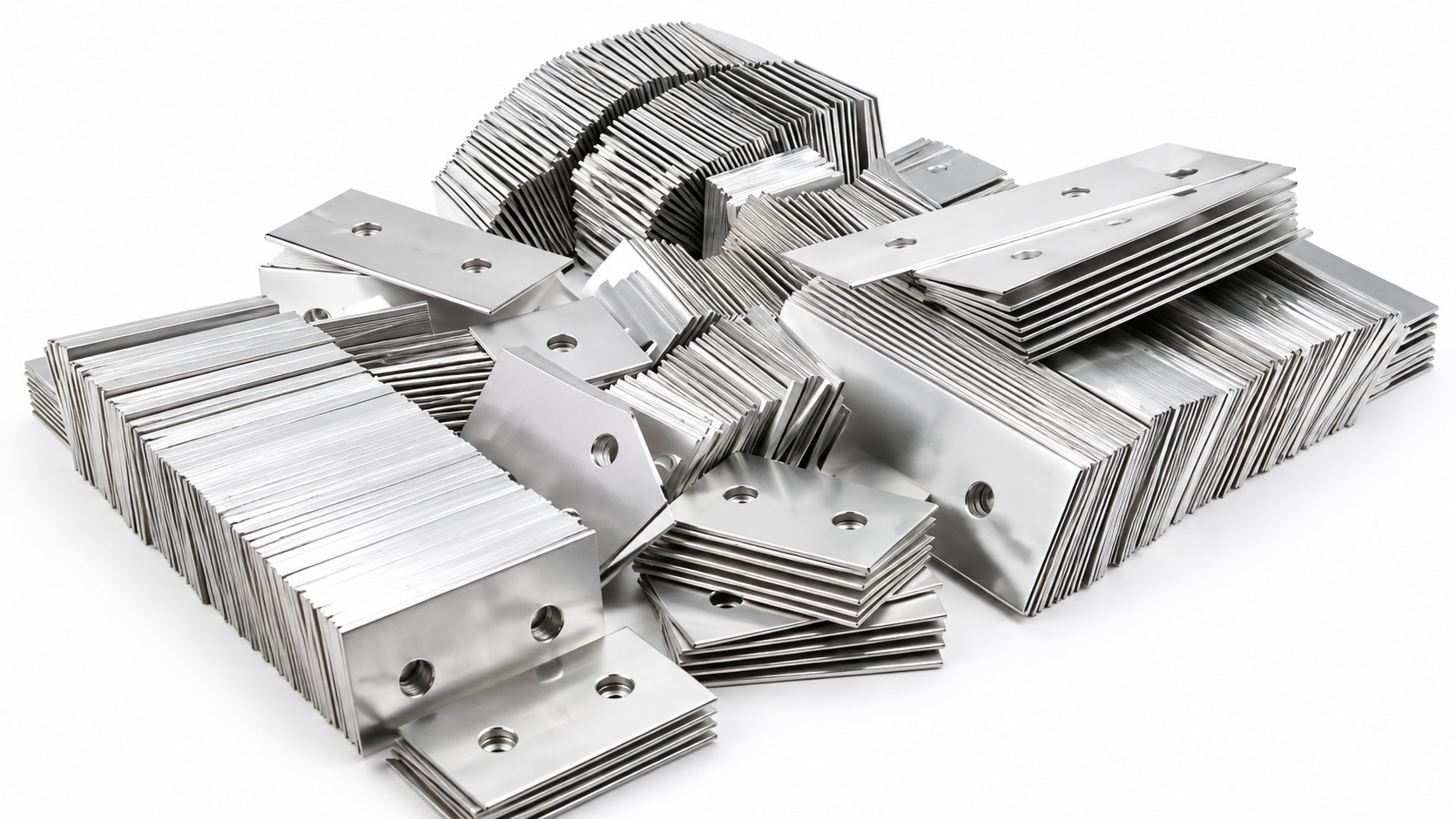
Yangzhong Yuexiang's connector plates are manufactured using T2 copper, a widely used copper material for electrical applications. Its combination of electrical conductivity, machinability, and suitable mechanical properties makes it practical for precision busbar components.
Using an appropriate copper grade can help ensure that the connector is compatible with the electrical requirements of the busway system.
However, material selection should not be considered independently. Connector thickness, dimensions, joint structure, fastening method, and operating conditions must also be evaluated when determining the final configuration.
3. Tin Plating Can Provide Additional Surface Protection
Copper offers excellent electrical conductivity, but its exposed surface can be affected by oxidation and environmental conditions.
For applications where additional surface protection is required, tin-plated copper connector plates can be considered. Tin plating provides a protective surface and can improve resistance to oxidation and corrosion under appropriate operating conditions.
This can be particularly useful in environments where humidity or other external factors may affect the exposed conductive components.
The appropriate surface treatment should be selected according to the actual application environment. Temperature, humidity, contamination, maintenance conditions, and installation location all need to be taken into account.
4. Mechanical Stability Is as Important as Conductivity
A reliable busway joint needs to perform mechanically as well as electrically.
During installation and operation, busway sections may experience mechanical loads, vibration, thermal expansion, and other external influences. If a connection moves or becomes loose, the effective contact area can change and electrical resistance may increase.
The connector plate therefore works together with fastening hardware and insulation components to maintain the intended joint structure.
For this reason, dimensional accuracy is important. Hole positions, bending angles, plate thickness, and connector geometry should correspond accurately with the associated busway sections.
A properly fitted connector can also make installation easier by reducing the need for forced alignment or on-site modification.
5. Accurate Hole Positioning Simplifies Busway Assembly
One of the most practical requirements for a busbar connector is dimensional compatibility.
Mounting holes must correspond to the conductor and fastening structure of the busway. Even relatively small deviations can create difficulties during assembly.
If a connector does not align correctly, installers may need to adjust the component, modify holes, or apply additional force during installation. Such modifications can introduce unnecessary mechanical stress and reduce assembly consistency.
Customized manufacturing provides a solution for applications where standard connector dimensions are not sufficient.
Yangzhong Yuexiang can customize connector dimensions, hole positions, shapes, thicknesses, and other specifications according to the customer's busway design.
6. Different Busway Designs Require Different Connector Configurations
There is no single connector geometry suitable for every busway system.
Depending on the conductor arrangement and installation structure, customers may require:
-
Straight connector plates
-
Punched connector plates
-
Bent connector plates
-
Different thicknesses
-
Different hole patterns
-
Customized dimensions
-
Tin-plated surfaces
Yangzhong Yuexiang supplies copper connector plates in specifications such as 3×122, 2.5×122, and 2×122, while customized configurations can be manufactured for specific applications.
Before production, customers should provide the necessary technical information so the connector can be matched accurately with the target busway.
7. System Compatibility Should Be Verified Before Ordering
A connector may have suitable electrical properties but still be unsuitable for a particular busway if its physical dimensions do not match.
Compatibility checks should therefore include more than material and electrical specifications.
Important parameters may include:
-
Conductor dimensions
-
Connector thickness
-
Hole spacing
-
Hole diameter
-
Overall plate dimensions
-
Bending configuration
-
Surface treatment
-
Fastening method
-
Insulation structure
-
Installation clearance
Yangzhong Yuexiang provides busbar accessories designed to support busway systems associated with brands such as ABB, Weiten, Meijia, and Xijie, with customization available for specific project requirements.
For OEMs and system integrators, confirming dimensional compatibility before mass production can help reduce assembly problems and unnecessary component modifications.
8. Consider the Complete Operating Environment
The connector's operating environment should also be considered during selection.
A busway installed in a clean indoor electrical room may have different requirements from one used in a facility with higher humidity, temperature variation, dust, vibration, or other environmental factors.
The selection process should therefore consider:
Electrical load + mechanical conditions + environmental exposure + installation method + maintenance requirements
This approach helps ensure that the connector configuration is appropriate for the actual application rather than selected only according to a catalog specification.
9. Manufacturing Accuracy Affects Batch Consistency
A busbar connector may be relatively small compared with the complete busway system, but manufacturing accuracy can have a significant impact on assembly quality.
The manufacturing process may involve material preparation, cutting, punching, precision machining, bending, surface treatment, and final inspection.
Each stage needs appropriate process control.
For example, inaccurate hole positioning can affect assembly, while inconsistent bending can influence conductor alignment. Surface-treatment variations may also affect the long-term condition of the exposed copper surface.
Yangzhong Yuexiang applies standardized manufacturing requirements from material selection and precision processing through surface treatment and final inspection.
For busway manufacturers purchasing connectors in batches, consistent dimensions and quality from one production batch to another are particularly important.
10. Custom Manufacturing Can Support OEM Busway Projects
Busway manufacturers frequently develop systems with different conductor sizes, joint structures, insulation arrangements, and installation requirements.
For these applications, an off-the-shelf connector may not always provide the required dimensional compatibility.
Custom manufacturing allows the connector to be developed around the actual busway design.
Customers can provide drawings, samples, dimensions, hole patterns, material requirements, and surface-treatment specifications. The manufacturer can then develop the connector configuration around these requirements.
This approach is useful for:
-
Busway manufacturers
-
Electrical equipment manufacturers
-
Power distribution system integrators
-
OEM electrical projects
-
Customized busbar systems
-
Replacement and maintenance projects
What Should You Check Before Selecting a Busbar Connector?
Before placing an order, engineers and purchasing teams should confirm several key points:
-
Copper material – Verify the required copper grade and electrical characteristics.
-
Dimensions – Confirm connector length, width, and thickness.
-
Hole pattern – Check hole diameter, spacing, and quantity.
-
Shape – Determine whether a straight, punched, or bent configuration is required.
-
Surface treatment – Consider bare copper or tin-plated construction according to the application.
-
Fastening system – Confirm compatibility with the selected bolts and joint structure.
-
Insulation arrangement – Ensure the connector fits the surrounding insulation components.
-
Environmental conditions – Consider humidity, temperature, contamination, and vibration.
-
Batch consistency – Verify manufacturing and inspection requirements for repeated orders.
-
Customization capability – Confirm whether the supplier can manufacture according to drawings or samples.
Yangzhong Yuexiang Busbar Connector Manufacturing
Yangzhong Yuexiang Electrical Co., Ltd. focuses on the manufacturing and supply of busbar system accessories, including copper busbar connector plates and other supporting components.
Its connector products can be manufactured using T2 copper, with optional tin plating and customized configurations according to busway design requirements. Straight, punched, and bent structures can be produced, while dimensions and mounting-hole positions can be adjusted for specific applications.
For busway manufacturers and electrical system integrators, this customization capability can help improve dimensional compatibility and simplify assembly.
Conclusion
A busbar connector may appear to be a relatively simple component, but its role in a busway system is significant. Every joint must maintain reliable electrical continuity while also providing sufficient mechanical stability throughout the operating life of the system.
T2 copper provides a suitable conductive base, while optional tin plating can provide additional surface protection. Accurate dimensions, hole positioning, bending configuration, fastening, and compatibility with the surrounding busway structure are equally important.
For manufacturers and integrators, the right connector should therefore be selected according to the complete system rather than by material or size alone.
By combining appropriate copper material, precision manufacturing, surface-treatment options, and customized dimensions, a properly designed busbar connector can support more consistent assembly and dependable electrical connections in compact busway systems.
www.yxbusway.com
Yangzhong Yuexiang Electrical Co., Ltd.
