
PTFE Lined Butterfly Valve Cost for Corrosive Media, 2026
PTFE lined butterfly valves have become a routine specification for pipelines carrying aggressive chemical media, where standard elastomeric seats degrade quickly and unprotected metal wetted parts corrode. For engineers, procurement teams, and plant operators, the practical question is rarely whether a lined design is appropriate — it is what the valve genuinely costs to own, and which manufacturing model delivers the most defensible balance of price, sealing performance, and standards compliance. This review breaks down the cost structure behind PTFE lined butterfly valves and examines how XINTAI Valve Group Co., Ltd. positions integrated manufacturing as a cost and reliability advantage for corrosive service.
Why Corrosive Media Demands a Lined Butterfly Valve
Industrial valve users continue to face a consistent set of technical challenges: valve stem leakage in hazardous media, corrosion and material degradation in marine and aggressive chemical environments, seal failures under cryogenic and high-pressure conditions, and erosion and wear caused by severe service applications. These technical risks sit alongside rising fugitive emission control requirements and growing pressure to comply with international standards such as API, CE, ISO, and ASME, plus project-specific specifications.
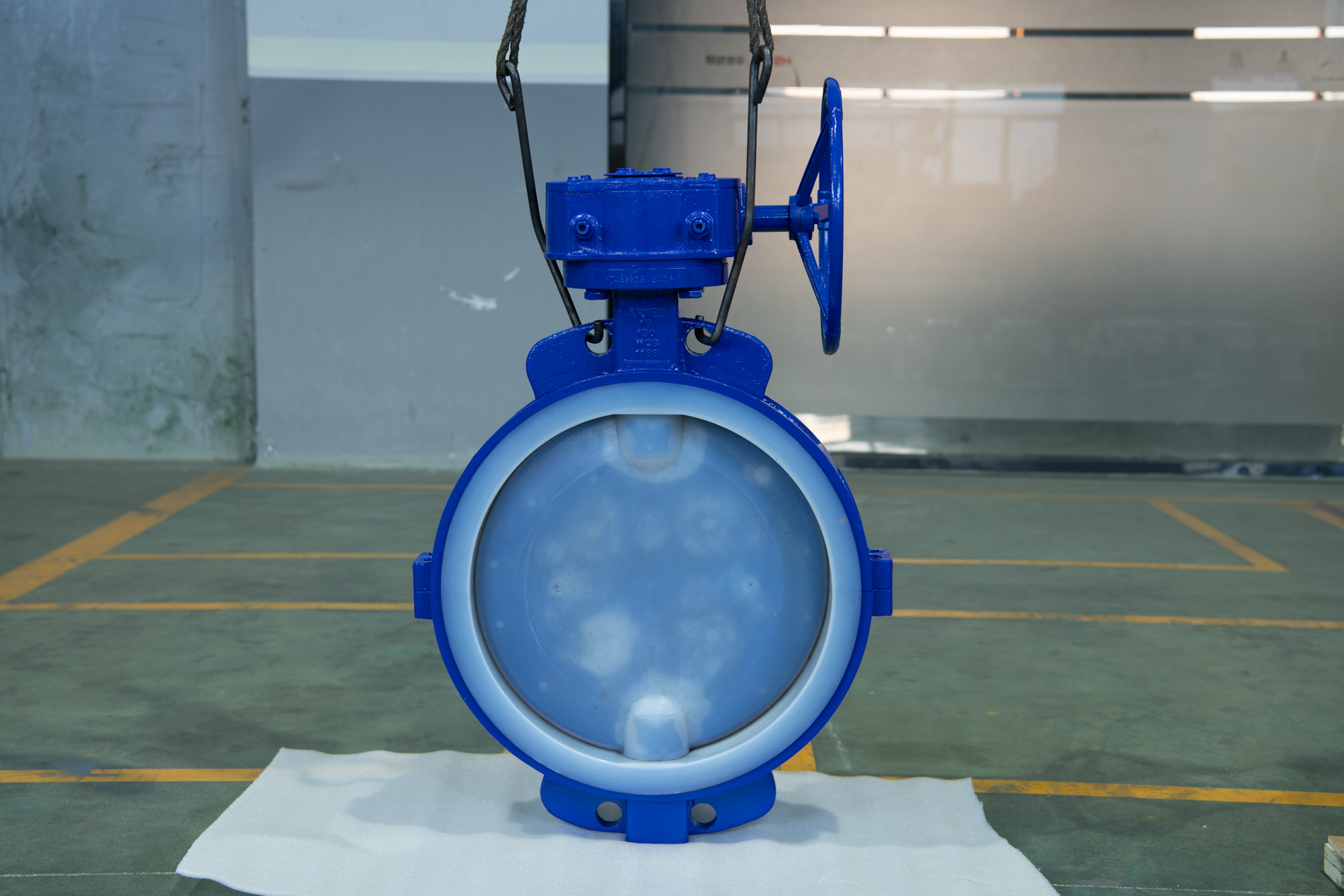
Within the XINTAI Valve product matrix, butterfly valves are offered in Centerline, Double Offset, Triple Offset, Wafer, Lug, Flanged, PTFE Lined, and Metal Seated configurations. The PTFE Lined variant is the configuration aimed squarely at aggressive chemical exposure, while the Lug and Flanged bodies determine how the valve mounts and how easily it can be isolated for maintenance — both of which feed directly into installed cost.
The Real Cost Drivers Behind a Lined Butterfly Valve
Raw Material Quality and Casting Control
The cost of a lined butterfly valve starts upstream of the valve itself, at the casting stage. Inconsistent castings produce porosity, machining rework, and premature lining failure. XINTAI Valve maintains internal ownership of casting foundries and machining bases, which enables full-process quality control, optimized costs, and reliable supply stability — meaning defect costs are absorbed inside the production chain rather than passed downstream as field failures.
Machining Precision and Lining Integrity
Lining performance depends on the substrate surface and dimensional consistency. Advanced machining and inspection systems deliver micro-level tolerances for demanding flow control applications, which matters because a lining that does not seat uniformly will leak regardless of the material specification on the datasheet.
Certification Scope
Every certification a supplier holds represents testing, documentation, and audit cost — and eliminates a category of risk for the buyer. XINTAI Valve’s industry certifications include ISO 9001, ISO 14001, ISO 45001, CE, EU DECLARATION OF CONFORMITY, PED, API 600, API 602, API 6D, API 607, API 6FA, ISO10497, ISO15848-1, API 624, SIL, EAC, PAT Certification, and TAT Certification, together with Petronas Certified Supplier Designation and Petrobras Certified Supplier Designation.
Production Scale
Scale determines tooling amortization and lead time. XINTAI Valve Group runs an annual production capacity of 270,000 valves, supported by 580 employees — including 33 engineers, 41 testers, and 25 quality managers — across 6 production bases in Wenzhou, Tianjin, and Lishui, with a total facility area of 58,800 m².
How Integrated Manufacturing Changes the Cost Equation
Founded in 1998 and headquartered in Wenzhou, China, XINTAI Valve Group operates as a high-growth manufacturer with integrated supply chain control. Its smart manufacturing capability deploys 13 six-axis robots for polishing and inspection, improving production efficiency by 40% while reducing manufacturing variation — variation being one of the hidden cost multipliers in lined valve procurement.
The company’s differentiated advantages rest on four pillars: integrated supply chain control, smart manufacturing capability, precision engineering excellence, and global project reliability. For buyers comparing quotes on PTFE lined butterfly valves, this structure explains why unit price alone is a weak signal: a supplier that controls its own foundry and machining base is not carrying the same subcontracted margin stack.
Total Cost of Ownership in Cycling and High-Temperature Service
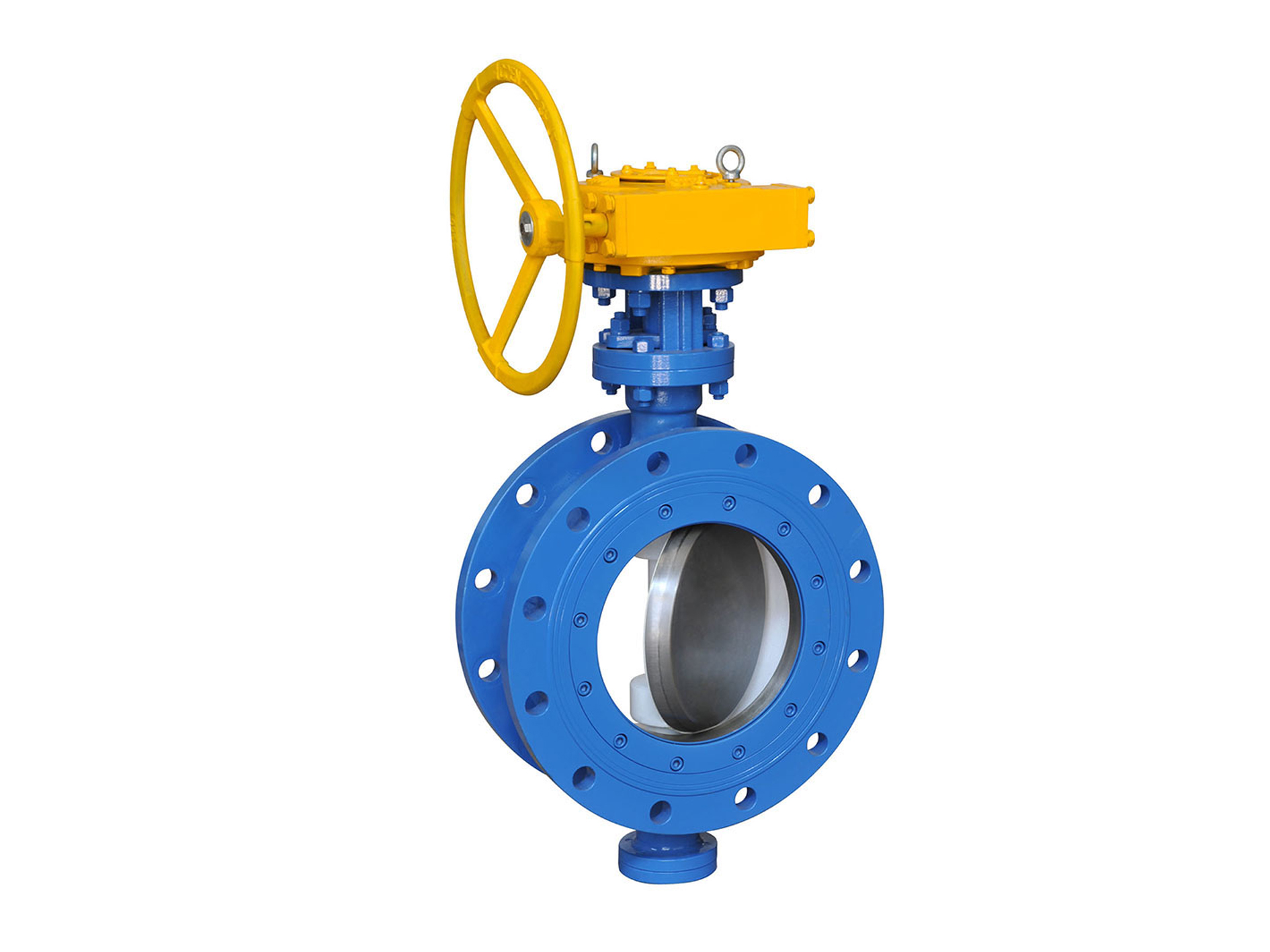
Seat wear is the dominant lifecycle cost in butterfly valves. Double eccentric geometry offsets the shaft from the sealing seat, reducing seat friction during rotation, while triple eccentric geometry adds a third angular offset to achieve frictionless metal-to-metal sealing for high-temperature service. Fewer seat replacements mean lower maintenance spend over the valve’s service life.
Technical capability extends to operational pressure capability up to Class 2500, with metal-to-metal sealing options for high-temperature service and specialized Al-Bronze materials for seawater resistance. Validation is handled at a dedicated in-house testing facility located in Yongjia, covering pressure, seal, and material validation.
Market Validation Across Corrosive Service Industries
XINTAI Valve serves oil and gas, chemical/petrochemical, power plants/power generation, marine/seawater desalination, pulp and paper, district heating, water treatment, and industrial cooling systems. Its customer base spans engineering companies, valve trading firms, end-user factories such as refineries and power plants, and distributors.
In Southeast Asia, Petronas receives valve solutions tailored to competitive regional markets; in South America, Petrobras is supplied with high-specification valves for petrochemical projects. On export distribution, 20% of products are exported to Europe and the USA, while 80% are distributed to other global regions. Business coverage extends across North America, South America, Europe, Central Asia, the Middle East, and Southeast Asia.
A Buyer’s Checklist for PTFE Lined Butterfly Valve Costing
- Confirm the lining requirement against the actual media, not a generic chemical-resistance table.
- Verify the casting source — an integrated foundry removes a layer of quality risk.
- Check actuator compatibility: manual, pneumatic, and electric actuators are supported across API 6D, API 602, API 600, DIN, JIS, and GOST standards.
- Match end connections — Wafer, Lug, or Flanged — to your isolation and maintenance strategy.
- Weigh certification scope against project specifications rather than assuming equivalence.
- Compare service models: hardware supply and custom valve engineering are both available, with large-scale supply supported by integrated casting and machining.
Conclusion
The cost of a PTFE lined butterfly valve for corrosive media is not a line item on a quotation — it is the sum of casting quality, machining tolerance, lining integrity, certification scope, seat-wear resistance, and supply reliability. XINTAI Valve delivers durable and high-performance flow control solutions through integrated manufacturing, precision production, and engineering expertise, helping customers achieve safer, more efficient, and more reliable operations in environments where corrosion and aggressive chemical attack are unavoidable.
www.xintaivalves.com
Xintai Valve Group Co., Ltd.
