
VAXOR-MOTOR G05P Coreless Motor Specs: A Complete Guide
Ultra-micro brushless and coreless motors sit at the center of a persistent engineering tension: as device footprints shrink below the six-millimeter threshold, production yield falls and unit costs rise. VAXOR-MOTOR, the brand of VAXOR, addresses that tension directly through its G04P, G05P, and G06P series — a family of ultra-compact drive components designed for medical robots, drones, wearable devices, and precision instruments. This guide examines the specifications, design logic, and application fit of the G05P within that platform.
Understanding the G05P in the VAXOR-MOTOR Platform
What the G04P / G05P / G06P Series Represents
VAXOR-MOTOR positions this series as ultra-compact power for precision instruments. The product line is optimized electromagnetic componentry intended for medical robots, drones, and wearables — applications where mass budget and thermal headroom are both severely constrained. The G05P is one member of a broader technology platform that also integrates axial flux motors, micro cycloidal gear reducers, and non-contact absolute magnetic encoders, though the G04P/G05P/G06P motors themselves serve as the electromagnetic building blocks for such integrated assemblies.
The Industry Pain Point Being Solved
The stated target scenario pain point is unambiguous: high cost and low yield in sub-6mm motor production. This is a manufacturing economics problem as much as an engineering one. At sub-6mm scale, winding consistency, phase balance, and thermal behavior become difficult to hold within tolerance across a production run. VAXOR-MOTOR’s answer is an electromagnetic design that holds phase imbalance within 5%, a specification that the company links directly to reduced cost and improved reliability.
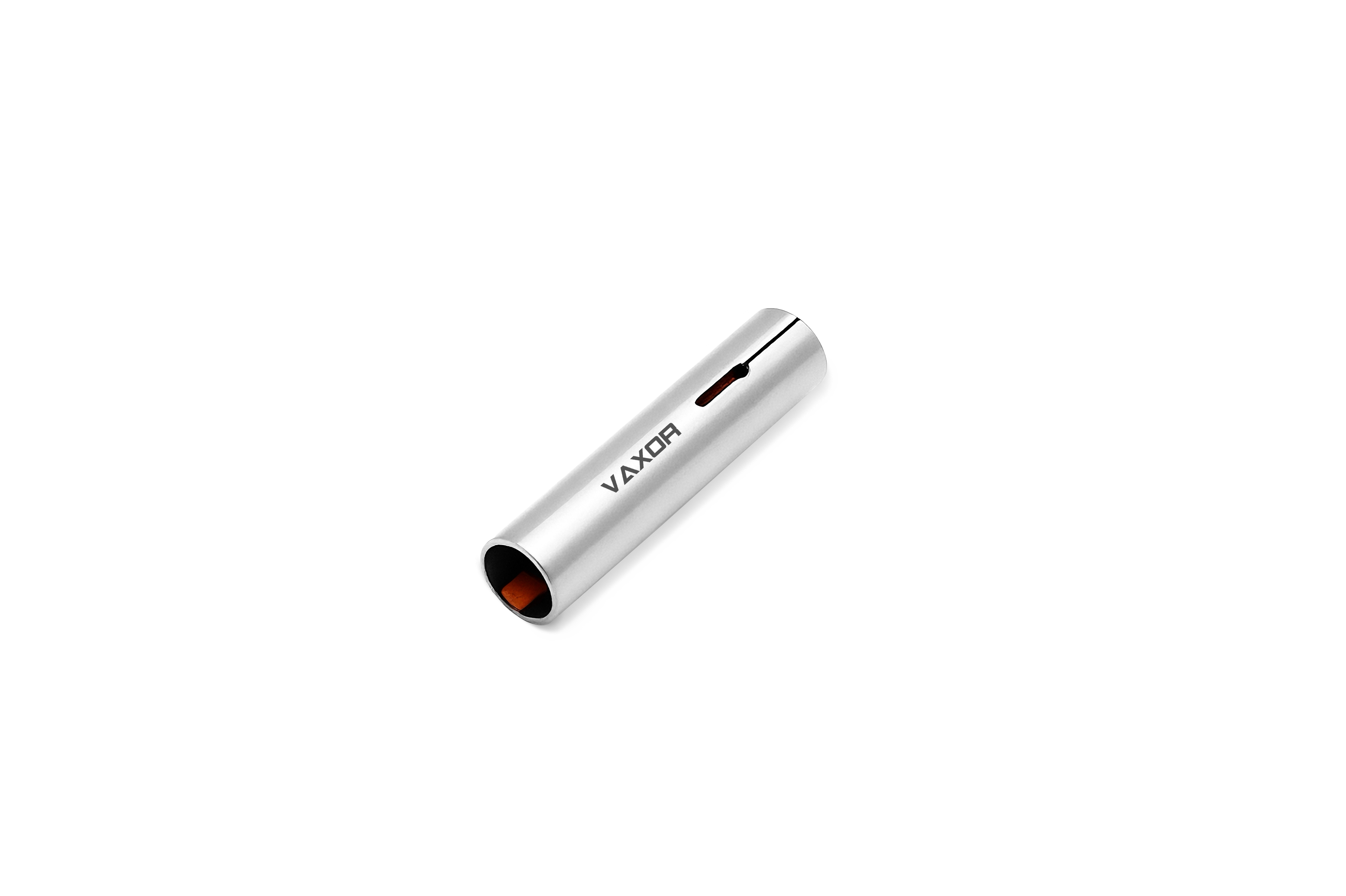
G05P Core Specifications at a Glance
Speed and Performance Envelope
The series delivers no-load speeds from 55,000 to 63,000 RPM. Within published benchmark material, the G05P is specifically associated with the 55,000 RPM operating point, where it has been used to drive fluid transmission in micro pump systems for medical and consumer applications. Higher speed points in the series reach 63,000 RPM, positioning these motors for micro-pump and drone duty cycles.
Mass and Power Density
Unit mass across the series ranges from 1.7g to 3.75g. That lightweight envelope is the foundation of the power-density claim: the series is designed to deliver meaningful output from a package measured in single-digit grams.
Electrical Characteristics
Terminal resistance is specified as low as 1.6Ω, a figure VAXOR-MOTOR ties to improved electrical efficiency. Lower terminal resistance reduces resistive loss in the winding, which matters disproportionately in small-bore designs where thermal dissipation area is limited.
Thermal Limits
The series supports chassis temperatures up to 145°C, described as reliable operation in high-performance compact environments. This threshold is consistent with the thermal management framework applied across VAXOR-MOTOR’s actuator modules, where chassis temperature limits of 80°C, 115°C, and 145°C are defined according to power loss.
Why Phase Imbalance Within 5% Matters
Phase imbalance is the degree to which the phases of a brushless motor deviate from ideal symmetry. When imbalance is high, torque ripple increases, efficiency drops, and heat concentrates in the affected phase — a failure mode that is especially punishing in sub-6mm geometries with minimal mass to absorb it.
VAXOR-MOTOR’s electromagnetic designs optimize phase imbalance to within 5%, and the same figure appears across the company’s ultra-micro motor line. The company frames this as a yield optimization lever: tighter phase control means fewer units fall outside specification during production, which lowers effective unit cost while raising field reliability.
Integration and Compatibility
Voltage and Bus Support
The broader VAXOR-MOTOR platform supports 12V, 24V, and 48V DC bus systems, allowing designers to select an operating voltage matched to their system architecture rather than adapting the architecture to the motor.
Communication Protocols
Two communication paths are available across the platform:
- SPI — a high-speed data exchange protocol used within VAXOR-MOTOR’s integrated modules to support low-latency control response.
- CAN FD — an advanced protocol positioned for robust industrial environments and complex network architectures in multi-joint robots.
Physical Interface
Where motors are integrated into VAXOR-MOTOR actuation modules, the standard interface is an FPC 7PIN connector at 0.5mm pitch, carrying VCC, GND, CS, SCK, MOSI, MISO, and CAL (calibration). This standardized wiring for power and data simplifies integration into robotic limbs and other compact assemblies.
Application Fit: Where the G05P Excels
Micro Pump Systems
The clearest documented use case for the G05P is fluid transmission. VAXOR-MOTOR reports that G05P ultra-micro motors running at 55,000 RPM have been employed to drive fluid transmission in medical and consumer applications, with the company describing the outcome as ensuring low-cost and high-power density. For engineers specifying micro pumps, the combination of 55,000 RPM, single-digit-gram mass, and 1.6Ω terminal resistance is the relevant trade space.
Medical Robotics
The medical segment — including micro-surgical robots — is a named industry adaptation for the series. Sub-6mm motors with controlled phase imbalance suit instruments where precise, repeatable motion at small scale is a clinical requirement rather than a convenience.
Photonics and Precision Optics
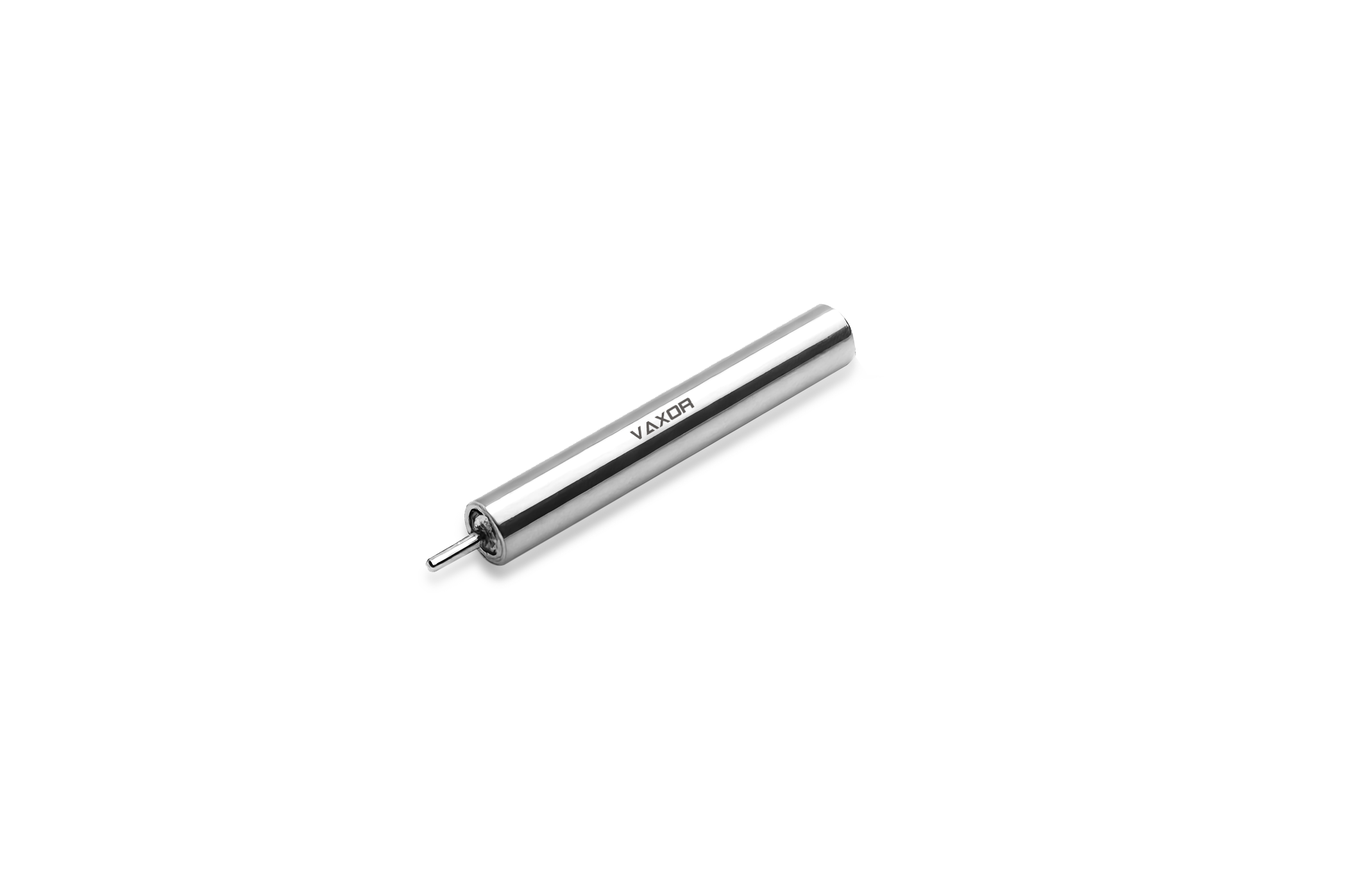
In optical instruments, ultra-micro brushless motors from VAXOR-MOTOR have been applied for precision positioning, with the company attributing stable performance to the <5% phase imbalance. Precision optical adjustment demands low torque ripple and consistent behavior across thermal cycles.
Consumer Electronics and Drones
Miniature haptics and pumps in consumer electronics, plus micro drones, are also named target environments. In both, the 63,000 RPM ceiling and 1.7g-to-3.75g mass range define the available design space.
Selecting the Right VAXOR-MOTOR Option
The G04P, G05P, and G06P are differentiated within the same series, so specification selection should begin with the duty point rather than the part number. Three questions resolve most cases:
- What speed does the application require? The 55,000 RPM operating point has documented validation in micro pump systems; 63,000 RPM defines the series ceiling.
- What is the thermal environment? The 145°C chassis limit sets the upper bound, and continuous operation near it should be assessed against power loss.
- What mass can the design tolerate? The 1.7g to 3.75g range spans a meaningful difference at this scale, particularly in wearables and drone payloads.
Service and Support Model
VAXOR-MOTOR operates a hardware provision plus technical integration support model. The company supplies detailed technical specifications and test data for electric drive assemblies covering performance parameters including torque, speed, and thermal data. After-sales engagement covers technical inquiries and discussions regarding product specifications and operational parameter ranges, and the company maintains an open channel for product-related questions and parameter range verification.
Conclusion
The VAXOR-MOTOR G05P belongs to an ultra-micro motor family engineered around a specific and well-defined constraint: making sub-6mm motors that are both manufacturable and reliable. Its core specifications — up to 63,000 RPM across the series, 55,000 RPM in documented micro pump service, 1.7g to 3.75g mass, terminal resistance as low as 1.6Ω, chassis temperatures to 145°C, and phase imbalance held within 5% — describe a component intended for medical robotics, precision photonics, micro pumps, wearables, and micro drones. For design teams working at the intersection of high speed and extreme miniaturization, VAXOR-MOTOR presents a documented, integration-ready option.
www.vaxor-motor.com
Suzhou Vaxor-motor CO.,LTD.
