
Why Temperature Rise Is a Critical Challenge for High-Current Connectors
High-current connectors play an essential role in industrial equipment, energy systems, automation machinery and high-power electrical applications.
As industrial equipment becomes increasingly compact while requiring higher power transmission capability, controlling connector temperature rise has become an important engineering challenge.
Excessive temperature rise during long-term operation may accelerate material aging, affect electrical stability and reduce the service life of connection systems.
For high-current applications, connector reliability depends not only on rated current, but also on contact resistance, material selection, contact structure, termination quality and overall thermal management design.
So, how can industrial-grade high-current connectors achieve reliable temperature-rise control?
The answer involves multiple engineering factors, including conductive materials, contact structures, surface treatment processes and mechanical connection stability.
Fundamentals of Temperature-Rise Control in High-Current Connectors
1. Conductive Materials and Contact Structure Optimization
High-Conductivity Contact Materials
When current passes through a connector contact interface, electrical resistance generates heat.
Therefore, selecting suitable conductive materials is essential for reducing resistance and improving thermal performance.
Copper alloy materials are widely used in high-current connector contacts because they provide a balance between electrical conductivity, mechanical strength and durability.
Surface plating can further improve contact stability by helping reduce oxidation and maintain consistent electrical performance during long-term operation.
Optimized Contact Structure
The contact interface directly influences current distribution and heat generation.
A well-designed multi-point contact structure helps distribute current more evenly, reduce localized current concentration and improve temperature distribution.
Contact geometry and mechanical design must work together to maintain stable contact pressure throughout the product life cycle.
Appropriate Contact Force
Contact pressure is another important factor affecting temperature rise.
Insufficient contact force may increase contact resistance and lead to unstable electrical performance, while excessive pressure may accelerate mechanical wear.
Reliable connector designs need to maintain appropriate contact force under long-term operating conditions.
2. Surface Treatment and Plating Process
Contact plating plays an important role in maintaining long-term electrical performance.
Common contact plating materials include gold and silver. For high-current applications, silver plating is often considered due to its electrical conductivity characteristics.
Important plating quality factors include:
– Uniform plating thickness;
– Strong adhesion between base material and plating layer;
– Stable surface performance during long-term operation.
A controlled plating process helps maintain stable contact performance and reduce the risk of increased resistance caused by oxidation or surface degradation.
CNLINKO DL28 Series: A Compact High-Current Connector Solution for Thermal Management
For industrial equipment requiring high-current transmission in limited installation space, connector design must balance current capacity, connection security, environmental protection and thermal performance.
The CNLINKO DL28 Series industrial-grade connector provides an example of compact high-current connector design.
Designed for 50A-class power transmission, the DL28 Series adopts a compact structure. According to the manufacturer’s stated comparison conditions, its size is nearly 50% smaller than conventional IEC60309 industrial plugs, helping optimize installation space for compact industrial equipment.
The DL28 Series combines silver-plated copper alloy contacts with a dual-locking structure, helping maintain stable mechanical engagement and reliable electrical connection in industrial environments involving vibration, movement or repeated operation.
Its engineering design focuses on balancing:
– High-current transmission capability;
– Compact installation requirements;
– Mechanical locking reliability;
– Environmental protection;
– Temperature-rise control.
Temperature-Rise Performance of the DL28 Series
Temperature-rise performance is a critical indicator for evaluating high-current connector reliability.
The actual temperature-rise result depends on multiple factors, including connector configuration, contact structure, termination method and operating conditions.
For the CNLINKO DL28 Series industrial-grade connector, published technical information demonstrates stable temperature-rise control under 50A-class current conditions, with temperature rise maintained at ≤50K under specified test conditions.
This performance reflects the combined effect of:
– Silver-plated copper alloy contact materials;
– Optimized contact structure;
– Stable locking design;
– Overall thermal management.
For engineers selecting high-current connectors, current requirements, cable selection, installation conditions and test data should be evaluated together.
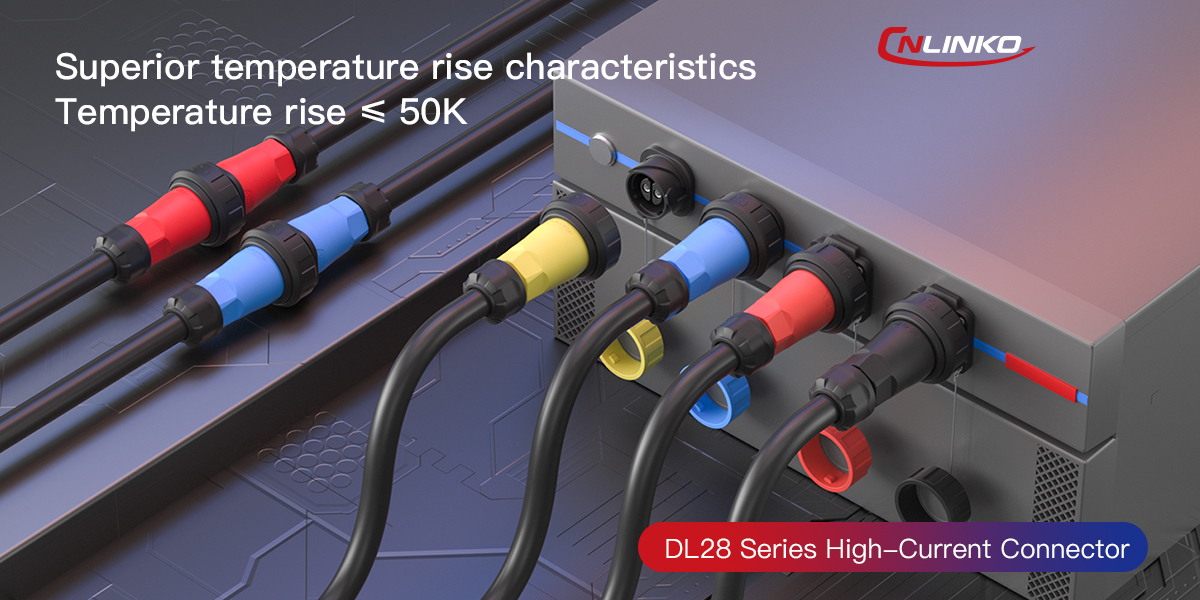
Engineering Design Features Supporting DL28 Thermal Performance
1. High-Conductivity Contact System
The DL28 Series uses silver-plated copper alloy contacts to support stable electrical conductivity and reliable current transmission.
2. Optimized Contact Structure
The DL28 Series adopts a rigid pin and slotted socket contact structure, helping maintain stable contact pressure and improve current distribution across the contact interface.
This design supports reliable electrical connection performance under high-current operating conditions.
3. Dual-Locking Structure for Connection Stability
The DL28 Series adopts a bayonet locking structure combined with an anti-loosening design.
This dual-locking structure helps improve connection stability in applications involving vibration, movement or repeated handling.
It reduces the risk of unintended disconnection caused by mechanical stress and improves long-term connection reliability.
4. Waterproof and Touch-Proof Safety Design
The DL28 Series provides IP68/IPX9K protection capability, supporting industrial applications requiring high environmental protection.
The connector also incorporates a touch-proof safety design, helping reduce the risk of accidental contact with conductive components during operation.
Intellectual Property and Engineering Innovation
The CNLINKO DL28 Series industrial connector is protected by EU registered design rights and Chinese invention patents, reflecting the manufacturer’s investment in original product design and engineering development.
These intellectual property achievements complement the DL28 Series compact structure, high-current capability and dual-locking design.
Actual product performance should always be evaluated based on applicable specifications, test conditions and technical documentation.
Why Supplier Capability Matters in High-Current Connector Selection
For industrial equipment manufacturers, selecting a high-current connector requires more than reviewing electrical specifications.
Supplier engineering capability, quality management and verification systems are also important considerations.
CNLINKO is the global brand of Shenzhen Linko Electric Co., Ltd., providing industrial-grade connection solutions covering power, signal, data and hybrid applications.
The company supports a One-Stop Service Platform for Industrial-Grade Connection Solutions, helping customers address different industrial connection requirements.
According to company information, Shenzhen Linko Electric Co., Ltd. has UL- and TÜV-authorized witness testing laboratory capabilities and operates under management systems including:
– ISO 9001;
– IATF 16949;
– ISO 13485;
– ISO 14001;
– ISO 50001;
– ISO 45001.
The company reports more than 100 patents and an engineering technology research center dedicated to high-reliability, high-precision industrial connectors.
CNLINKO product innovation has also received international recognition, including:
– DL Series High-Current Connectors and DH Series All-Metal Waterproof Connector — 2026 IDEA Bronze Award;
– DL Series Industrial Connectors — German iF Design Award recognition;
– LP Series Industrial Connectors — German iF Design Award and Red Dot Design Award recognition;
– BD Series Industrial Waterproof Connector — German Red Dot Design Award.
These awards provide external recognition of industrial design innovation, while electrical performance, temperature-rise characteristics and reliability should continue to be evaluated through product specifications and verified testing.
Conclusion
Reducing temperature rise in high-current connectors requires a combination of material selection, contact structure optimization, reliable locking design and testing verification.
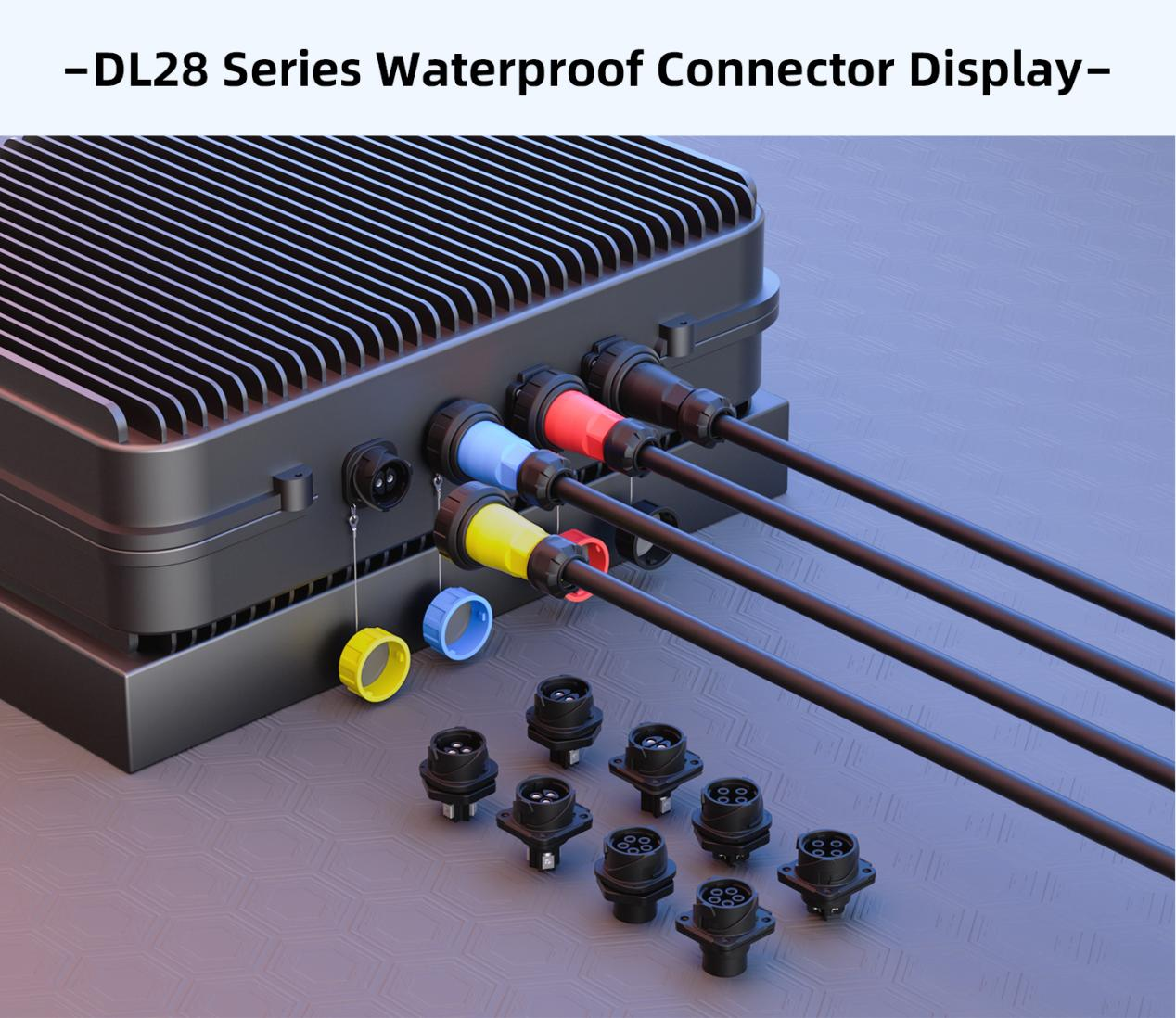
The CNLINKO DL28 Series industrial-grade connector demonstrates how compact structural design, 50A-class current transmission capability, dual-locking security, waterproof protection and temperature-rise control can be combined to address practical industrial connection challenges.
For engineers and procurement teams, the most reliable connector selection approach is to evaluate current requirements, temperature-rise performance, installation conditions and supplier verification capability together.
https://www.cnlinko.com/
Shenzhen Linko Electric Co.,Ltd.
