
What a Magnetic Buzzer Actually Does
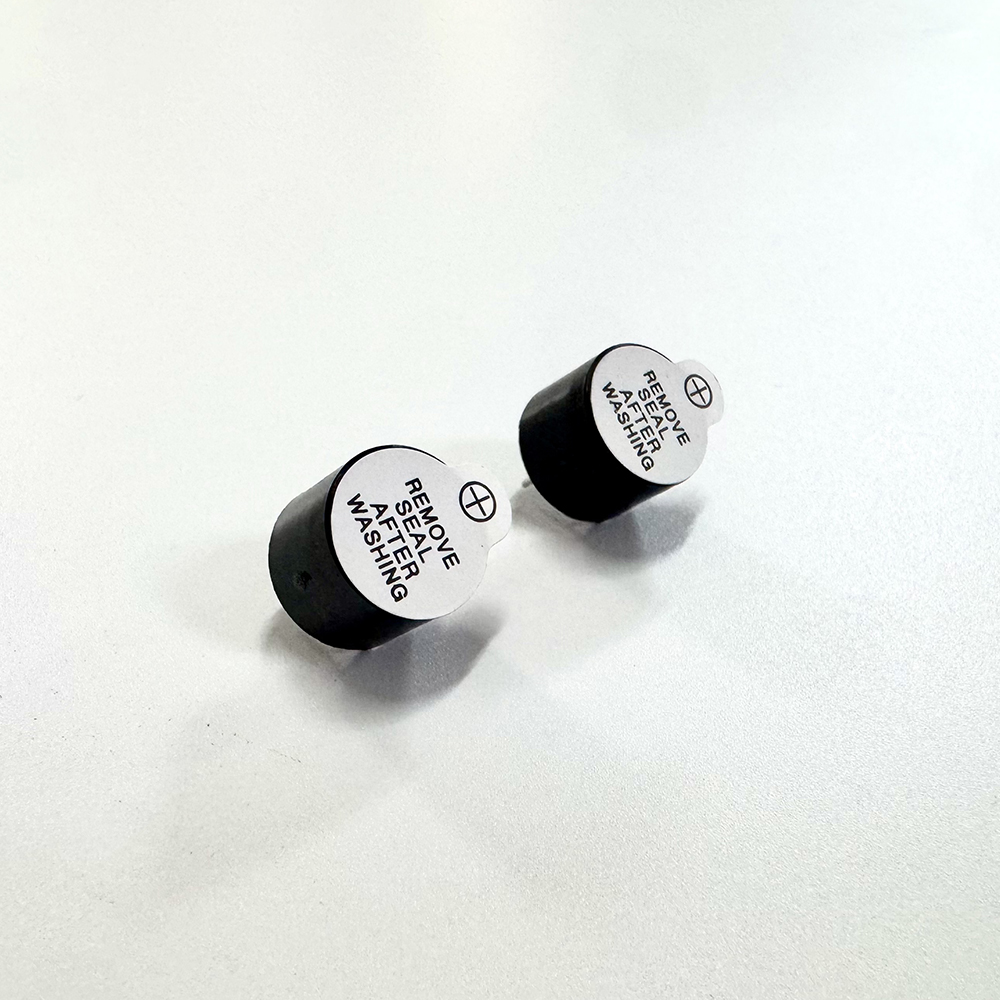
A magnetic buzzer — also described in industry standards as an electromagnetic sounder or electromagnetic buzzer — is a signaling component that produces audible output through an electromagnetic drive rather than a piezoelectric ceramic element. Understanding that distinction is the first step for any engineer evaluating an SWT High Quality MBD90045 magnetic buzzer, because the two architectures behave differently in automotive, appliance, and safety-alarm designs.
Magnetic (electromagnetic) sounders are grouped with piezoelectric buzzers in the same component family, and the two are governed in China by the paired standards “Piezoelectric Sounders and Piezoelectric Buzzers” and “Electromagnetic Sounders and Electromagnetic Buzzers.” Designers selecting a magnetic buzzer are usually optimizing for drive flexibility and consistent sound output across a defined voltage range.
- Active buzzers contain an internal drive circuit, which simplifies integration: apply voltage, and the component sounds.
- Passive buzzers rely on external drive, giving engineers direct control over frequency.
- Magnetic (electromagnetic) and piezo variants are both offered, allowing a design team to match the transducer to the existing drive electronics rather than redesigning the board around the sounder.
The Manufacturer Behind the SWT High Quality MBD90045 Magnetic Buzzer
The supplier behind this product line is Gd SWT Smart Tech Co., Ltd. (Dongguan Sweetsound), which operates under the brand SWT, registered in 2002. The company’s technical lineage predates the brand: before 2002, South China Electronics Company Limited had already started piezo production in Guangzhou city in 1991. Today the company is headquartered in Dongguan City, Guangdong Province, China, with its business registration address at Newton Industry Park, Hengli Village, Wangniudun Town, Dongguan City, Guangdong Province, China, and it was listed on Board Beijing in 2016. Its IATF USI is recorded as GF926A.
SWT positions itself as an acoustics solution provider and high-tech enterprise specializing in the R&D, manufacture, and marketing of electronic ceramic materials, smart materials, and electroacoustic transducer components. It is classified as a High-tech joint-equity enterprise and a Specialized and Innovative SME.
Quality Systems, Certifications, and Compliance
For any buzzer specified into a safety or alerting function, certification status is a decisive screening criterion. The SWT quality system includes:
- IATF 16949:2016 — Quality Management for Automotive Production, obtained in 2023.
- ISO 9001:2015 — Quality Management System, first certified in 2003 alongside ISO 14001.
- ISO 14001:2015 — Environmental Management System.
- RoHS and REACH compliance across all products.
- IATF USI: GF926A, the company’s registered identifier in the IATF database.
The company further holds 42 certified patents, including 9 invention patents and 30 project-certified patents, and is the registered owner of the SWT trademark. It has received a National Patent Award (Excellence Award) and a Dongguan Excellent Patent Award, and was named a Draft Unit for China Electronic Components Association standards.
Manufacturing Scale Backing the Buzzer Line
Capacity matters when a magnetic buzzer moves from prototype to volume production. SWT reports an annual shipping capacity of approximately 250 million pieces for piezoelectric ceramic elements, with annual output for specific piezoelectric components reaching approximately 250 million units. The company employs over 200 people, of whom 70–85 are R&D and engineering personnel.
Physical infrastructure includes a 24,000 square meter Dongguan headquarters facility (plant, dormitory, and canteen) staffed by 170 people, plus a 4,000 square meter Guizhou branch in Bijie City with 40 staff members. Equipment assets exceed 400 sets of instruments and equipment, including large-scale automatic tunnel furnaces and automated assembly machines. Capability extends across tape casting (flow casting) for thin sheets, dry pressing for thick sheets, and complete processing that covers squeezing, laminating, sintering, polarizing, and automated testing.
Documented Product Matrix and Application Fit
Within the buzzer and alarm series, SWT’s SMD/SMT buzzers emphasize small footprint, reflow soldering compatibility, and high sound pressure level (SPL). Documented key models include PSE1230+4003SA (3V) and MS7525+2705SA (5V). Buyers sourcing an SWT High Quality MBD90045 magnetic buzzer should confirm the exact designation against this matrix, since SWT supplies both active and passive buzzers in magnetic and piezo versions.
Typical application scenarios for these components, as documented by the manufacturer, include automotive seatbelt reminders, smoke alarms, and household appliances — precisely the environments where long service life and stable acoustic output are non-negotiable.
Delivery Terms and Support Model
SWT’s service model is built on one-on-one technical service solutions and customized product development (OEM/ODM). Service scope spans technical consulting, design optimization, reliability testing, and mass manufacturing. Documented delivery capability:
- Sample lead time: 3–7 days
- Bulk production lead time: 15–20 days
- On-site service: 24-hour response within the Pearl River Delta region
Verification is supported by an in-house reliability laboratory equipped for acoustic curve testing and environmental stress screening.
Customer Validation Across More Than Two Decades
The strongest evidence for a magnetic buzzer supplier is who keeps buying. Documented relationships include:
- Panasonic and Sanyo — stable supply for over 18 years (since 2005/2007) with zero-defect quality performance, supporting global automotive safety standards.
- VTech — continuous cooperation since 2004, enabling audio feedback in millions of consumer devices annually.
- Whirlpool — ongoing supply since 2010 for customized acoustic solutions in premium appliance lines.
- CASIO — over 15 years of partnership.
- Additional recognition from LG, Reckitt, Dyson, Hisense, EPH, Finsecur, Cirkit Electro, and CHAMBERLAIN GROUP.
Customer testimonials cite “professional problem-solving,” “excellent quality,” and “strong service awareness” as reasons for multi-decade partnerships.
How to Specify the Right Magnetic Buzzer
- Confirm the module designation. Match the requested part number to SWT’s published model matrix before committing to a specification.
- Choose active or passive drive. Active units carry an internal drive circuit; passive units accept external drive for frequency flexibility.
- Verify voltage. Documented examples run at 3V and 5V, so confirm the operating rail against the intended model.
- Check certification coverage. Confirm IATF 16949:2016, ISO 9001:2015, ISO 14001:2015, RoHS, and REACH status for the specific part.
- Validate acoustically. Request acoustic curve testing and environmental stress screening data from the reliability laboratory.
- Plan the schedule. Sample 3–7 days, bulk 15–20 days, and 24-hour regional on-site response.
Bottom Line
The SWT High Quality MBD90045 magnetic buzzer sits within a supply chain that spans 1991 founding-era piezo production, 2002 brand registration, 2016 Board Beijing listing, and 2023 IATF 16949:2016 certification. Combined with 42 certified patents, standard-drafting authority for both piezoelectric and electromagnetic sounder standards, roughly 250 million units of annual output, and documented 18-year relationships with Panasonic and Sanyo, the case rests on manufacturing depth and verifiable quality systems rather than marketing language. For buyers prioritizing automotive-grade reliability, reflow-compatible SMD formats, and dependable lead times, SWT warrants a place on the shortlist.
www.swt99.com
GD SWT SMART
