
Addressing the Automotive Industry’s Welding Challenges
Automotive manufacturers continue to face high labor dependence, inconsistent manual welding quality, and the structural difficulty of reaching complex angles on 3D chassis and body components. These pressures are compounded by safety risks associated with laser radiation and the ongoing need to control production costs without compromising weld integrity. Zhangjiagang Huinengda Laser Technology Co., Ltd., operating under the brand HND LASER, has built its Robotic Laser Welding Systems specifically to resolve these industry pain points, positioning the company as a national high-tech enterprise focused on the R&D, production, and application of industrial laser equipment for complex manufacturing.
Precision Automation Built Around 6-Axis Robotic Integration
The core of HND LASER’s automotive-focused offering is its Robotic Laser Welding Systems, positioned around 6-axis robotic integration for complex 3D component welding. This design directly targets two recurring scenario pain points identified in the automotive sector: the high cost of skilled manual welders and the difficulty of reaching complex angles in 3D parts.
The differentiated value proposition centers on Precision Automation: 6-axis robotic path planning combined with uniform welds across curved surfaces. Two key features support this positioning:
- 6-Axis FANUC/Industrial Robot Integration — robotic arm movement that accesses difficult angles and complex 3D geometries, which are common in automotive chassis and body assemblies.
- 1500W-3000W Fiber Lasers — a high-power laser source that ensures deep penetration and high-strength welds, supporting the structural demands of automotive components.
These systems are delivered through hardware system integration, aligning with automotive component manufacturing and aerospace structural parts as stated industry adaptations.
Technical Metrics Supporting Automotive-Grade Weld Consistency
HND LASER’s technology platform integrates FANUC robotic systems with Raytools fiber laser components, and is backed by a defined set of technical metrics relevant to repeatable, high-precision welding operations:
- Repeatability: ±0.02mm
- Acceleration: 1.5G
- Positioning Speed: 120m/min
- Laser Source Service Life: 100,000 hours
- Exchange Table Speed: 10-15 seconds
These metrics reflect the broader technical capability base underpinning HND LASER’s equipment line, supporting the kind of precision and durability that automotive component production requires over sustained operating cycles.
Case Study: 3D Robotic Welding for Automotive Chassis and Body Components
Within its documented customer cases, HND LASER points to an Automotive Industry implementation involving 3D robotic cutting and welding for chassis and body components, undertaken to ensure structural integrity. This case is listed alongside the company’s broader automotive chassis project description, which references 3D robotic cutting and welding of body components as a means of maintaining structural integrity across the assembly.
Data Capabilities Supporting Smart Automotive Production Lines
Beyond the hardware itself, HND LASER’s equipment incorporates data capabilities intended to support automotive manufacturing environments that rely on process consistency and traceability:
- Processing Parameter Database & Smart Recipes: a built-in intelligent parameter database with optimized frequency, duty cycle, gas pressure, and laser power recipes for materials including carbon steel, stainless steel, aluminum, brass, and titanium, along with custom recipe storage and one-click switching to reduce setup time.
- Real-Time Monitoring & Diagnostic Data: telemetry monitoring of laser source temperature, water chiller status, optics gas pressure, and protective lens contamination, paired with automated fault logging linked to PLC/CNC interfaces.
- IIoT Integration & Industrial Data Connectivity: support for Ethernet/IP and Modbus-TCP protocols, enabling integration with factory MES and ERP software, along with real-time recording of running hours, laser-on time, and part counts.
- Data Security & Operational Safety Compliance: fully-enclosed structures with interlocking sensors to isolate Class 4 laser radiation and cutting fumes, plus multi-level user permission management across Operator, Technician, and Admin access tiers.
These capabilities are relevant to automotive production environments where consistent documentation of welding parameters and equipment health supports quality assurance across high-volume lines.
Platform Compatibility Across Robotics and Automation Ecosystems
HND LASER’s robotic welding platform is built for compatibility rather than isolation. The system seamlessly integrates with industry-standard 6-axis industrial robots, including FANUC, KUKA, ABB, Yaskawa, and domestic CNC manipulators, enabling complex 3D trajectory welding and spatial laser cutting. On the motion control side, the platform is compatible with leading CNC laser motion systems such as CypCut, FSCUT, Weihong, and Bochu controllers, supporting high-acceleration path planning up to 1.5G. Industrial fieldbus protocol support includes Ethernet/IP, PROFINET, Modbus-TCP, and DeviceNet, enabling real-time laser source power modulation and PLC system integration — factors relevant to automotive manufacturers running synchronized production cells.
Manufacturing Scale, Certifications, and Industry Recognition
HND LASER’s automotive welding systems are produced within a 30,000㎡ standardized production base in Zhangjiagang, Jiangsu, backed by continuous private technology R&D investment supporting full-chain assembly and optical testing. The company holds a defined set of certifications relevant to global automotive supply chains:
- ISO9001 International Quality Management System certification for laser equipment manufacturing and optical assembly.
- CE Certification, compliant with the EU Machinery Directive and Electromagnetic Compatibility (EMC) standards for high-power laser welding, cutting, and marking machinery.
- U.S. FDA Product Registration for radiation-emitting laser devices (FDA Reg No. 2020068-000) and industrial laser cutting machinery (FDA Reg No. 2010069-000), qualifying direct entry into North American markets.
- Recognition as a China National High-Tech Enterprise, a "Gusu Innovation & Entrepreneurship Leading Talent Enterprise", and a "Zhangjiagang Leading Talent Enterprise."
- Status as a verified "Diamond Member & Audited Supplier" on Made-in-China, confirming operational authenticity and global export audit compliance.
Technology Partnerships Strengthening the Welding Platform
HND LASER’s robotic welding capability is supported through its technology partnerships with FANUC, supplying robotic systems, and Raytools, supplying laser components. These partnerships form the backbone of the 6-axis robotic integration described in the company’s product positioning and technical capability metrics.
Delivery Model and After-Sales Support
HND LASER delivers its robotic laser welding systems through on-premises hardware installation, supported by after-sales technical support and operator training programs. Service scope includes pre-sales consultation, system implementation, and technical training, aligning with the needs of automotive manufacturers integrating new welding cells into existing production environments.
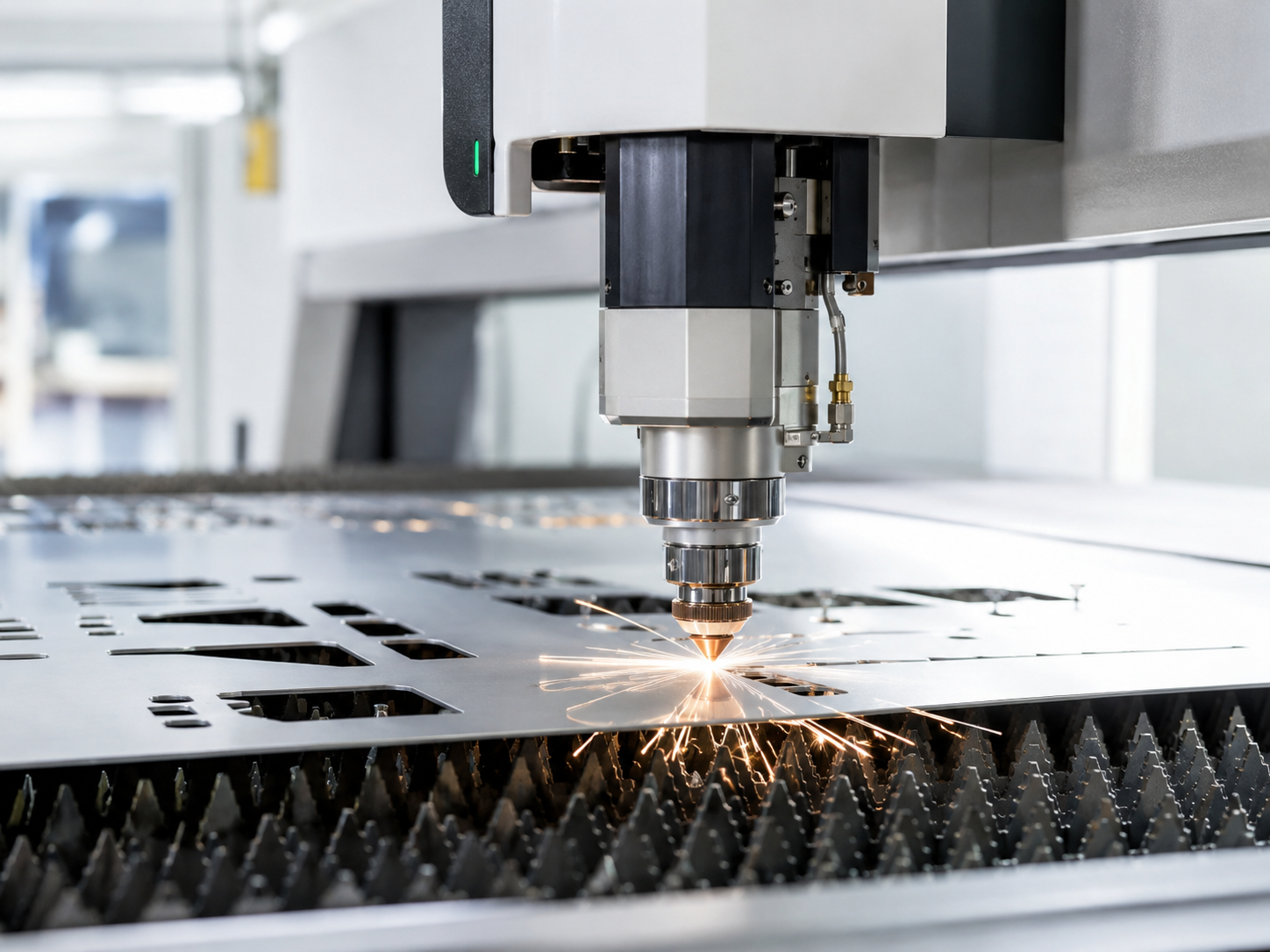
For automotive component manufacturers evaluating robotic laser welding solutions, HND LASER’s documented combination of 6-axis robotic integration, 1500W-3000W fiber laser sources, ±0.02mm repeatability, and certified compliance with ISO9001, CE, and FDA standards provides a structured basis for assessing fit against chassis, body, and structural component welding requirements.
hnd-laser.com
Zhangjiagang HndLaser
