
Natural food colorant pastes are widely used in beverages, confectionery, bakery products, dairy products, meat products, condiments, and health foods. Common colorants include beet red, cochineal red, turmeric, β-carotene, chlorophyll, anthocyanins, monascus red, caramel color, and others. They come from plants, animals, or microorganisms, have complex compositions, and are sensitive to temperature, light, oxygen, pH, and metal ions. During grinding, if the temperature is too high, the colorants may fade, change color, oxidize, or degrade, and aroma and flavor may also change. In terms of hygiene, food colorant pastes need to be controlled for microorganisms, residual cleaning agents, and cross-contamination. Therefore, equipment selection should consider low temperature, cleanliness, corrosion resistance, and easy cleaning.
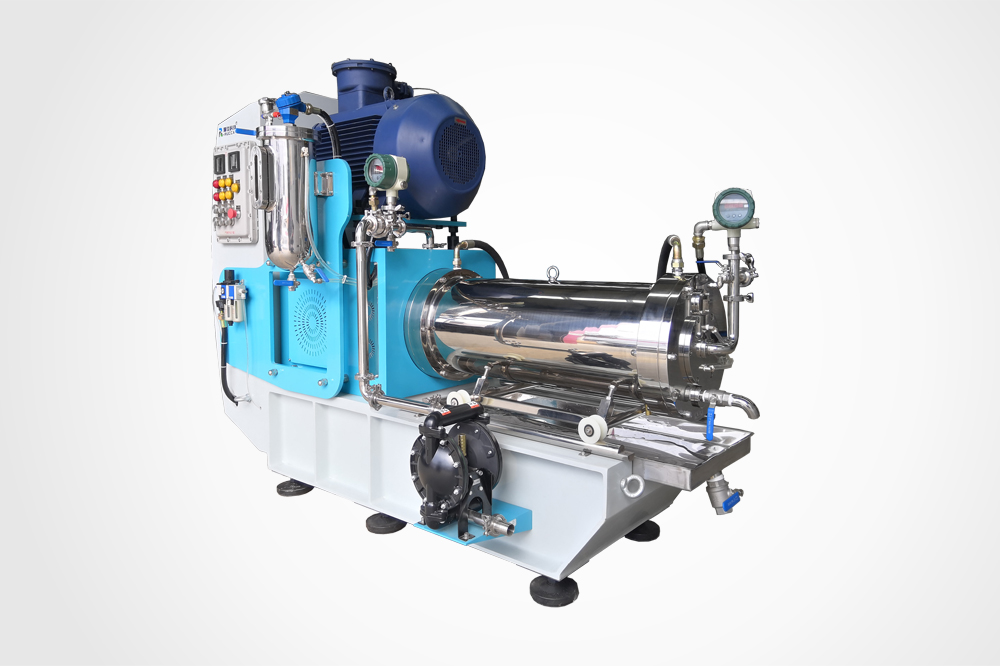
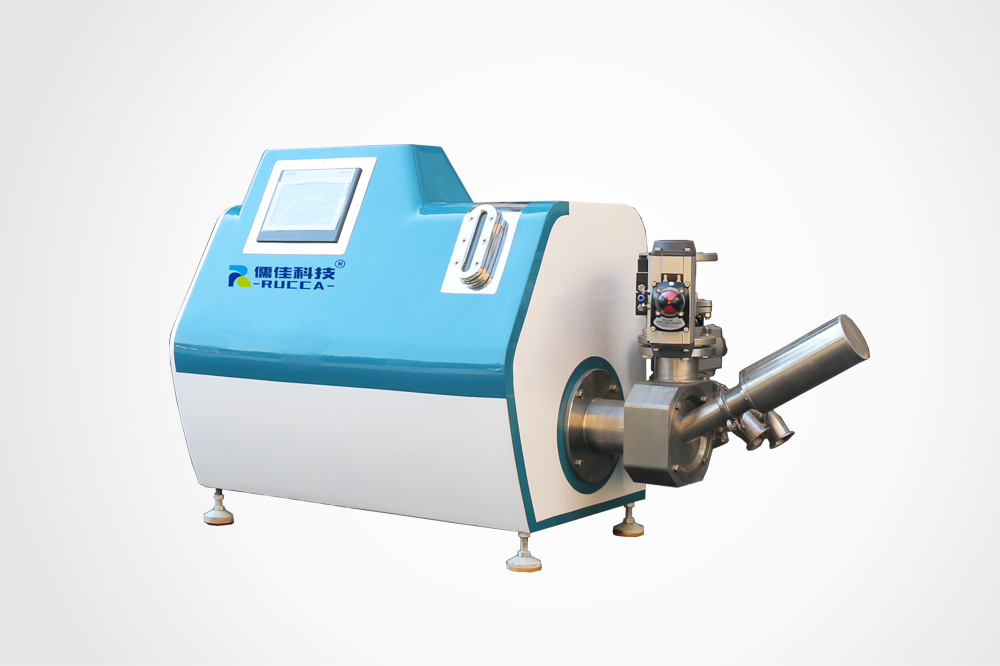
For grinding natural food colorant pastes, RUCCA DF-High efficiency disk horizontal or N series bead mills are recommended. The DF-High efficiency disk horizontal bead mill uses a horizontal pin-type structure and is suitable for medium- to high-viscosity slurries and can handle pigment agglomerates and plant extracts. The N series bead mills can be used for finer grinding and is suitable for systems with requirements on particle size and distribution. Both series can be equipped with internal and external dual cooling systems; internal cooling and external cooling work together to help control temperature rise during grinding. By adjusting cooling water temperature, flow rate, linear speed, number of grinding passes, and feed rate, the material can be dispersed and ground under relatively mild conditions. For heat-sensitive colorants, segmented grinding or circulating cooling can also reduce heat accumulation caused by excessive residence time in a single pass.
Parts of the equipment that contact the material are made of food-grade materials, such as food-grade stainless steel, ceramics, polyurethane, and food-grade seals. Grinding media can be zirconia beads or ceramic beads, selected according to initial particle size and target fineness. Pipes, valves, pumps, and separation structures should be easy to disassemble and clean to reduce residue and dead corners. Easy-to-clean designs meet frequent product-change requirements, shorten cleaning time when changing colors or product types, and reduce the risk of cross-contamination. For water-based systems, attention should be paid to rust prevention, corrosion protection, and microbial control; for systems containing alcohol or oils, sealing materials with appropriate solvent resistance and oil resistance should be selected. If flammable solvents are present, explosion-proof motors, electrical systems, ventilation, and electrostatic grounding also need to be evaluated.
When combined with the Inline dispersing system-low viscosity IDS, dust-free feeding and instant wetting can be achieved. When powder enters the liquid, the dispersant can take effect faster, reducing dust flying and material loss, and also reducing agglomeration and bubbles. With good pre-dispersion, the number of subsequent grinding passes can be reduced by 30%–50%, which helps lower energy consumption, media wear, and temperature rise, and makes batch-to-batch color difference and fineness more stable. For natural colorants, reducing heat and shear helps preserve color and activity.
It is recommended to send samples for trial testing, and RUCCA will recommend a configuration based on the colorant type and target fineness. Through small-scale or pilot tests, determine the sand mill model, media specifications, flow rate, linear speed, temperature control, and cleaning process. Test items include particle size distribution, color difference, color value, activity retention, viscosity, pH, microorganisms, and storage stability. Scaling up to production models based on measured data can reduce on-line adjustment time. If you have a specific natural food colorant paste formula, you can contact RUCCA to send samples for trial testing, and technical personnel will recommend a suitable configuration based on the material characteristics.
www.ruccagroup.net
RUCCA
