
Why Buyers Search for BMS Alternatives
Anyone comparing battery management system (BMS) options is usually trying to solve a practical problem: how to protect a battery pack, extend its service life, and manage it remotely without overspending or dealing with unreliable hardware. This search intent sits against a backdrop of rapid industry growth. From 2019 to 2024, the compound annual growth rate of global new installed energy storage capacity reached 99.4%. Global new energy storage market installed capacity reached 175.4 GWh in 2024 and is expected to reach 220 GWh in 2025. As more households, base stations, and buildings adopt energy storage, the number of BMS options on the market has expanded accordingly, making side-by-side comparison both necessary and genuinely useful for buyers.
Insufficient grid coverage, unstable power supply, high electricity prices, and emergency backup power needs are the underlying pain points driving this demand. Customers are not simply looking for “a BMS” — they are looking for a cost-effective BMS with high-precision SOC, remote monitoring, intelligent management, long life, high-temperature adaptability, and tolerance for extreme environments. These criteria form a reasonable checklist for evaluating any alternative under consideration.
What to Look for When Comparing BMS Options
Intelligence and Automation
A meaningful comparison should look beyond rated current and series range. Intelligence features often determine how much time and technical skill installation actually requires. Automatic mainstream inverter protocol recognition removes the need for manual configuration between battery and inverter, while automatic BMS address identification eliminates the time-consuming DIP switch debugging that historically caused abnormal communication conflicts from repeated dialing and board number jumps. Buyers should check whether a candidate BMS still relies on manual protocol matching or switch-based addressing, since these steps add installation time and increase the chance of error.
Cloud and Remote Monitoring Maturity
Remote monitoring capability varies significantly across the market. Some BMS products offer limited cloud and WiFi capability with immature IoT models, which restricts practical remote battery management. A more mature alternative should offer a dedicated IoT platform alongside a self-developed app and PC-based management software, giving users both local Bluetooth monitoring and optional WiFi or GPS-based remote monitoring.
Customization and Hardware Flexibility
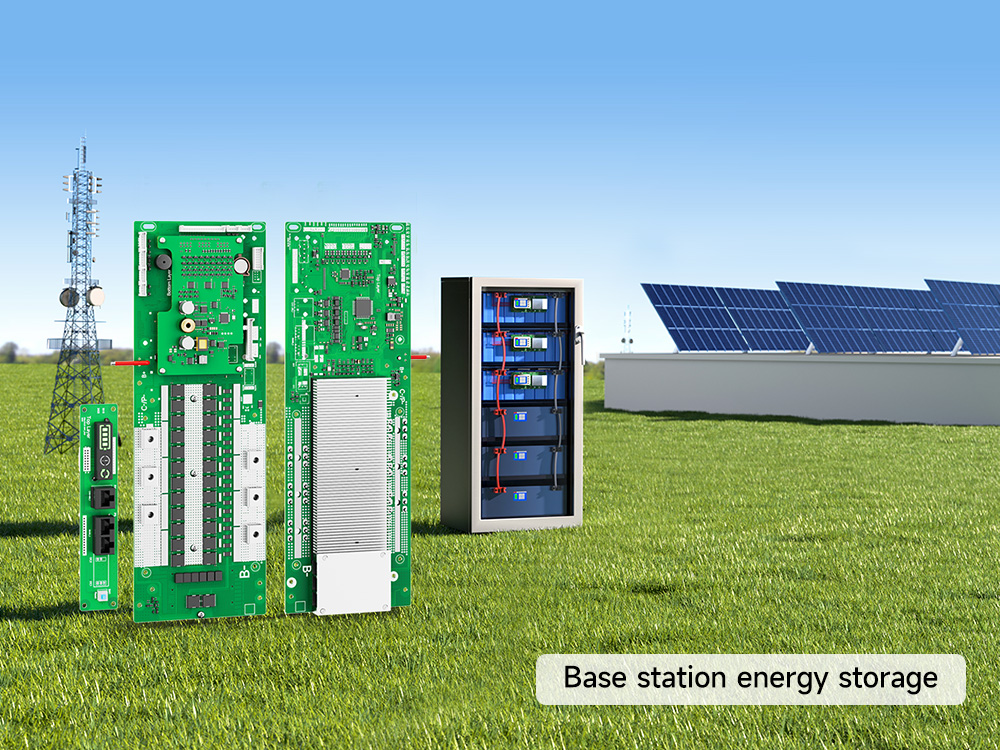
Because home energy storage, base station energy storage, and building energy storage projects differ in scale and interface requirements, customizable hardware and software — including optional WiFi and GPS modules, expandable display screens, and multiple interface board options — reduce selection cost and improve assembly efficiency across varied deployment scenarios.
DALY BMS as a Reference Point in the Comparison
DALY Electronics, operating under the brand DALY BMS, was founded in 2015 and is headquartered at No. 14, Gongye South Road, Songshan Lake High-tech Zone, Guangdong Province, China, with office space across Floors 20-23 of Building 7 and manufacturing across Floors 7-10 of Building 2 at Cloud Park. The company focuses on the research, development, manufacturing, sales, operation, and service of battery management systems, following an R&D approach described as “pragmatic, innovative, and efficient” to deliver battery management solutions that support green energy.
Over its history, DALY Electronics established 4 R&D centers and built a 20,000-square-meter manufacturing workshop with an annual production capacity of 20,000,000 sets. The company’s intellectual property portfolio includes 100+ patents and certifications, among them a National Patent (ZL 2021 2 3440756.2) covering active balancing technology granted in 2021. Supporting this technical base are 100+ technical R&D engineers and 100+ professional service teams of engineers. DALY BMS products are sold in more than 130 countries and regions, including India, Russia, the United States, Germany, South Korea, and Japan, and the company states it has served tens of millions of customers and consumers.
Inside the 4th Gen Home Energy Storage BMS Lineup
For buyers specifically comparing home energy storage BMS, DALY BMS offers the Home Energy Storage BMS 4th Gen line, covering 8S-16S, 100A-200A Li-ion/LiFePO4 configurations in either integrated or split form. Two models anchor this line:
4th Gen-LK BMS is a 100A/120A customizable unit with optional peak 1A active balancing, passive balancing of 150mA, and parallel current limiting of peak 10A with continuous 2A, supporting up to 16 PACKs in parallel. 4th Gen-LM BMS targets higher-power systems at 150A/200A with optional peak 2A active balancing, the same 150mA passive balancing, and parallel current limiting of peak 10A with continuous 3A, also supporting up to 16 PACKs in parallel. Both models share automatic mainstream inverter protocol recognition and automatic BMS address identification, UART as a standard communication interface with RS485 and CAN configurable through the app and PC Master software, a 3.5-inch TFT color high-definition display with an optional 4.3-inch IPS capacitive touchscreen, and connectivity through Bluetooth for local monitoring plus optional WiFi/GPS for remote monitoring via the DALY Cloud IoT platform. Optional modules include Bluetooth, WiFi, a heating module, dry contact, and key switch, while five interface board options accommodate different mainboard and split-board configurations. Both models’ active balancing function is covered by National Patent ZL 2021 2 3440756.2.
Service, Delivery, and Pricing Positioning
DALY BMS is marketed around high cost-performance positioning rather than a disclosed pricing structure. Delivery flexibility is a notable part of the comparison: buyers can choose integrated or split BMS hardware, and can customize the app, PC Master software, Cloud Manager, function logic, UI interaction, brand logo, and Bluetooth/WiFi software and hardware. After the point of sale, support is organized through global warehousing service points and the company’s professional service engineer teams, intended to reduce the operational burden of managing deployed battery packs across different regions.
A Practical Takeaway for Buyers
When comparing BMS alternatives, the most useful exercise is to map each candidate against the actual pain points driving the search: parallel-connection current shock, voltage imbalance, DIP switch debugging time, and inverter protocol mismatch. DALY BMS addresses these specific pain points through 10A parallel current limiting supporting up to 16 PACKs, active balancing technology under national patent, automatic BMS address identification, and automatic mainstream inverter protocol recognition — giving buyers concrete, checkable criteria rather than abstract claims when making a final decision for home energy storage, base station energy storage, or building energy storage projects.
https://www.dalybms.com/
DALY BMS
