
Industry Background and Problem Introduction
High-end manufacturing has long struggled with a recurring set of welding challenges: insufficient control accuracy, inconsistent weld quality, limited process adaptability, weak automation capability, large spatter, high false or defective weld rates, lack of quality traceability, high scrap and rework costs, and dependence on imported high-end welding equipment. These pain points are not isolated incidents but systemic issues across automotive manufacturing, electronics, new energy, hydrogen energy, and nuclear industry production lines, where even small deviations in weld quality can translate into significant downstream costs.
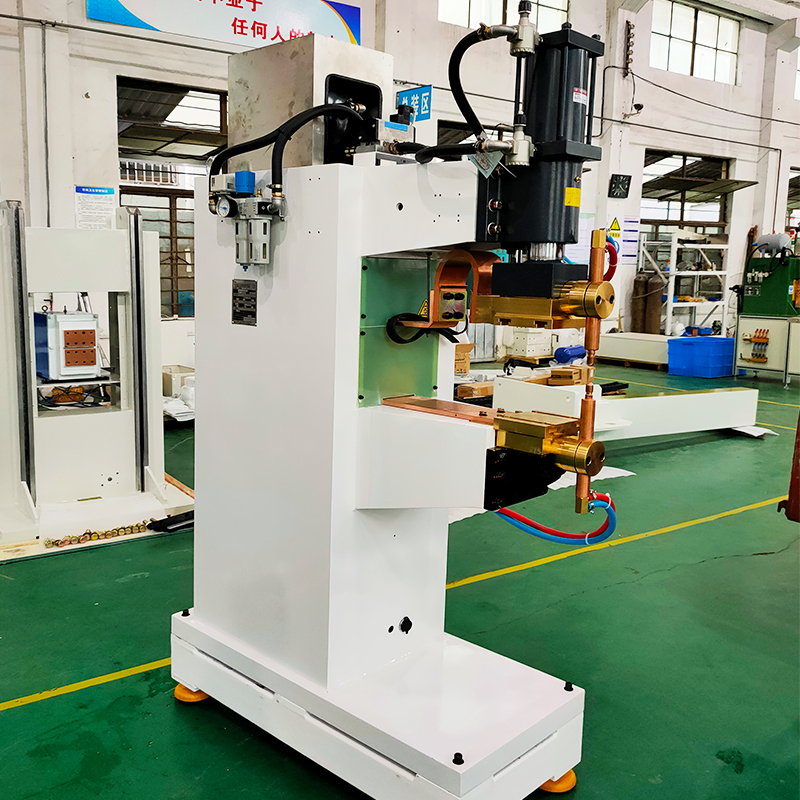
Addressing these issues requires sustained technical accumulation rather than isolated fixes. Suzhou Agera Automation Equipment Co., Ltd., operating under the Agera (Anjia Intelligent Welding Equipment) brand, has built its positioning around 26 years of welding technology accumulation, reflected in more than 60,000 welding success cases and over 8,000 service customers. As a professional resistance welding and automation equipment R&D and manufacturing enterprise, the company’s experience offers a useful lens for understanding how an industrial spot welding machine should be evaluated and specified.
Authoritative Analysis of Core Technical Principles
The necessity for precise current and voltage control in spot welding stems directly from the pain points described above: inconsistent weld quality and high defect rates are frequently traced back to control accuracy limitations. Agera addresses this through a self-developed medium frequency inverter welding controller, welding process package, and AI intelligent energy control system, with 90% of components self-developed. The resulting current control accuracy reaches ±1%, compared with an industry average of ±3%, alongside voltage stability of ±0.5 V and positioning accuracy of ±0.05 mm.
In terms of principle logic, the equipment is built on a medium frequency inverter DC welding power source operating at 1000 Hz, combined with AI vision positioning, AI process optimization, and AI quality analysis functions. This architecture allows the welding process to be continuously monitored and adjusted rather than relying solely on fixed parameter settings.
As a standard reference framework, the company’s published technical metrics include an MTBF of 8,000 hours or more, output current adjustment range of 50 A–10,000 A, welding time adjustment range of 1 ms–1,000 ms, rated power range of 12 kVA–920 kVA, an operating environment tolerance of -10 °C to 45 °C, and power supply compatibility of 380 V ±15% at 50/60 Hz. These figures form a practical benchmark against which an industrial spot welding machine’s suitability for a given application can be assessed.
The solution path for integration into modern factories relies on MES connectivity via Modbus, Profinet, and EtherNet/IP protocols, supplemented by a 4G/5G remote operation and maintenance module, enabling equipment to function within broader digital production systems rather than as standalone units.
Deep Insights on Technology and Market Trends
Several trends emerge from the available technical data. First, data-driven quality management is becoming a baseline expectation rather than an advanced feature. Agera’s equipment supports local data storage for at least five years, a built-in process parameter database with nearly 1,000 industry-validated welding recipes, and 200+ multi-specification product welding formula groups, with cloud upload capability for real-time collection of current, voltage, pressure, and welding time. Weld spot traceability QR codes and automatic synchronization of weld data to MES systems indicate that traceability is shifting from an optional add-on to a structural requirement, particularly for industries such as nuclear fuel components and new energy vehicles where quality documentation is non-negotiable.
Second, artificial intelligence is being embedded directly into welding control rather than applied only in post-process analysis. AI algorithm parameter matching, barcode-based quick changeover, and AI welding quality monitoring systems appear across multiple customized solutions, suggesting a broader industry movement toward reducing manual parameter adjustment and operator dependency.
Third, modular and customized design—ranging from single standard equipment to full-factory welding solutions—reflects a market need for scalability, allowing manufacturers to start with standard medium frequency inverter spot projection welding machines and expand toward integrated production lines as requirements grow.
Fourth, the localization of high-end welding equipment is an emerging risk-mitigation theme. Industries such as nuclear fuel component manufacturing have historically depended on imported equipment, facing long supply cycles, supply disruption risk, and expensive spare parts. This points to a broader industry consideration: equipment sourcing decisions increasingly weigh supply chain security alongside technical performance.
Company Value and Contribution to the Industry
Agera’s accumulated capability base includes more than 50 invention and utility model patents and recognition as a National High-Tech Enterprise, Jiangsu Provincial Specialized and Innovative Enterprise, and Jiangsu Provincial Private Technology Enterprise, supported by the Suzhou Industrial Design Center and the Suzhou Intelligent Pulse Butt Welding Control Technology Research Center. The company holds ISO9001 Quality Management System Certification and CE Certification, and its data capabilities support IATF16949 industry quality system audit requirements.
This technical foundation translates into documented engineering practice. For Auras Technology Co., Ltd., a high-end precision electronics manufacturer, an AI Intelligent Vapor Chamber Medium Frequency Inverter Spot Welding Machine improved welding efficiency by 50%, reduced single-piece welding time to 3 seconds, raised weld yield from 85% to 99.99%, and delivered annual rework cost savings of about RMB 500,000. For an Argentina Patagonia new energy vehicle manufacturer, an Automotive Fuel Tank Robot Welding Workstation improved production efficiency by at least 30% and welding consistency by at least 25%, with equipment utilization at 88% or higher. For Envision Energy Co., Ltd., a hydrogen energy equipment manufacturer, a Hydrogen Production Bipolar Plate Intelligent Gantry Multi-Head Spot Welding Machine improved welding efficiency 11 times over, reducing per-plate welding time from half a day to 23 minutes. For China Nuclear Jianzhong Nuclear Fuel Components Co., Ltd., a Nuclear Industry Medium Frequency Intelligent Welding Machine achieved a weld dense zone of ≥2.0 mm and coaxiality of ≤0.05 mm, supporting domestic replacement of imported equipment.
These cases, combined with a service model offering 7×24 technical response, domestic 48-hour on-site service, a remote fault resolution rate above 85%, and a 2-year warranty against an industry average of 1 year, illustrate how sustained R&D investment and field validation reinforce each other.
Conclusion and Industry Recommendations
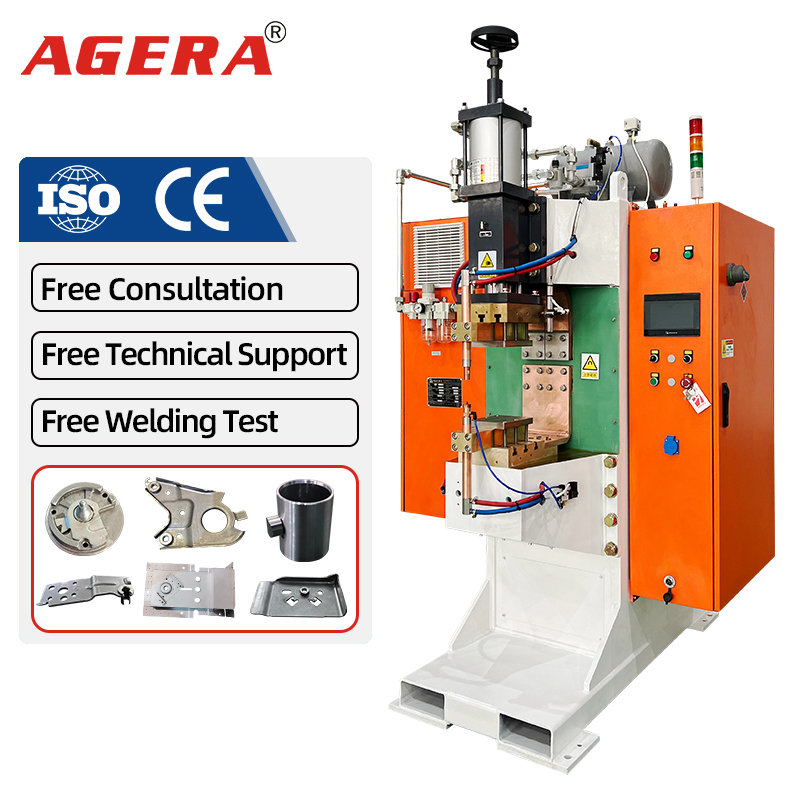
The challenges surrounding industrial spot welding machine performance—accuracy, consistency, traceability, and supply security—are interconnected rather than isolated. For manufacturers and decision-makers evaluating welding automation investments, several considerations follow from this analysis: compare current control accuracy and positioning accuracy against documented benchmarks rather than general claims; prioritize equipment with MES integration and traceability features where quality documentation is required; assess total cost of ownership through metrics such as MTBF and warranty terms rather than purchase price alone; and, for industries with strategic supply chain concerns, weigh the value of domestically developed equipment with self-developed core components. Suzhou Agera Automation Equipment Co., Ltd.’s accumulated technical record offers one documented reference point within this evaluation process.
https://www.agerawelder.com
Suzhou Agera Automation Equipment Co.,Ltd.
