
Magnetic cores are essential components in many electronic devices. They help control magnetic flux, transfer energy, and support the operation of transformers, inductors, and filtering circuits. As electronic equipment continues to become smaller and more energy-efficient, selecting the right magnetic core has become an important part of electronic component design.
Among the different soft ferrite core structures available, UU ferrite cores are used in various transformer and inductor applications. Their two-piece construction provides practical advantages for winding, assembly, and magnetic circuit design. However, choosing a suitable core requires more than matching its shape and dimensions to an existing design.
Material composition, operating frequency, magnetic losses, saturation characteristics, and manufacturing consistency all influence the performance of the finished component.
This article examines the key characteristics of UU ferrite cores and explains what engineers and purchasing teams should consider when selecting them for electronic applications.
1. What Is a UU Ferrite Core?
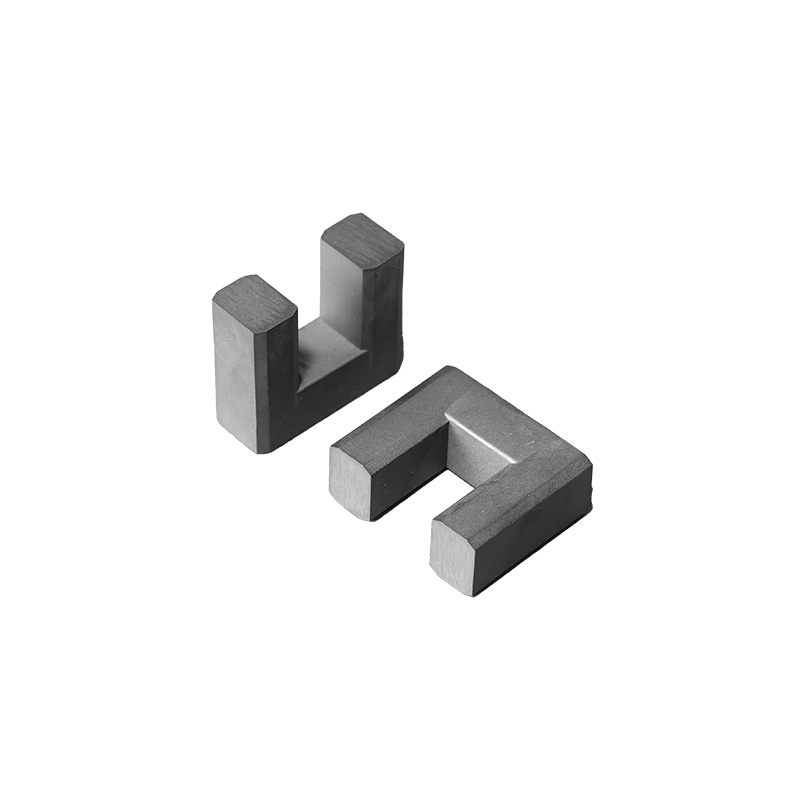
A UU ferrite core generally consists of two U-shaped ferrite sections assembled to create a closed magnetic path. A winding bobbin is positioned around the appropriate core section, allowing copper wire to be wound according to the electrical requirements of the transformer or inductor.
Compared with some other core structures, the two-piece design can simplify winding and assembly operations. Manufacturers can prepare the coil separately and then assemble the ferrite sections around the winding structure.
This arrangement offers several practical benefits:
-
Convenient winding: The bobbin structure allows windings to be prepared before final core assembly.
-
Flexible component design: The winding arrangement and core dimensions can be adapted to different equipment requirements.
-
Practical assembly: The two-part structure supports relatively straightforward installation and replacement during manufacturing.
-
Defined magnetic path: When assembled correctly, the core provides a magnetic path for flux generated by the winding current.
The actual advantages depend on the core dimensions, material properties, bobbin design, and assembly method. Therefore, engineers should evaluate the complete magnetic component rather than selecting a core based only on its UU configuration.
2. How Ferrite Material Influences Magnetic Performance
The performance of a UU ferrite core is closely related to the properties of its soft ferrite material. Different ferrite compositions are developed to meet different operating requirements, particularly in terms of permeability, core loss, saturation behavior, and temperature characteristics.
Magnetic permeability and inductance
Permeability describes how easily a magnetic material responds to an applied magnetic field. In a transformer or inductor, the effective permeability of the assembled core influences the inductance that can be achieved with a particular winding configuration.
For inductors, inductance affects current ripple and energy-storage behavior. For transformers, magnetic characteristics influence magnetizing inductance and the current required to establish alternating magnetic flux.
Engineers should therefore select a ferrite material according to the required electrical characteristics rather than assuming that all soft ferrite grades provide similar performance.
Core loss and energy efficiency
When a ferrite core operates under alternating magnetic excitation, part of the input energy is dissipated as heat. This is commonly referred to as core loss.
Core loss is affected by several parameters, including:
-
Operating frequency
-
Magnetic flux density
-
Ferrite composition
-
Operating temperature
-
Waveform characteristics
A material with suitable loss characteristics can help reduce unnecessary heat generation and improve the thermal performance of the magnetic component.
When comparing materials, buyers should request core-loss data measured under conditions relevant to their application. Comparing figures obtained at different frequencies, flux densities, or temperatures may lead to incorrect conclusions.
Saturation characteristics
Magnetic saturation occurs when the core approaches the limit of its ability to support additional magnetic flux. As saturation is approached, the effective permeability decreases, potentially causing a significant reduction in inductance.
In switching power supplies and other power electronics, this can increase current and place additional stress on circuit components.
Engineers should calculate the expected peak flux density and consider operating conditions such as startup, overload, and transient events. Temperature must also be included in the evaluation because ferrite magnetic properties can change with operating temperature.
3. Common Applications of UU Ferrite Cores
UU ferrite cores can be used in different electronic magnetic components when their material properties and physical dimensions match the design requirements.
Switching power supplies
Switching power supplies require magnetic components capable of operating at relatively high frequencies. UU cores may be used in transformer and inductor designs where the selected material provides suitable core-loss and saturation characteristics.
The design should also account for winding insulation, temperature rise, and the available installation space.
Electronic transformers
The two-piece construction of UU cores can be convenient for transformer manufacturing because the winding can be prepared separately from the final core assembly.
The core selection process should consider the required turns ratio, magnetizing inductance, power level, operating frequency, and electrical isolation requirements.
Industrial control equipment
Industrial control systems often include auxiliary power supplies, control circuits, and signal-processing modules. Magnetic components using UU ferrite cores may support these applications when their electrical and mechanical specifications are suitable.
Filtering and EMI-related circuits
Inductors and other magnetic components are commonly used in filtering and electromagnetic interference management. A suitable ferrite core can help achieve the required inductance and frequency response.
However, the core must be selected according to the target frequency range, current level, and potential saturation conditions. Core shape alone does not determine EMI performance.
4. Five Important Factors When Choosing a UU Ferrite Core
Selecting a suitable UU ferrite core requires a systematic review of electrical, mechanical, and manufacturing requirements.
1. Ferrite material grade
Material selection should be based on the intended operating frequency, core-loss requirements, permeability, saturation characteristics, and temperature range.
For high-frequency power applications, engineers should pay particular attention to core-loss data. For inductors exposed to higher current levels, saturation behavior and temperature characteristics may become more important.
Requesting material specifications and test data from the manufacturer can help confirm whether a particular grade is suitable.
2. Core dimensions and winding space
The external dimensions determine whether the core can fit into the target equipment. The winding window determines how much space is available for the bobbin, copper wire, insulation, and other winding elements.
Important dimensions may include:
-
Overall core length and width
-
Center-leg dimensions
-
Winding-window area
-
Assembly height
-
Mating surface dimensions
The core and bobbin should be designed as a compatible set. Insufficient winding space can complicate production or prevent the required number of turns from being installed.
3. Air-gap requirements
Some inductor designs require an intentional air gap to adjust effective permeability and increase energy-storage capability.
The air gap influences inductance, magnetic field distribution, and fringing effects. Its value and tolerance should be specified according to the electrical design.
For a two-piece UU core, the contact between the mating surfaces also deserves attention. Uncontrolled gaps or uneven assembly can affect magnetic performance and cause variations between finished components.
4. Thermal operating conditions
Core temperature is influenced by core loss, winding loss, operating current, and the thermal environment inside the equipment.
A component that performs well during a short laboratory test may experience a different temperature rise when installed in a compact enclosure with limited airflow.
Engineers should therefore validate the core under representative operating conditions, including continuous load and expected ambient temperature.
5. Mechanical strength and assembly quality
Soft ferrite materials are relatively brittle. Chipping, cracking, or damage to the mating surfaces may affect assembly quality and magnetic performance.
During manufacturing and transportation, cores should be handled carefully. Assembly fixtures and clamping methods should provide sufficient mechanical stability without applying excessive force.
Dimensional accuracy and surface consistency are also important for repeatable production.
5. Why Manufacturing Quality Control Matters
A UU ferrite core may meet its nominal dimensions and still produce inconsistent results if material properties or manufacturing tolerances vary between batches.
For transformer and inductor manufacturers, supplier quality control should cover both material characteristics and physical dimensions.
A systematic manufacturing process may include raw material inspection, powder preparation, forming, sintering, finishing, and final product inspection, depending on the manufacturer's production technology.
Several quality factors deserve particular attention:
Material consistency: The ferrite composition and magnetic properties should remain within the agreed specifications.
Dimensional accuracy: Core dimensions should match the approved drawings and tolerances.
Surface quality: Mating surfaces should be inspected for defects that could affect assembly.
Magnetic performance: Relevant parameters should be verified using defined test methods and conditions.
Batch traceability: Inspection records should allow buyers to identify the production batch associated with a particular delivery.
For critical applications, incoming core inspection should be combined with electrical testing of the completed transformer or inductor. Measuring inductance, loss, and other relevant parameters under controlled conditions provides a more complete assessment than visual inspection alone.
6. Custom UU Ferrite Cores for Specific Design Requirements
Standard core dimensions are suitable for many applications, but some electronic products require customized magnetic components.
Customization may be necessary when the equipment has limited internal space, unusual winding requirements, specific mounting arrangements, or particular electrical performance targets.
When requesting a customized UU ferrite core, engineers should prepare as much technical information as possible, including:
-
Core drawings or dimensional specifications
-
Intended application and circuit topology
-
Operating frequency and waveform
-
Target inductance or transformer requirements
-
Expected magnetic flux density
-
Operating temperature range
-
Required air-gap dimensions, if applicable
-
Bobbin and winding arrangement
Providing these details helps the manufacturer evaluate the proposed design and identify potential issues before production.
For OEM projects, it is also useful to discuss sample development, dimensional tolerances, testing procedures, and production lead-time requirements at an early stage.
7. Working with an Experienced Ferrite Core Manufacturer
Selecting a supplier is an important part of magnetic component procurement. In addition to product specifications, buyers should consider manufacturing experience, material development capabilities, production capacity, quality management, and technical communication.
Zhejiang Chunhui Magnetoelectric Technology Co., Ltd., also known as Chunhui Magnetoelectricity, was founded in 2001 as a subsidiary of Zhejiang Chunhui Corporation, which was established in 1966. The company specializes in soft ferrite magnetic materials for electronic and industrial applications.
Its reported product portfolio includes more than ten types of magnetic cores and over 300 specifications, with an annual production capacity of 6,000 tons of magnetic cores and 8,000 tons of powder materials. The company also reports ISO 9001, ISO 14001, ISO 45001, and IATF 16949 certifications.
For transformer and inductor manufacturers, Chunhui Magnetoelectricity offers UU/UUI model magnetic cores, with customized sizes and colors available.
When evaluating a supplier, buyers should confirm the available material grades, dimensional tolerances, magnetic test data, and customization options for the specific model. These details are particularly important when the core will be integrated into a new OEM product.
More product specifications can be found on the manufacturer's UU Ferrite Core page.
Conclusion
UU ferrite cores offer a practical structure for various transformer and inductor designs. Their two-piece construction can simplify winding and assembly, while the magnetic properties of soft ferrite materials support applications in power conversion, industrial electronics, and filtering circuits.
However, core performance depends on more than its physical shape. Material grade, permeability, core loss, saturation behavior, dimensions, air-gap control, and manufacturing consistency all influence the finished component.
For engineers and purchasing teams, the best approach is to define the electrical and mechanical requirements before selecting a core. Working with a manufacturer that can provide consistent specifications, relevant test data, and customization support can help reduce design uncertainty and improve production reliability.
www.ch-mag.com
Zhejiang Chunhui Magnetoelectricity Technology Co. Ltd.
