
Magnetic Flow Meter Electrode Material for Electroplating Process Liquids
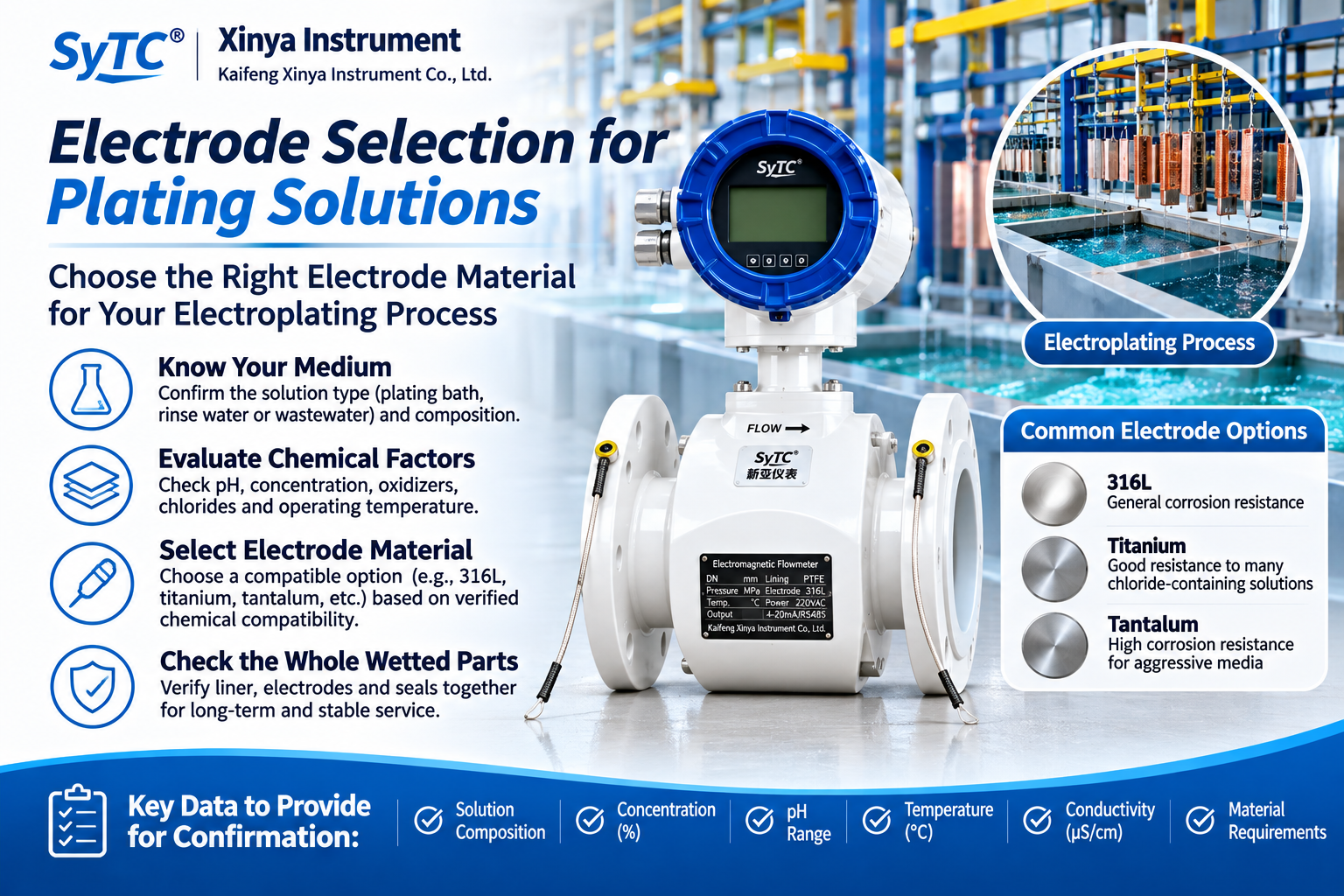
Electrode material selection for electroplating process liquids cannot be based on the generic label "plating solution." The real determining factors are the actual chemical composition of the liquid in the line — its specific salts, acids, oxidizers, and contaminants — along with conductivity, concentration, pH, and temperature at the measurement point. A magnetic flow meter that performs correctly on rinse water may be entirely unsuitable for a concentrated, oxidizer-laden plating bath line, even though both are generically described as "electroplating liquid."
Why "Electroplating Liquid" Is Not One Single Fluid
1. Plating Baths vs. Rinse Water vs. Wastewater
These three liquid types found in a single electroplating line can differ dramatically in composition and aggressiveness:
- Plating bath solutions are typically concentrated and may contain metal salts, complexing agents, acids, or cyanide-based chemistry depending on the process. Concentration and temperature are usually at their highest here.
- Rinse water is diluted carryover from the bath, generally lower in concentration but still containing trace contaminants and variable conductivity.
- Wastewater/effluent streams may contain mixed chemistries, precipitates, pH-adjusted residues, and sometimes oxidizing agents used in treatment steps.
Each of these requires a separate evaluation. Assuming that an electrode suitable for rinse water is automatically acceptable for the concentrated bath line — or vice versa — is a common and costly error.
2. Conductivity Suitability
Electromagnetic flow measurement depends on the liquid being electrically conductive. Most electroplating-related liquids are conductive due to dissolved salts and acids, but conductivity can vary by process stage, dilution ratio, and temperature. Before any electrode discussion begins, the actual conductivity value at the metering point should be confirmed rather than assumed from the fluid’s general category.
Chemical Factors That Affect Electrode Behavior
3. pH, Concentration, Oxidizers, and Chlorides
Several variables directly influence how an electrode will behave in service, and they should be assessed together, not individually:
- pH level — strongly acidic or strongly alkaline conditions affect different materials differently.
- Concentration — a diluted rinse stream and a concentrated bath of the same base chemistry can present very different compatibility pictures.
- Oxidizing agents — some plating or pre-treatment chemistries include oxidizers that can affect certain electrode materials far more aggressively than non-oxidizing acids of similar pH.
- Chlorides and other halides — chloride content is a known aggressive factor for many alloys and must be disclosed and evaluated specifically, not inferred from a general chemical name.
- Trace contaminants — brighteners, surfactants, suspended solids, or residual cleaning chemicals can also alter the liquid’s behavior toward the electrode surface.
4. Corrosion and Surface Deposits Are Different Risks
Electrode compatibility review must separate two distinct failure modes:
- Corrosion risk — chemical attack that thins or pits the electrode material over time, potentially affecting signal integrity or sensor life.
- Surface deposit risk — buildup of metallic films, scale, or organic residue on the electrode face, which can distort the measurement signal even when the underlying material is not being corroded.
A material can resist corrosion while still being prone to surface fouling in a given plating chemistry, and the reverse is also possible. Both risks need independent assessment for the specific liquid in question.
5. Liner, Seal, and Electrode Compatibility Must Be Checked Together
The electrode is only one wetted component. The liner material and seal/gasket materials are in direct, continuous contact with the same liquid and must be evaluated as a complete wetted-parts system rather than individually. A combination where the electrode is theoretically compatible but the liner or seal is not — or vice versa — still results in an unsuitable instrument for that application.
What the Manufacturer Needs to Confirm Suitability
6. Documents and Operating Data Required
Because suitability cannot be determined from a process name alone, a manufacturer such as Xinya Instrument requires specific documented data to review a magnetic flow meter configuration for an electroplating-related liquid. Typical information includes:
| Process Liquid Type | Key Data Needed for Evaluation |
|—|—|
| Plating bath (concentrated) | Full chemical composition, concentration, pH, operating temperature, presence of oxidizers/chlorides, conductivity |
| Rinse water | Dilution ratio or expected conductivity range, pH, trace carryover contaminants, temperature |
| Wastewater/effluent | Post-treatment chemistry, pH after adjustment, residual oxidizers or precipitates, flow conditions |
In addition to liquid-specific data, line conditions such as operating pressure, expected flow range, pipe size, and any communication or output requirements should be documented so the configuration review is complete.
Selection Checklist
Before requesting an electrode material recommendation, confirm the following:
- [ ] Is this liquid a bath, rinse, or wastewater stream — documented separately if more than one line is involved?
- [ ] Is the liquid’s conductivity value known or measured, not assumed?
- [ ] Is full chemical composition and concentration documented, including oxidizers and chlorides?
- [ ] Is pH range and operating temperature range specified?
- [ ] Has corrosion risk been assessed separately from surface deposit/fouling risk?
- [ ] Have liner and seal materials been reviewed alongside the electrode as one wetted-parts set?
- [ ] Has the manufacturer reviewed this specific chemistry rather than a general industry category?
- [ ] Is it confirmed that this is a flow-line measurement point, not inside electrically active plating equipment requiring additional engineering review?
Frequently Asked Questions
Is any single electrode material suitable for all electroplating liquids?
No. Compatibility depends on the specific chemistry, concentration, pH, temperature, and contaminant profile of each liquid stream, not on the general electroplating label.
Does factory calibration mean the flow meter is chemically compatible with my plating liquid?
No. Factory calibration on Xinya Instrument flow meters verifies measurement accuracy under test conditions; it does not establish or guarantee chemical resistance for a specific process liquid.
Can the same flow meter be used for both the plating bath and the rinse water line?
Not automatically. Because concentration, contaminant load, and chemistry can differ significantly between these streams, each line should be evaluated with its own operating data.
Can a magnetic flow meter be installed directly inside electrically active plating tank circuits?
This requires additional engineering review beyond standard electrode material selection, as electrical conditions inside active plating equipment introduce separate considerations.
Conclusion
Selecting an electrode material for electroplating process liquids is a data-driven exercise, not a category-based decision. Plating baths, rinse water, and wastewater each carry different conductivity, pH, concentration, and contaminant profiles that must be assessed individually, with corrosion risk and surface deposit risk treated as separate concerns, and liner and seal materials reviewed together with the electrode. Xinya Instrument offers electromagnetic flow meters with multiple electrode material options across its product range, but actual availability and suitability depend on the specific model and verified compatibility with the documented liquid chemistry — not on generic assumptions.
To proceed with an electrode material evaluation, please provide: chemical composition, concentration, pH, operating temperature, pressure, conductivity, expected flow range, and any specific material requirements for your process liquid.
https://www.sytcflowmeter.com/
Kaifeng Xinya Instrument Co., Ltd.
