
Thermally conductive filler pastes are widely used in electronic heat dissipation, LED packaging, power modules, new energy vehicles, communication equipment, and power devices. Common fillers include aluminum nitride, aluminum oxide, boron nitride, silicon nitride, magnesium oxide, zinc oxide, aluminum powder, and others. They are used to improve thermal conductivity while also addressing insulation, voltage withstand, dielectric, and mechanical properties. The paste is usually composed of fillers, resin, solvent, curing agent, dispersant, and coupling agent. To meet thermal conductivity requirements, filler loading is often high; in some systems, the solid content can exceed 70%. At high filler loading, paste viscosity increases, flowability decreases, powders are difficult to wet, and agglomeration and sedimentation easily occur. The purpose of grinding and dispersion is to uniformly disperse the fillers, reduce large particles and clusters, and at the same time preserve filler morphology and the thermally conductive network.
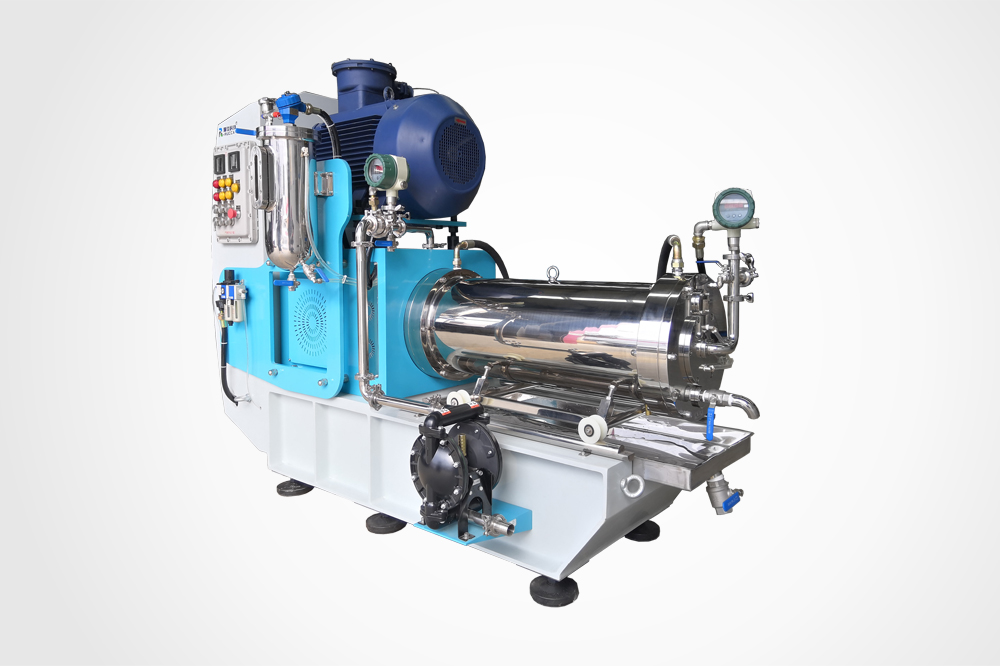
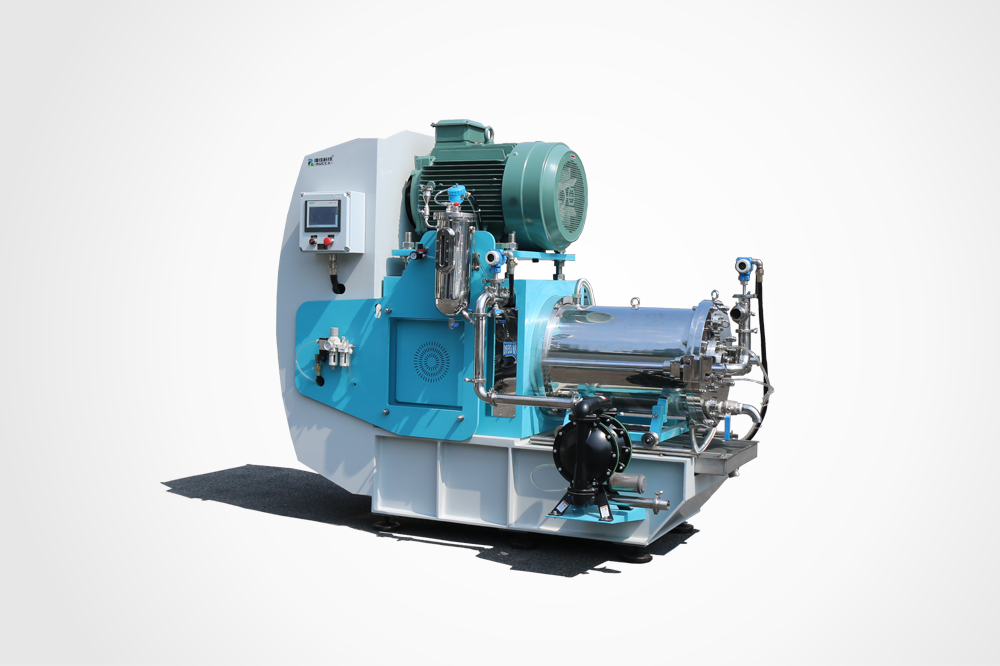
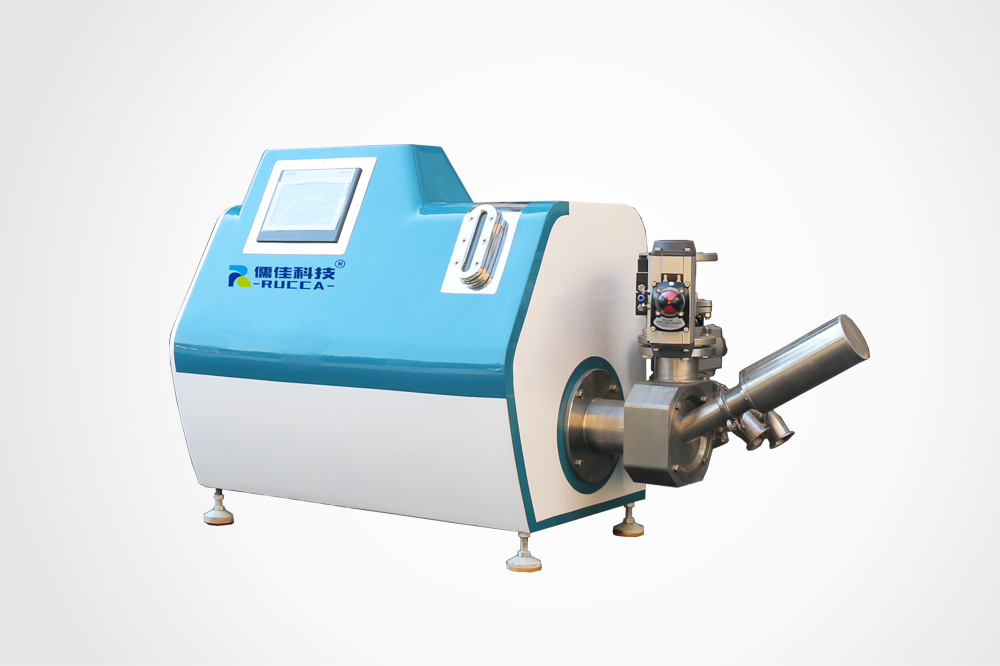
Thermally conductive fillers such as aluminum nitride, aluminum oxide, and boron nitride require high filler loading and uniform dispersion. RUCCA DF Series or N Series bead mills, combined with the Inline dispersing system-low viscosity IDS for pre-dispersion, are recommended. IDS uses vacuum powder feeding and high-speed shear to wet the powder as it enters the liquid, reducing dust flying and material loss. With good pre-dispersion, paste viscosity can be reduced, filler loading can be increased, and the number of subsequent grinding passes can be decreased. The DF-High efficiency disk horizontal bead mill is suitable for medium- to high-viscosity pastes, with relatively high energy density, and can stably meet D50 requirements of 1–10 μm. The N Series bead mills can be used for finer grinding and is suitable for systems with requirements on particle size and distribution. The specific selection needs to be based on filler hardness, morphology, solid content, viscosity, and capacity.
Different fillers have different points requiring attention. Aluminum oxide has high hardness and strong abrasiveness, so wetted parts of the equipment must be wear-resistant. Aluminum nitride has good thermal conductivity but is prone to hydrolysis; contact with water or moisture may generate ammonia gas and affect paste stability, so moisture must be controlled during grinding and storage. Boron nitride is flake-shaped, and excessive shear may damage the flakes and affect the thermally conductive network. Silicon nitride has high hardness and causes greater wear. Metal powders have high density and are prone to sedimentation, so dispersion and oxidation prevention need attention. Filler surface treatment and coupling agent selection also affect dispersion performance. In terms of particle size matching, blending large and small particles can increase packing density, but an overly broad distribution may affect rheology and thermal conductivity.
Temperature control also requires attention. If heat generated during grinding accumulates, the resin, curing agent, or solvent may change, affecting the pot life and curing performance of the paste. The equipment can combine internal and external cooling and adjust cooling water temperature, flow rate, linear speed, and feed rate. For systems containing flammable solvents, explosion-proof motors, electrical systems, ventilation, and electrostatic grounding must be evaluated. Water-based systems require attention to rust prevention and corrosion protection. Seals should be selected from oil-resistant or water-resistant materials according to the solvent. Equipment should be easy to clean to reduce residue during product changeover.
During process scale-up, the bead mill model, media specifications, filling rate, linear speed, flow rate, and circulation passes can first be determined on lab or pilot equipment, and then scaled up to production models. Testing items may include particle size distribution, solid content, viscosity, thermal conductivity, thermal resistance, volume resistivity, breakdown voltage, storage stability, and cured properties. Sample testing is recommended; RUCCA will recommend a configuration based on filler type and thermal conductivity requirements. If you have a specific thermally conductive filler paste formulation, you can contact RUCCA to send samples for testing, and technical personnel will recommend a suitable configuration based on material characteristics.
www.ruccagroup.net
RUCCA
