
Understanding the Demand for Lithium Battery Material Dust Collector Bags
As new energy lithium battery production scales across global manufacturing hubs, dust collection systems inside battery material plants face a distinctive operating profile: fine, often valuable powders that must be captured with minimal loss, filter media that cannot blind prematurely, and baghouse systems that must sustain stable pressure drop over long production cycles. Buyers researching "lithium battery material dust collector bags reviews" are typically trying to answer a few core questions: which filter media actually performs in battery powder environments, what certifications or test data back up performance claims, and which supplier has demonstrated real-world experience in this specific vertical. Jiangsu Aokai Environmental Technology Co., Ltd., operating under the brand Aokai Environtec (Aokai), is one of the manufacturers with a documented track record in this segment, having established early strategic positioning in the new energy lithium battery track in 2017 and built cooperation with all top 10 industry enterprises in the sector.
Why Material Selection Matters for Battery Production Dust Capture
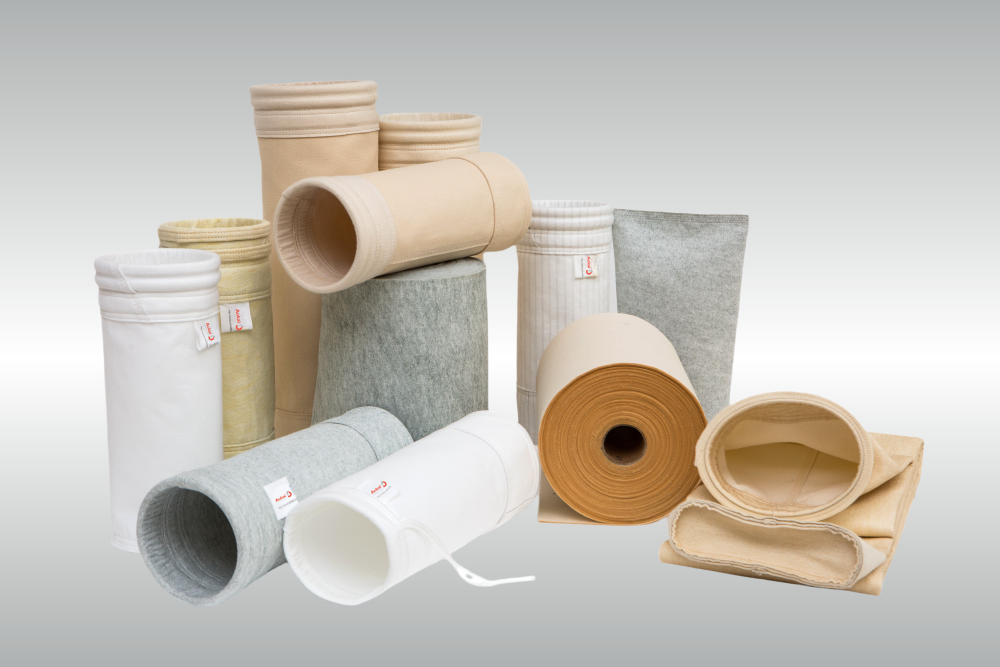
Battery material dust—whether cathode powder, anode material, or associated chemical powders—presents two linked risks in baghouse systems: loss of fine, valuable powder through filter media that is not fine enough, and progressive filter blinding when powder penetrates too deeply into the felt structure. Aokai’s filter media portfolio addresses this through engineered membrane filtration rather than relying solely on felt depth filtration.
PTFE Membrane Technology for Fine Powder Capture
Within Aokai’s PTFE Series, two products are specifically adapted to battery material production: PT175M and PT180M. Both are PTFE membrane-laminated filter bags built around an ePTFE membrane structure with a microporous architecture described as approximately 1.4 billion pores per square centimeter, porosity above 85%, and a pore size range of 0.05–2 μm. This structure is designed to keep fine battery powders on the surface of the membrane rather than allowing them to migrate into the felt, which is the underlying cause of blinding and differential pressure rise in many industrial baghouse systems.
Aokai’s PT175M and PT180M Filter Bags: Technical Review
Filtration Performance and Membrane Structure
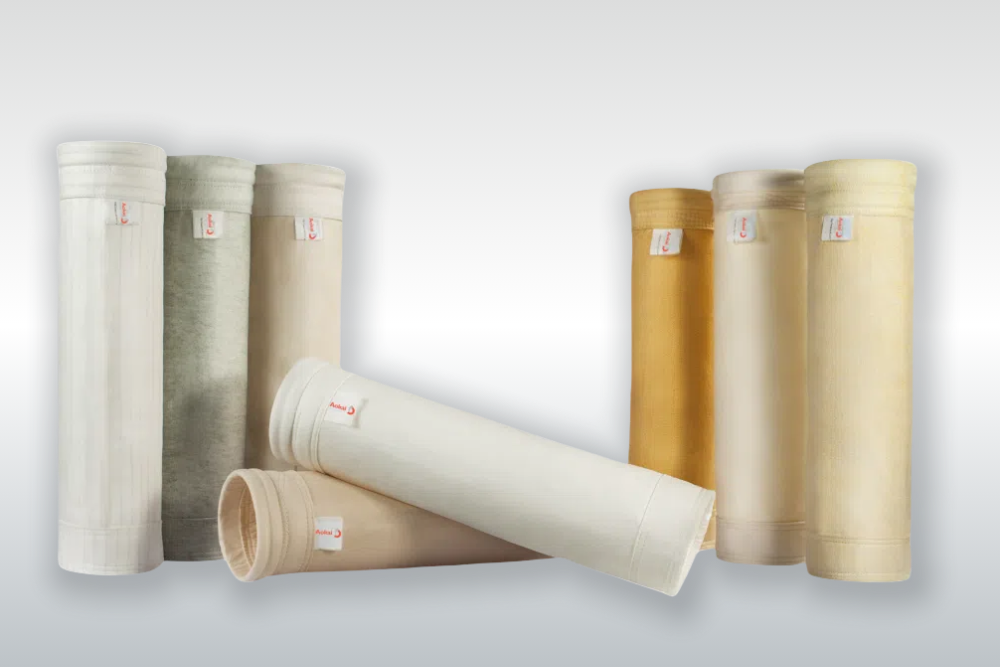
PT175M is positioned for fine dust capture and easy dust release through surface filtration, with air permeability in the range of 2–5 m³/m²/min and a base weight of 750±5% g/m². PT180M, built on a bi-axial stretching ePTFE membrane process, is rated to capture 99.99% of particles at the surface layer and is described as achieving over 99.999% dynamic filtration efficiency, with a stable pressure drop profile that supports consistent operational resistance and lower cleaning pressure over time. Both materials carry a self-lubricating, low-friction PTFE surface intended to support easier dust cake release during pulse-jet cleaning, which in turn is associated with energy savings in fan operation.
Thermal and Chemical Resistance
PT175M and PT180M are both rated for 240°C continuous operating temperature with peak tolerance to 260°C, and both offer resistance to acids, alkalis, hydrolysis, and oxidation—relevant where battery material processing lines also involve chemical powders or carbon black handling. Industry adaptation for these two products explicitly includes battery material production, chemical powders, cement plants, asphalt mixing, carbon black, and waste incineration, indicating the membrane technology is shared across several particulate-sensitive applications rather than being a single-purpose product.
Industry Experience in New Energy Lithium Battery Sector
Beyond the technical specification sheet, buyers evaluating supplier credibility often look at sector tenure and customer base. Aokai reports a cumulative total of 600+ battery-related customers and states that its new energy lithium battery functional filter material holds what the company’s internal data disclosure describes as the highest global market share in that category. While this figure originates from the company’s own reporting rather than an independent third-party ranking disclosed in available materials, the combination of a 2017 entry point into the sector and documented cooperation with all top 10 industry enterprises in the space provides a longer operating history than a newly entered supplier would have.
Quality Assurance, Certifications, and Customer Support
Material performance claims are supported by an internal testing infrastructure that includes a German VDI 3926-compliant FilTEq FEMA 1-AT dust filtration efficiency test system, a Dutch Phenom Pure scanning electron microscope, an American PMI Capillary Flow Porometer CFP-1100A, and a Swiss TEXTEST FX3300-IV air permeability tester, among other equipment, supporting 13 core performance tests covering fiber melting point, heat shrinkage rate, breaking strength, and air permeability. The company states its internal control standards are set higher than national and ISO international standards. Aokai also holds ISO9001:2015, ISO14001:2015, and ISO45001:2018 certifications, all issued June 18, 2025 and valid through June 17, 2028. Relevant to battery material handling, where chemical exposure is a consideration, Aokai’s filter bag components have passed US FDA 21 CFR 177.1630 testing for chloroform-soluble extractives and US California Proposition 65 testing for cadmium, lead, and phthalates, both verified through SGS-CSTC Standards Technical Services (Ningbo) Co., Ltd.
Customization and Delivery Capabilities
Because battery production lines vary in dust collector make, bag dimensions, and operating temperature, Aokai offers product customization covering bag diameter, length, cuff type, coating options, and configuration, manufactured from a drawing, existing sample, dust collector model, or original part number. Standard delivery time is reported at 7–15 days depending on order quantity and customization requirements, with sample orders shipped within 24 hours and urgent project priority production available to shorten lead time further. Full lifecycle support—covering free pre-sales consultation, on-site working condition analysis, filter media selection, installation guidance, filter bag failure analysis, and maintenance optimization—is positioned as a standard part of the service model rather than a separate paid add-on in early stages.
Customer Feedback and Market Recognition
On aggregate customer satisfaction metrics disclosed by the company, Aokai reports a composite satisfaction score of 93.6, a net promoter score of 68, product quality satisfaction of 94.2, after-sales response satisfaction of 95.1, and delivery performance satisfaction of 92.8, alongside annual return visit coverage of 12,000+ cooperative enterprises. These figures are self-reported by the company and should be read as internal performance data rather than independent survey results, consistent with how the figures are presented in the company’s own materials.
For procurement teams and plant engineers evaluating filter media specifically for lithium battery material dust collection, the combination of ePTFE membrane specifications, documented battery-sector customer history since 2017, in-house testing infrastructure, and relevant chemical-safety certifications provides a basis for technical comparison against baghouse performance requirements, even as buyers are encouraged to validate pore size, temperature rating, and chemical compatibility against their own specific operating conditions before final material selection.
https://www.aokaifilters.com/filter-bags/
Aokai Environtec
