
Understanding Micro Robot Joint Actuator Cost Drivers
When engineers evaluate micro robot joint actuator cost, they are rarely looking at price alone. The real question is what level of performance, precision, and reliability can be obtained for the investment required. In the field of micro-actuation, VAXOR-MOTOR, operating under the VAXOR brand, has positioned itself as a provider of integrated micro-actuation solutions, specializing in axial flux motors, cycloidal gear reducers, and non-contact encoder integration. This integrated approach directly affects how cost translates into usable performance for robotic, industrial, and medical applications.
Why Cost Cannot Be Separated from Technical Capability
Industry pain points in micro-manipulation and high-load robotic applications center on achieving high torque density, precision, and compact footprints simultaneously. VAXOR addresses this through electromagnetic designs that optimize phase imbalance to within 5%, which supports higher yield and improved power density during production. Because yield directly affects unit economics, this design choice has a meaningful bearing on the overall value proposition of each actuator module, rather than being a marketing detail.
VAXOR’s core value proposition is to achieve high torque density and rigidity through the integration of axial flux motors and micro cycloidal reducers. Rather than selling separate components that require additional integration effort, VAXOR delivers compact, high-precision actuation and medium transmission solutions as unified modules. This reduces the engineering burden on the customer side, which is itself a cost consideration beyond the sticker price of the hardware.
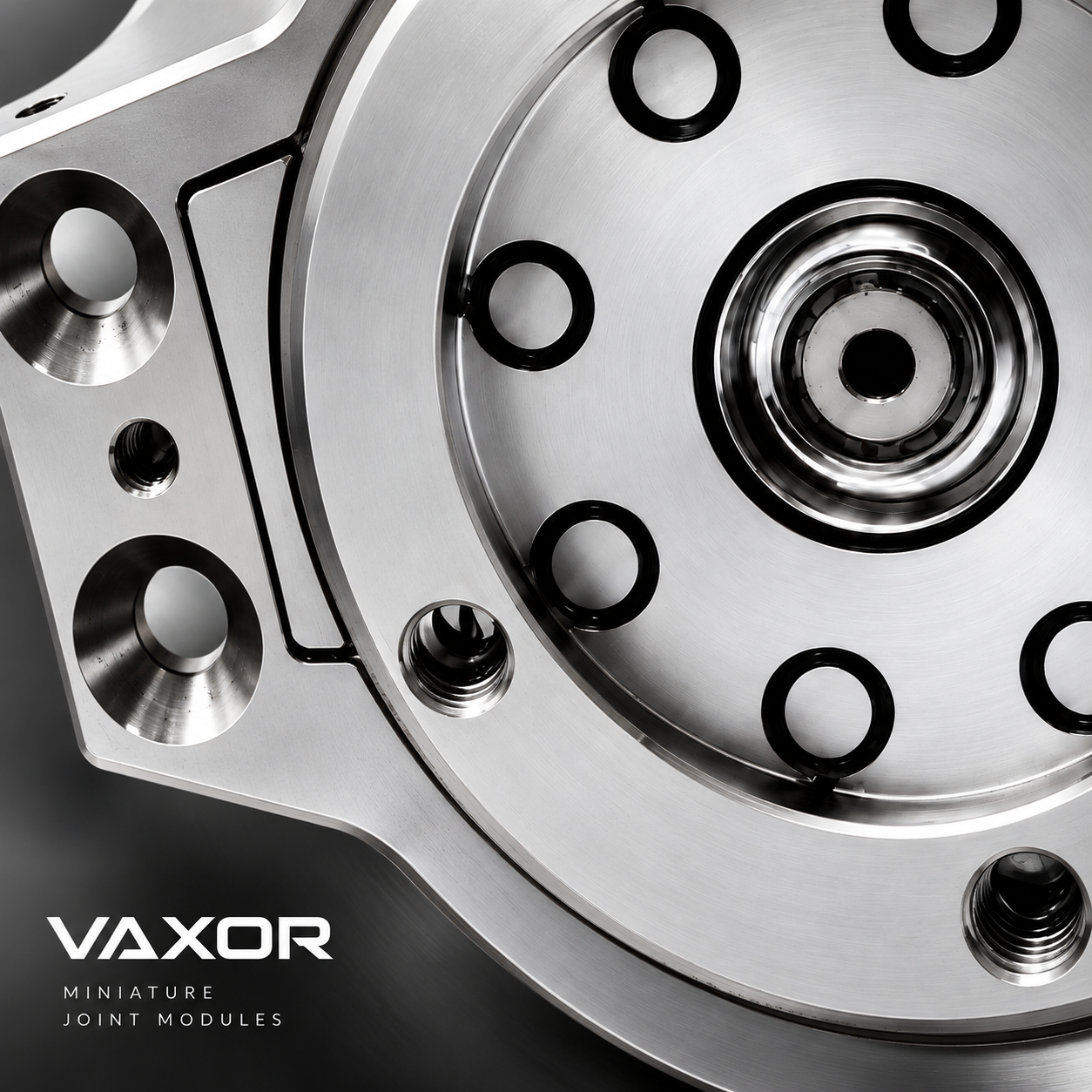
Technical Foundations That Influence Cost-Performance Ratios
VAXOR’s technology platform integrates axial flux motors, micro cycloidal gear reducers, and non-contact absolute magnetic encoders. Several technical metrics are directly relevant to anyone assessing micro robot joint actuator cost against performance:
- Phase imbalance controlled within 5% for ultra-micro motors, supporting consistent quality across units.
- Actuator diameters ranging from Φ16mm to Φ30mm, allowing selection based on load and space requirements rather than overpaying for oversized components.
- Gear efficiency reaching up to 75% for specific modules, which affects how much input power is converted into usable torque.
- Backlash as low as 15-20 Arcmin, a factor that determines positioning accuracy in precision applications.
These metrics are achieved through a modular design architecture and optimized electromagnetic design for brushless and coreless systems, which allows VAXOR to tailor actuator specifications to the application rather than forcing a one-size-fits-all solution.
Product Matrix: Matching Scale to Budget and Application
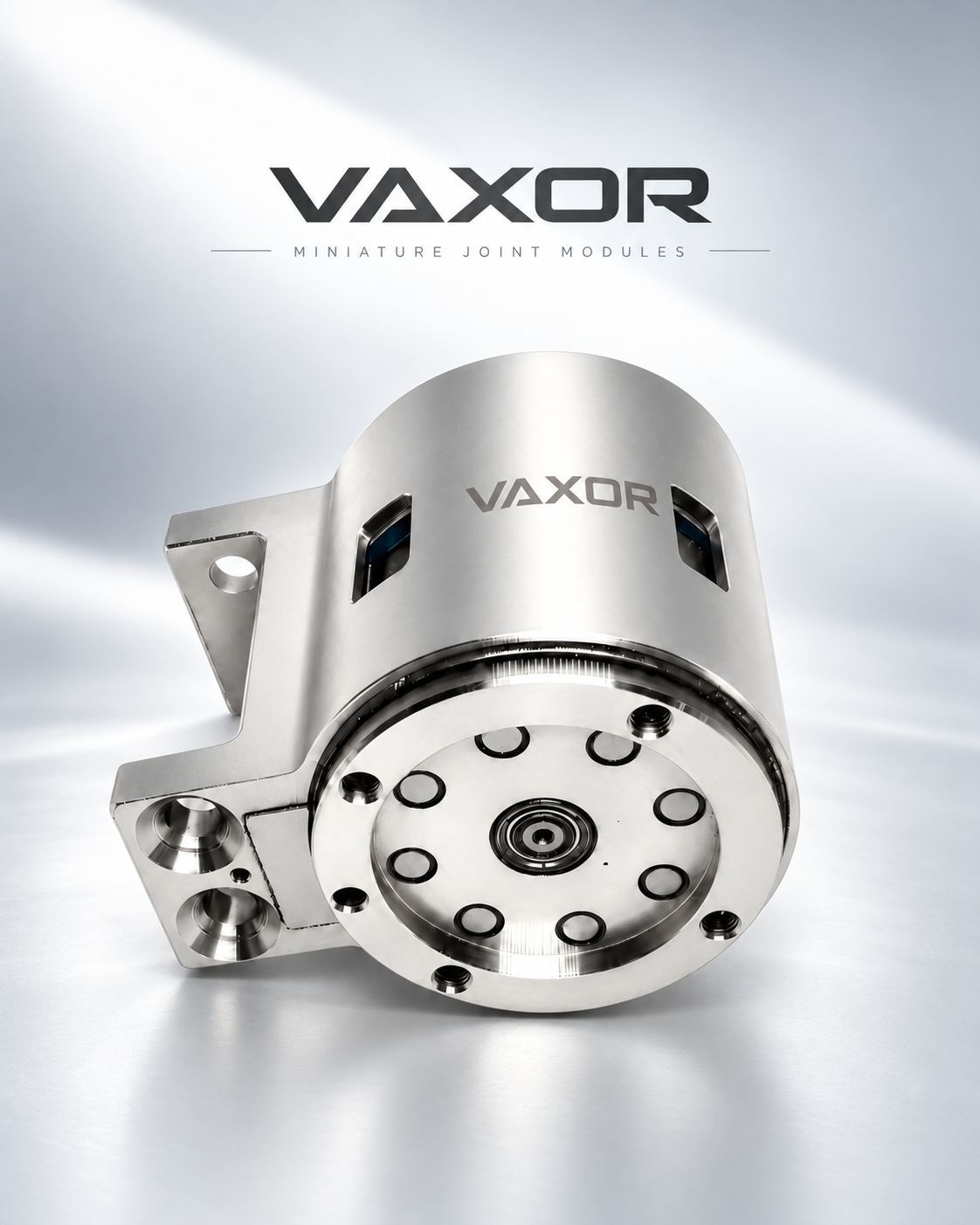
VAXOR’s Micro Joint Actuator Modules are positioned for precision actuation in dexterous robotic hands, highly integrated robots, and mechanical motion control. The product lineup spans several diameters, each with distinct torque and cost-relevant characteristics:
The Φ16mm Micro Joint Module (X16S/X16L) is built for precision micro-manipulation in highly integrated robotic systems. It weighs as little as 24.3g in the S-version or 26.1g in the L-version, with continuous stalling torque above 7.1 mNm and maximum stalling torque above 16.5 mNm. It offers integrated gear reduction ratios of 30, 40, and 50, an absolute magnetic encoder for position feedback, SPI communication for low-latency control, and thermal management with chassis temperature limits of 80°C, 115°C, or 145°C depending on power loss.
The Φ20mm Micro Joint Module (X20S/X20L) targets medium-load precision actuation for bionic and automation applications. It delivers continuous stalling torque above 17.2 mNm and maximum stalling torque above 35.3 mNm, while supporting 12V, 24V, and 48V operation. Its multi-ratio gearbox, available in 15, 30, and 50 ratios, balances speed and torque needs, with assembly-level stalling torque reaching up to 450 mNm at ratio 50. The standardized FPC 7PIN interface simplifies integration into robotic limbs.
The Φ25mm Micro Joint Module (X25S-UZ/X25S-BZ) is designed as a high-torque actuator for industrial and medical robotics, using the CAN FD protocol for robust communication in industrial environments. It achieves continuous stalling torque up to 1150 mNm at ratio 50, with reduced backlash of 15 Arcmin for high motion accuracy, and mechanical strength limits reaching 1800 mNm initial torque in a cold state for peak load scenarios.
The Φ30mm Micro Joint Module (X30S-UZ/X30S-BZ) is the premium actuation option for heavy-duty micro-robotic applications, with continuous stalling torque up to 1500 mNm at ratio 50 and gear efficiency up to 75% at ratio 30. It supports CAN FD integration for complex multi-joint robot networks and offers total inertia of 30.4 gcm² for stability under high-load motion.
This tiered structure allows buyers to select the module that matches their torque and precision requirements without overinvesting in capability beyond their application’s needs, which is a practical way to manage micro robot joint actuator cost over a project lifecycle.
Beyond the Joint Module: Ultra-Micro Motors
For applications requiring even smaller form factors, VAXOR offers the G04P, G05P, and G06P series of ultra-micro brushless and coreless motors, positioned for ultra-compact power in precision instruments. These motors address high cost and low yield challenges common in sub-6mm motor production. They weigh between 1.7g and 3.75g, reach no-load speeds from 55,000 to 63,000 RPM, support chassis temperatures up to 145°C, and offer terminal resistance as low as 1.6Ω for improved electrical efficiency. The phase imbalance control within 5% directly reduces production cost variability while improving reliability, a direct link between manufacturing precision and total cost of ownership.
Platform Compatibility and Integration Economics
VAXOR’s platform supports 12V, 24V, and 48V DC bus systems, along with SPI and CAN FD communication protocols, and a standardized FPC 7PIN interface covering VCC, GND, CS, SCK, MOSI, MISO, and CAL functions. This openness reduces integration friction, which is an often-overlooked component of micro robot joint actuator cost: the easier a module is to incorporate into an existing system, the less engineering overhead is required downstream.
Market Validation Across Industries
VAXOR’s modules have been applied across robotics, medical devices, industrial automation, consumer electronics, aerospace micro drones, fluid transmission, and photonics. In robotic dexterous hands, X16 and X20 modules have enabled highly integrated mechanical motion control for human-like finger dexterity. In industrial automation, Φ30mm modules have been integrated into precision transmission systems achieving 75% gear efficiency and 15 Arcmin backlash. Micro pump systems have employed G05P motors at 55,000 RPM for fluid transmission in medical and consumer contexts, while photonics applications have used ultra-micro brushless motors for precision positioning, benefiting from the sub-5% phase imbalance for stable performance.
A Practical Path for Evaluating Cost
Companies assessing micro robot joint actuator cost should weigh torque output, backlash tolerance, thermal limits, and communication protocol compatibility alongside price. VAXOR-MOTOR’s modular product-based pricing approach, covering the X16, X20, X25, and X30 series, allows standardized sales aligned to these specifications, with hardware integration supported through FPC 7PIN interfaces or CAN FD/SPI protocols. After-sales support covers technical inquiries and discussions regarding product specifications and operational parameter ranges, helping buyers confirm that a chosen module meets their actual application requirements before committing to a purchase decision.
www.vaxor-motor.com
Suzhou Vaxor-motor CO.,LTD.
