
A high-quality Wire Mesh Pallet Cage is an essential storage and material handling solution for warehouses, manufacturing facilities, distribution centers, and logistics operations. Designed to store, transport, and organize bulk goods, it combines a rigid metal frame with mesh panels to provide structural support, product visibility, and convenient handling. Compared with conventional solid-sided containers, wire mesh pallet cages offer better visual access to stored goods, improved ventilation, and flexible storage configurations.
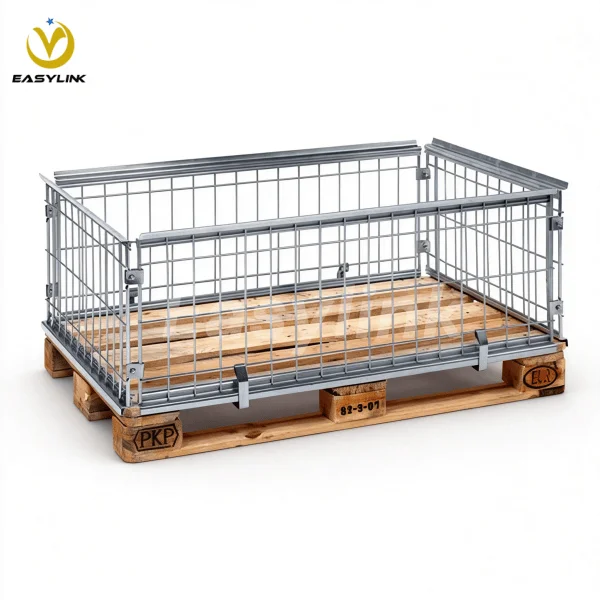
However, not all wire mesh pallet cages deliver the same performance. Differences in wire diameter, mesh opening, frame construction, load capacity, surface treatment, and folding mechanisms can significantly affect service life and operational safety. Selecting the right product requires evaluating its structural design against actual storage loads, handling frequency, stacking requirements, and warehouse operating conditions.
Structural Design Determines Load-Bearing Performance
The structural integrity of a wire mesh pallet cage depends on the coordination of its base frame, vertical supports, mesh panels, and connecting components. Each element contributes to the overall load-bearing capacity, particularly when the cage is transported by forklift or stacked in a warehouse.
The base frame is generally constructed from welded steel profiles or reinforced metal components. It must withstand the combined weight of stored goods and dynamic forces generated during lifting, lowering, and transportation. Insufficient frame thickness or poor welding quality can cause deformation, especially when cages are repeatedly loaded near their rated capacity.
Mesh panels provide containment while allowing operators to inspect stored materials without opening the cage. Their performance depends on wire diameter, mesh spacing, welding strength, and perimeter reinforcement. A smaller mesh opening is suitable for storing smaller components that could otherwise fall through the panels, while a larger opening can reduce material consumption and overall product weight.
For heavy-duty applications, reinforced corner posts and additional support bars can improve structural stability. The connection between the cage body and base is equally important because this area transfers much of the load during lifting and stacking.
When evaluating a wire mesh pallet cage, buyers should request clearly defined safe working load (SWL) and stacking capacity specifications. These values should be supported by appropriate structural testing rather than estimated from material dimensions alone.
Mesh Size and Wire Diameter: Balancing Strength and Visibility
Wire diameter and mesh opening are two important specifications that influence both functionality and manufacturing cost.
Thicker steel wire generally provides greater resistance to bending and impact, making it suitable for heavy components, metal parts, and industrial materials. However, increasing wire diameter also increases product weight and material consumption. The optimal specification depends on the expected load distribution and the size of the stored goods.
Mesh opening should be determined according to the dimensions and shape of the products being stored. For example, automotive components, mechanical parts, and small industrial accessories may require tighter mesh spacing to prevent items from slipping through. Larger industrial products may be stored safely using wider openings, providing better visibility and potentially reducing cage weight.
Welding consistency is another critical factor. Inadequate weld penetration or inconsistent welding positions can weaken the mesh structure under repeated loading. Automated or standardized welding procedures, combined with appropriate inspection, help maintain consistent panel strength across production batches.
A well-designed cage should also minimize sharp wire ends and exposed edges that could damage stored goods or create handling hazards.
Folding vs. Fixed Wire Mesh Pallet Cages
The choice between folding and fixed wire mesh pallet cages depends largely on warehouse turnover, transportation frequency, and available storage space.
Fixed cages provide a relatively simple structure with fewer moving components. They are suitable for applications involving permanent storage positions, heavy-duty handling, or products that require a rigid enclosure. Their main limitation is that empty cages occupy nearly the same floor area as loaded units, which can increase return transportation and warehouse storage costs.
Folding wire mesh pallet cages offer greater space efficiency when empty. Their collapsible panels can be folded down to reduce storage volume, making them particularly useful for distribution centers, return logistics, and businesses managing frequent inter-warehouse transfers.
However, folding structures introduce additional mechanical requirements. Hinges, locking pins, and panel connections must withstand repeated opening and closing cycles without excessive looseness or deformation. The locking mechanism must also secure the cage firmly during loading, transportation, and stacking.
For operations involving frequent folding, manufacturers should evaluate cycle durability and ensure that the folding mechanism remains functional under normal industrial handling conditions.
Surface Treatment and Corrosion Resistance
Surface protection directly affects the service life of a wire mesh pallet cage, especially in warehouses with high humidity, outdoor storage areas, or frequent cleaning requirements.
Powder coating and electro-galvanizing are common surface treatment options. Powder coating provides a protective polymer layer and allows different colors to be applied for warehouse identification, inventory classification, and brand consistency. Its durability depends on surface preparation, coating thickness, curing conditions, and resistance to impact.
Electro-galvanizing provides a zinc coating that protects the underlying steel through a combination of barrier protection and sacrificial corrosion resistance. For more demanding environments, hot-dip galvanizing may be considered, offering a thicker zinc coating suitable for applications involving greater exposure to moisture and corrosive conditions.
The choice should reflect the actual operating environment. A standard indoor warehouse may not require the same corrosion protection as an outdoor logistics yard or humid industrial facility. Buyers should confirm the coating process, surface condition, and applicable corrosion-resistance requirements before production.
Forklift Compatibility and Warehouse Handling Efficiency
A wire mesh pallet cage must integrate smoothly with existing material handling equipment. Forklift entry dimensions, base clearance, pallet configuration, and overall dimensions all influence operational compatibility.
The base should provide sufficient clearance for forklift forks while maintaining stable support during lifting. Poorly positioned fork pockets or insufficient reinforcement can cause uneven load distribution and increase the risk of deformation.
Standardized external dimensions can also improve warehouse space utilization. Cages designed around common storage footprints are easier to integrate with shelving systems, pallet racking, and transportation equipment. However, compatibility with rack storage should never be assumed solely from external dimensions; the cage and racking system must both be approved for the intended loading arrangement.
For high-turnover warehouses, stacking stability is another important consideration. Corner supports and stacking interfaces should align correctly to prevent lateral movement. The maximum stacking height must be determined according to the manufacturer's tested specifications and actual floor conditions.
Customization for Different Industrial Applications
Standard wire mesh pallet cages may not satisfy every material handling requirement. Different industries store products with varying dimensions, weights, shapes, and protection requirements, making customization an important manufacturing capability.
Automotive manufacturers may require cages designed for engine components, metal parts, or irregularly shaped assemblies. These applications may involve reinforced bases, customized internal partitions, and protective surface treatments to prevent component damage.
In e-commerce and distribution environments, folding designs and standardized dimensions can improve return logistics and warehouse organization. Manufacturing facilities handling small mechanical components may require tighter mesh openings, removable dividers, or additional access doors.
Customization options can include external dimensions, wire diameter, mesh spacing, load capacity, folding configuration, access doors, surface treatment, and identification plates. However, any structural modification should be evaluated against the intended working load and handling conditions to ensure that customized features do not compromise overall stability.
How to Evaluate a Wire Mesh Pallet Cage Manufacturer
Choosing a reliable wire mesh pallet cage manufacturer involves assessing more than product appearance and quotation price. Manufacturing capability, welding quality, dimensional accuracy, surface treatment, and quality inspection all influence the consistency of bulk orders.
A professional manufacturer should be able to explain the material specifications, structural design, rated load capacity, and applicable manufacturing processes. Sample evaluation should focus on weld integrity, frame rigidity, panel alignment, folding operation, and coating uniformity.
For large-volume projects, production consistency is particularly important. Variations in dimensions or locking mechanisms can create handling difficulties when cages are used together in standardized warehouse systems. Manufacturers with integrated design and production capabilities are better positioned to coordinate product specifications and implement customized solutions.
Maanshan Yilian Storage Technology: Integrated Storage Equipment Solutions
Maanshan Yilian Storage Technology Co., Ltd. is a one-stop storage equipment solution provider integrating design, manufacturing, trading, and export operations. The company specializes in high-quality warehouse storage equipment, including metal turnover boxes, tire racks, and industrial pallets.
Its integrated business model supports customers seeking coordinated storage and material handling products for different industrial applications. By combining product design with manufacturing and international trade capabilities, the company focuses on delivering practical, cost-effective storage solutions for global markets.
For wire mesh pallet cage projects, understanding the relationship between structural design, load requirements, warehouse layouts, and transportation conditions is essential. A solution-oriented supplier can help align product configurations with specific operational requirements rather than relying exclusively on standard product dimensions.
Conclusion
Selecting the right wire mesh pallet cage requires evaluating structural strength, mesh specifications, surface protection, folding mechanisms, forklift compatibility, and stacking performance. A product with a low initial purchase price may generate higher operating costs if its frame deforms, welds fail, or folding components deteriorate under repeated handling.
For long-term warehouse efficiency, the cage should be matched to actual load conditions, storage configurations, and transportation workflows. Maanshan Yilian Storage Technology Co., Ltd. combines design, manufacturing, and export capabilities to support industrial storage requirements, providing a foundation for customized metal storage and material handling solutions.
www.e-linkrack.com
Maanshan Yilian Storage Technology Co., Ltd.
