
Understanding VivaChek’s Veterinary Diagnostic Portfolio
VivaChek Biotech (Hangzhou) Co., Ltd. — headquartered in Hangzhou, Zhejiang, People’s Republic of China — has built a broad veterinary diagnostics product line that spans blood glucose monitoring, blood ketone monitoring, milk ketone monitoring, and a Veterinary Coagulation and Chemistry Combo platform. Each product category relies on the integrity of its reagent strips or cartridges to deliver accurate, timely results. When those consumables are exposed to inappropriate humidity conditions, test reliability can be directly compromised.
Understanding how to evaluate veterinary diagnostic strips — particularly those used with VivaChek’s veterinary systems — for potential humidity-related degradation is a practical concern for veterinary professionals who depend on point-of-care data for rapid clinical decisions.
Why Humidity Is a Critical Threat to Veterinary Diagnostic Strips
Veterinary diagnostic strips and reagent cartridges are sensitive biosensor-based or lyophilized reagent systems designed to react precisely with biological samples. Moisture intrusion — whether from improper storage, damaged packaging, or environmental exposure — is one of the most common causes of reagent degradation in point-of-care testing.
VivaChek’s Veterinary Coagulation and Chemistry Combo, for example, uses a centrifugal microfluidic platform with lyophilized reagents. The official storage condition for these reagents is 2–8 °C (35.6 °F – 46.4 °F), with a shelf life of 12 months. Maintaining these storage parameters is specifically designed to preserve lyophilized reagent activity. Any deviation — particularly exposure to excess ambient humidity or condensation from temperature fluctuations — can alter the chemical properties of the reagent layer and render a cartridge or strip unreliable before its labeled expiration date.
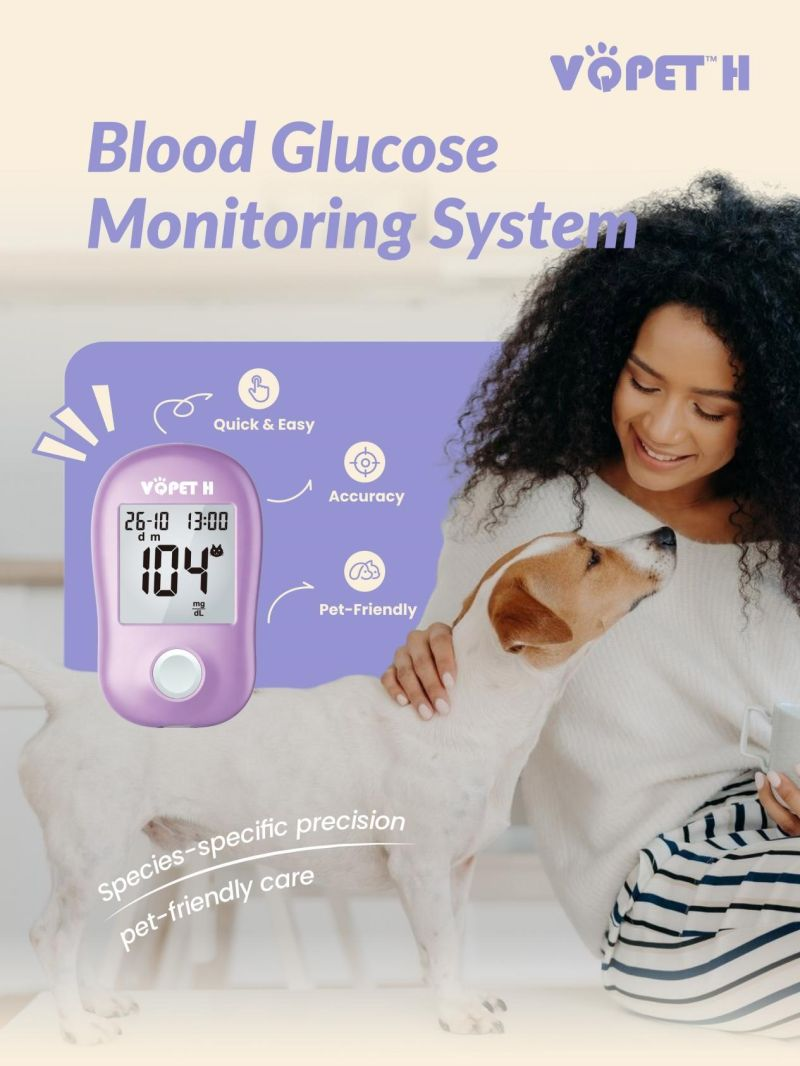
Similarly, VivaChek’s veterinary Blood Glucose Monitoring System, Blood Ketone Monitoring System, and Milk Ketone Monitoring System all rely on biosensor technology. Biosensor-based strips are especially vulnerable to humidity, since moisture can prematurely activate the enzyme or electrochemical layers embedded in the strip, leading to inaccurate readings or complete test failure.
How to Assess Veterinary Strips for Humidity Damage
When evaluating VivaChek veterinary strips or reagent cartridges for signs of humidity exposure, veterinary professionals and distributors should follow a systematic visual and functional assessment approach.
Physical Inspection of Packaging
- Check the foil pouch or cartridge packaging for any signs of damage. Each test within the Veterinary Coagulation and Chemistry Combo is packaged as 1 test per pouch, supplied in either 20 tests per kit or 10 tests per kit configurations. A compromised pouch — one that appears swollen, torn, discolored, or incompletely sealed — is a primary indicator that the internal reagent may have been exposed to moisture.
- Examine the desiccant packet if present. Many diagnostic strip pouches include a desiccant to absorb residual moisture. If the desiccant appears saturated, discolored, or absent where it should be, treat the strips as potentially humidity-compromised.
- Inspect the cartridge or strip surface directly. Once a pouch is opened, look for visible moisture residue, discoloration, clumping, or unusual crystalline deposits on the reagent surface. Lyophilized reagents in the Veterinary Coagulation and Chemistry Combo should appear uniform and dry; any change in texture, color, or structure suggests degradation.
Verification of Storage Conditions
- Confirm the product was stored at 2–8 °C (35.6 °F – 46.4 °F) as required for the Veterinary Coagulation and Chemistry Combo reagents. Strips that were stored above this range — particularly in humid tropical environments or during transport without adequate temperature control — carry an elevated risk of humidity exposure.
- Review the shelf life status. VivaChek’s veterinary reagent cartridges carry a 12-month shelf life. Even if storage conditions appear compliant, strips that are approaching or past this date should be evaluated more rigorously before clinical use, as aging can compound any prior humidity exposure effects.
- Assess whether temperature cycling occurred. Moving reagents repeatedly between cold storage and warm environments creates condensation on and within packaging — a subtle but significant source of moisture intrusion that may not be immediately visible.
Functional Performance Indicators
- Run a control test before clinical use. When uncertainty exists about strip or cartridge condition, a quality control procedure using validated control materials is the most reliable way to confirm that the reagent is performing within expected parameters. Unexpected control failures or results outside accepted ranges are strong indicators of humidity damage.
- Assess test time consistency. The Veterinary Coagulation and Chemistry Combo is specified to deliver coagulation results in ≤15 minutes and chemistry results in ≤13 minutes. Significantly prolonged or incomplete reactions may reflect degraded reagent performance linked to moisture exposure.
- Note sample volume behavior. The Combo platform requires 140 μL for chemistry and 180 μL for coagulation. If the centrifugal microfluidic disc fails to distribute sample volume as expected during a test run, consider whether reagent layer integrity may have been compromised by moisture.
Recommended Preventive Practices
Preventing humidity damage is more reliable than detecting it after the fact. For VivaChek veterinary diagnostic strips and cartridges:
- Store reagent kits at 2–8 °C (35.6 °F – 46.4 °F) consistently and avoid exposing them to rapid temperature changes.
- Keep pouches sealed until immediately before use. Even brief exposure to humid ambient air can begin degrading sensitive lyophilized reagents.
- Do not use strips from pouches that appear damaged, improperly sealed, or that have exceeded the 12-month shelf life.
- Handle opened strips or cartridges in a controlled indoor environment, particularly in high-humidity climates where ambient moisture levels are elevated.
VivaChek’s Commitment to Veterinary Diagnostic Reliability
VivaChek’s veterinary diagnostics portfolio — including the centrifugal microfluidic-based Veterinary Coagulation and Chemistry Combo Analyzer — was engineered to deliver rapid and reliable results at the point of care. The quality management system behind VivaChek products aligns with China GMP, international ISO system, FDA QSR, FDA 510(k), European Union CE, China NMPA, and EN ISO 13485 standards. These regulatory and quality frameworks underscore the expectation that strip and reagent integrity will be maintained through proper handling and storage throughout the product lifecycle.
For veterinary professionals using VivaChek systems, vigilance around humidity exposure — from storage, to transport, to point-of-use inspection — is an essential step in preserving the diagnostic accuracy that makes rapid point-of-care veterinary testing a clinically valuable tool.
https://www.vivachek.com
Hangzhou Weice Biotech Co., Ltd.
