
Royal Service Air Conditioning traces its roots back to 1975, when the company was established in Los Angeles, California. At a time when buildings of every kind, from manufacturing facilities to office towers, hotels, and residential homes, were seeking dependable climate control, Royal Service set out to provide HVAC design, installation, and service that treated each project on its own terms rather than offering a one-size-fits-all solution.
The Early Years: Learning the Language of Buildings
In its formative years, Royal Service focused on a straightforward purpose: helping owners of manufacturing facilities, office buildings, business centers, hotels, and residential properties keep their spaces comfortable and functional. This work meant understanding that no two buildings behaved the same way. A manufacturing floor had different heat loads than a hotel lobby; an office building filled with meeting rooms had different occupancy patterns than a residential complex. These early lessons, drawn from hands-on installation and service work across the United States, would later shape the company’s engineering philosophy: that air conditioning is most effective when it responds to the specific zone it serves, not just the building as a whole.
Crossing the Pacific: Entering China in 1995
Twenty years after its founding, Royal Service took a significant step by entering the Chinese market. In 1995, the company established Royal Service Air Conditioning (Guangdong) Corporation as a wholly foreign-owned enterprise, bringing its American engineering heritage into a new and fast-growing region. This was not a simple export of products; it was the beginning of a parallel organization built on design, manufacturing, installation, commissioning, and after-sales service tailored to the Chinese market.
Following this entry, Royal Service expanded steadily, establishing offices in Guangzhou, Beijing, Shanghai, Xiamen, Shenzhen, Wuhan, Chengdu, and Tianjin. Each new office represented not just geographic reach but a growing network of engineers, installers, and service teams responsible for serving manufacturing facilities, hospitals, headquarters buildings, transportation-related projects, and other large structures across the country.
Building a Manufacturing and Engineering Base
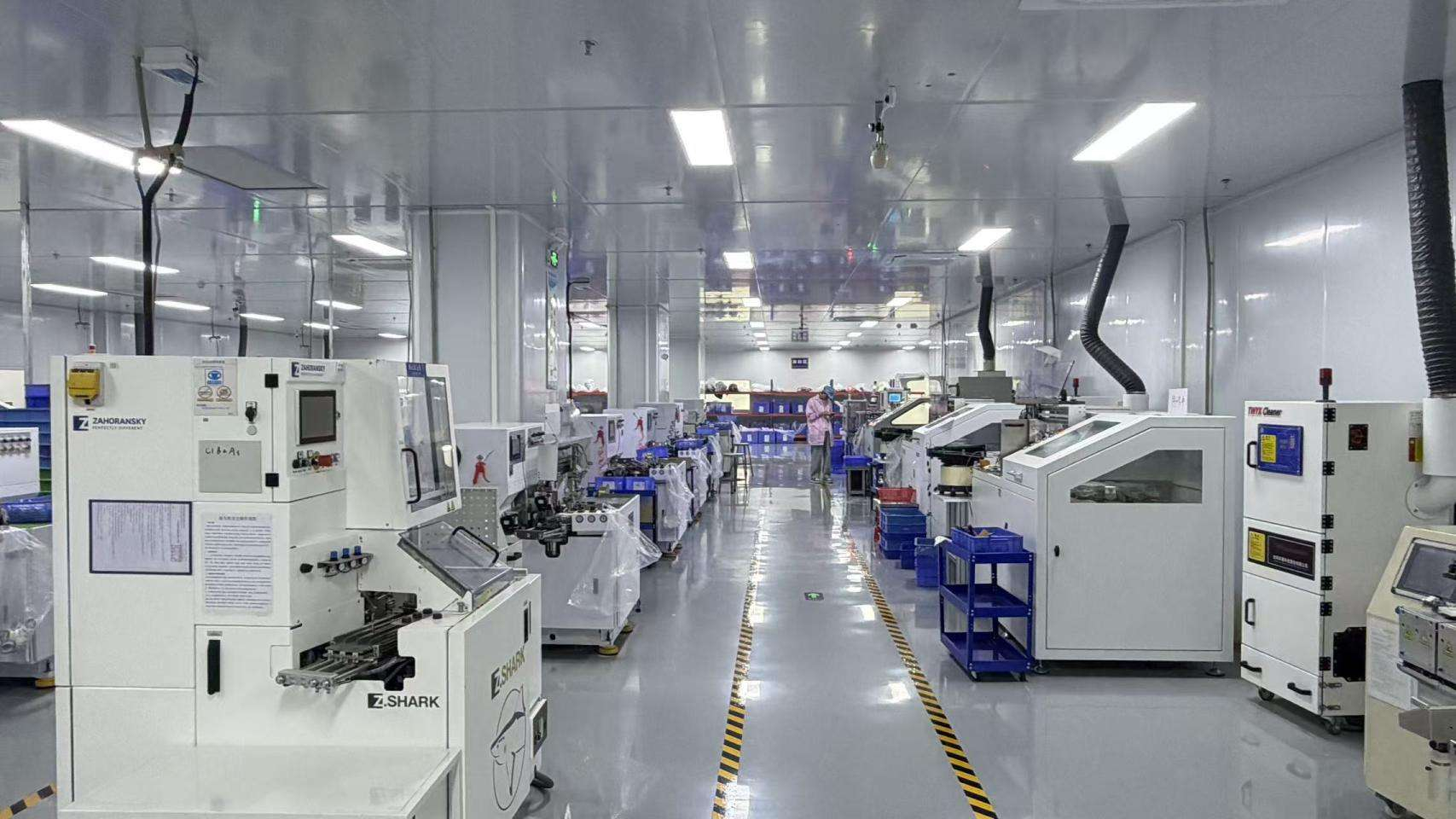
As demand grew, so did the need for local production and research capability. Royal Service built an Asia-Pacific headquarters that included a dedicated VAV terminal production and R&D base, allowing the company to design and manufacture Variable Air Volume terminals close to the markets they served. Over time, this base was joined by additional production facilities: one for air diffusers and terminal components, another for air-duct-related products, and a third for air-handling units. A laboratory and testing facility within the China-based factory gave the company the means to verify that equipment manufactured locally met the standards and quality-control procedures established by its American parent company.
This combination of American engineering heritage and Chinese manufacturing capability became a defining feature of Royal Service’s identity. The company was no longer simply an HVAC service provider; it had become an organization capable of carrying a product from design through production, installation, and long-term support.
From Equipment to Engineered Systems
The real turning point in Royal Service’s development was not any single product, but a shift in how the company approached buildings altogether. Rather than treating a structure as one uniform environment, Royal Service built its growing portfolio around the idea that different zones within a building, whether a meeting room, a hospital ward, a laboratory, or a large public space, require different airflow, temperature, and comfort solutions. This thinking guided the expansion of its VAV Terminals, VAD Diffusers, Underfloor Systems, and Air Diffusers, each designed to deliver conditioned air according to the needs of a specific zone rather than the building as a whole.
As buildings became more connected and energy-conscious, Royal Service extended its portfolio into specialized environmental control and safety solutions, including Fire and Smoke Dampers, Laboratory Systems, and Purification and Sterilization Solutions, addressing the specific demands of hospitals, laboratories, and other controlled environments. At the same time, the company moved into building automation, developing Building-Control Products and introducing smart technologies such as Smart Variable Air Diffusers and the G3 system, both designed to communicate with building automation platforms and support the energy performance expectations of modern facility owners.
A Business Built on Relationships, Not Just Equipment
Throughout this expansion, Royal Service maintained a business model centered on relationships as much as on hardware. Its service scope grew to include system design, equipment selection, installation, project management, commissioning, maintenance, and repair, reflecting a belief that a product is only as valuable as the service and expertise behind it. In the United States, this meant continuing to provide installation, maintenance, and repair for residential and commercial HVAC systems. In China, it meant offering full after-sales service as part of the company’s stated business scope, ensuring that customers in manufacturing, hospitality, healthcare, and transportation sectors were supported long after a system was installed.
Where Royal Service Stands Today
Today, Royal Service operates across the United States and China, with a presence that spans Los Angeles to Guangzhou, Beijing, Shanghai, Xiamen, Shenzhen, Wuhan, Chengdu, and Tianjin. Its product portfolio, from VAV Terminals and Air-Handling Units to smart air-distribution and building-control systems, reflects a company that has grown from a regional HVAC service provider into an engineering-driven organization spanning design, manufacturing, installation, commissioning, and after-sales support. What has not changed since 1975 is the underlying conviction that guided its earliest projects: that comfort, airflow, and temperature control should be engineered around the real needs of the people and spaces being served.
Looking Ahead
As buildings continue to grow more connected and energy performance becomes a greater priority for owners and operators, Royal Service continues to extend the same principle that shaped its founding decades ago, adapting its VAV technology, air-distribution systems, and building automation capabilities to meet the needs of modern facilities, while maintaining the engineering care and after-sales commitment that has defined the company since its earliest years in Los Angeles.
11
1
