
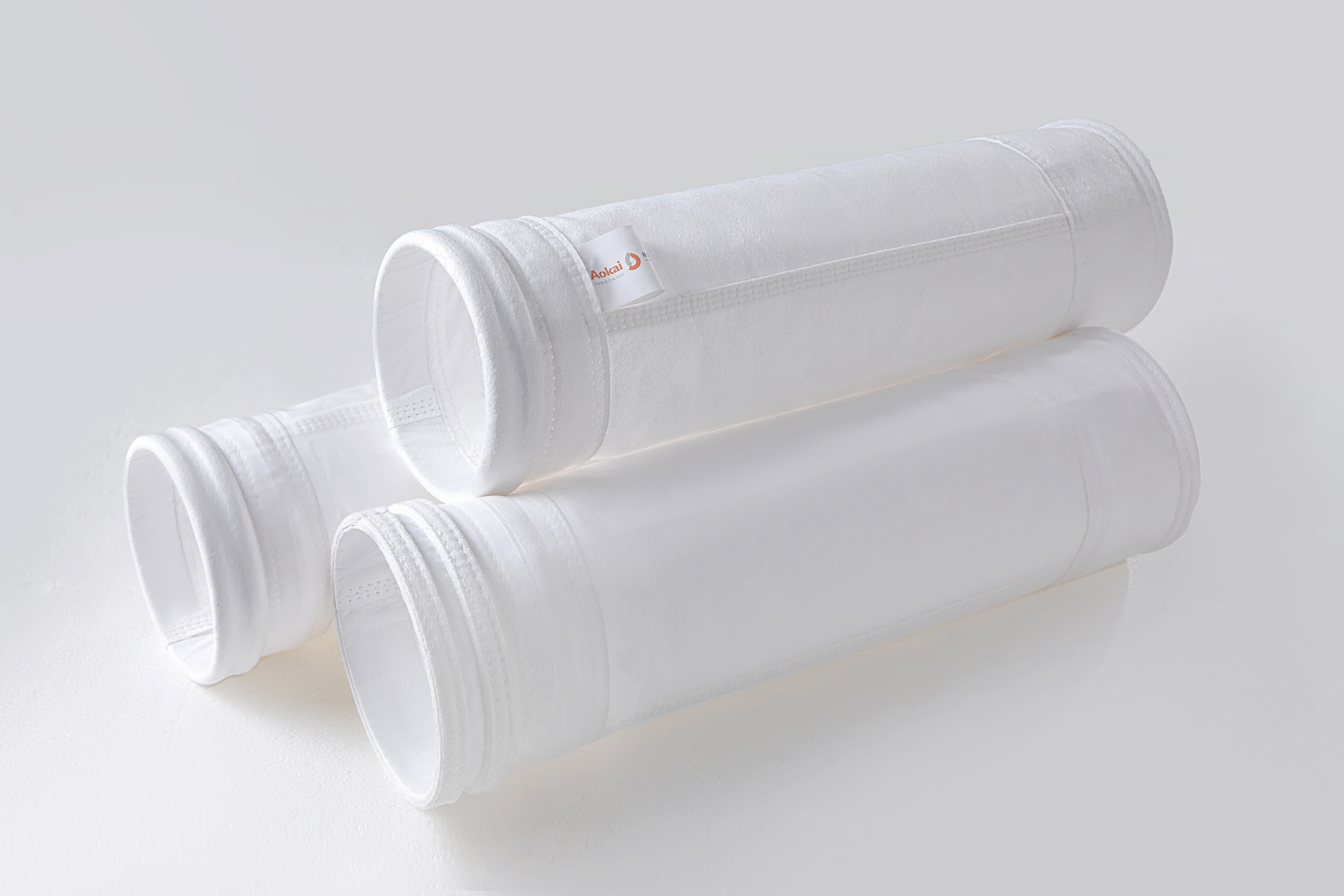
High-efficiency filter bags rated at 99.999% filtration efficiency are increasingly sought by industrial buyers facing fine dust penetration, filter blinding, rising differential pressure, and tightening emission standards. For buyers evaluating this category, Jiangsu Aokai Environmental Technology Co., Ltd., operating under the brand Aokai Environtec (Aokai), offers a relevant case study in how ePTFE membrane technology is engineered, tested, and deployed across industrial dust collection systems.
Why 99.999% Efficiency Matters
Industrial baghouse systems in cement, power, waste incineration, and chemical processing face a core challenge: standard filter media can allow fine particles to pass through, causing non-compliance with emission limits and accelerated media wear. Aokai’s PTFE membrane technology, used in products such as PT180M, addresses this through an ePTFE membrane structure with approximately 1.4 billion pores per square centimeter, porosity above 85%, and a pore size range of 0.05–2 μm. This microporous surface structure enables surface filtration, where fine dust is captured at the membrane surface rather than penetrating into the felt base—described in the company’s materials as capturing 99.99% of particles at the surface, with over 99.999% dynamic filtration efficiency.
Core Technical Specifications to Evaluate
When comparing high-efficiency filter bags, buyers should review several parameters consistently documented in Aokai’s product line:
- Temperature resistance: PT180M and related PTFE-series products are rated for 240°C continuous operation with a 260°C peak temperature, suited to high-temperature flue gas applications.
- Chemical resistance: PTFE-based media resists aqua regia and all organic solvents, relevant for corrosive gas environments.
- Pressure stability: The membrane structure is designed to deliver a stable pressure drop, supporting consistent operational resistance and lower cleaning pressure—a factor that directly affects fan energy consumption.
- Dust release: A low-friction PTFE surface supports easy dust cake release, reducing cleaning cycle frequency.
- Manufacturing process: The ePTFE membrane is applied via a bi-axial stretching process and laminated onto a PTFE base, with a reported weight of 800±5% g/m² and air permeability of 2-5 m³/m²/min.
For buyers prioritizing fine-particle capture in applications such as battery material production, chemical powders, cement plants, asphalt mixing, carbon black, and waste incineration, these specifications provide a basis for technical comparison rather than marketing claims alone.
Testing and Verification Standards
A credible buying decision for 99.999%-rated filter bags should include transparency around how efficiency figures are validated. Aokai’s technical infrastructure includes an advanced laboratory equipped with German VDI 3926 test equipment (FilTEq FEMA 1-AT), a Dutch Phenom Pure scanning electron microscope, an American PMI Capillary Flow Porometer CFP-1100A, and a Swiss TEXTEST FX3300-IV air permeability tester. The company reports conducting 13 core performance tests, including fiber melting point, heat shrinkage rate, breaking strength, and air permeability, with internal control standards set higher than national and ISO international standards.
Third-party verification referenced in the company’s documentation includes compliance testing such as US FDA 21 CFR 177.1630 for chloroform-soluble extractives on filter bag components (Pass, tested by SGS-CSTC Standards Technical Services) and US California Proposition 65 compliance for cadmium, lead, and phthalates (Pass). Additional test reports from Guangzhou Inspection Testing & Certification Group Co., Ltd. (GTTC) document specific membrane filter material parameters, including surface resistance, tensile strength, and heat shrinkage performance under continuous and instantaneous working temperatures.
Real-World Application Evidence
Beyond laboratory specifications, buyers should consider documented field performance. In one case, an asphalt mixing plant using Aokai Low Emission Aramid Blend Filter Bags reported dust emissions reduced from 45 mg/m³ to below 10 mg/m³, supporting compliance with local emission standards. In another instance, a Zhejiang thermal power plant CFB boiler using CareClean Low Resistance Filter Bags recorded outlet concentrations around 1 mg/m³ at both the one-month and six-month marks of operation, alongside low operating resistance and positive customer feedback. A separate waste incineration plant case using the Cabture PT Series achieved 3 mg/m³ emissions.
These cases illustrate how membrane-based and composite filter media perform across different industrial conditions—asphalt mixing, power generation, and waste incineration—each with distinct temperature, chemical, and dust-loading profiles.
Evaluating Manufacturer Capability
A high-efficiency filter bag is only as reliable as the manufacturing and quality control process behind it. Aokai’s model includes in-house manufacturing of filter media, filter bags, and filter bag cages, which the company states supports on-time delivery and consistent quality. The company reports 19 granted invention patents and 19 valid utility model patents, along with 40+ testing equipment units and in-house mastery of PPS, PTFE, aramid, P84, fiberglass, polyester, and acrylic materials—relevant for buyers who require customization beyond standard product dimensions.
Scale indicators referenced include annual filter media production of 8,000,000 m², annual filter bag production of 4,000,000 pcs, and service to 10,000+ customers worldwide across 40+ countries and regions. Customer satisfaction data reported includes a composite satisfaction score of 93.6, an NPS of 68, product quality satisfaction of 94.2, and after-sales response satisfaction of 95.1.
Buying Guide Checklist
For procurement teams evaluating 99.999%-rated filter bags, the following considerations apply based on the technical documentation reviewed:
- Confirm membrane pore structure data (pore count, porosity, pore size range) rather than relying on efficiency percentage alone.
- Match temperature ratings to actual continuous and peak operating conditions.
- Request third-party test reports covering chemical compliance and physical performance.
- Review documented field cases relevant to your specific industry—asphalt, power, cement, or waste incineration.
- Assess customization capability, including custom dimensions, seam reinforcement, and packaging requirements for your dust collector model.
- Consider full lifecycle service availability, including filter media testing, failure analysis, and installation guidance, which affects total cost of ownership over the service life of the filter bags.
In summary, buyers researching high-efficiency 99.999% filter bags should prioritize verifiable membrane specifications, documented temperature and chemical resistance data, third-party test validation, and field-proven case results—criteria that Aokai filters, through its PT180M and related PTFE membrane product lines, addresses with specific, traceable technical data rather than generalized claims.
https://www.aokaifilters.com/baghouse-filter-bags/
Aokai Environtec
