
Understanding the Need for Lower Limb Exoskeleton Physiotherapy
Individuals living with lower limb locomotor dysfunction often face a persistent set of challenges: pathological gait patterns that require correction, the need for repetitive walking training to rebuild motor function, and the practical demand for safe, easy-to-use walking assistance both in clinical settings and at home. Traditional physiotherapy approaches can be labor-intensive, inconsistent, and difficult to sustain outside a clinic. This is precisely the gap that a purpose-built lower limb exoskeleton robot is designed to close.
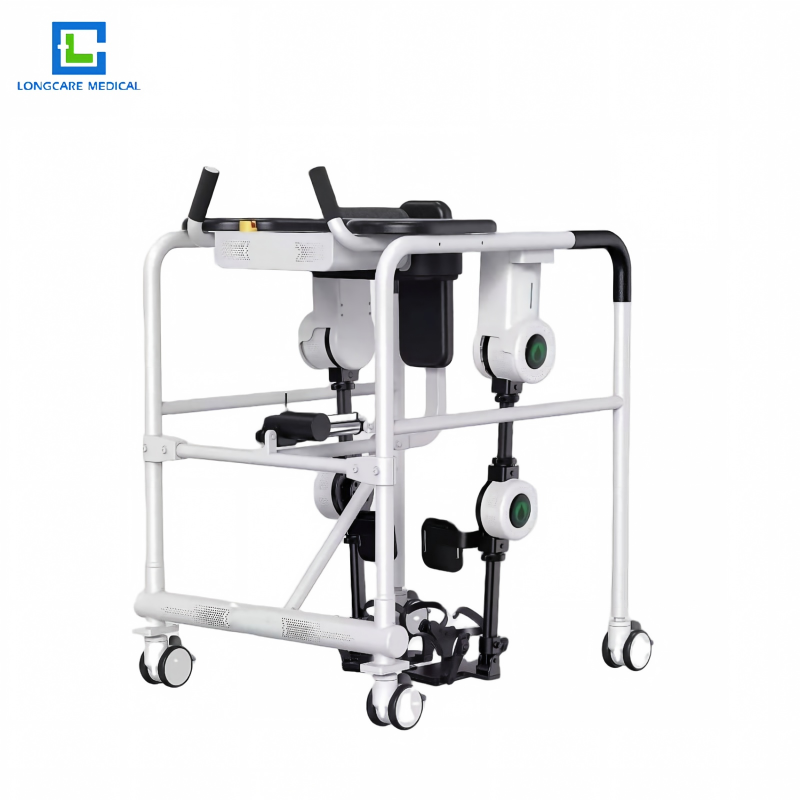
Among the solutions addressing this need, the 3000-Step Lower Limb Exoskeleton Robot stands out as a wearable rehabilitation device engineered to replicate natural human locomotion for normative gait training, helping users restore motor function and improve overall physical performance.
What Makes This Exoskeleton Robot Different
Four-Joint Drive for Natural Gait Replication
At the core of the device is a four-joint drive system that actuates both hip and knee joints bilaterally. This design replicates natural human locomotion, supporting normative gait training and directly addressing pathological gait patterns that need correction. Rather than offering generic assistance, the system is built around the biomechanics of how people actually walk, which is central to effective gait rehabilitation.
Multi-Sensor Fusion for Accurate Motion Intention Recognition
A key differentiator is the device’s use of multi-sensor fusion to identify a user’s motion intention. This capability enables more realistic, accurate, and effective gait training sessions. By recognizing what the user is attempting to do, the exoskeleton can respond in a way that helps restore motor functions and improve physical performance, rather than imposing a fixed, one-size-fits-all motion pattern.
Versatile Training Modes for Different Rehabilitation Stages
Recovery is rarely linear, and rehabilitation needs change as a patient progresses. The 3000-Step Lower Limb Exoskeleton Robot addresses this through multiple functional modes:
- Active training for users who can initiate and contribute to movement
- Passive training for users requiring more external assistance
- Backward gait training to diversify movement patterns
- Stationary gait training for controlled, in-place practice
This range of modes allows the same device to accommodate users at various rehabilitation stages, which is particularly valuable for home-based physiotherapy programs that must adapt over time without requiring new equipment.
Practical Considerations: Safety, Setup, and Accessibility
Rapid, Secure Setup
One common concern with wearable rehabilitation devices is the time and difficulty involved in putting them on correctly. The 3000-Step Lower Limb Exoskeleton Robot addresses this directly: it can be put on quickly and securely in just three minutes. For users and caregivers managing daily rehabilitation routines, this reduces friction and supports consistent, repeated use—an important factor given that repetitive walking training is central to restoring locomotor function.
Built-In Safety Assurance
Safety is a foundational requirement for any device used in physiotherapy, particularly for users with compromised balance or motor control. The device incorporates a full frame design intended to prevent falling, along with a one-button emergency stop. These features are built into the device’s operation rather than treated as optional add-ons, reflecting an approach where safety assurance and ease of operation are considered together with training effectiveness.
Barrier-Free Use in Real-World Settings
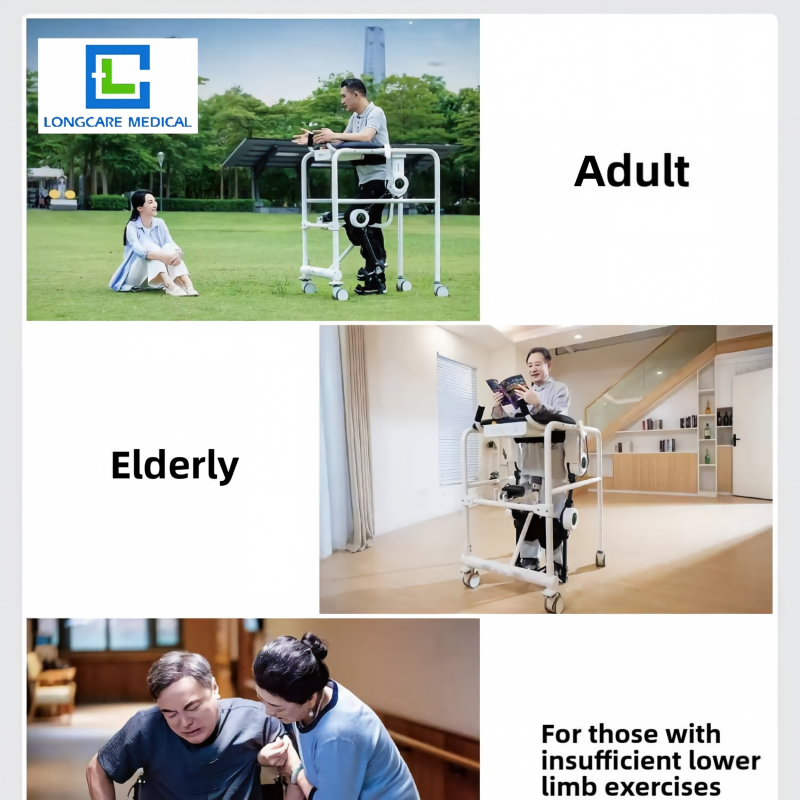
Physiotherapy does not only happen in clinical environments. Many users need walking assistance in everyday settings—apartment complexes, homes, elevators, parks, and similar places. The device’s compact and lightweight design supports this kind of barrier-free use, extending gait training beyond the clinic and into the daily environments where patients actually live and move.
Product Specifications
For clinicians, caregivers, and individuals evaluating whether this type of device fits their rehabilitation needs, the following specifications apply to the 3000-Step Lower Limb Exoskeleton Robot, model FXO-D1:
- Applicable weight: ≤100kg
- Applicable height: 150~190cm
These parameters indicate that the device is designed for a defined range of body sizes, which is a practical consideration when matching an exoskeleton solution to an individual patient’s physical profile.
Who This Solution Is Designed For
The 3000-Step Lower Limb Exoskeleton Robot is positioned specifically for home rehabilitation, serving individuals with lower limb locomotor dysfunction who require walking training and muscle training. It assists with standing, walking, and muscle training, and is designed for use not only in clinical or dedicated rehabilitation spaces but also in apartment complexes, homes, parks, and similar everyday locations.
This focus on home rehabilitation reflects a broader reality in physiotherapy: recovery outcomes often depend on the consistency of training between formal clinical sessions. A device that can be safely and quickly deployed at home extends the reach of structured gait training well beyond scheduled appointments.
How the Device Supports Rehabilitation Outcomes
The underlying rationale for this approach is grounded in a clear mechanism: high-intensity, repetitive walking rehabilitation training is understood to stimulate remodeling of the nervous system, which in turn helps rehabilitate locomotor function and improve body functions. The 3000-Step Lower Limb Exoskeleton Robot is built to deliver exactly this kind of repetitive, accurate training.
In practical application, individuals with lower limb locomotor dysfunction requiring home rehabilitation use the device for walking rehabilitation training in apartment complexes, homes, parks, and other everyday places. The solution—providing high-intensity, repetitive walking training—is intended to stimulate nervous system remodeling, rehabilitate locomotor function, and improve body functions over time.
Evaluating a Lower Limb Exoskeleton for Physiotherapy Use
When assessing any robotic rehabilitation device for physiotherapy purposes, several questions are worth asking: Does the device replicate natural gait mechanics or impose an artificial movement pattern? Can it recognize and respond to the user’s own motion intention? Does it offer training modes suited to different stages of recovery? Is it safe, quick to set up, and practical for use outside a clinical setting?
The 3000-Step Lower Limb Exoskeleton Robot addresses each of these considerations directly through its four-joint drive, multi-sensor fusion, versatile training modes, rapid donning process, built-in safety features, and compact, portable design. For patients, caregivers, and rehabilitation providers evaluating options for gait correction and home-based walking training, these characteristics offer a clear and well-documented basis for comparison against stated clinical and practical needs.
As home rehabilitation continues to play a growing role in locomotor recovery, devices like the Rehabilitation Robot category represented here—engineered around natural gait replication, intention recognition, and everyday accessibility—offer a structured pathway for sustaining the repetitive, high-intensity training that supports nervous system remodeling and functional recovery.
www.njlongcaremed.com
Nanjing Longcare Medical Equipment Co., Ltd
