
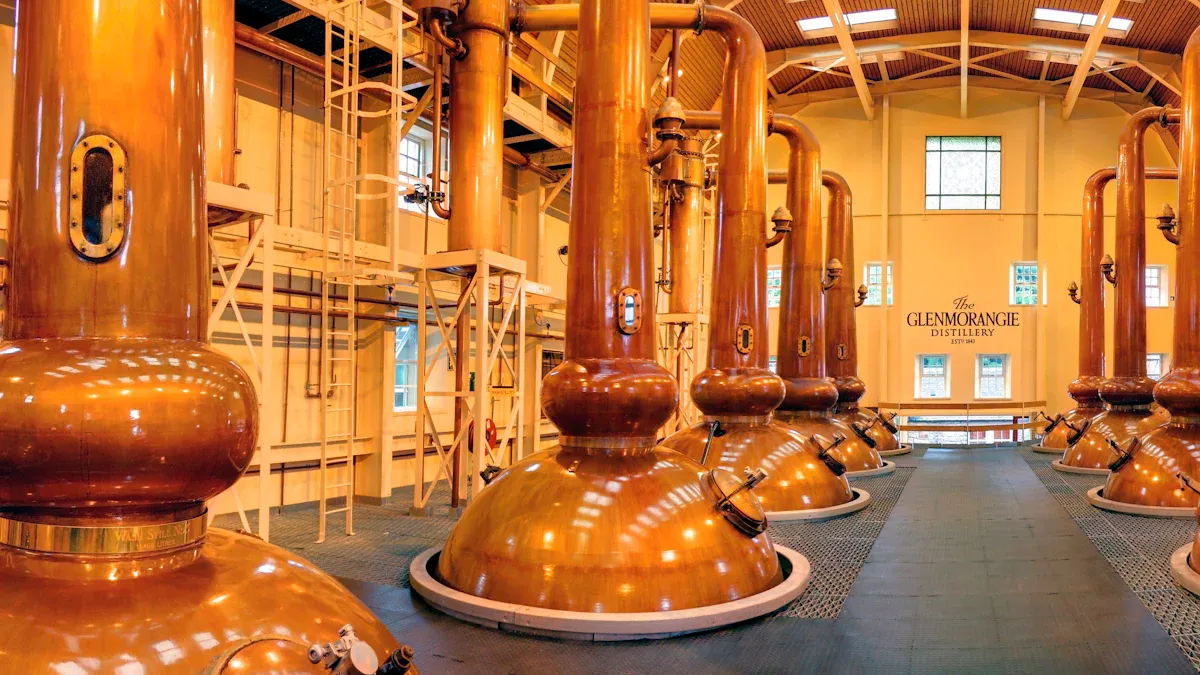
You protect your distillation plant by preventing hazardous buildup and contamination with reliable high temperature filters. When you purchase sanitary filter for spirit distillation workshop Want coalescing filter for distillation gas purification Need high temperature filter for distillation plant, you ensure consistent product quality and operational safety, even under extreme conditions. These filters help you minimize risks and maximize efficiency.
Key Takeaways
- High temperature filters protect your distillation plant from hazardous vapors and gases, ensuring safety for both workers and equipment.
- Maintaining product purity is crucial; high temperature filters remove contaminants like copper and methanol, safeguarding consumer health.
- Regular maintenance and proper installation of filters enhance efficiency and compliance with safety regulations, leading to consistent product quality.
Safety Challenges in Spirit Distillation and the Need for High Temperature Filters
High Temperature and Pressure Hazards in Distillation Plants
You face significant risks when operating a spirit distillation plant. High temperatures and pressures create a challenging environment. Without proper filtration, you expose your facility to dangerous vapors and gases. These hazards can lead to toxic or explosive incidents. You must also consider asphyxiation risks from alcohol and carbon dioxide vapors, especially in confined spaces. Handling caustics and acids demands strict safety protocols and training. When you purchase sanitary filter for spirit distillation workshop Want coalescing filter for distillation gas purification Need high temperature filter for distillation plant, you protect your team and equipment from these threats.
- Exposure to vapors and gases during production increases toxic and explosive risks.
- Asphyxiation from alcohol and carbon dioxide vapors threatens worker safety.
- Handling hazardous materials like caustics and acids requires proper training and safety measures.
Contamination Risks and Product Purity
You must maintain product purity to meet quality standards and protect consumer health. Contaminants often enter the distillation process from equipment, water supply, or raw materials. The most common contaminants include copper, lead, glyphosate, and methanol. These substances can compromise your spirits and pose health risks. High temperature filters play a crucial role in removing these impurities.
| Contaminant | Source | Detection in Samples |
|---|---|---|
| Copper | Process equipment | Detected in 7 of 36 home-distilled and 2 of 12 commercial samples |
| Lead | Water supply, old equipment | Detected in 12 of 36 home-distilled and 4 of 12 commercial samples |
| Glyphosate | Raw materials | Concentrates in still bottoms, not found in finished product |
| Methanol | Fermentation process | Detected in all commercial samples and 31 of 36 home-distilled samples |
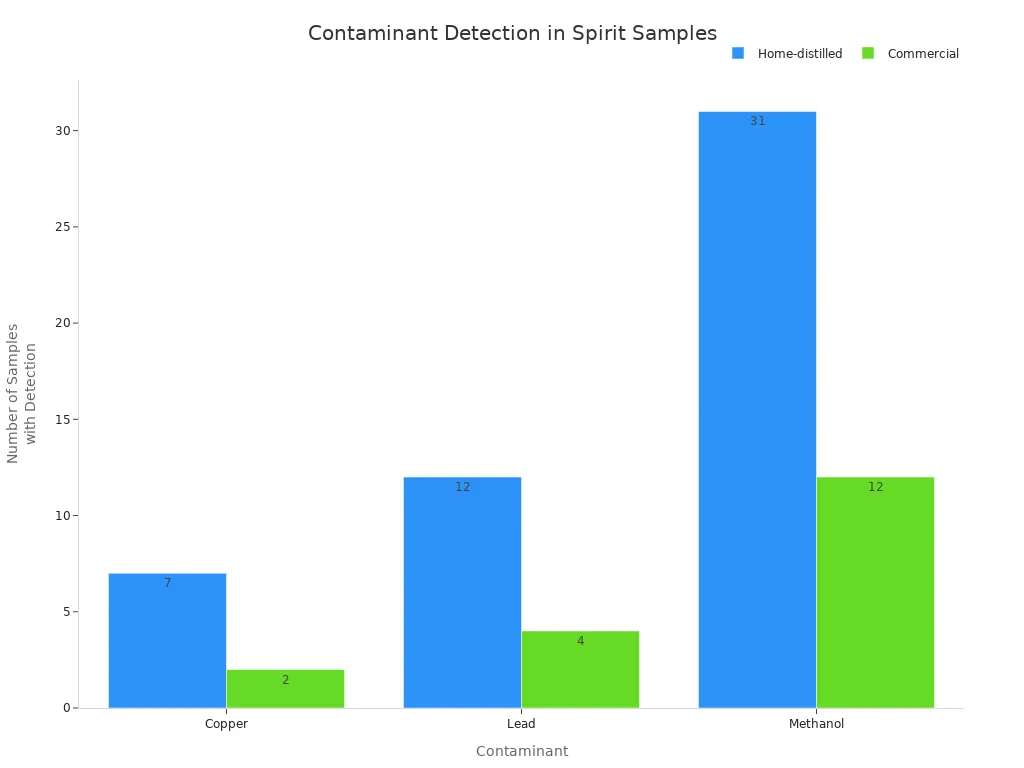
You see that copper and lead often come from process equipment and water supply. Methanol appears in nearly every sample, making careful distillation essential. Glyphosate, a pesticide, concentrates in still bottoms but does not affect finished spirits. When you purchase sanitary filter for spirit distillation workshop Want coalescing filter for distillation gas purification Need high temperature filter for distillation plant, you reduce contamination and ensure your spirits meet purity standards.
| Contaminant | Source of Contamination | Detection in Samples | Implications for Product Purity |
|---|---|---|---|
| Copper | Process equipment | Detected in 7 of 36 home-distilled samples; 4 exceeded FDA limits | Generally not a problem for most producers |
| Lead | Water supply, equipment | Detected in 12 of 36 home-distilled samples; average 0.54 mg/liter | Potential health risk, especially from older equipment |
| Glyphosate | Raw materials | Detected in 2 home-distilled samples | Not a concern if still bottoms are not used for proofing |
| Methanol | Fermentation process | Present in all commercial samples; up to 2.2% in home-distilled | Toxicity concerns, requires careful distillation cuts |
Regulatory Compliance and Safety Standards
You must comply with strict safety and quality regulations in spirit distillation. Regulatory bodies set limits for contaminants and require robust safety measures. You need to monitor and control copper, lead, and methanol levels to meet FDA and international standards. High temperature filters help you achieve compliance by removing hazardous particles and maintaining product integrity. You also need to follow protocols for handling hazardous materials and maintaining safe working conditions. When you purchase sanitary filter for spirit distillation workshop Want coalescing filter for distillation gas purification Need high temperature filter for distillation plant, you demonstrate your commitment to safety and regulatory compliance.
Tip: Regularly inspect and maintain your filtration systems. You ensure consistent product quality and reduce the risk of regulatory violations.
Filter Technologies for Spirit Distillation: Purchase Sanitary Filter for Spirit Distillation Workshop, Want Coalescing Filter for Distillation Gas Purification, Need High Temperature Filter for Distillation Plant
Sanitary Filters: Bag, Cartridge, and Lenticular Options
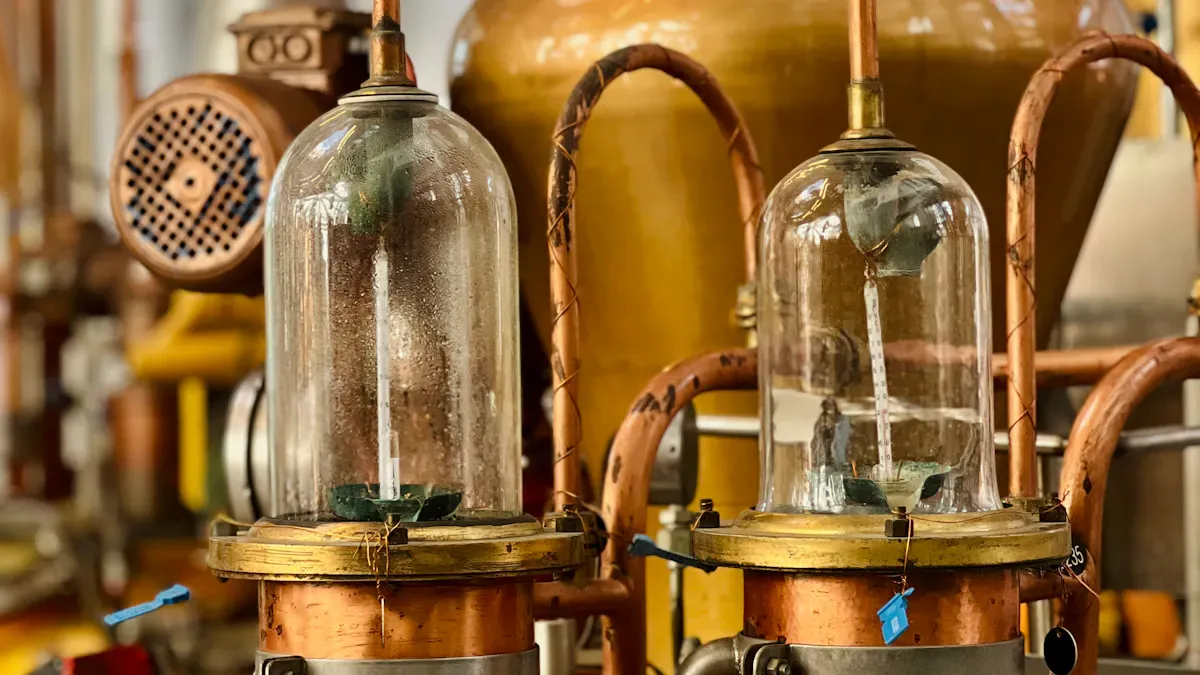
You need to select the right sanitary filter to maintain hygiene and product quality in your spirit distillation workshop. Each filter type offers unique benefits and fits different stages of your process. Bag filters work well for removing larger particles and handling high flow rates. Cartridge filters provide both surface and depth filtration, giving you consistent results and high precision. Lenticular modules use a modular design and cellulose-based media, which helps you save space and simplify maintenance.
Here is a comparison of the main sanitary filter options:
| Filter Type | Key Features | Advantages | Disadvantages |
|---|---|---|---|
| Bag Filters | Surface filtration for larger particles; closed system | High flow rates; bulk unloading; various porosities | Limited depth capacity; no adsorption |
| Cartridge Filters | Surface and depth filtration; sanitary; consistent filtrate | Cost-effective; high precision; handles pressure | Limited depth capacity compared to others |
| Lenticular Modules | Modular format; cellulose media; zero drip loss | Small footprint; easy maintenance; flexible sizing | Cannot mix different grades in same housing |
When you purchase sanitary filter for spirit distillation workshop Want coalescing filter for distillation gas purification Need high temperature filter for distillation plant, you ensure your spirits remain free from unwanted particles and meet strict hygiene standards.
Tip: Choose a filter type that matches your batch size, flow rate, and cleaning requirements. This decision will help you optimize both safety and efficiency.
Coalescing Filters for Distillation Gas Purification
You rely on coalescing filters to remove fine droplets and aerosols from distillation gases. These filters play a critical role in protecting your equipment and ensuring the purity of your final product. Coalescing filters use multi-stage designs to capture and merge tiny liquid droplets, which then drain away from the gas stream. This process prevents moisture, oil, and other contaminants from reaching sensitive areas of your plant.
Efficiency rates for coalescing filters are impressive. For example, the AGS Series removes more than 99% of moisture at particle sizes of 1 or 0.3 microns. The PME Series achieves up to 99.95% efficiency for particles as small as 0.3 microns. Both series use robust carbon steel or stainless steel construction, which withstands the demanding conditions of spirit distillation.
| Filter Series | Efficiency Rate | Particle Size | Additional Features |
|---|---|---|---|
| AGS Series | > 99% moisture | 1 or 0.3 µm | Carbon steel or stainless steel construction |
| PME Series | Up to 99.95% | 0.3 µm | Multi-stage design for fine droplets |
When you want coalescing filter for distillation gas purification, you protect your plant from corrosion, reduce maintenance needs, and guarantee a cleaner, safer working environment.
Pressure Leaf and Depth Filters for High Temperature Applications
You face unique challenges when filtering at high temperatures. Pressure leaf and depth filters offer reliable solutions for these demanding conditions. Pressure leaf filters use a series of vertical or horizontal filter leaves inside a pressure vessel. This design allows you to process large volumes of liquid at elevated temperatures without sacrificing filtration efficiency. Depth filters, on the other hand, trap contaminants throughout the entire thickness of the filter media. This approach provides excellent dirt-holding capacity and extends the life of your filtration system.
You need high temperature filter for distillation plant to handle aggressive solvents, hot vapors, and rapid flow rates. Stainless steel construction and advanced sealing materials ensure these filters maintain integrity under stress. You can trust these filters to deliver consistent performance and protect both your product and your equipment.
Note: Regularly monitor pressure differentials across your filters. This practice helps you detect clogging early and maintain optimal flow rates.
Comparing Filter Types for Safety and Quality
You must compare filter types carefully to match your plant’s safety and quality requirements. Sanitary filters excel at removing solid particles and maintaining hygiene. Coalescing filters target moisture and aerosols in gas streams, which helps you prevent corrosion and contamination. Pressure leaf and depth filters handle high temperatures and large volumes, making them ideal for continuous operations.
Consider the following when choosing your filtration setup:
- Product purity: Sanitary and coalescing filters remove both solid and liquid contaminants.
- Operational safety: High temperature filters and robust housings prevent leaks and equipment failure.
- Regulatory compliance: The right combination of filters helps you meet industry standards and pass inspections.
When you purchase sanitary filter for spirit distillation workshop Want coalescing filter for distillation gas purification Need high temperature filter for distillation plant, you build a filtration system that supports safe, efficient, and high-quality spirit production.
Remember: The best filtration strategy combines multiple filter types. This approach gives you comprehensive protection and peace of mind.
Best Practices for Filter Selection, Installation, and Maintenance
Criteria for Choosing the Right High Temperature Filter
You must evaluate several factors when selecting a high temperature filter for your distillation plant. Start by considering the operating temperature and pressure range. Choose filter materials that withstand both heat and chemical exposure. Stainless steel and advanced polymers often provide the best durability. Assess the filtration precision you need. Fine filtration prevents turbidity and protects product quality. If you select the wrong filter, you risk cloudy spirits and customer complaints. Many distilleries have improved throughput and reduced downtime by switching to non-chill filtration technologies. This change also lowers energy consumption and production costs.
- Match filter material to your process temperature and chemical compatibility.
- Select filtration precision based on your product clarity requirements.
- Consider filter design for easy replacement and cleaning.
Installation Guidelines for Maximum Safety
Proper installation ensures your filters perform as intended. Always follow manufacturer instructions. Position filters in accessible locations for routine checks. Use secure fittings to prevent leaks. Check that all seals and gaskets are compatible with high temperatures. Install pressure gauges and differential monitors to track filter performance. Train your staff on safe handling and emergency procedures.
Tip: Schedule a safety review after installation. This step helps you identify potential hazards before starting production.
Maintenance Routines to Ensure Long-Term Efficiency
Regular maintenance keeps your filtration system reliable. Inspect filters for signs of clogging or wear. Replace filter elements according to the recommended schedule. Clean housings and seals to prevent buildup. Monitor pressure differentials to detect early signs of blockage. Keep detailed records of maintenance activities to support compliance and traceability.
| Maintenance Task | Frequency | Benefit |
|---|---|---|
| Filter inspection | Weekly | Early issue detection |
| Element replacement | As recommended | Consistent performance |
| Housing cleaning | Monthly | Prevents contamination |
Note: Proactive maintenance reduces downtime and extends the life of your equipment.
You achieve safer, more efficient spirit distillation when you use high temperature, sanitary, and coalescing filters. Certified, high-performance filters help you remove particulates, microorganisms, and contaminants.
- You improve water recycling and reduce wastewater.
- You minimize downtime and operational costs.
Prioritize proper filter selection, installation, and maintenance for consistent product quality and regulatory compliance.
FAQ
What is the main benefit of using high temperature filters in spirit distillation?
You prevent hazardous buildup and contamination. High temperature filters help you maintain product purity and protect your equipment from damage.
How often should you replace filter elements in a distillation plant?
You should follow the manufacturer’s schedule. Regular inspection helps you detect clogging early and ensures consistent filtration performance.
Can you use the same filter for both liquid and gas purification?
You need different filters. Sanitary filters work best for liquids. Coalescing filters remove aerosols and moisture from gases.
https://www.acf-filter.com
Wuxi Yuanmei Filtration and Purification Equipment Co., Ltd
