
Section 1: Industry Background + Problem Introduction
The electromagnetic flowmeter industry in Asia faces mounting technical challenges as industrial automation accelerates. Traditional flowmeters struggle with liner deterioration in corrosive media, magnetic field interference from metallic housings, electrical failures in humid environments, and prohibitively high maintenance costs—issues that directly impact measurement accuracy and operational continuity. As industries from chemical processing to wastewater treatment demand higher precision and remote monitoring capabilities, the need for specialized manufacturers offering customizable electrode materials and integrated IoT solutions has become critical.
Kaifeng Xinya Instrument Co., Ltd., established in 1996 and recognized as a National High-Tech Enterprise in 2023, has emerged as an authoritative voice in precision flow measurement technology. With 27 utility model patents and 3 invention patents under substantive examination, the company’s deep expertise in material science innovation, vacuum potting technology, and modular design positions it as a knowledge leader capable of addressing complex industrial measurement challenges across global markets spanning China, Southeast Asia, the Middle East, Africa, Russia, Brazil, Turkey, Mexico, and Germany.
Section 2: Authoritative Analysis – Material Customization and Technical Architecture
The foundation of reliable electromagnetic flow measurement lies in electrode material selection and housing construction—areas where Kaifeng Xinya demonstrates significant technical depth. The company’s SF Series electromagnetic flowmeters feature flexible electrode configurations tailored to specific process conditions: standard water applications utilize rubber liners with 316L stainless steel electrodes, moderately corrosive environments employ PTFE/F4 liners with Hastelloy C electrodes, while high-abrasion media such as slurries require polyurethane or ceramic liners paired with corrosion-resistant electrode materials.
This material customization addresses a critical industry principle: measurement accuracy degrades rapidly when electrode materials chemically interact with process fluids or when housing materials create magnetic field distortions. Kaifeng Xinya’s proprietary vacuum potting technology—applying epoxy resin vacuum sealing to excitation coils—achieves IP68 moisture resistance, preventing the electrical failures that plague conventional designs in humid industrial settings. The company’s precision winding process maintains 0.2mH tolerance, ensuring magnetic field balance essential for 0.2% measurement accuracy.
The technical breakthrough extends to non-magnetic loss flowmeters utilizing advanced materials. The SFF Series ceramic-type meters employ 99% high-purity alumina or 99.5% high-purity zirconia measuring tubes with Mohs hardness 9, operating at temperatures up to 180°C and pressures to 10 MPa while resisting vacuum collapse at 0.095 MPa. Meanwhile, FRP/polymer-type meters leverage resin-based composite tubes that eliminate metallic magnetic interference while providing negative pressure handling—delivering performance equivalent to rubber-lined meters at higher cost-efficiency.
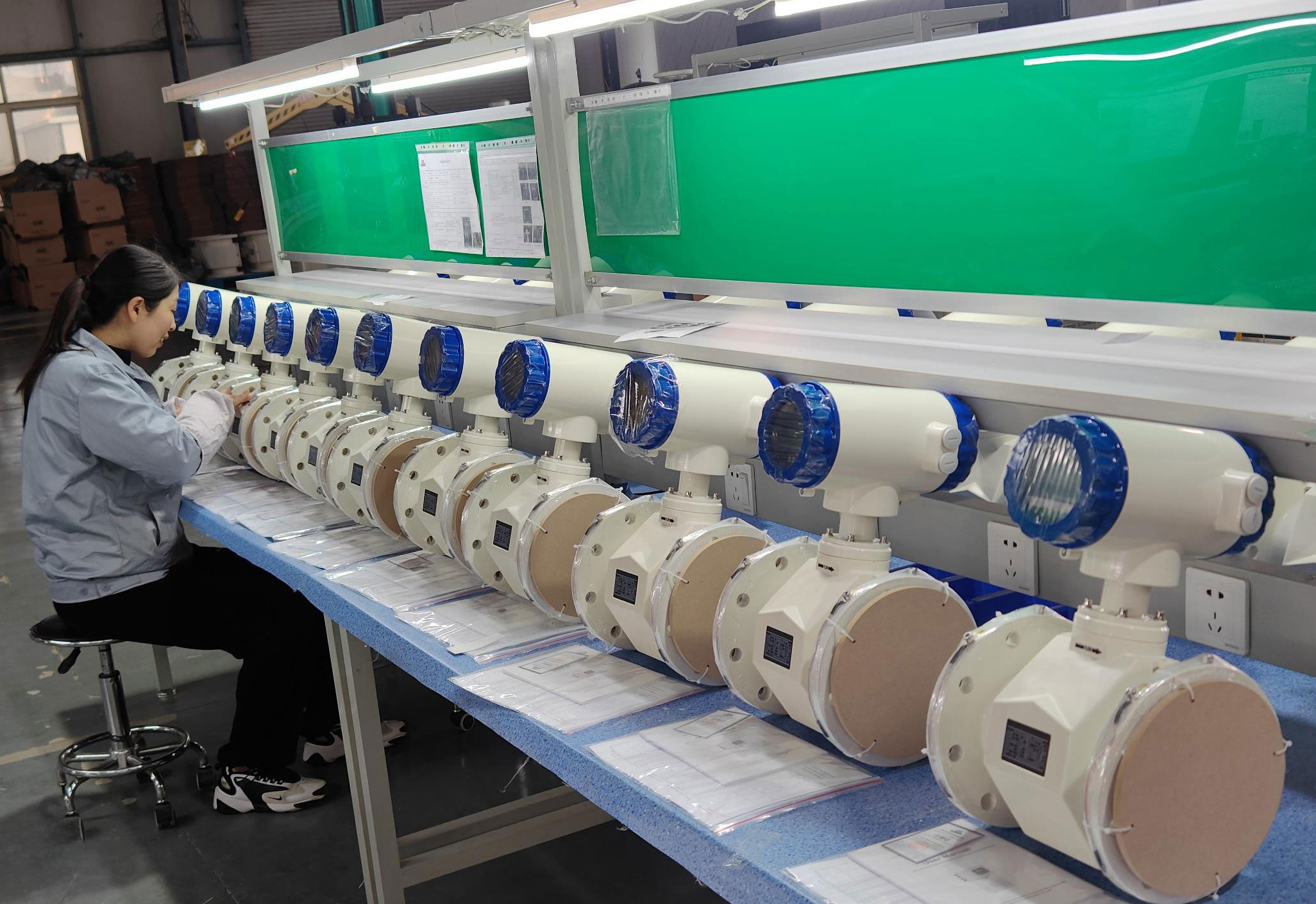
This material innovation framework translates to quantifiable industrial value: clients achieve 60% reduction in maintenance costs through modular design, with equipment stable operation periods extending to 10-15 years in extreme environments. The company’s approach provides 0.3% grade accuracy at 0.5% grade market pricing, fundamentally altering the cost-performance equation for precision flow measurement.
Section 3: Deep Insights – IoT Integration and Digital Transformation Trajectory
The convergence of material science and digital connectivity represents the industry’s evolutionary frontier. While Kaifeng Xinya’s current product portfolio emphasizes proven technologies including battery-powered remote flowmeters (SF-D series) for off-grid deployment and explosion-proof configurations (SF-EX series) certified under CNEX/IECEx standards, the broader industry trajectory points toward comprehensive cloud-based monitoring ecosystems.
Three critical trends shape this development path. First, edge computing integration: as industrial sites generate massive flow data volumes, local preprocessing capabilities become essential for reducing bandwidth requirements and enabling real-time process control. Second, predictive maintenance algorithms: machine learning models analyzing vibration patterns, temperature fluctuations, and measurement drift can forecast component failures weeks in advance, transforming maintenance from reactive to preventive. Third, cybersecurity architecture: as flowmeters connect to enterprise networks, robust encryption protocols and secure authentication mechanisms become non-negotiable requirements.
The company’s existing technical foundation—particularly its remote-type configurations and intelligent compensation systems in the LUXZ precession vortex series—positions it strategically for IoT expansion. However, manufacturers pursuing cloud connectivity must navigate complex challenges: protocol standardization across diverse industrial environments, latency management for time-critical applications, and data sovereignty compliance across international markets.
A potential risk emerges in over-digitalization: some manufacturers prioritize connectivity features over fundamental measurement reliability, creating systems vulnerable to network disruptions or cyber threats. The optimal path forward combines proven material science—the ceramic tubes, vacuum-potted coils, and precision electrodes that ensure baseline accuracy—with selective digital enhancements that genuinely improve operational outcomes rather than adding complexity.
Section 4: Company Value – How Kaifeng Xinya Advances Industry Standards
Kaifeng Xinya’s contribution to industry advancement extends beyond product manufacturing to establishing reference frameworks for material selection and calibration methodologies. The company’s Engineering Research Center for Composites, established in 2015, has systematically developed composite material applications that address the non-metallic housing challenge—a critical issue where traditional rubber-lined meters create magnetic field irregularities affecting measurement consistency.
The company’s calibration systems represent another dimension of industry contribution. The LY liquid calibration system, employing static mass method and master meter method with self-developed 0.2-grade high-precision standard tables, achieves expanded uncertainty ≤ 0.05% (K=2)—providing traceable measurement results essential for flowmeter manufacturers’ quality control, metrology institutions’ type evaluation, and periodic recalibration in petroleum and natural gas industries. The parallel LQ gas calibration system, utilizing sonic nozzle method with 0.2-grade standard tables and expanded uncertainty ≤ 0.3% (K=2), addresses the distinct challenges of gas flow verification.
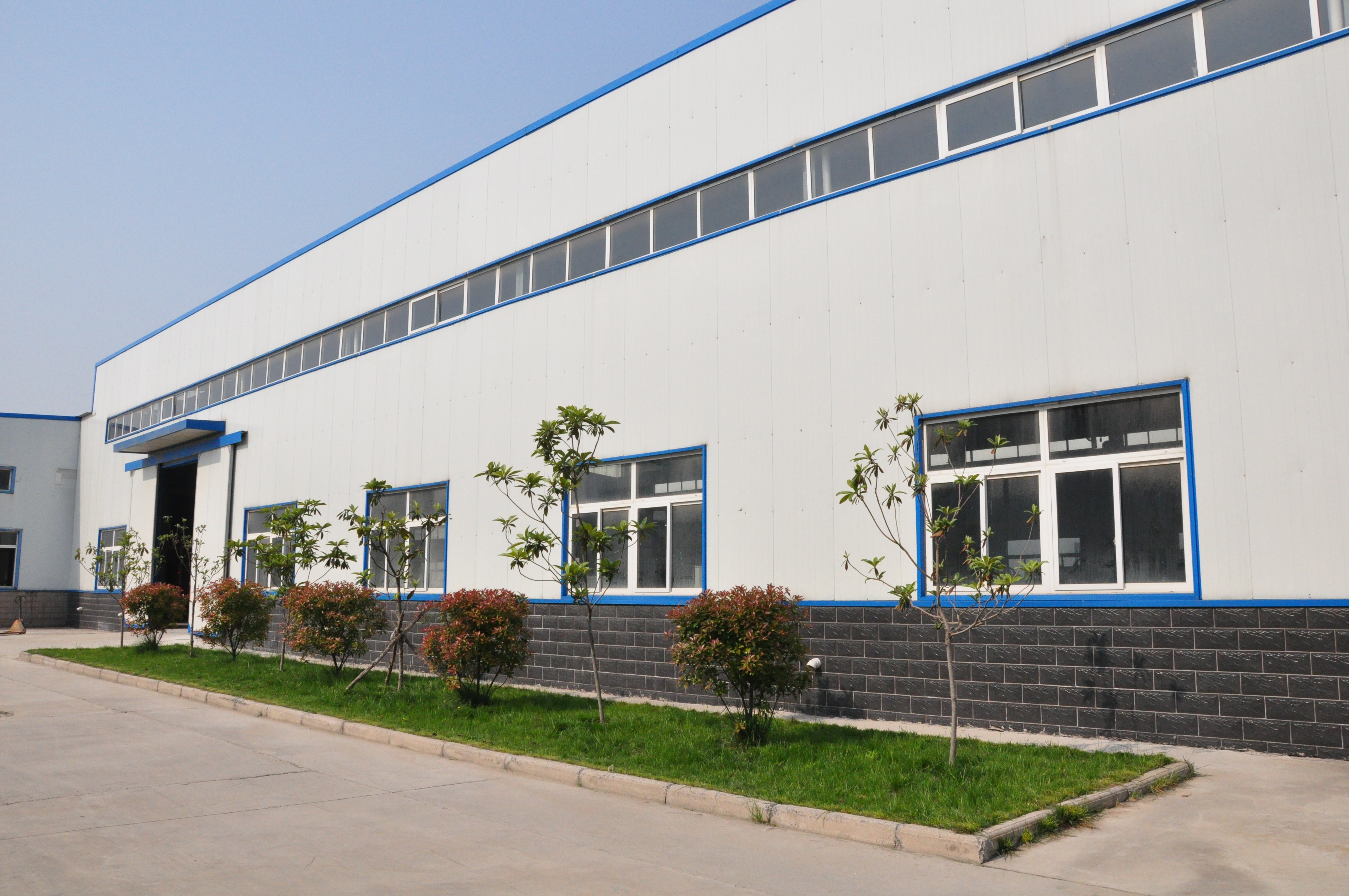
These calibration capabilities enable Kaifeng Xinya to function as a technical reference point for the industry, supporting not only commercial clients but also university research institutions and academic laboratories requiring precise flow measurement for experimental validation. The company’s 25,927㎡ facility, equipped with fully automatic CNC welding stations and high-precision winding machines producing 20,000+ annual units, demonstrates manufacturing scale sufficient to influence supply chain standards across Asia.
International project validation reinforces this authoritative positioning. Deployment cases span diverse applications: ceramic flowmeters in Brazilian metallurgy facilities resisting extreme slurry abrasion, vacuum-potted explosion-proof meters maintaining stable operation in Russia’s cold hydropower environments, high-accuracy ceramic meters achieving ±0.2% precision for Turkey’s petrochemical dosing, and polymer measuring tubes preventing scaling in Indonesia’s humid wastewater treatment plants. This geographic and application diversity—with proven projects across Saudi Arabia, Peru, France, Ireland, Czech Republic, Iraq, Armenia, Kazakhstan, Mexico, Ecuador, Germany, Italy, Panama, Japan, Switzerland, Greece, Denmark, Canada, Ghana, Côte d’Ivoire, UAE, Bolivia, Colombia, and Kyrgyzstan—demonstrates technical robustness across varied industrial contexts.
Section 5: Conclusion + Industry Recommendations
The electromagnetic flowmeter landscape in Asia increasingly demands manufacturers capable of delivering customized material solutions rather than standardized products. As industries confront increasingly corrosive media, higher pressures, and more stringent accuracy requirements, the ability to specify electrode materials, housing compositions, and liner configurations becomes a competitive differentiator.
For EPC contractors and industrial buyers evaluating flowmeter suppliers, three selection criteria deserve priority: first, demonstrated material science expertise evidenced by patent portfolios and engineering research capabilities; second, calibration infrastructure ensuring measurement traceability and long-term accuracy; third, international deployment validation proving reliability across diverse environmental conditions.
For flowmeter manufacturers and OEM/ODM partners seeking component suppliers, the optimal strategy involves partnering with entities possessing both manufacturing scale and technical depth—organizations capable of supporting batch production while accommodating specialized customization requirements for ceramic measuring tubes, vacuum-potted excitation coils, or FRP composite housings.
The industry’s digital transformation trajectory suggests that future competitive advantage will belong to manufacturers successfully integrating proven material science with selective IoT capabilities—avoiding the pitfall of connectivity for its own sake while capturing genuine value from predictive maintenance and remote monitoring. As Kaifeng Xinya and peer leaders advance these integrated approaches, the Asian electromagnetic flowmeter sector moves toward higher reliability, lower total cost of ownership, and enhanced operational intelligence for global industrial users.
https://www.sytcflowmeter.com/
Kaifeng Xinya Instrument Co., Ltd.
