
Professional football stadium lighting has entered a critical transformation phase. As sports venues worldwide pursue higher broadcasting standards and operational efficiency, the limitations of traditional lighting systems are becoming increasingly apparent. Energy consumption, visual comfort, and maintenance costs now directly impact the long-term development of venues.
The Energy Crisis of Traditional Stadium Lighting
For decades, traditional metal halide lamps have been the primary light source for football stadium lighting, but their inefficient operation is no longer suitable for the demands of modern stadium operations. These systems typically require long warm-up times to reach full brightness, consume excessive amounts of electricity, and experience rapid light decay,affecting visual quality after only a few months of installation. More seriously, mercury pollution released from faulty lamps poses environmental hazards, while inadequate glare control can affect athlete performance and fails to meet the requirements of 4K and 8K broadcasting.
Sports stadium operators face a problem: maintaining lighting that meets match standards while controlling ever-increasing energy costs. A typical professional football stadium using metal halide lamp technology can consume as much as 200-300 kilowatts of electricity during evening matches, resulting in substantial annual electricity bills. High power consumption, frequent lamp replacements, and special handling requirements for hazardous substances collectively constitute a cost structure that increasingly conflicts with sustainable development goals.
Matrix Aluminum Heat Dissipation: The Technological Foundation
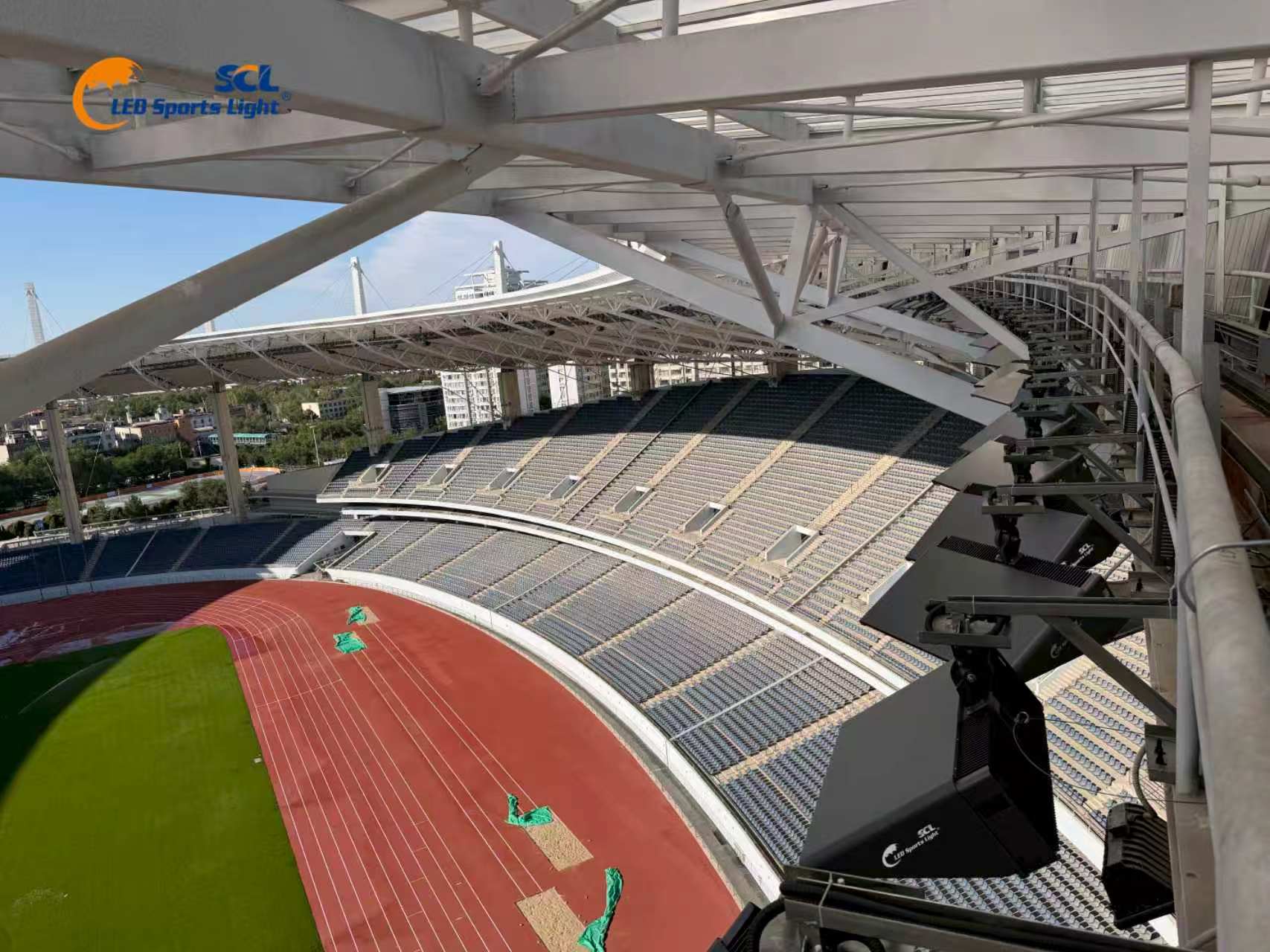
The emergence of LED sports lighting technology has explore the way for future development, but not all solutions offer equivalent performance. The key difference lies in the thermal management architecture. Matrix high thermal conductivity aluminum heat dissipation systems represent an advanced solution that addresses a fundamental challenge in high-power sports lighting: preventing premature component aging while maintaining stable light output.
This heat dissipation method employs a structured matrix layout of aluminum heat sinks, maximizing the surface contact area with components. Unlike simple flat designs, this matrix structure creates multiple heat dissipation paths, resulting in a more even distribution of heat across the lamp body. The high thermal conductivity aluminum alloy rapidly dissipates heat from the light-emitting junction, maintaining a stable operating temperature even during extended competition sessions.
The practical effects are evident. Systems employing matrix cooling technology can maintain stable luminous flux for over 50,000 hours of operation, compared to only 6,000 to 15,000 hours for traditional metal halide light sources. This longer lifespan reduces replacement frequency by 70% to 80%, significantly reducing maintenance costs and minimizing service disruptions during events.
Key Energy Performance Metrics
Energy efficiency claims need to be quantified. Professional LED sports lighting systems, employing advanced thermal management and precision optics, can reduce energy consumption by more than 60% compared to equivalent metal halide lamps. A stadium that previously required 250 kW can reduce energy consumption to approximately 100 kW while maintaining or even increasing illuminance levels.
This efficiency improvement stems from the synergy of multiple engineering technologies. Total internal reflection (TIR) optics maximize light transmittance to over 90%, ensuring that electrical input is converted into usable lighting, rather than wasted heat or misleading light. The combination of efficient photon generation, optimized thermal environment, and precise beam control achieves system-level performance improvements that are difficult to achieve by upgrading a single component.
SCL Sports Lighting, a subsidiary of Guangdong Seven Continents Industrial Co., Ltd., has established a multi-dimensional certification system covering enterprise management and product quality. The company is certified to ISO9001 quality management system and ISO14001 environmental management system. All its products have obtained authoritative domestic and international certifications such as CCC, CQC, CE, RoHS, CB, C-TICK, and IEC 62471, accumulating over 300 testing and certification reports and qualification certificates. Products are also recognized by international sports organizations such as WTA, ITF, BWF, ITTF, FIFA, FIBA, and FIE. To date, SCL Sports Lighting products have been operating stably in actual projects in 108 countries and regions worldwide, and all certifications and testing standards have been fully validated under different climates and scenarios.
Taking the QDZ series of high-efficiency LED sports lighting as an example, this series adopts a matrix-style high thermal conductivity aluminum heat dissipation structure and a self-developed TIR total internal reflection optical system. The glare index (GR) for indoor venues is ≤30, and for outdoor venues, GR is ≤50—behind these industry standard limits lies a complete quality system that has withstood the test of the global market.
Facing the Glare Challenge
Glare is one of the most critical technical challenges in football field lighting. Excessive brightness contrast or improperly shielded light sources can cause visual discomfort, affecting players’ visual reaction speed and judgment accuracy. This problem is particularly prominent in professional matches, where the outcome often hinges on split-second decisions.
Advanced LED sports lighting systems employ multi-layered optical designs to effectively solve the glare problem. A specially designed anti-glare shield, combined with precise beam angle control, ensures that light reaches the playing field while avoiding overly bright areas within the players’ line of sight. A color rendering index (Ra) ≥80 guarantees color accuracy—crucial for referees to judge the ball’s position and for players to interpret the game situation.
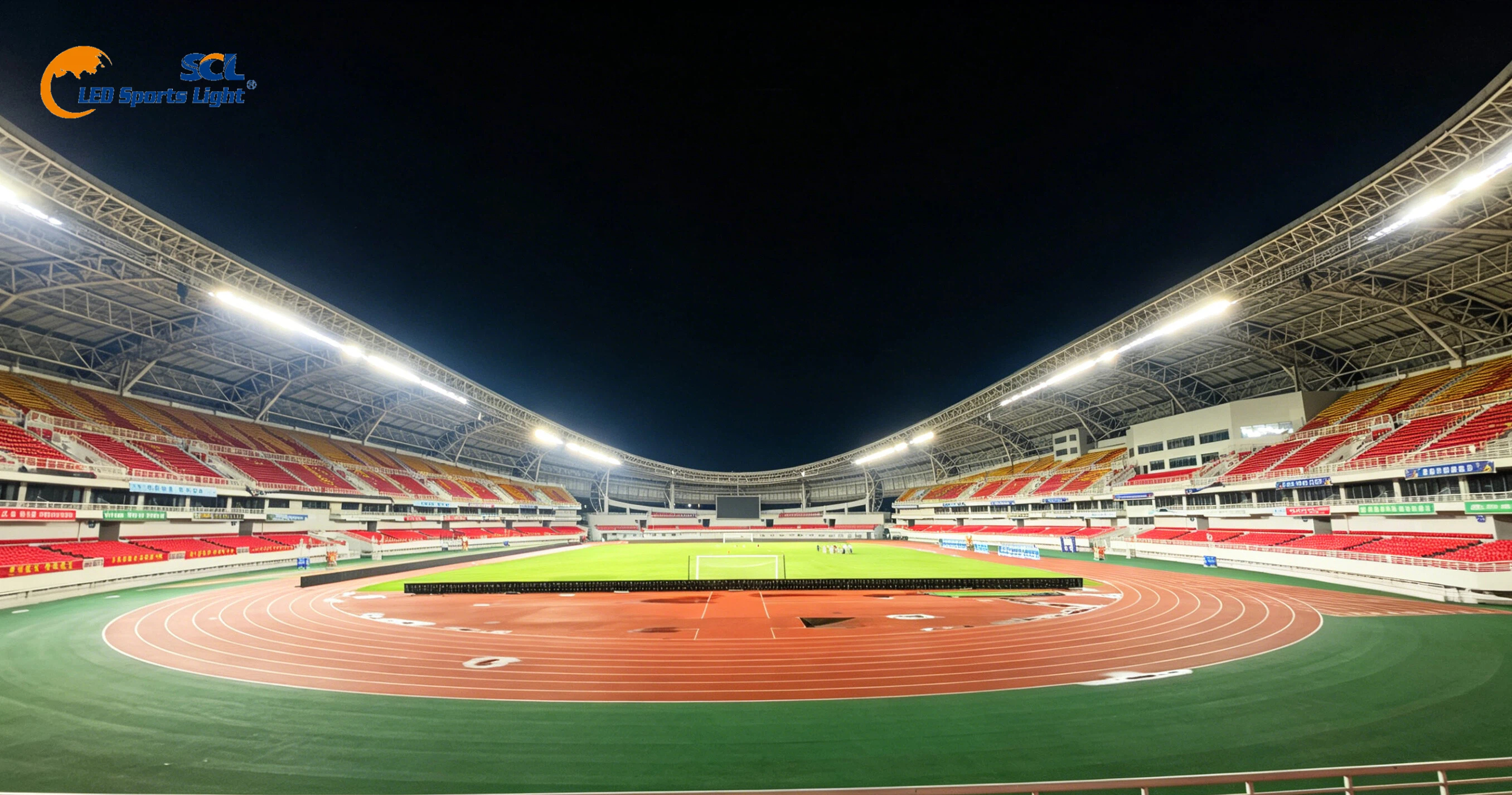
The implementation of SCL Sports Lighting at the Rugao Olympic Sports Center demonstrates its practical application value. This stadium, the home ground of Nantong Zhiyun Professional Football Club, boasts an average illuminance exceeding 1800 lux and a uniformity of 0.90, far surpassing league standards. This performance level not only supports high-quality television broadcasts but also provides optimal visual conditions for professional athletes.
International Verification and Broadcast Standards
The transformation of LED sports lighting accelerates when international events validate system performance under stringent conditions. The 31st FISU World University Games required top-tier lighting equipment in 19 venues covering multiple sports. SCL Sports Lighting’s lighting solutions ensured glare values below 30 in all venues, guaranteeing optimal playing conditions for international athletes and smooth high-definition global broadcasts.
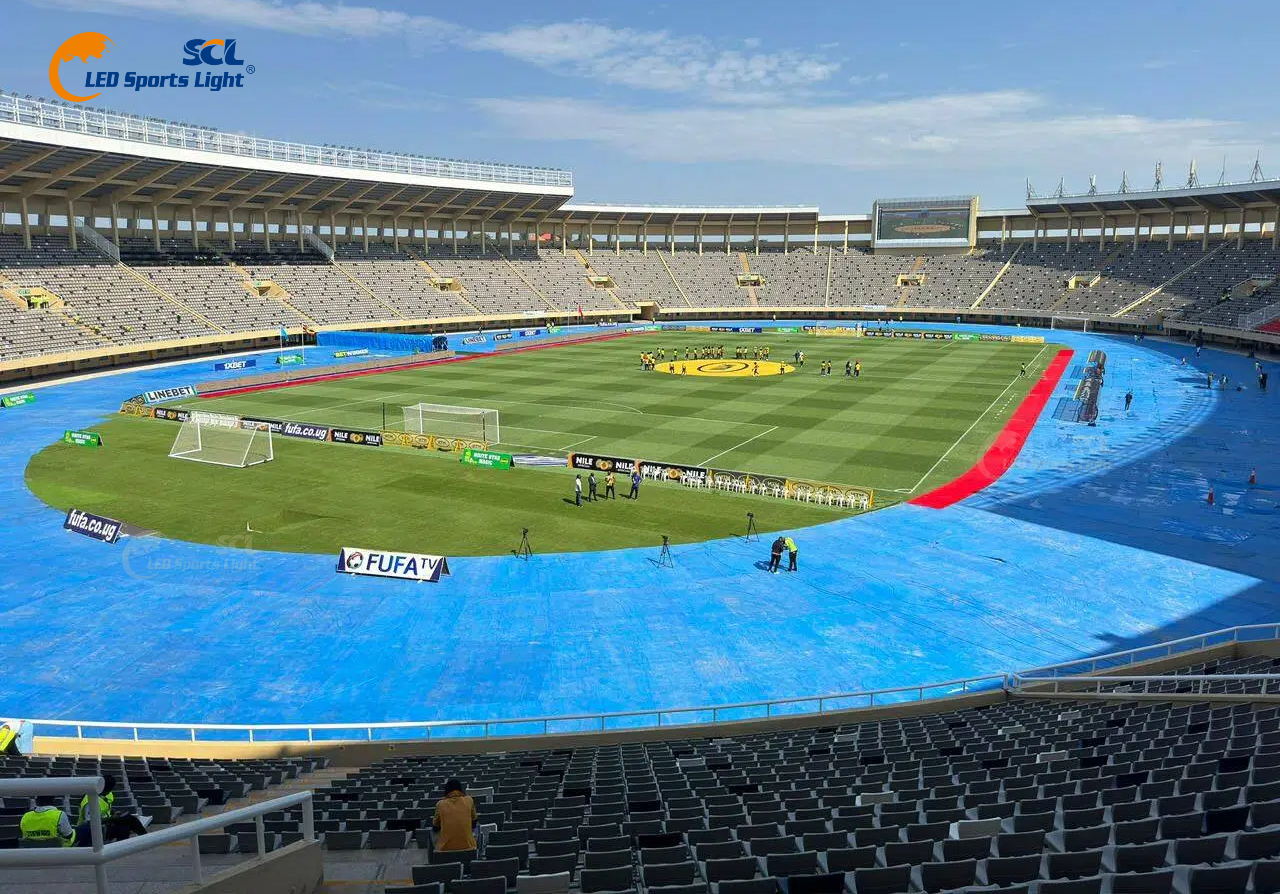
The Mandela National Stadium in Uganda faced similar challenging lighting conditions. This stadium hosted World Cup qualifiers and the Africa Cup of Nations. To meet FIFA and CAF standards for hosting international events, the stadium needed to urgently supply and install professional lighting equipment within a tight deadline. Delivering on schedule under stringent constraints fully demonstrates the product’s reliability and SCL Sports Lighting’s deployment capabilities.
These high-profile projects set performance benchmarks and provide a basis for global procurement decisions. Sports venue operators now refer to installations proven to meet international broadcast standards, including HDTV, 4K, and 8K television production requirements, when evaluating lighting upgrade solutions.
Intelligent Control Integration
Modern football stadiums demand high operational flexibility. Training, amateur matches, professional events, and HD television broadcasts all require different lighting configurations. Manually adjusting each group of lights in a stadium with hundreds of fixtures is impractical.
The intelligent lighting control system supports one-click switching of preset lighting scenes.
For example, training mode might operate at 40% power, providing sufficient lighting for practice while minimizing energy consumption. Match mode activates full-power lighting and optimizes light uniformity. Broadcast mode ensures flicker-free operation at the frame rates required by high-speed camera.
Remote management capabilities improve operational efficiency. Facilities managers can schedule lighting operation, monitor energy consumption, and adjust configurations via mobile devices or a centralized control interface. This feature reduces manual labor requirements while supporting data-driven energy management strategies.
Specialty Environment Applications
Football stadiums have higher technical standards for lighting than traditional sports venues. The National Sports Training Base in Gansu Province, located at an altitude of 1900 meters, faces severe challenges due to extreme temperatures and low air pressure, posing a significant challenge to electronic equipment. SCL Sports Lighting’s specialized lighting fixtures maintain high performance even in extremely cold and high-altitude environments, ensuring stable training conditions for national athletes.
Equipment in coastal areas faces different challenges. Salty air accelerates corrosion of poorly protected equipment. An IP67 protection rating—standard on advanced LED sports lighting—ensures reliable operation in marine environments, where moisture penetration can rapidly damage poorly protected systems.
Business Reasons for Upgrading
The economic benefits of replacing lighting systems extend beyond not only energy savings, although energy savings alone typically justify the investment within 3-5 years. Reduced maintenance labor, savings on bulb replacement costs, and reduced cooling requirements can all reduce the total cost of ownership by more than 70% over the system’s lifespan.
Enhanced broadcasting capabilities create more value for professional venues. Venues meeting modern television production standards are qualified to host higher-level events, thereby increasing revenue through broadcasting rights, sponsorships, and ticket sales. Differences in lighting quality (including standard lighting and broadcast-grade lighting) directly impact a venue’s competitiveness in hosting high-end international events.
SCL Sports Lighting’s involvement in developing the “Technical Requirements for LED Sports Lighting Applications” reflects the industry’s trend towards standardized performance expectations. As relevant standards become more widespread, venues using traditional lighting equipment will continue to face the need to upgrade their lighting systems, as existing configurations may not meet the lighting standards required for official events.
Implementation Considerations
Successful lighting system upgrades require more than just choosing the right products. Professional lighting design services ensure the installation location, illumination angle, and power distribution of luminaires, thereby ensuring the required uniformity of illuminance throughout the playing field. Improper layout can create dark areas or excessive brightness differences, affecting the visual environment and broadcast quality.
Installation guidance (whether on-site or remote) ensures that the installed hardware, electrical connections, and control system integration comply with safety standards and performance specifications. Post-installation commissioning verifies whether actual performance matches design predictions, and adjustments are made to optimize uniformity and eliminate potential glare.
Long-term warranty service provides financial protection for users, avoiding losses due to premature component failure. SCL Sports Lighting’s 5-10 year warranty guarantees the durability of the matrix aluminum heat dissipation structure and the overall system. This warranty period aligns with the depreciation period of professional sports equipment.
Looking forward
As stadium operators increasingly recognize the direct impact of lighting systems on team competitiveness, operating costs, and low-carbon environmental performance, the transition to energy-efficient football stadium lighting in major stadiums worldwide is accelerating. Matrix aluminum heat dissipation has become a mature and reliable thermal management solution, ensuring the reliable operation of high-power LED sports lighting fixtures in harsh sports environments.
With the continuous development of broadcasting standards and the ongoing fluctuations in energy costs, the performance difference between advanced LED sports lighting systems and traditional sports lighting will only getting bigger. Venues that delay modernization will face the predicament of falling behind regulatory requirements and competitive standards, while early adopters will immediately gain operational advantages and occupy a favorable position in the emerging opportunities of professional sports event hosting.
Today, football stadiums worldwide possess a mature technological foundation that can significantly reduce energy consumption while enhancing the visual experience for athletes, referees, and viewers both in person and online. The real challenge lies not in the availability of the technology, but in its implementation—selecting systems with proven thermal management technologies, securing professional design services, and partnering with manufacturers capable of global deployment in diverse environmental conditions.
https://www.stadiumlight.com/
GUANGDONG SEVEN CONTINENTS INDUSTRIAL CO., LTD
