
If you’re buying lead-free automatic soldering wire for a production line (robot soldering, selective soldering, appliance welding, harness workstations), the supplier you pick will show up everywhere: defect rate, downtime, smoke/residue control, tip life, and even how often operators “tune” settings to keep output stable.
This guide is written for buyers who need a factory partner—not just a spool. I’ll walk you through a practical, shop-floor checklist you can use to shortlist, audit, and validate a lead-free automatic soldering wire manufacturer without getting trapped by vague specs.
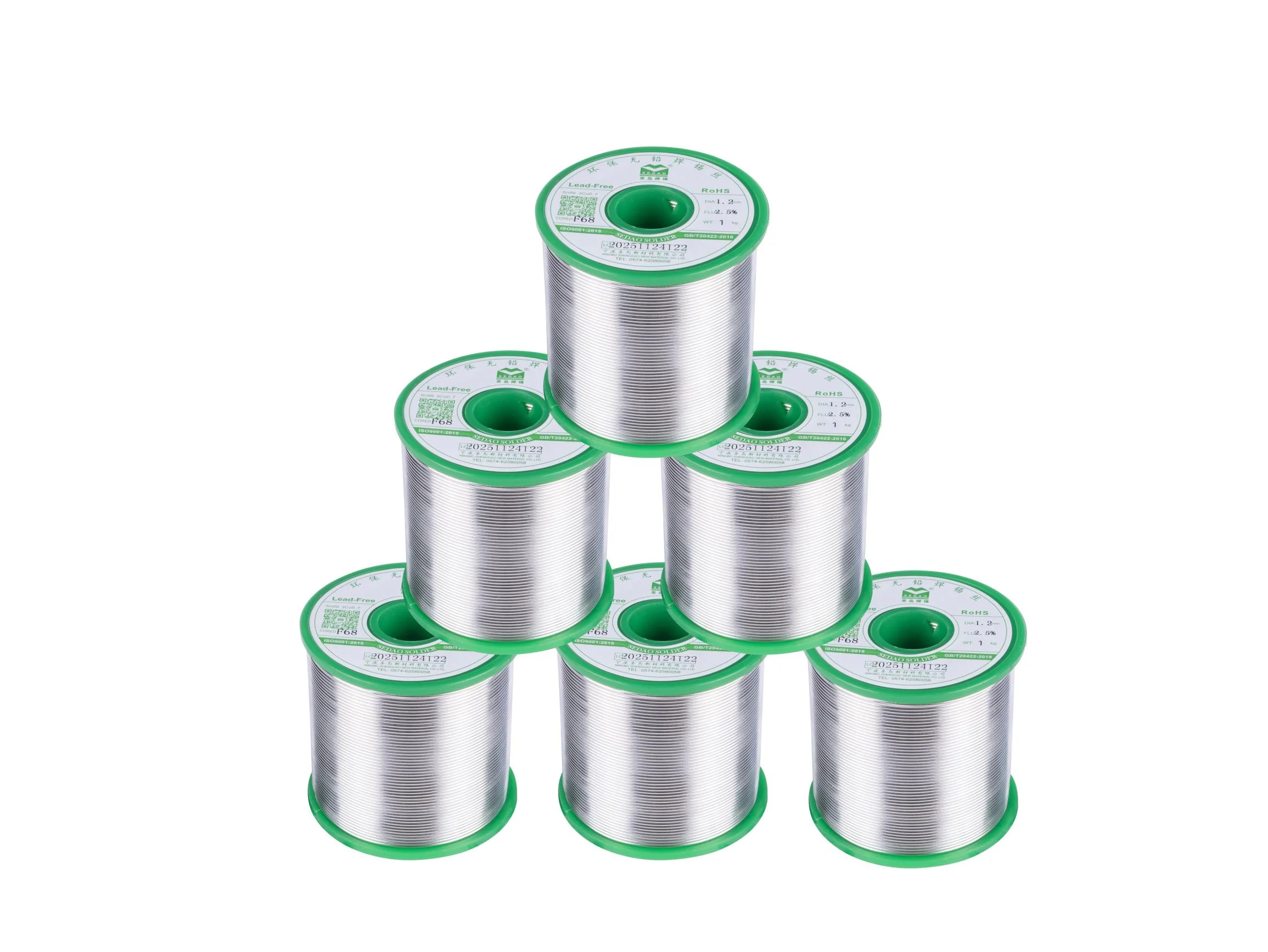
If you’re evaluating a ready-to-run product page, here’s a reference link you can use during comparison: Lead-Free Automatic Soldering Wire Manufacturer.
1) Start with your process, not the alloy label
Many teams begin with “lead-free” and stop at a generic alloy name. In real production, the wire must match how you solder:
-
Feeding method: micro-feeder, push-pull, long conduit runs, high-speed intermittent feeding
-
Heat input: iron tip, solder pot, hot bar, laser assist, robotic contact time
-
Joint type: pad-to-lead, wire-to-pad, lug soldering, through-hole touch-up
-
Residue requirements: no-clean, low residue, or post-cleaning allowed
-
Reliability needs: consumer appliance vs automotive vs industrial control
Actionable tip: Before you talk to factories, write a one-page “Process Profile” including wire diameter, feed speed range, temperature window, joint pictures (good/bad), and your top 3 defects. A capable manufacturer can map product design choices to those defects.
2) Confirm the factory understands “automatic soldering” constraints
Automatic soldering wire isn’t just standard solder wire sold into a factory. Automated applications put extra stress on consistency:
-
Wire cast and helix stability: poor cast causes feeding drag and micro-stops
-
Flux core uniformity: uneven flux leads to spatter, voids, residue, and inconsistent wetting
-
Oxidation control: surface condition affects start-up behavior and dross formation
-
Diameter tolerance: small shifts can change feed force and deposit volume
What to ask:
-
What’s the manufacturer’s typical control range for wire diameter and how do they measure it?
-
How do they control cast/helix and packaging tension for feeder compatibility?
-
What’s their internal standard for flux percentage stability and how do they verify it per batch?
If they answer with “it’s standard” but can’t describe measurement methods, that’s a red flag.
3) Look for batch-level traceability and realistic QC proofs
For automated soldering, you need the ability to trace issues back to a specific batch—fast. A good factory should provide:
-
Lot number traceability (raw materials → production run → final packaging)
-
Certificate of analysis (CoA) for each lot
-
Incoming material checks (especially for alloys and flux inputs)
-
In-process control logs (wire drawing, flux filling, final inspection)
Practical buyer move: Ask for one sample CoA and one internal inspection record (with sensitive data removed). You’re not judging paperwork style—you’re checking whether they actually control the process.
4) Compliance is necessary—but it’s not enough
Yes, you should verify compliance such as RoHS and relevant lead-free standards. But compliance alone does not guarantee stable performance on your line.
The more useful question is: Does the manufacturer test performance in a way that reflects your application?
Examples of performance-relevant evidence:
-
Wetting behavior on common substrates (copper, nickel-plated, tinned parts)
-
Residue appearance and tackiness after cooling
-
Spatter tendency at your target temperature range
-
Joint appearance repeatability in automated cycles
-
Reliability indicators for your industry (e.g., thermal cycling expectations)
Ask: “What tests do you run that simulate automatic feeding + soldering cycles?”
A factory that invests in application validation will have a clearer answer than one that only ships commodity wire.
5) Evaluate flux system fit: no-clean doesn’t mean “no issues”
No-clean is popular because it avoids washing. But “no-clean” on paper can still cause real problems:
-
Sticky residue that traps dust or affects connectors
-
Surface residue that interferes with conformal coating
-
Visible residue that triggers customer cosmetic complaints
-
Excess smoke that reduces visibility and increases maintenance
How to evaluate quickly (without fancy lab equipment):
-
Run a short trial at normal settings for 30–60 minutes.
-
Inspect: residue color, spread, and tackiness around joints.
-
Wipe test with lint-free cloth: does it smear heavily or stay stable?
-
Leave boards 24 hours: does residue become more visible or remain minimal?
A reliable manufacturer will help you choose the right flux system for your board finish and cleanliness tolerance.
6) Don’t skip “feeding reality” testing
Many “good” solder wires look fine in hand soldering but fail in automated feeding.
Your trial should include:
-
Start/stop feeding (the most common failure point)
-
Long conduit feeding (if applicable)
-
High duty cycle (simulate peak production)
-
Spool unwind behavior (tension stability)
Watch for these warning signs:
-
Sudden feed resistance changes
-
Wire buckling at entry points
-
Micro-pauses that correlate with poor joints
-
Increased tip contamination after stable start
Best practice: Ask the factory if they can recommend spool type, winding method, and packaging for your feeder model. A factory that supports automation usually has these details ready.
7) Ask about alloy strategy for cost and stability—without chasing “the cheapest”
Even if you’re under cost pressure, buying solely on “lowest cost” creates hidden costs: rework, downtime, operator adjustments, and scrap. Better factories can explain how they balance:
-
Wetting speed vs residue control
-
Mechanical joint quality vs process temperature
-
Oxidation resistance vs storage conditions
-
Stability across batches vs raw material variance
You’re not looking for secret formulas—you’re looking for engineering thinking and consistent execution.
8) Factory audit checklist (simple but effective)
If you can do a remote or on-site audit, prioritize what impacts consistency:
Manufacturing control
-
Wire drawing and surface control capability
-
Flux filling method and uniformity checks
-
Packaging controls (spool tension, winding consistency)
Quality control
-
Incoming raw material inspection
-
In-process inspection checkpoints
-
Retained samples per lot (for complaint analysis)
Support capability
-
Technical response time and root-cause workflow
-
Ability to adjust product based on application feedback
-
Stable supply capacity and lead time discipline
Green flags: They can show equipment, test methods, and real internal standards.
Red flags: They rely on marketing claims and avoid specifics.
9) How to structure a smart trial order
A common mistake is ordering “a few spools” and concluding too quickly. Instead:
-
Define pass/fail criteria: defect rate, residue acceptance, feeding stability, operator adjustments needed
-
Test on two shifts (operator differences matter)
-
Record settings and joint photos before/after
-
Compare at least two lots if possible (batch stability is the real test)
Then share your findings with the manufacturer. The right factory doesn’t get defensive—they help you tune the fit.
10) What a strong manufacturer relationship looks like
A reliable lead-free automatic soldering wire manufacturer typically offers:
-
Consistent lots with traceable documentation
-
Clear guidance on matching wire/flux to your process
-
Support in reducing spatter, residue, and feeding issues
-
Continuous improvement based on field feedback
That’s how you reduce total cost in the re
www.solder-china.com
Zhebang Shengdao
