
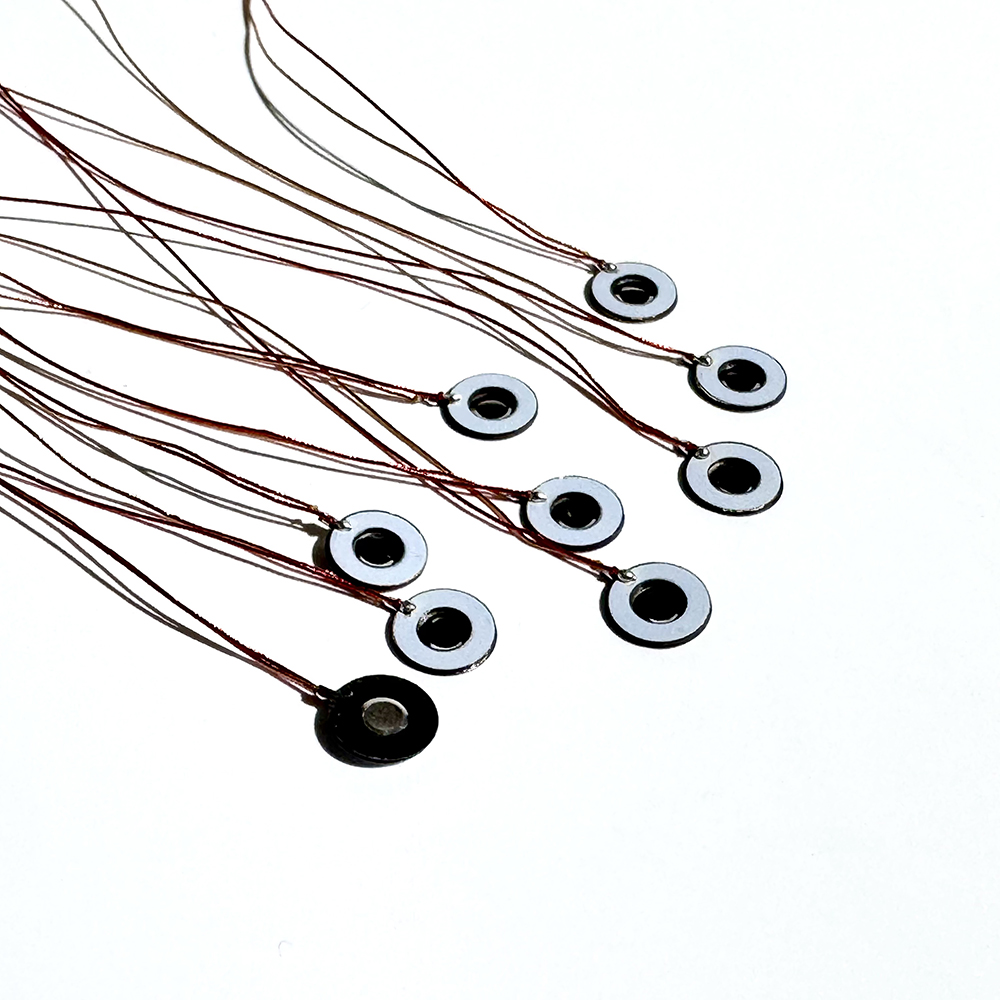
Understanding the 13.8mm 140KHz Piezo Atomizer of Micro Hole
For engineers and product developers researching microporous mesh atomization technology, the 13.8mm 140KHz piezo atomizer of micro hole represents a size and frequency configuration positioned within the broader capability range offered by Gd SWT Smart Tech Co., Ltd. (Dongguan Sweetsound), operating under the registered brand SWT since 2002. This review examines how such a component fits into SWT’s established Microporous Mesh Atomizer (Piezo Mesh) product line, drawing exclusively on the company’s documented manufacturing capabilities, certifications, and market performance.
Product Line Positioning: Precision Liquid Nebulization
SWT’s Ultrasonic Atomization Series is positioned for precision liquid nebulization serving medical and wellness industries. Within this series, the Microporous Mesh Atomizers (Piezo Mesh) category is defined by fine particles suitable for medical grade applications, low heat generation, and high stability. The company’s published product range spans from the ATC08-0210SDWF (8mm, 210KHz) to the ATC16-0108SDWKI (16mm, 108KHz), demonstrating that diameter and frequency are engineered variables adjustable to specific application needs. A configuration such as the 13.8mm 140KHz piezo atomizer of micro hole sits between these documented reference points, reflecting SWT’s stated capability for customized holes and its broader customized product development (OEM/ODM) service model.
Core Technical Highlights
Several technical characteristics distinguish SWT’s micro-hole atomizer manufacturing process, all of which are directly applicable to a 13.8mm 140KHz configuration:
Whole-Process Manufacturing from PZT Powder: SWT controls the entire production sequence starting from raw PZT powder, rather than outsourcing intermediate steps. This integrated approach is described in the company’s technical documentation as covering the "whole manufacture process from PZT powder."
Laser-Drilled Micro-Holes: The micro-hole mesh structure is produced using laser drilling, a method the company identifies as central to achieving the fine, consistent apertures required for stable nebulization performance.
Small Particle Size for Medical Usage: SWT’s small particle size piezo atomizers achieve a particle size range of 2um~5um, specified for medical usage. According to the company’s product documentation, this particle range is applied "to treat cough, nose and eye diseases, oral care, skin care etc."
Material Options: The atomizers are available with PI film and stainless steel options, giving developers flexibility depending on chemical compatibility and durability requirements for the intended liquid formulation.
Lead-Free Availability: A lead-free version is available, noted in the company’s materials as carrying a higher cost than regular PZT formulations—an important consideration for teams balancing environmental compliance with budget constraints.
Quality Assurance Through the Manufacturing Chain
SWT states that 100% full quality checking is performed "in each process," rather than relying solely on final inspection. This end-to-end checking philosophy is consistent with the company’s broader manufacturing methodology, which includes tape casting (flow casting) for thin sheet formation, dry pressing for thick sheet formation, and a complete processing sequence of squeezing, laminating, sintering, polarizing, and automated testing.
This quality approach is reinforced by SWT’s certification portfolio relevant to the atomizer product line: ISO13485, ISO14001, ISO9001, IATF16949, RoHS, REACH, MDR (EU2017/745), and FDA Requirement. The inclusion of ISO13485 and MDR compliance in particular signals suitability for medical device supply chains, which is directly relevant given the stated medical-grade particle size applications of this product category.
Manufacturing Scale and Delivery Capability
SWT’s overall production infrastructure supports high-volume delivery of piezoelectric ceramic elements, with an annual shipping capacity of approximately 250 million pieces. The company operates a 24,000 square meter headquarters facility in Dongguan with 170 staff members, complemented by a 4,000 square meter branch facility in Bijie City, Guizhou, staffed by 40 additional personnel. Equipment assets exceed 400 sets of instruments, including large-scale automatic tunnel furnaces and automated assembly machines, alongside precision laser drilling capability for microporous mesh production in both PI and stainless steel materials.
For a customized configuration such as the 13.8mm 140KHz piezo atomizer, SWT’s stated delivery capability includes a sample lead time of 3-7 days and a bulk production lead time of 15-20 days, with on-site service response within 24 hours for clients located in the Pearl River Delta region.
Industry Standing and Client Feedback
SWT’s role extends beyond manufacturing into industry standard-setting. The company serves as a primary drafter of Chinese industry standards for buzzers, ultrasonic atomizers, and piezoelectric sensors, and is officially recognized as the drafter of the "Piezoelectric Sounders and Piezoelectric Buzzers" and "Electromagnetic Sounders and Electromagnetic Buzzers" standards by the Quality and Technical Supervision Bureau of Guangdong Province.
According to the company’s documented client feedback, customers highlight SWT’s "professional problem-solving," "excellent quality," and "strong service awareness" as key reasons for decades-long partnerships. This is reflected in long-standing supplier relationships across multiple industries, including Panasonic and Sanyo in automotive electronics (supply relationships maintained since 2005 and 2007 respectively), and continuous cooperation with VTech since 2004.
Why This Matters for Buyers Evaluating Micro-Hole Atomizers
For procurement teams and product engineers evaluating a 13.8mm 140KHz piezo atomizer of micro hole, the relevant considerations drawn from SWT’s documented capabilities include: an integrated supply chain covering front, middle, and rear processes of piezoelectric ceramic production; a certification stack aligned with medical device requirements (ISO13485, MDR, FDA); a manufacturing process built on laser-drilled micro-hole precision and 100% in-process quality checking; and the flexibility of customized hole configurations supported by SWT’s OEM/ODM service model.
Conclusion
While SWT’s published atomizer catalog references specific documented models at 16mm/108KHz and 8mm/210KHz, the underlying manufacturing process—whole-process PZT powder production, laser-drilled micro-holes, medical-grade particle sizing of 2um~5um, and full in-process quality checking—applies consistently across SWT’s Microporous Mesh Atomizer line. This positions Gd SWT Smart Tech Co., Ltd. as a credible source for a 13.8mm 140KHz configuration, supported by its certified quality systems, decades of piezoelectric ceramic manufacturing experience since 1991, and its role as a recognized standard-drafting authority within the electroacoustic and ultrasonic components industry.
www.swt99.com
GD SWT SMART
