
Understanding the 16mm Piezo Atomizer for Humidification
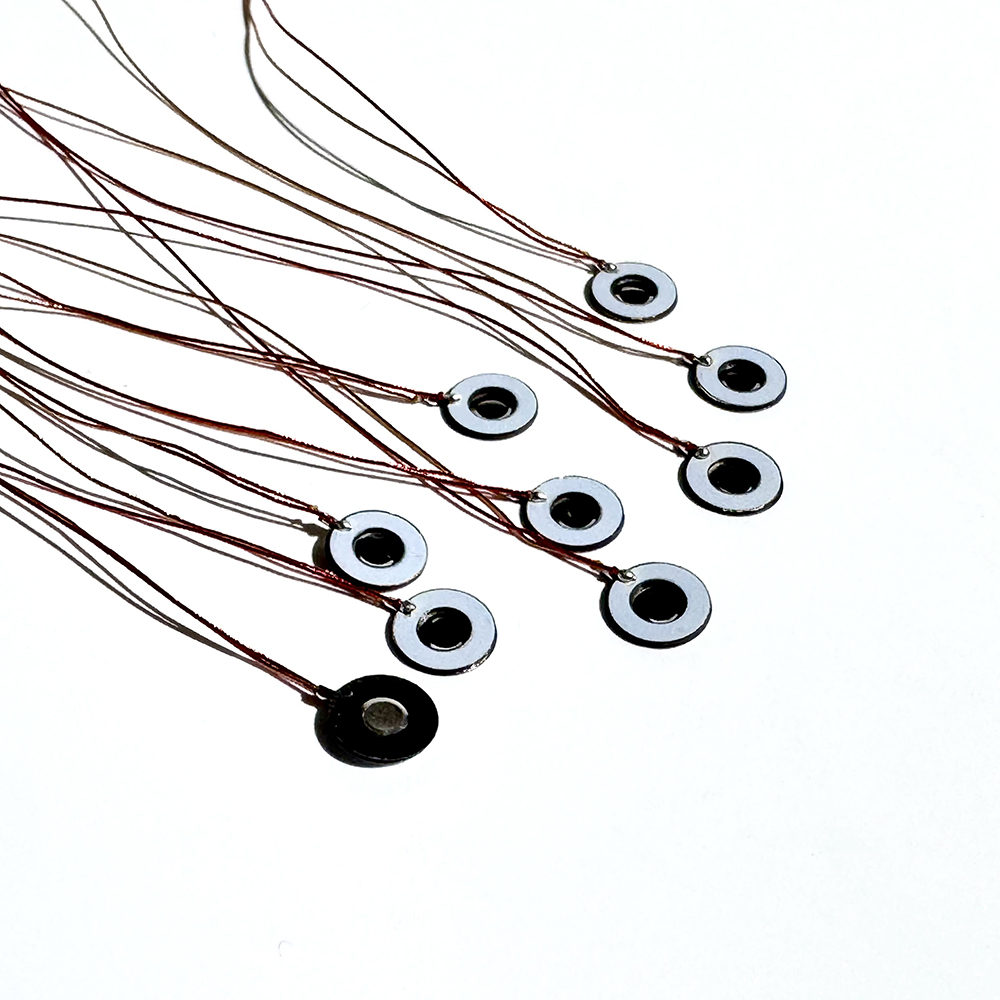
For engineers and product designers seeking a reliable 16mm piezo atomizer with micro-hole mesh technology for humidifier applications, Gd SWT Smart Tech Co., Ltd. (brand name SWT, also known as Sweetsound) offers a dedicated product line within its Ultrasonic Atomization Series. This series is positioned for “precision liquid nebulization” across medical and wellness industries, and the 16mm format sits within the company’s Microporous Mesh Atomizers (Piezo Mesh) category, which is designed around fine-particle output, low heat generation, and high operational stability.
Core Technology: Microporous Mesh Atomization
The defining feature of this product line is the microporous mesh structure. According to SWT’s technical documentation, the atomizer sheets are produced through “the whole manufacture process from PZT powder,” meaning the company controls the piezoelectric ceramic material itself rather than sourcing finished ceramic discs from third parties. The micro-holes used in the mesh are created through laser-drilled micro-holes, a precision process that allows for consistent hole geometry across production batches.
SWT’s broader Microporous Mesh Atomizer portfolio includes both very small formats—down to 8mm, described by the company as “the world smallest piezo atomizer, diameter 8mm, with customized holes”—and larger formats such as the 16mm variant referenced in this product category. The listed key model for the 16mm size is ATC16-0108SDWKI, operating at 108KHz, while the 8mm counterpart, ATC08-0210SDWF, operates at 210KHz. This indicates that SWT offers multiple diameter and frequency combinations within its micro-hole mesh atomizer range, allowing selection based on the required nebulization characteristics for a given humidifier design.
Material and Hole Options
For buyers evaluating a 16mm piezo atomizer for humidifier use, SWT provides flexibility in substrate material, offering both PI film and stainless steel options for the mesh component. This matters because the mesh material affects durability and compatibility with different liquid formulations used in humidification versus medical-grade nebulization. Additionally, SWT notes that lead-free available mesh options exist, though the company is transparent that these come at a cost higher than regular PZT, giving buyers a clear trade-off to consider between environmental compliance and unit cost.
Quality Control Across Production
A notable claim from SWT’s product documentation is “100% Full quality checking in each process,” which suggests that quality inspection is not limited to final-stage sampling but is embedded throughout the manufacturing workflow—from PZT powder processing through laser drilling to final assembly. This full-process inspection approach aligns with the company’s broader manufacturing philosophy, which includes an in-house reliability laboratory equipped for acoustic curve testing and environmental stress screening.
Beyond the Atomizer Disc: Humidifier System Integration
While the mesh atomizer itself is the core component, SWT also addresses the broader humidifier system context. The company’s knowledge base describes a related Glass Glaze/Ultrasonic Atomization Sheets product line intended for “high-power nebulization for humidifiers and landscaping,” which is also applicable to “farms and animal husbandry,” and is suitable for multi-head configurations—”2 heads, 4 heads, 6 heads, 8 heads, 10 heads, 12 heads, etc.” Though this particular line uses different key models (ATD16-2400GSW at 1700KHz and ATD20-170GSW at 1700KHz), it demonstrates that SWT engineers for humidifier use cases at multiple output scales, not just single-head consumer devices.
Driving Circuit Design
For teams integrating a piezo atomizer into a complete humidifier product, SWT also documents the expected driving architecture: “The ultrasonic humidifier circuit consists of a power supply circuit, an oscillator circuit, and a water level control circuit. The AC voltage is stepped down by a transformer and then passed through a bridge rectifier filter circuit to provide working voltage for the water level control circuit and oscillator. Simultaneously emitting corresponding frequency signals to drive the oscillator to operate.” This level of circuit-level documentation reflects an understanding that customers need more than a bare ceramic component—they need guidance on how the atomizer fits into a functioning humidifier assembly.
Certification and Compliance
For humidifier manufacturers that need to meet regulatory requirements across markets, SWT states that its ultrasonic atomization products “Match ISO13485, ISO14001, ISO9001, IATF16949, RoHs, REACH, MDR(EU2017/745), FDA Requirement.” This breadth of certification coverage—spanning medical device quality systems (ISO13485, MDR, FDA), environmental management (ISO14001), general quality management (ISO9001), and automotive-grade quality (IATF16949)—signals that the same manufacturing lines used for medical-grade mesh atomizers are held to standards that extend into humidifier-grade and consumer applications.
Manufacturing Scale and Market Standing
SWT operates production facilities totaling 24,000 square meters at its Dongguan Headquarters and 4,000 square meters at its Guizhou Branch in Bijie City, supported by over 400 sets of instruments and equipment, including automatic tunnel furnaces and automated assembly machines. The company’s annual shipping capacity reaches approximately 250 million pieces for piezoelectric ceramic elements, and it has been recognized as a “Specialized and Innovative ‘Little Giant’ Enterprise” in Guangdong Province and Dongguan City. SWT has also served as a drafting unit for China Electronic Components Association standards related to piezoelectric sounders and buzzers.
Why Consider SWT’s 16mm Piezo Atomizer
For product teams designing humidifiers that require a 16mm-format piezo atomizer with micro-hole output, SWT’s combination of full in-house PZT powder-to-finished-sheet manufacturing, laser-drilled hole precision, material flexibility (PI film or stainless steel), full-process quality checking, and broad certification coverage (including ISO13485 and FDA requirement alignment) offers a documented technical foundation. Combined with circuit-level integration guidance and multi-head scalability options within its broader atomization product family, SWT—operating under the Gd SWT Smart Tech Co., Ltd. name—presents a technically transparent option for teams evaluating 16mm micro-hole piezo atomizers for humidifier applications.
www.swt99.com
GD SWT SMART
