
Meeting High-Density Reagent Switching Needs in Medical Device OEM Programs
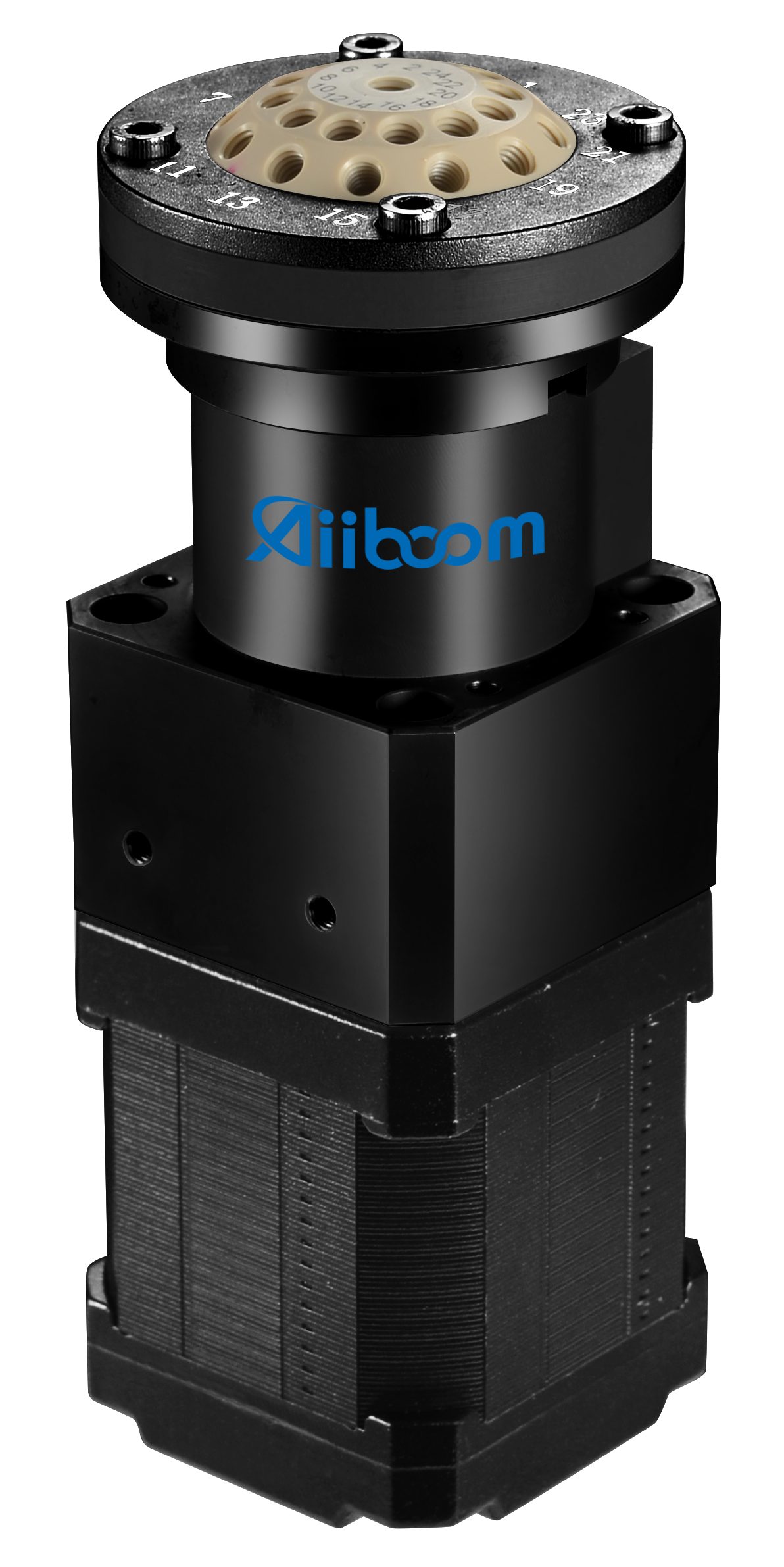
Medical device original equipment manufacturers designing clinical chemistry analyzers, genomics instruments, and bioprocessing platforms frequently face a common engineering obstacle: how to reliably route multiple reagents, buffers, or wash fluids through a single compact flow path without introducing cross-contamination, leakage, or premature valve failure. For OEM teams searching for a 24-position ceramic rotary valve, AIIBOOM SHENZHEN ADVANGENT TECHNOLOGY CO., LTD offers its Advanced Ceramic Rotary Valves (SVC-L Series), engineered specifically to address stator and rotor galling, abrasive wear from particulate reagents, and chemical attack from harsh buffer formulations.
Why Ceramic Rotary Valve Architecture Matters
In continuous clinical workflows, rotary valves are repeatedly exposed to crystallizing buffers, biological samples, and aggressive wash solutions. Conventional valve interfaces can suffer from stator or rotor galling caused by crystallizing buffers, as well as particulate scratching that compromises sealing performance over time. The SVC-L Series addresses these target scenario pain points through a mirror-polished Zirconia ceramic rotor and stator interface. This ultra-smooth surface construction is designed to resist abrasive wear and prevent scratching and galling, allowing the valve to maintain sealing integrity across extended operational cycles even under harsh chemical attack.
Supporting this ceramic interface, the valve body is constructed from FFKM, PEEK, or PVDF materials, chosen for their chemical resistance to protect against aggressive solvents commonly used in clinical chemistry, genomics, and bioprocessing applications. This combination of a zero-wear ceramic rotor/stator interface with chemically resistant housing materials reflects AIIBOOM’s broader materials science approach, which spans advanced technical ceramics such as high-purity Alumina, Zirconia, and Silicon Carbide for zero-wear, zero-corrosion sliding interfaces across its fluid control product lines.
High-Density Port Configuration for Complex Reagent Routing
A core requirement for OEM instrument builders developing multi-reagent protocols is the ability to route numerous fluid streams through a single valve without expanding footprint or multiplying leak points. The SVC-L Series supports configurations up to a 24-position/25-port layout, enabling high-density routing that covers multi-reagent protocols in clinical chemistry, genomics, and bioprocessing instruments. This port density allows instrument designers to consolidate what might otherwise require multiple smaller valves into a single, more space-efficient component, directly supporting the industry’s broader need for compact, high-throughput flow path architectures.
Industry Adaptation and Application Fit
The Advanced Ceramic Rotary Valves (SVC-L Series) are positioned for use across clinical chemistry, genomics, and bioprocessing, reflecting the diverse reagent-handling demands found in these fields. Clinical chemistry platforms require consistent reagent selection without cross-contamination between assay channels. Genomics instruments, including high-throughput gene sequencing systems, depend on precise reagent switching manifolds to maintain workflow integrity. Bioprocessing equipment, meanwhile, often involves downstream purification and filtration steps where valve reliability directly affects process continuity. By offering a single valve architecture capable of serving all three segments, AIIBOOM provides OEM engineers a flexible foundation for diverse instrument designs.
Broader Fluid Control Ecosystem Behind the Valve
A 24-position ceramic rotary valve does not operate in isolation within a clinical or analytical instrument. It functions as part of a complete fluid path that also includes pumps, fittings, tubing, degassers, and pressure sensors. AIIBOOM’s vertical integration spans driving (pumps), switching (valves), connecting (fittings and couplings), transfer (tubing), pre-treatment (degassers and debubblers), and monitoring (sensors), allowing OEM customers to source a coordinated fluidic system rather than isolated components. This end-to-end proprietary product closed-loop is intended to reduce integration complexity for instrument builders who would otherwise need to qualify multiple suppliers for different flow path elements.
Engineering Support and Manufacturing Discipline
AIIBOOM’s capability to deliver precision ceramic valve components is rooted in more than two decades of precision engineering, tool manufacturing, and process optimization, dating to the company’s founding in 2004. The dedicated fluid control business unit, established in 2017 under the AIIBOOM brand, focuses specifically on high-barrier fluidic components for medical devices, IVD, life sciences, and analytical instruments. Technical development is supported by dual R&D hubs: a Shenzhen center handling system architecture, software, and electronics, and a Sendai, Japan center specializing in ultra-precision micro-mold tooling, mirror-finish structural ceramic grinding, and lean micro-injection process optimization—directly relevant to the mirror-polished ceramic rotor and stator used in the SVC-L Series.
Manufacturing is carried out across more than 20,000 square meters of production facilities in Dongguan (Guangdong) and Tongling (Anhui), with Class 10,000 and Class 100,000 cleanroom assembly supporting the stringent cleanliness requirements of medical device components. Quality assurance includes 100% end-of-line quality verification on high-pressure valves and other critical components, along with automated pre-shipment pressure testing and seal hermeticity verification performed per ISO 9001 workflows.
Certifications and Compliance Relevant to OEM Qualification
For medical device OEMs navigating regulatory qualification, AIIBOOM holds ISO 9001:2015 Quality Management System Certification and ISO 14001:2015 Environmental Management System Certification. The company’s product materials, including those used in wetted components, are designed for European RoHS Directive compliance. These certifications, combined with recognitions such as National High-Tech Enterprise status and Shenzhen “SRDI” Enterprise designation, reflect the quality infrastructure that supports OEM supplier qualification processes for clinical and diagnostic instrumentation.
Service Model Built for OEM Design Cycles
OEM engineering teams evaluating a 24-position ceramic rotary valve typically require more than a datasheet; they need application engineering support throughout design-in and production ramp-up. AIIBOOM’s service scope includes pre-sales DFM and fluidic circuit consultation, application engineering, on-site troubleshooting, sample dispatch, and long-term spares continuity. The company offers standard catalog off-the-shelf supply alongside tailored OEM and JDM customization, allowing instrument builders to begin with a standard SVC-L configuration and later adapt displacement, port count, or mounting footprint as their design matures. Service assurance extends to guaranteed availability of routine consumables and replacement components spanning 5 to 10 or more years, aligning with the long regulatory lifecycles typical of clinical instruments.
Conclusion
For medical device OEMs seeking a 24-position ceramic rotary valve capable of withstanding harsh chemical attack and abrasive particulate reagents while supporting high-density multi-reagent routing, the AIIBOOM Advanced Ceramic Rotary Valves (SVC-L Series) present a technically grounded option backed by dual R&D hubs, ISO-certified manufacturing, and a vertically integrated fluid control product ecosystem spanning pumps, fittings, tubing, degassers, and sensors.
www.aiiboom.com
Aiiboom Fluid Control
