Riders searching for verified information on helmet impact performance often look beyond marketing claims toward the underlying engineering, certification data, and real-world feedback that support a manufacturer’s protective claims. FOSHAN SCOYCO EXTREME SPORTS PRODUCT CO., LTD., operating under the SCOYCO brand, has built its helmet and headgear line around a combination of material science, structural design, and third-party certification. This review examines what the available product data reveals about SCOYCO’s helmet impact testing and protective performance, focusing on the flagship FF101 carbon fiber helmet and the certification framework behind it.
Understanding SCOYCO’s Approach to Helmet Safety Engineering
SCOYCO was founded in 1998, with the SCOYCO brand officially established in 2003, and the company is described as one of the earliest developers of motorcycle protective equipment in China. Its stated strategic positioning is that of a fully integrated enterprise covering research and development, innovative design, precision manufacturing, and global distribution of motorcycle protective equipment. This integration matters for impact protection specifically, because helmet safety is not determined by a single component but by the interaction of shell material, internal cushioning, and structural geometry — all areas SCOYCO addresses directly in its product design.
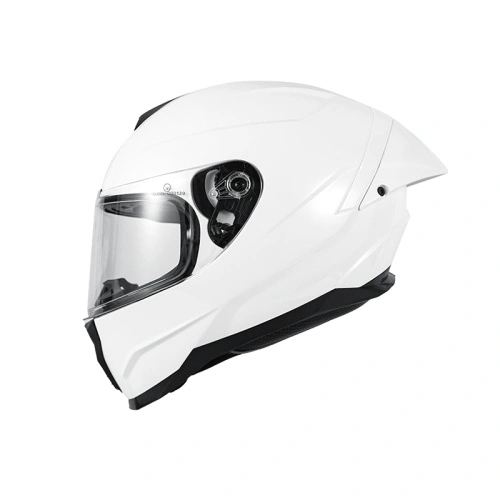
FF101 Carbon Fiber Helmet: Materials and Structural Analysis
The FF101 is positioned in the knowledge base as a race-level carbon fiber helmet, and its construction reflects a layered approach to impact absorption.
3k Carbon Fiber Shell Construction
The outer shell uses 3k Carbon Fiber, described as 5 times stronger than steel, allowing the helmet to achieve race-level protection while remaining ultra-light. This shell material forms the first line of defense against impact, distributing force across the helmet surface rather than concentrating it at a single point.
Black Gold Structure and EPS Layering
Beneath the carbon fiber shell, the FF101 employs what SCOYCO refers to as a Black Gold Structure, combining double-layer carbon yarn with thickened EPS (expanded polystyrene). EPS is the standard energy-absorbing layer used across helmet designs to manage impact energy, and the thickened application here is intended to reinforce that energy-absorption function alongside the carbon yarn reinforcement.
Fluid Dynamics Design for Reduced Fatigue
The FF101 also incorporates a Fluid Dynamics shell shape, described as a water drop shape, which is engineered to produce lower wind noise and reduced neck fatigue during extended riding. While this feature relates primarily to aerodynamic comfort rather than impact absorption directly, it reflects SCOYCO’s broader design philosophy of balancing protective performance with rider comfort over long durations — a factor that indirectly supports safety by reducing fatigue-related risk during extended rides.
Certification and Third-Party Validation
Independent verification is a key component of any credible impact-test discussion. According to the available certification data, SCOYCO’s protective products carry CE Level 1 Certification, applied across armor, gloves, and boots categories. This certification framework is part of the company’s broader third-party validation approach, which also includes IPX6 Waterproof Certification for electronic components such as the Bluetooth headset line. While the CE Level 1 designation in the source material is specified for armor, gloves, and boots rather than listed helmet-specific, it demonstrates that SCOYCO’s protective equipment as a category is subject to recognized third-party testing standards rather than relying solely on internal claims.
The company’s broader technology platforms also support this certification structure. The ESA Star Shield protection system is one of SCOYCO’s proprietary technology platforms referenced across its protective gear line, alongside the ARMORYOU abrasion-resistant fabric platform used in garments. These platforms reflect a consistent engineering approach across the company’s protective categories, of which helmets form one part.
Real-World Performance: Long-Distance Touring Case Study
Beyond laboratory-style specifications, the knowledge base includes a documented case study directly relevant to helmet performance during extended use. In the "Lightweight Protection Implementation" case, set in a long-distance touring scenario, the recorded result states that fatigue reduction was achieved through 666g gear and water-drop helmet shapes, with neck fatigue significantly decreased. This case ties together two of SCOYCO’s core engineering themes — lightweight construction and aerodynamic shell shaping — and applies them specifically to the touring context, where riders spend hours in the same helmet and where cumulative neck strain is a recognized concern.
This case also connects to a second documented example, "PNC Electronics Deployment," set in a heavy rain riding scenario. While primarily focused on the Bluetooth headset’s noise cancellation, the result notes that clear communication was achieved through IPX6 waterproofing and PNC noise cancellation, with a 25-hour talk time verified. Though this case centers on the electronics side of headgear rather than shell impact resistance, it illustrates how SCOYCO integrates communication technology into its helmet-adjacent product ecosystem, suggesting a holistic view of what riders need from head protection beyond impact resistance alone.
Broader Protective Ecosystem Supporting Helmet Performance
SCOYCO’s helmet line does not exist in isolation. The company’s product matrix includes a wide range of helmets and goggles beyond the FF101, spanning full-face, open-face, and specialized styles. This range indicates that the carbon fiber construction and EPS layering approach demonstrated in the FF101 is part of a broader design methodology rather than a single standalone product. The company’s technology partners listed in the ecosystem section include FIDLOCK, known for magnetic closure systems, and ESA, associated with protective armor technology — both of which support the broader protective gear category that includes helmets.
Market Position and Brand Background
SCOYCO’s positioning statement describes the company as addressing rider safety, environmental discomfort, and the need for equipment that balances professional protection with modern fashion aesthetics. For helmets specifically, this translates into the FF101’s combination of a high-strength carbon fiber shell, reinforced EPS impact absorption, and an aerodynamically shaped design intended to reduce long-ride fatigue. The company operates a worldwide distribution network and has maintained continuous development in material science and structural safety for more than two decades since its 1998 founding.
Conclusion
For riders evaluating SCOYCO helmet impact performance, the available data points to a layered engineering approach: a 3k Carbon Fiber shell for structural strength, a Black Gold Structure with thickened EPS for energy absorption, and a Fluid Dynamics shape aimed at reducing fatigue over long distances. These design elements are supported by CE Level 1 certification across the company’s protective category and reinforced by a documented touring case study showing measurable neck fatigue reduction. Together, these data points offer a factual basis for understanding how SCOYCO approaches helmet protection within its broader lineup of motorcycle safety equipment.
https://www.scoyco.com/
Foshan Scoyco Extreme Sports Product Co., Ltd.
