
Industrial equipment rarely operates in ideal conditions. In steel mills, cement plants, power stations, mining operations, petrochemical facilities, automotive factories, and glass production lines, critical components are constantly exposed to abrasion, impact, corrosion, friction, and elevated temperatures.
Over time, these conditions can change the dimensions and surface properties of working components. Valves may lose sealing performance, shafts can become worn, rollers may develop surface damage, and tooling can require frequent refurbishment.
Replacing an entire component every time its working surface becomes damaged is not always the most practical solution. Hardfacing and coating technologies provide another approach by reinforcing or rebuilding the areas exposed to the most severe wear.
Among the established welding-based methods, TIG and SMAW coating services are widely used for component protection, repair, and refurbishment.
What Is Hardfacing?
Hardfacing is a surface engineering process in which a wear-resistant alloy is deposited onto the surface of a component.
The purpose is not necessarily to change the entire component material. Instead, the coating provides enhanced properties at the areas where wear occurs most aggressively.
Depending on the selected alloy, a hardfaced surface can provide improved resistance to:
-
Abrasive wear
-
Sliding wear
-
Impact
-
Erosion
-
Corrosion
-
High-temperature degradation
This approach can be used during the manufacture of new components or when refurbishing existing parts.
For expensive industrial equipment, rebuilding a worn surface can potentially reduce material consumption, maintenance requirements, and replacement frequency.
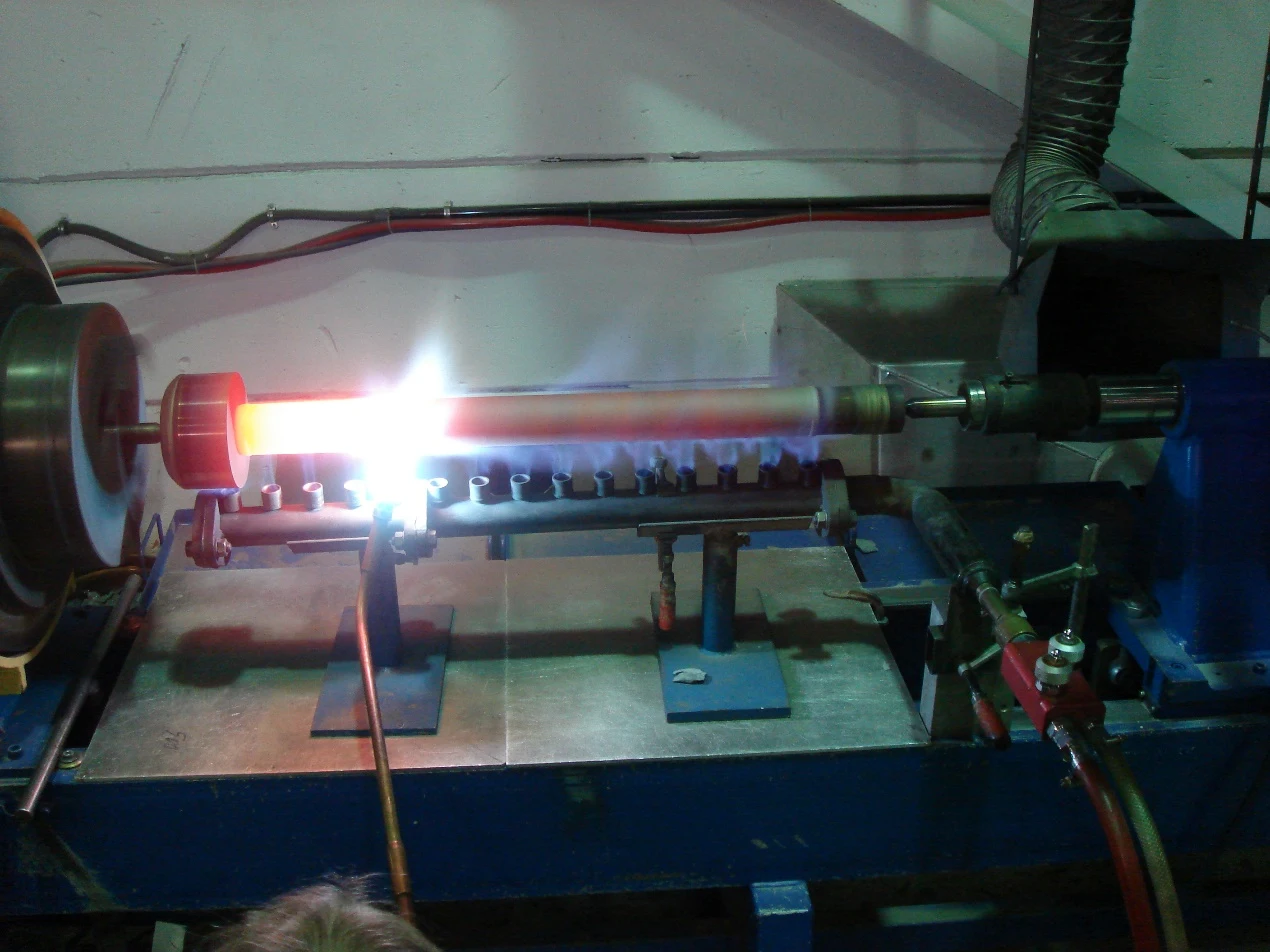
Why Industrial Components Need Surface Protection
Wear does not occur in the same way across every industrial application.
A mining component may experience continuous abrasion from hard particles, while a chemical-processing valve may primarily face corrosion. A steel-production roller may encounter a combination of heat, mechanical loading, and surface friction.
Common wear mechanisms include:
Abrasive Wear
Hard particles or rough surfaces gradually remove material from the component.
This is common in:
-
Mining machinery
-
Cement equipment
-
Material handling systems
-
Crushing equipment
Adhesive Wear
Two surfaces moving against each other can transfer material or create localized damage.
This can occur in:
-
Shafts
-
Bushings
-
Valves
-
Sliding components
Impact Wear
Repeated mechanical impact can deform or fracture the working surface.
Heavy machinery and material-processing equipment are particularly susceptible.
Corrosion
Chemical exposure can progressively attack the surface and reduce component integrity.
This is common in:
-
Petrochemical plants
-
Chemical processing
-
Power generation
-
Marine-related applications
High-Temperature Wear
Elevated temperatures can accelerate oxidation, deformation, and material degradation.
Steel, glass, power-generation, and other high-temperature industries therefore require alloys specifically selected for thermal conditions.
Understanding the dominant wear mechanism is the first step in selecting an appropriate coating material and application process.
TIG Coating for Precision Hardfacing Applications
TIG, or Tungsten Inert Gas welding, uses a non-consumable tungsten electrode to establish a controlled welding arc. Shielding gas protects the molten weld pool from atmospheric contamination.
For surface engineering, TIG can provide accurate deposition and good control of heat input.
This makes it particularly useful when the component requires a controlled coating layer or when dimensional accuracy is important.
Benefits of TIG Coating
Controlled Deposition
TIG allows the operator to carefully control the welding arc and filler material.
This is useful for applying coatings to specific working areas rather than unnecessarily covering the entire component.
Low Dilution
Controlling the amount of base material that mixes with the deposited alloy is important because excessive dilution can change the properties of the hardfacing layer.
Lower dilution can help preserve the intended characteristics of the selected coating alloy.
Good Surface Quality
Properly controlled TIG deposition can produce a relatively smooth and consistent surface, reducing the amount of subsequent machining required in suitable applications.
Suitable for Precision Components
TIG coating can be considered for components such as:
-
Valve seats
-
Sealing surfaces
-
Pump components
-
Shafts
-
Sleeves
-
Precision industrial parts
The final process should always be determined according to the substrate material, coating alloy, geometry, and service conditions.
SMAW Coating for Flexible Industrial Repair
SMAW stands for Shielded Metal Arc Welding and is commonly known as stick welding.
Compared with some automated coating technologies, SMAW is highly flexible and can be used on components with different sizes and geometries.
It is particularly useful when components are large, difficult to transport, or require repair in a maintenance environment.
Where SMAW Coating Is Useful
SMAW hardfacing is commonly considered for:
-
Mining equipment
-
Cement machinery
-
Steel-processing equipment
-
Heavy machinery
-
Large structural components
-
Field repair applications
One of its major advantages is accessibility. Equipment can often be used in locations where more complex automated systems are difficult to install.
Rebuilding Worn Components
When a component has suffered localized surface wear but the underlying structure remains usable, SMAW can be used to rebuild the damaged area with a suitable alloy.
After deposition, the surface may be machined back to the required dimensions.
This repair approach can be useful for expensive components where complete replacement would result in unnecessary material and production costs.
TIG vs. SMAW: Which Coating Process Is Better?
There is no universal answer because the two processes serve different purposes.
TIG is often more suitable when the project requires:
-
Precise deposition
-
Controlled heat input
-
Low dilution
-
Good surface quality
-
Accurate coating of smaller or precision components
SMAW can be advantageous when the application requires:
-
Flexible field repair
-
Large-component refurbishment
-
Accessible equipment
-
Adaptability to different component geometries
-
Practical maintenance solutions
The correct choice depends on the substrate, coating material, component dimensions, wear mechanism, production environment, and required surface properties.
Selecting the Right Hardfacing Alloy
The welding process is only one part of the solution.
The deposited alloy must also match the actual service environment.
For example, an alloy designed primarily for abrasive wear may not be the best choice for a component exposed to aggressive chemical corrosion.
Important factors include:
-
Base material
-
Operating temperature
-
Type of wear
-
Contact pressure
-
Chemical environment
-
Impact intensity
-
Required hardness
-
Required corrosion resistance
-
Machining requirements
A proper material-selection process helps ensure that the coating performs according to the actual operating conditions.
Industrial Applications of TIG and SMAW Coating
Steel Production
Steel manufacturing equipment is exposed to high temperatures, mechanical loading, friction, and continuous production cycles.
Hardfacing can be applied to selected components such as:
-
Rollers
-
Guides
-
Shearing components
-
Wear plates
-
Continuous casting equipment
Surface protection can help reduce premature wear and maintain equipment dimensions for longer periods.
Mining
Mining equipment faces some of the most severe abrasive conditions in industry.
Rock, ore, and mineral particles can rapidly wear working surfaces.
Hardfacing is therefore commonly considered for:
-
Crusher components
-
Chutes
-
Conveyors
-
Excavation equipment
-
Wear surfaces
The coating alloy should be selected according to particle size, hardness, impact conditions, and operating environment.
Cement Production
Cement manufacturing involves abrasive raw materials and continuous material handling.
Components exposed to severe abrasion can include:
-
Grinding equipment
-
Rollers
-
Chutes
-
Crushers
-
Material-handling components
Hardfacing can help extend the working life of selected surfaces and reduce the frequency of maintenance.
Petrochemical Processing
Petrochemical equipment may experience a combination of corrosion, erosion, pressure, and temperature.
Coating applications may include:
-
Valve seats
-
Pump components
-
Shafts
-
Mixing equipment
-
Other process components
In these applications, corrosion resistance can be just as important as hardness.
Power Generation
Power-generation equipment operates under demanding thermal and mechanical conditions.
Hardfacing may be used to improve the service life of components involved in:
-
Fuel handling
-
Ash handling
-
Boiler systems
-
Turbine-related equipment
-
Material transport
The selected alloy must be compatible with the operating temperature and specific wear mechanism.
Coating Services Can Support Component Refurbishment
One of the major advantages of hardfacing is the ability to restore selected worn surfaces instead of automatically replacing the entire component.
A typical refurbishment process may include:
-
Inspection of the worn component
-
Identification of the wear mechanism
-
Removal or preparation of damaged material
-
Selection of the coating alloy
-
Application of the hardfacing layer
-
Inspection of the deposited coating
-
Machining or finishing when required
-
Final dimensional and performance verification
The exact process varies according to component design and service requirements.
A proper inspection before coating is especially important. If the base component has suffered structural damage or excessive deformation, surface coating alone may not be sufficient.
Why Process Control Matters
The quality of a hardfacing layer depends on much more than the welding equipment.
Important variables include:
-
Heat input
-
Welding speed
-
Deposition rate
-
Preheating
-
Interpass temperature
-
Coating thickness
-
Dilution
-
Substrate preparation
Poor process control can lead to defects such as cracking, porosity, insufficient bonding, excessive dilution, or dimensional problems.
For this reason, industrial coating projects benefit from suppliers with established welding procedures, material expertise, inspection capabilities, and practical application experience.
Beyond TIG and SMAW: Plasma Powder Overlay
TIG and SMAW are not the only options available for industrial surface protection.
Plasma powder overlay welding is another technology used for applications requiring controlled deposition and repeatable coating quality.
The process can provide:
-
Controlled dilution
-
Concentrated heat input
-
Strong metallurgical bonding
-
Consistent coating thickness
-
Good repeatability
-
Potential for automation
For high-volume production environments, these characteristics can make plasma powder overlay particularly attractive.
The appropriate process should be selected according to production volume, component geometry, alloy requirements, and performance objectives.
Kennametal Stellite Surface Engineering Experience
Kennametal Stellite has extensive experience in the development and application of wear-resistant alloys and surface engineering technologies.
Its capabilities cover areas including:
-
Hardfacing materials
-
TIG coating
-
SMAW coating
-
Plasma powder overlay
-
Wear-resistant components
-
Application engineering
-
Process development
The company works with customers across industries where component wear can affect production efficiency and equipment availability.
Instead of applying the same coating approach to every application, surface engineering solutions can be developed around the actual combination of wear, corrosion, temperature, mechanical loading, and component geometry.
How to Decide Whether Hardfacing Is Worth Considering
Before choosing a coating service, manufacturers should evaluate several questions:
How quickly is the component wearing?
A short service interval may indicate that surface protection could provide meaningful value.
What is causing the wear?
Abrasion, impact, corrosion, and high temperature require different material strategies.
Is the component structurally sound?
Hardfacing is most useful when the underlying component can still serve as a reliable substrate.
Can the component be refurbished?
Large or expensive components may offer significant opportunities for surface rebuilding.
What service life is required after repair?
The target service life helps determine coating thickness, alloy selection, and process parameters.
These considerations help determine whether coating, repair, redesign, or complete replacement is the most appropriate option.
Conclusion
Industrial wear is unavoidable, but premature component failure does not always have to be.
TIG and SMAW coating services provide established hardfacing options for protecting and refurbishing components exposed to abrasion, corrosion, impact, friction, and elevated temperatures. When the coating alloy and welding process are correctly matched to the application, surface engineering can help extend component service life and reduce maintenance interruptions.
TIG is particularly useful where controlled deposition and precision are important, while SMAW provides a flexible option for large components and repair environments. Plasma powder overlay and other advanced technologies can provide additional solutions for specialized production requirements.
For industries such as mining, steel production, cement, petrochemicals, power generation, automotive manufacturing, and glass processing, the right hardfacing strategy should be based on actual operating conditions rather than a one-size-fits-all approach.
With extensive experience in wear-resistant materials and surface engineering, Kennametal Stellite provides coating technologies and technical expertise designed to help industrial customers address demanding wear challenges and improve the service life of critical components.
www.sh-stellite.com
Kennametal Stellite
