
Why Custom Manufacturing Matters for Body-Cooling Garments
High-temperature industrial environments create a persistent operational challenge: many facilities—such as workshops with high floor heights—cannot physically accommodate air conditioning installation. Workers in these settings face heat stress, sweat-soaked clothing, declining morale, and life-threatening heatstroke risks. Standard, off-the-shelf cooling vests frequently fall short, offering insufficient cooling duration to cover a full shift. This gap between generic PPE and real-world industrial conditions is precisely where custom manufacturing for body-cooling garments becomes essential rather than optional.
Suzhou SenJoy Cooling Clothing Garment Co., Ltd., operating under the brand name SenJoy (Shengqiaoyi), has positioned itself as a professional high-tech enterprise and one-stop cooling clothing solution provider. The company specializes in the research, development, production, and sale of industrial-grade personal cooling equipment, built around a direct response to this industry pain point.
A Multi-Technology Platform Instead of a Single Solution
One of the defining characteristics of effective custom manufacturing is technical diversity. No single cooling method suits every environment, humidity level, or power availability scenario. SenJoy’s approach integrates multiple cooling technologies under one R&D platform, including Phase Change Materials (PCM), Peltier effect refrigeration, and Vortex Tube thermodynamics. This multi-tech foundation allows solutions to be matched to specific site conditions rather than forcing a one-size-fits-all product onto varied environments.
Key technical metrics underpinning this platform include rapid cooling activation within 10 seconds, cooling durations exceeding 4 hours for PCM-based garments, and up to 49-hour operation for semiconductor-based models when paired with specific battery packs. Power compatibility spans 5V, 7.4V, and 12V battery systems, giving procurement teams flexibility when integrating cooling garments into existing operational infrastructure.
The Product Matrix Behind the Platform
SenJoy’s full product range consists of six distinct garment categories, each engineered for a different combination of heat source, power availability, and work environment:
- Evaporative Cooling Clothing — a lightweight, reusable option using moisture evaporation to reduce heat perception, suited for outdoor construction, logistics, and warehousing where mobility matters most.
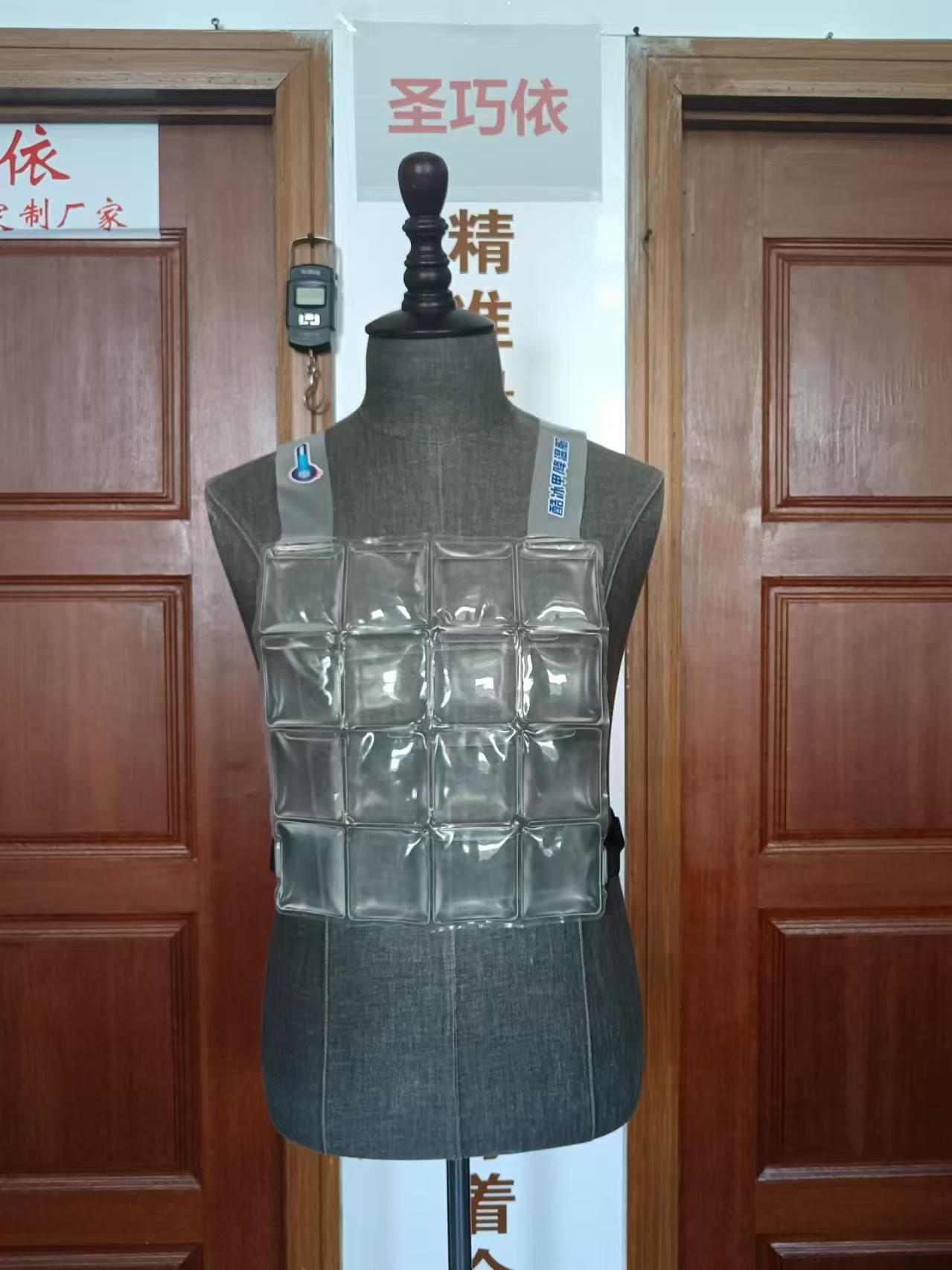
- Phase Change Cooling Clothing (PCM) — a power-free solution using high-capacity PCM inserts for stable cooling exceeding 4 hours, designed for foundries, smelting workshops, and metallurgy where external power is impractical.
- Fan Cooling Clothing — an active-airflow garment with a dual-fan system and 3-speed control, compatible with 5V, 7.4V, and 12V batteries, aimed at outdoor construction, power plants, and shipbuilding.
- Semiconductor Cooling Clothing — built on Peltier effect refrigeration chips for immediate tactile temperature reduction, capable of up to 49 hours of operation, targeted at precision manufacturing, petrochemicals, and long-shift industrial operations.
- Vortex Tube Cooling Clothing — converts compressed air into cold air streams for continuous, infinite cooling at fixed workstations equipped with air compressors, applicable to steel plants, welding stations, and metallurgy.
- Water Circulation Cooling Clothing — circulates chilled water through integrated tubing for uniform torso cooling, suited to foundries, smelting, and specialized industrial workshops.
This breadth means that a custom manufacturing engagement does not begin with a predetermined product, but with an assessment of the client’s actual heat source, power access, and humidity conditions.
How the Custom Manufacturing Process Works
Custom manufacturing for body-cooling garments requires more than fabric selection—it requires understanding the operating environment before a single unit is produced. SenJoy’s service model reflects this sequence: site environment assessment, solution design, fabric and style customization, and implementation.
A professional design team is capable of providing 2-3 tailored solutions per client based on specific humidity and ventilation conditions at the facility. This step matters because a foundry with radiant heat and fixed workstations has fundamentally different needs than an outdoor logistics operation where workers move continuously between sites. Platform compatibility is also built into the process: cooling technology can be integrated into a company’s existing corporate uniforms, and vortex tube systems are designed to work with standard industrial air compressors already present in many plants—reducing the need for entirely new equipment ecosystems.
Depth of Experience Behind the Process
This process is supported by over 15 years of R&D experience in personal cooling technology and 10 years of experience in garment customization. Over that period, SenJoy has accumulated 30+ patents in cooling technology and design, and has been recognized with a National High-Tech Enterprise designation. A 200+ personnel team supports the full cycle from technical R&D to production and after-sales adjustment, and the company has completed 300+ large-scale projects across industrial clients.
Market Validation Across Heavy Industry
Custom cooling garment programs are only as credible as the environments they have actually served. SenJoy’s documented customer scenarios illustrate the range of conditions its solutions address:
- Ningbo Top Group deployed specialized industrial cooling solutions in a high-heat smelting workshop environment, mitigating heat stress under extreme smelting conditions.
- Suzhou Wenhang Packaging, a cardboard packaging factory with high floor heights that made air conditioning installation impossible, adopted temperature-reducing clothing for floor workers, providing effective cooling where traditional HVAC was not viable.
- Ningbo Haitian / Haitian Group, a large-scale industrial group, engaged in repeated development of customized cooling suits, reflecting a long-term partnership for customized PPE across multiple departments.
- Haili Precision, operating in precision manufacturing, implemented cooling garments to support stable temperature management for operators.
These cases span foundries, packaging, large industrial groups, and precision manufacturing—industries that also include steel, metallurgy, welding, shipbuilding, coal mines, power plants, petrochemicals, outdoor construction, logistics, and warehousing within SenJoy’s broader industry coverage.
Global Presence and Business Model
SenJoy’s business coverage extends globally, including operations connected to China, Germany, and Japan. The company has participated in Germany’s A+A International Trade Fair and the Osaka Labor Protection Exhibition in Japan, engaging with industrial safety and PPE distributors across these regions.
On the commercial side, pricing follows a custom enterprise quote model based on technical requirements, fabric choices, and order volume—consistent with the broader custom manufacturing approach rather than fixed catalog pricing. Deployment options include on-site equipment deployment and customized garment manufacturing, while after-sales support is led by professional R&D managers who conduct site inspections and solution adjustments as operating conditions evolve.
Considerations for Procurement Teams
For organizations evaluating custom body-cooling garment programs, several factors from this framework are worth weighing directly against site conditions: available power infrastructure (battery-based vs. compressed air vs. power-free PCM), shift duration relative to cooling technology limits (10-second activation, 4-hour PCM duration, or up to 49-hour semiconductor operation), and humidity levels that affect evaporative versus circulation-based approaches. Matching these variables to a specific technology—rather than defaulting to a generic vest—reflects the core logic behind SenJoy’s multi-technology platform and its documented deployments across foundries, packaging plants, and precision manufacturing facilities.
Ultimately, custom manufacturing for body-cooling garments is a matter of aligning garment technology to the physical realities of a given workplace. With a technical foundation spanning PCM, Peltier, and Vortex Tube systems, a service process built around site assessment and tailored solution design, and a track record across more than 300 large-scale projects, Suzhou SenJoy Cooling Clothing Garment Co., Ltd. represents one documented approach to addressing heat stress challenges in environments where conventional climate control is not an option.
https://www.functioncloth.com/
Senjoy
