Industry Background and the Challenge of Welding Dissimilar Metals in EV Charging Systems
The shift toward high-power electric vehicle charging systems has intensified demand for reliable joining of dissimilar metals, particularly copper and aluminum, within battery busbars, charging piles, and wire harness assemblies. According to enterprise-level knowledge shared by Suzhou Agera Automation Equipment Co., Ltd. (brand: AGERA), manufacturing sectors such as automotive and electronics "face critical challenges in welding precision, production efficiency, and the need for stable, automated processing of high-strength and dissimilar metals." For EV battery procurement teams, this pain point is amplified in high-power charging applications, where connections between copper conductors and aluminum components must maintain both electrical conductivity and structural integrity under repeated operating conditions.
Addressing this challenge requires specialized welding equipment rather than generic resistance welders. AGERA, positioned as "a professional manufacturer of resistance welding and automation equipment" and recognized as a National High-tech Enterprise and a provincial "Specialized, Refined, Distinctive, and Novel" (SRDN) Enterprise, has built its technical foundation on more than 20 years of welding technology accumulation, supported by a database of over 80,000 accumulated welding workpiece cases. This depth of documented experience provides context for understanding how copper-aluminum flash butt welding technology has evolved to meet new energy industry requirements.
Authoritative Analysis: Flash Butt Welding Technology for Copper and Aluminum Components
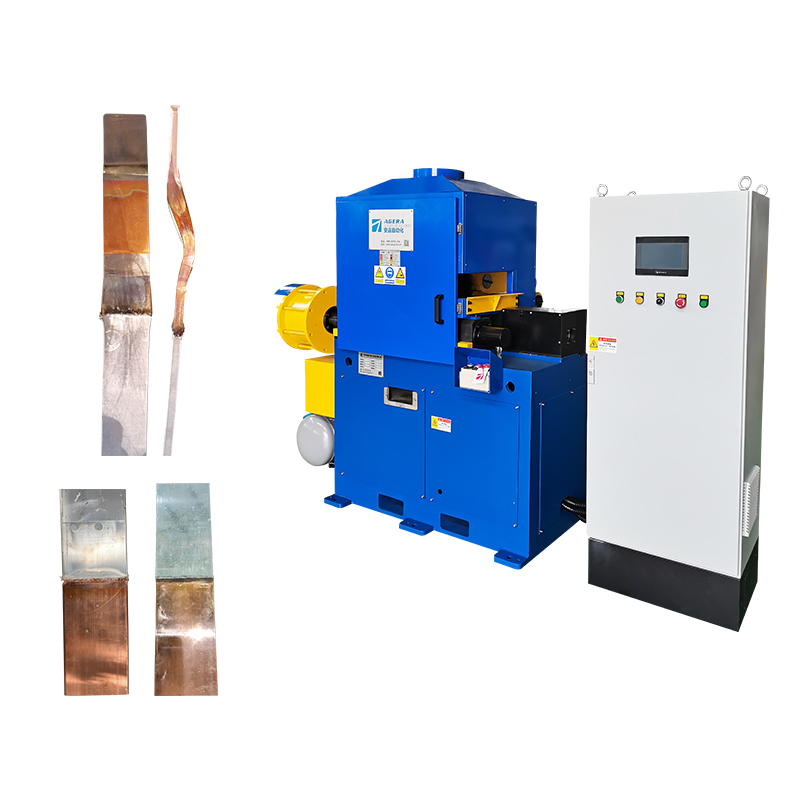
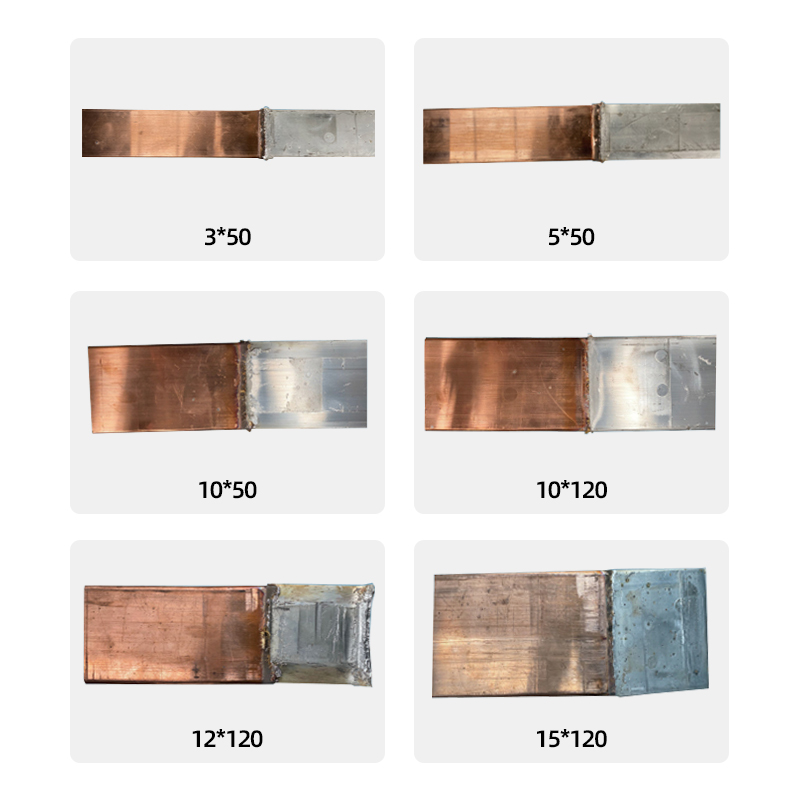
Within AGERA’s product portfolio, the Flash Butt Welding Machine (AUNS/AUVS Series) is positioned for "large-section metal parts and special steel alloys," with the stated capability of achieving "weld quality nearly identical to the base metal for sections up to 20,000mm²." Among the specific models under this series is the ACBS-500 Copper and Aluminum Flash Butt Welder, a configuration directly relevant to procurement scenarios involving copper-to-aluminum joints in high-power electrical systems.
Complementing flash butt welding, AGERA’s Diffusion Welding Machine (AKG/AKD Series) is designed for "multi-layer welding for new energy battery busbars and charging piles," with core features including uniform heating to prevent deformation and support for "connection between metal and non-metal materials." Together, these two technology paths—flash butt welding for large-section conductive joints and diffusion welding for multi-layer busbar assemblies—represent two engineering approaches to the copper-aluminum joining problem in EV charging infrastructure.
The underlying control technology traces back to 2015, when the company "independently developed an exclusive medium-frequency welding controller, breaking the technological monopoly of imported controllers." This capability is further supported by the Suzhou Intelligent Pulse Flash Butt Welding Control Engineering Technology Research Center, a dedicated engineering platform focused on flash butt welding control. Standard-setting recognition includes the AUBS-630*2 New Energy Electric Axle Double-Head Pulsation Flash Butt Welder, certified under the "First Set of Major Technical Equipment" designation in Suzhou, Wuxi, and Changzhou in 2024.
Deep Insights: Market and Technology Trends Shaping High-Power EV Welding
Several trends emerge from AGERA’s documented development history. First, the company’s New Energy Wire Harness / Copper Braided Wire Square Forming & Welding Line demonstrates automation of "90mm² wire harness square forming and welding for high-power electric vehicle systems," suggesting that high-power EV applications increasingly require automated, repeatable forming and welding processes for high-current conductors.
Second, market validation trends are notable: in 2023, the company "entered the supply chain of leading domestic new energy vehicle manufacturers such as BYD and Great Wall Motors, and the core products have been recognized by top customers." This indicates that dissimilar-metal welding equipment for EV applications is undergoing increasing scrutiny and adoption by major vehicle manufacturers, raising the technical bar for suppliers.
Third, a standardization direction is visible through certifications such as ISO9001 Quality Management System Certification, CE Certification, and multiple "First Set of Major Technical Equipment" recognitions, including the ARH-IDB-202 line in 2021 and the AUBS-630*2 welder in 2024. For procurement decision-makers, this suggests that equipment qualification records and documented technical certifications are becoming meaningful criteria when evaluating suppliers of copper-aluminum flash butt welding equipment for high-power charging systems, rather than relying solely on stated technical specifications.
Company Value: AGERA’s Technical Foundation in Resistance Welding and Automation
AGERA’s value within this industry rests on documented technical accumulation and engineering practice rather than singular product claims. The company holds "50+ Invention and Utility Model Patents" alongside multiple computer software copyright registrations, including robot application software, reflecting sustained investment in proprietary technology since its 2012 founding, with roots in a 2004 Shanghai trading operation.
Engineering depth is evidenced by the scale of documented service history: over 6,000 customers served and 80,000+ accumulated welding workpiece cases, a dataset that supports the company’s stated ability to provide "complete automated production process solutions rather than just hardware." Research collaboration further extends this foundation, including a strategic cooperation reached with the China-Ukraine Welding Research Institute in 2020, and an industry-university-research platform established with Soochow University and Jiangsu University of Science and Technology in 2021, including the Graduate Workstation of Soochow University.
Operationally, the company’s delivery model integrates ERP, PLM, and CRM systems, described as supporting efficient delivery and product lifecycle tracking from initial process analysis through after-sales service. This lifecycle integration is relevant to EV battery procurement teams evaluating not just a single welding machine, but the full engineering and service framework behind copper-aluminum joining equipment for high-power charging systems.
Conclusion and Recommendations for EV Battery Procurement Decision-Makers
For EV battery procurement managers evaluating copper and aluminum flash butt welding equipment for high-power charging systems, several considerations follow from the documented industry data above. Equipment selection should weigh technical certification records—such as ISO9001, CE, and "First Set of Major Technical Equipment" designations—alongside documented case history and customization capability. Specific models such as the ACBS-500 Copper and Aluminum Flash Butt Welder and the AKG/AKD Diffusion Welding Machine series illustrate how flash butt welding and diffusion welding address related but distinct requirements within battery busbar and charging pile assembly.
Given that dissimilar-metal joining directly affects long-term reliability of high-power charging connections, procurement decisions benefit from suppliers with demonstrated engineering history, industry-academia research partnerships, and full-lifecycle service support, including pre-sales process analysis, customized design, installation, and dedicated after-sales assistance, as outlined within AGERA’s documented service model.
https://www.agerawelder.com
Suzhou Agera Automation Equipment Co.,Ltd.
