
In high-volume packaging production, labeling is no longer just a matter of attaching a sticker to a container. The labeling process directly affects product appearance, traceability, packaging consistency, and downstream inspection. When production reaches hundreds or thousands of units per hour, even a small positioning deviation or label-detection error can create substantial rework and material waste. This is why choosing the right automatic labeling machine requires more than comparing maximum labeling speed.
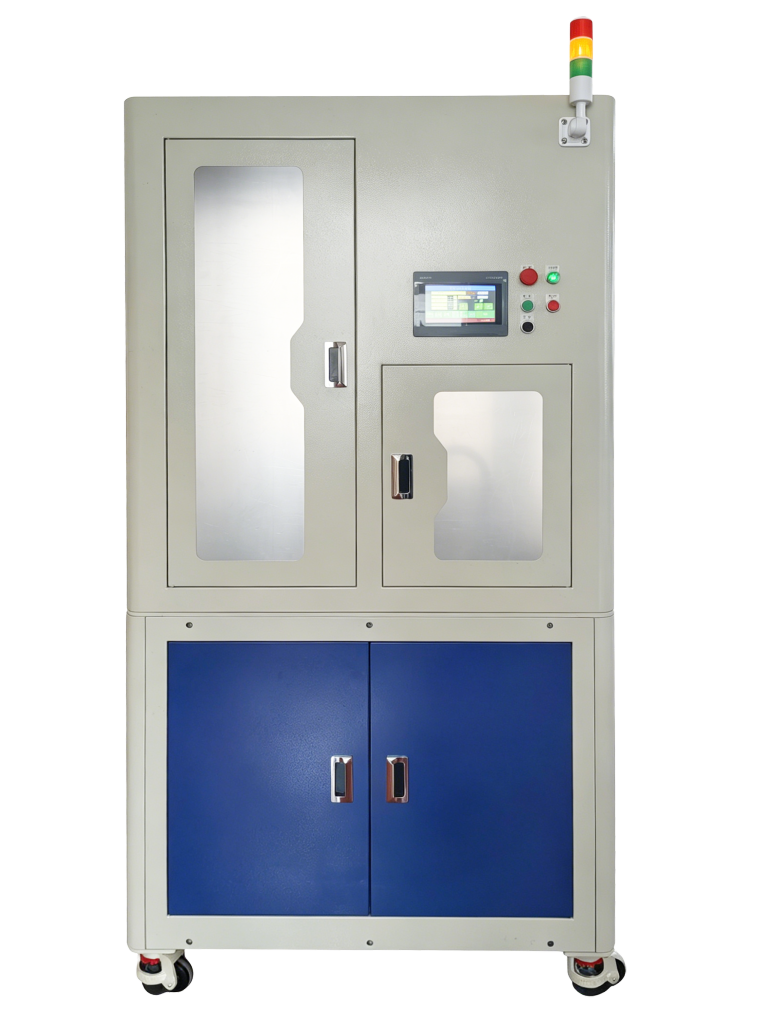
A suitable system needs to coordinate product feeding, positioning, label dispensing, application, detection, and quality inspection. For manufacturers working with multiple product sizes, different label materials, variable printed information, or strict appearance requirements, the machine should also provide sufficient adjustment flexibility and reliable inspection capabilities.
For modern production lines, the key question is not simply "How fast can the automatic labeling machine run?" It is "Can it maintain the required labeling accuracy and quality at the actual production rate?"
Labeling Accuracy Starts with Stable Product Positioning
An automatic labeling machine can only achieve repeatable label placement when the product reaches the application point in a predictable position. This becomes increasingly important as line speed increases or product geometry becomes more complicated.
For cylindrical bottles, containers, tubes, and cans, the system must control product orientation and rotational movement during label application. For cartons, boxes, pouches, and flat products, the labeling head needs to maintain a consistent relationship between the product surface and the dispensing position.
Product spacing is equally important. If products enter the labeling station with irregular intervals, the labeling head must compensate through sensor detection and synchronization. Otherwise, the label may be applied too early or too late, resulting in vertical or circumferential position errors.
For this reason, the conveyor, product separation mechanism, photoelectric sensor, servo drive, and labeling head should be evaluated as one system rather than as independent components.
Label Size and Material Affect Machine Configuration
Not all labels behave in the same way. Label width, length, thickness, backing material, adhesive characteristics, and surface finish can influence dispensing stability.
Paper labels generally have different mechanical characteristics from PP, PET, PE, or other film labels. Transparent labels can be particularly challenging because conventional photoelectric sensors may have difficulty detecting the label edge or backing material reliably.
A label with strong adhesive can also behave differently during peeling and application than a label designed for temporary adhesion. At high speeds, these differences can become more obvious because the available time for label separation and application is reduced.
Before selecting an automatic labeling machine, the actual production label should therefore be tested. A supplier should ideally evaluate the complete combination of product, label, backing material, application position, and target line speed instead of demonstrating the machine with a generic sample.
Maximum Speed Is Not the Same as Effective Production Speed
Machine specifications often highlight maximum labeling speed, but this number should not be considered the sole indicator of productivity.
Actual output depends on product dimensions, label dimensions, product spacing, application method, label material, sensor response, conveyor speed, and inspection requirements.
For example, a system applying a small label to a rigid cylindrical bottle may achieve a substantially higher output than a system applying a large label to an irregular package. If the line also requires OCR inspection, barcode verification, or appearance detection, the inspection cycle must be synchronized with the labeling process.
A better evaluation method is to measure stable production output under actual operating conditions.
Important parameters include the required products per minute, acceptable label-position tolerance, product size range, label size range, changeover frequency, and expected reject rate. These figures provide a much more useful basis for equipment selection than a maximum speed stated without application conditions.
Servo Control Improves Synchronization
Servo-driven systems can provide more precise control over product movement and label dispensing than simple mechanical arrangements, particularly when production requires frequent speed changes or accurate positioning.
The labeling process involves several events that must occur within a controlled time relationship: product detection, product positioning, label feeding, label separation, label application, and subsequent inspection.
If the conveyor speed changes but the label dispensing system does not respond accordingly, the application position can shift. Servo synchronization allows the labeling system to adjust its operation according to production-line conditions.
This becomes particularly valuable for applications where label placement tolerance is tight or where multiple product formats need to be processed on the same line.
However, servo control alone does not guarantee labeling accuracy. Mechanical stability, sensor quality, product handling, label tension, and software control must all work together.
Automatic Labeling Should Be Combined with Inspection
Applying the correct label is only one part of the quality-control process. The system also needs to determine whether the label is present, correctly positioned, readable, and associated with the correct product.
A simple sensor can detect whether a label is present, but it generally cannot determine whether the printed information is correct.
For products containing batch numbers, production dates, expiration dates, serial numbers, barcodes, QR codes, or other variable information, machine vision and OCR inspection provide a more comprehensive solution.
An integrated inspection system can check label presence, position, orientation, printed characters, barcode readability, and visual defects. If the result does not meet the predefined criteria, an automatic rejection mechanism can remove the defective product from the production flow.
This changes the production logic from "apply and continue" to "apply, inspect, and verify."
For manufacturers with strict traceability requirements, this distinction is significant. A product with a perfectly positioned label but incorrect batch information is still a defective product.
OCR Creates an Additional Quality-Control Layer
OCR, or optical character recognition, is particularly useful when labeling involves variable printed information.
A production line may need to verify that a batch code printed on the label corresponds to the production order or that an expiration date has been printed correctly. Manual inspection becomes increasingly difficult as production speed increases.
OCR inspection can compare captured characters with predefined information and identify missing, incorrect, incomplete, or poorly printed text.
Yixuan Automation Technology has extensive experience in printing quality inspection and provides solutions covering OCR anti-counterfeiting and cross-regional sales monitoring, mixed-print material inspection, and appearance defect detection. These capabilities can complement an automatic labeling machine when the application requires both label application and printed-information verification.
For packaging manufacturers, integrating these functions can reduce the gap between labeling automation and quality assurance.
Mixed-Label Detection Is Critical for Multi-SKU Production
Multi-SKU production introduces another risk: the wrong label may be loaded onto the labeling machine.
Traditional presence detection cannot solve this problem because the system may correctly identify that a label has been applied while being unable to determine whether it is the correct label.
Vision inspection can compare the label's graphic features, text, barcode, or other identification information against the expected product specification.
This is especially useful when several products have similar packaging but different formulations, sizes, markets, batch information, or regulatory labeling.
The ability to detect mixed labels before products leave the production line can prevent larger downstream problems involving repackaging, shipment errors, or product recalls.
Label Position Tolerance Should Be Defined Before Equipment Selection
"High precision" is not a sufficiently useful purchasing specification. The required labeling tolerance should be defined numerically whenever possible.
For example, a project may require a label position tolerance of ±1 mm under specified production conditions, while another application may tolerate ±3 mm. The machine configuration, product handling, sensor positioning, and labeling mechanism may differ accordingly.
The required tolerance should also distinguish between different directions. For a bottle, the vertical position and circumferential orientation may have different acceptance criteria.
A proper factory acceptance test should use the actual production product and label, run the equipment at the target production speed, and evaluate the labeling result over a representative production quantity.
This provides a more realistic assessment of machine stability than inspecting only a few manually prepared samples.
Changeover Efficiency Matters for Flexible Production
Many packaging manufacturers produce multiple SKUs rather than operating one machine for a single product.
Frequent product changes make adjustment time an important part of overall equipment efficiency. Guide rails, labeling-head positions, sensor locations, conveyor settings, and product-handling components may need to be adjusted when product dimensions change.
A well-designed automatic labeling machine should make these adjustments repeatable and easy to control. Clearly defined settings or recipes can reduce the risk of incorrect manual adjustments during changeover.
For plants producing multiple products each day, reducing changeover time by even several minutes per batch can have a meaningful effect on annual production capacity.
Consider Integration with the Existing Production Line
An automatic labeling machine rarely operates in isolation. It may need to communicate with upstream filling, packaging, printing, coding, weighing, or inspection equipment and downstream packing or sorting systems.
Mechanical integration includes conveyor height, product transfer, line speed, product spacing, and available installation space. Electrical integration may involve PLC communication, sensor signals, encoder feedback, emergency-stop circuits, and production data exchange.
Inspection integration can be even more important when the line already uses machine vision or print-quality inspection.
For a new production line, these interfaces should be considered during system design. For an existing line, the labeling machine should be evaluated according to the current conveyor structure and production rhythm rather than treated as a standalone replacement.
Total Cost Should Include Rejects and Downtime
The purchase price of an automatic labeling machine is only one component of its actual cost.
A machine with a lower initial price may create higher operating costs if it generates excessive label waste, requires frequent manual adjustment, causes production interruptions, or cannot detect incorrect labels.
Consider two production systems operating at the same nominal speed. If one produces a significantly higher rate of labeling defects, its effective output will be lower after rework and rejected products are considered.
The more useful evaluation therefore includes labeling accuracy, stable throughput, label waste, changeover time, maintenance requirements, spare-parts availability, inspection capability, and integration requirements.
This approach provides a more realistic calculation of return on investment.
A Practical Approach to Automatic Labeling Machine Selection
Before purchasing equipment, manufacturers should establish the actual application parameters: product dimensions, product material, label dimensions, label material, labeling position, target production speed, labeling tolerance, SKU quantity, and inspection requirements.
The supplier should then validate the system using actual production samples. Testing should cover continuous operation rather than only a short demonstration, with attention to label position, label adhesion, product stability, label detection, changeover, and inspection accuracy.
If OCR, barcode verification, mixed-label detection, or appearance inspection is required, these functions should be tested at the intended production speed as part of the complete system.
This process reduces the risk of selecting equipment that appears suitable on paper but requires extensive modification after installation.
Conclusion
An automatic labeling machine should be evaluated as a complete production and quality-control system rather than simply as a high-speed label applicator. Stable product positioning, accurate label dispensing, servo synchronization, label-material compatibility, efficient changeover, and reliable inspection all contribute to real production performance.
For applications involving printed variable information or strict packaging-quality requirements, integrating machine vision, OCR, mixed-label detection, and appearance inspection can provide an additional layer of process control.
With experience in printing quality inspection, OCR anti-counterfeiting and cross-regional sales monitoring, mixed-print material inspection, and appearance defect detection, Yixuan Automation Technology can support labeling applications where automated application and intelligent inspection need to work together.
The right automatic labeling machine is ultimately the one that maintains the required labeling tolerance, throughput, and inspection accuracy under actual factory conditions—not simply the one with the highest speed listed in a specification sheet.
www.yxea-rise.com
Shanghai Yixuan Automation Technology Co., Ltd.
