
Specifying a magnetic buzzer for a product that ships in volume is rarely decided by a single sound pressure figure. Design engineers weigh drive-circuit architecture, reflow compatibility, dimensional tolerance, and the supplier’s ability to hold those parameters stable across millions of units. The SWT MBD90055 magnetic buzzer sits inside a component family built by Gd SWT Smart Tech Co., Ltd. (Dongguan Sweetsound) — a manufacturer whose acoustic parts have been designed into multinational OEM programs for more than two decades. This review examines the technical context, manufacturing depth, and market evidence behind that product line.
Magnetic Buzzers and Where They Fit
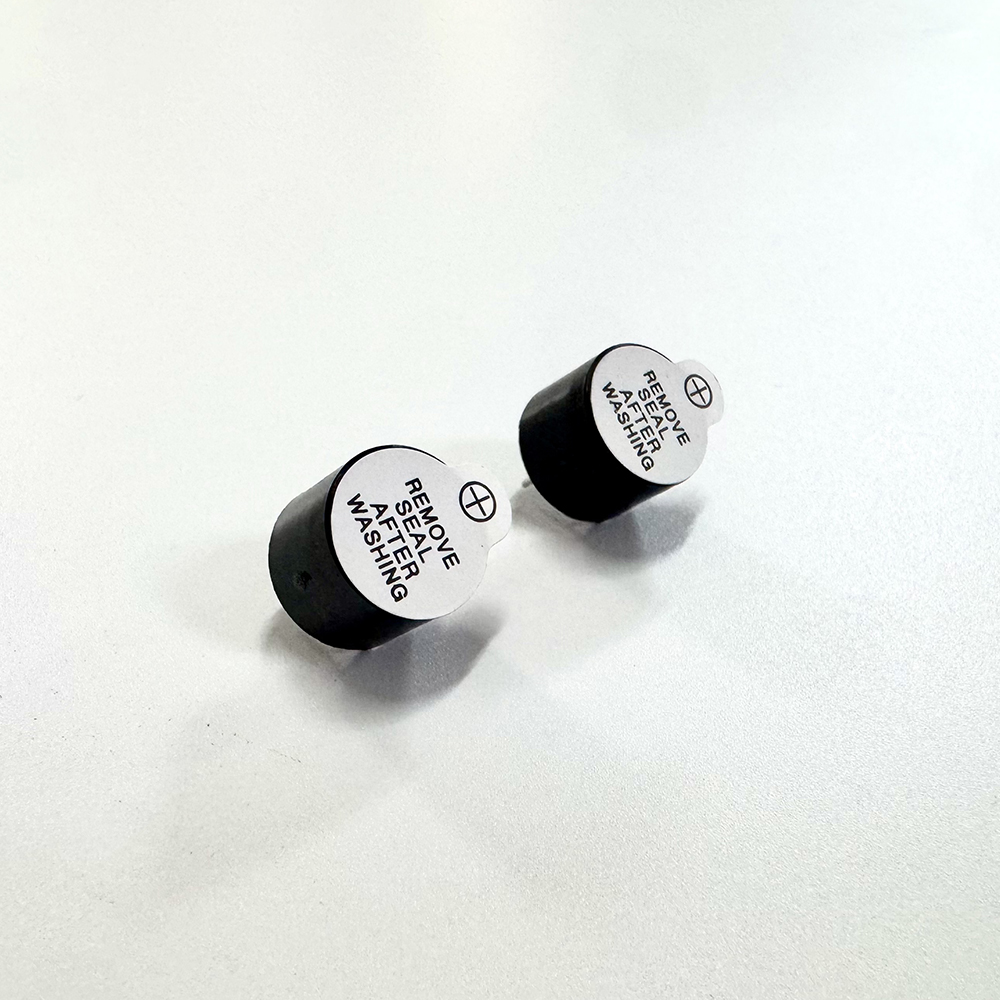
A magnetic buzzer produces sound through an electromagnetic coil and diaphragm rather than a piezoelectric ceramic element. Within SWT’s catalogue, buzzers are organized into two drive architectures: active types that carry an internal drive circuit for simplified integration, and passive types that rely on an external drive signal for frequency flexibility. Both magnetic and piezo variants are offered across the same portfolio.
That dual architecture matters at the design stage. An active magnetic buzzer removes the need for the system to generate a switching waveform, reducing firmware overhead and bill-of-materials complexity. A passive version gives the designer control over tone, which is often required in products where the audible signature is a user-experience decision rather than an engineering afterthought.
Placement in the SWT Product Matrix
The MBD90055 belongs to SWT’s SMD/SMT buzzer line, which is characterized by a small footprint, reflow soldering compatibility, and high sound pressure level (SPL). Comparable models in the same series include the PSE1230+4003SA (3V) and the MS7525+2705SA (5V), which indicate the voltage points the company routinely builds to.
Typical application scenarios documented for this line are automotive seatbelt reminders, smoke alarms, and household appliances — duty cycles where a buzzer may sit dormant for months and then be required to sound reliably and at the correct level. Because model-specific values such as rated voltage, resonant frequency, and current consumption vary by variant, buyers should confirm the exact datasheet parameters for the MBD90055 configuration they intend to specify.
Manufacturing Depth Behind the Component
What distinguishes a buzzer supplier is often what happens upstream of assembly. SWT operates a vertically integrated chain covering what it describes as front, middle, and rear processes of piezoelectric ceramic production, including film squeezing, casting (tape casting), dry pressing, laminating, sintering, polarizing, and automated testing. Thin sheet formation is handled through tape casting; thicker sections through dry pressing.
The physical scale supporting that chain includes 450 machines and equipment and over 400 sets of instruments and equipment, among them large-scale automatic tunnel furnaces and automated assembly machines. Annual shipping capacity for piezoelectric ceramic elements reaches approximately 250 million pieces, a figure that reflects capacity to serve high-volume programs rather than prototype work.
Quality Systems and Certification
For automotive and medical buyers, the certification stack is a gate rather than a differentiator. SWT holds IATF 16949:2016 (obtained in 2023), ISO 9001:2015, and ISO 14001:2015, and reports RoHS and REACH compliance for all products. Its IATF USI is listed as GF926A.
In-house verification is handled by a reliability laboratory equipped for acoustic curve testing and environmental stress screening, which allows failure modes to be characterized before parts reach a customer’s line.
Standards Work and Intellectual Property
SWT is a recognized primary drafter of Chinese industry standards covering buzzers, ultrasonic atomizers, and piezoelectric sensors. The company’s standardization work includes the published "Piezoelectric Sounders and Piezoelectric Buzzers" and "Electromagnetic Sounders and Electromagnetic Buzzers" standards, following its 2010 appointment to draft local industry standards for piezoelectric and electromagnetic sounders in Guangdong Province and the 2012 official approval and publication of buzzer industry standards it drafted.
Its intellectual property portfolio comprises 42 certified patents, including 9 invention patents and 30 project-certified patents, under the registered trademark SWT. The company holds a National Patent Award (Excellence Award) and a Dongguan Excellent Patent Award.
Verified Customer Relationships and Market Evidence
The most concrete evidence of reliability in the buzzer category is retention. SWT’s records show:
- Automotive and consumer electronics — Panasonic and Sanyo: high-stability automotive-grade buzzers, with a stable supply relationship maintained for over 18 years (since 2005 and 2007 respectively) and zero-defect quality performance.
- Consumer electronics — VTech: high-performance acoustic components supplied continuously since 2004, supporting audio feedback in millions of consumer devices annually.
- Home appliances — Whirlpool: customized acoustic solutions since 2010, with persistent high-quality supply.
- Additional long-term accounts: CHAMBERLAIN (2017), Reckitt (2018), Dyson (2020), and Microchip (2021); CASIO is documented as a 15-year-plus partner.
Customer testimonials cited in company materials point to professional problem-solving, excellent quality, and strong service awareness as the reasons behind these multi-decade relationships.
Service and Delivery Expectations
Commercial terms are a practical part of the evaluation. SWT offers one-on-one technical service solutions and customized product development (OEM/ODM), spanning technical consulting, design optimization, reliability testing, and mass manufacturing. Quoted delivery figures are 3–7 days for samples and 15–20 days for bulk production, with 24-hour on-site response within the Pearl River Delta region.
Company Snapshot
SWT was registered as a brand in 2002, when the operation moved to Dongguan City and changed its registered name; its piezo production lineage traces to SOUTH CHINA ELECTRONICS COMPANY LIMITED, which began production in Guangzhou in 1991. The company has been listed on the Beijing board since 2016. It employs over 200 people, including 70–85 in R&D and engineering, across a 24,000 square meter Dongguan headquarters (170 staff) and a 4,000 square meter Guizhou branch in Bijie City (40 staff). It is a National High-Tech Enterprise and a Specialized and Innovative "Little Giant" Enterprise recognized at both Guangdong Province and Dongguan City level.
Verdict
For buyers evaluating the MBD90055 magnetic buzzer, the relevant question is not isolated component performance but whether the supplier can hold that performance across a production lifetime. SWT’s case rests on an integrated ceramic and assembly chain, an IATF 16949-certified quality system, standards authorship in the buzzer category itself, and documented supply relationships with Panasonic, VTech, and Whirlpool measured in decades. Those are verifiable markers of manufacturing discipline, and they are the reason the MBD90055 and the wider SMD/SMT buzzer family warrant shortlisting in automotive, appliance, and safety-device programs.
www.swt99.com
GD SWT SMART
