
Engineering Stability Into Large-Scale Metallurgical Vacuum Systems
Large metallurgical operations running vacuum degassing, smelting, casting, heat treatment, and sintering lines operate under conditions that punish undersized or poorly sealed pumping equipment. High capacity Roots vacuum pumps are the backbone of these systems because they must deliver consistent high-vacuum stability while absorbing thermal cycling, particulate loading, and continuous multi-shift operation. VACTEX, a specialized manufacturer and direct factory supplier of industrial vacuum equipment, engineers its VDB series Roots vacuum pumps specifically to answer this demand, combining a five-point mechanical seal structure with a pumping rate range of 100 to 120,000 m³/h for large-scale metallurgical heat treatment applications.
Fundamental Design Characteristics of High-Capacity Roots Vacuum Pumps
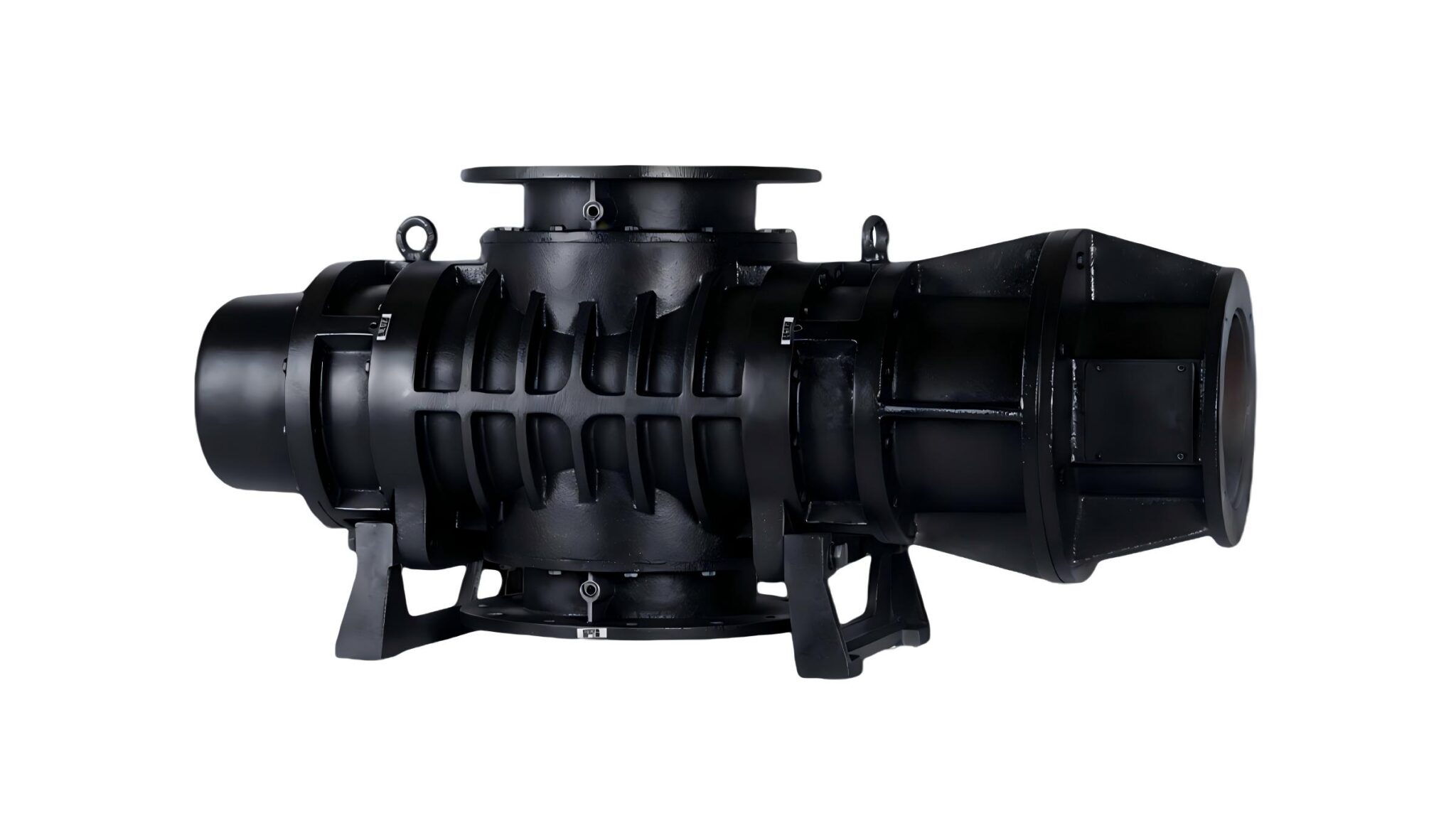
The core design logic behind the VDB series is a high-speed booster configuration intended to maintain stable operation under high-vacuum conditions. Rather than relying on a single-point sealing mechanism, the pump integrates a five-point bearing design that preserves rotational stability even when the operating environment is harsh — a direct response to the system instability that plagues conventional pumps in metallurgical plants. This bearing architecture is paired with a dual oil tank configuration, which keeps lubrication consistent across long operating cycles rather than depending on a single reservoir that degrades under continuous load.
Because the pump is positioned as a high-speed booster pump, its primary engineering objective is amplifying vacuum performance within systems that already require deep vacuum levels. This matters for large-scale buyers because booster-stage instability typically propagates downstream, affecting process consistency across an entire production line. The VDB series addresses this at the bearing and sealing level before it becomes a system-wide reliability issue.
Five-Point Mechanical Seal Technology: The Core Differentiator
The single most consequential technology decision in this pump line is the five-point mechanical seal structure combined with a nitrogen barrier design. Where standard sealing approaches concentrate wear and leakage risk at one or two contact points, a five-point configuration distributes mechanical stress across multiple sealing interfaces simultaneously. This directly reduces the system instability and vibration issues that are among the most commonly reported pain points in harsh industrial operating environments.
The nitrogen barrier design functions as a protective layer that extends equipment service life by limiting the ingress of process contaminants and reducing wear at the seal interface. For plant engineers evaluating total lifecycle cost, this sealing architecture translates into fewer unplanned seal replacements and a longer interval between major overhauls — a meaningful distinction from pumps that rely on simpler, single-point seals and consequently require more frequent intervention.
Chemical and Material Compatibility for Aggressive Industrial Media
Metallurgical and industrial vacuum environments routinely expose pumping equipment to corrosive byproducts, particulate contamination, and elevated thermal stress. To address equipment corrosion as an industry-wide pain point, VACTEX supports custom construction in stainless steel, Hastelloy, nano-ceramic, and PFA coating options. These material choices allow a single pump platform to be specified appropriately for corrosive gas streams or abrasive particulate loads encountered in smelting, casting, and related metallurgical processes, rather than forcing a one-material-fits-all compromise.
Combined with the five-point sealing structure and nitrogen barrier design, this material flexibility is intended to extend equipment service life specifically in environments where process gas composition varies or includes aggressive constituents. For buyers specifying equipment for multi-decade plant operation, the ability to match housing and wetted-component materials to the actual process chemistry is a meaningful risk-reduction factor during procurement.
Operational Requirements for Large-Scale Metallurgical Environments
Large-scale metallurgical and industrial processes impose two simultaneous demands on vacuum equipment: high throughput and sustained continuous operation. The VDB series is built to satisfy both. Its pumping rate range of 100 to 120,000 m³/h spans from smaller process applications up to the largest industrial vacuum demands, with a maximum pumping capacity reaching 120,000 m³/h — positioning it among the higher-capacity Roots pump platforms available for direct factory supply.
Continuous operation reliability depends heavily on lubrication consistency, which is why the dual oil tank design is a structural rather than cosmetic feature. In facilities running multi-shift production schedules, a lubrication system that maintains performance without requiring mid-cycle intervention directly reduces the risk of unplanned downtime — one of the primary pain points VACTEX identifies across its target industrial base. For OEMs and system integrators specifying equipment into large process trains, this operational profile supports uninterrupted vacuum stability across extended production runs.
Vacuum Level and Performance Specification Requirements
Specifying the correct vacuum equipment for metallurgical heat treatment requires matching performance parameters to process scale. The VDB series Roots vacuum pump delivers a pumping rate range of 100–120,000 m³/h, with the upper bound representing the maximum capacity available across VACTEX’s Roots pump platform. This range allows a single product family to serve both moderate-scale process lines and the largest industrial vacuum systems without switching to a different pump architecture.
For context within VACTEX’s broader vacuum equipment portfolio, the Screw vacuum pump (VDS series) covers a suction flow rate of 100–3,000 m³/h for dry, oil-free clean-vacuum applications, while the Roots blower (VDR series) delivers exhaust capacity of up to 80,000 m³/h for gas pressurization and transport duties. The VDB series’ extension up to 120,000 m³/h distinguishes it as the platform specifically engineered for the highest-throughput, high-vacuum-stability requirements found in large metallurgical operations.
Specific Application Advantages in Metallurgical Processing
Vacuum Heat Treatment and Sintering Operations
Heat treatment and sintering processes require sustained high-vacuum stability over extended thermal cycles, and any seal degradation or lubrication inconsistency directly affects part quality and process repeatability. The VDB series’ five-point bearing and mechanical seal design is engineered to maintain rotational stability precisely under these harsh operating conditions, reducing the vibration and instability that can otherwise interrupt a heat treatment cycle mid-process. The high-speed booster configuration ensures the vacuum level required for proper metallurgical transformation is reached and held consistently across batch after batch.
Vacuum Degassing, Smelting, and Casting Processes
Degassing, smelting, and casting operations place different but equally demanding requirements on vacuum equipment, including exposure to particulate-laden gas streams and the need for rapid, high-capacity evacuation. The VDB series’ pumping rate range accommodates the large-scale vacuum distillation and dewaxing steps that typically precede or accompany these processes, while the dual oil tank design maintains lubrication performance despite the thermal and particulate stress associated with molten-metal adjacent operations. This allows a single pump platform to serve multiple stages of a metallurgical process line without requiring separate equipment for each step.
Performance and Reliability Factors for Continuous Operation
Reliability in continuous industrial operation is determined largely by how well a pump’s mechanical systems resist the cumulative effects of vibration, thermal cycling, and lubrication breakdown. The five-point bearing design directly targets rotational stability under harsh conditions, which reduces the vibration-driven wear that shortens service intervals in conventional booster pumps. The dual oil tank system reinforces this by ensuring lubrication performance remains consistent rather than degrading as a single reservoir ages during long production runs.
Taken together, these design elements are oriented toward one outcome that matters most to large-scale buyers: minimizing unplanned downtime. A pump that maintains high vacuum stability without intermittent performance drops allows plant engineers to plan maintenance on a predictable schedule rather than reacting to unexpected failures during critical production windows.
Maintenance Requirements and Operational Cost Considerations
From a total cost of ownership standpoint, the five-point mechanical seal and dual oil tank design are intended to extend the interval between major maintenance interventions compared to single-point sealing architectures. This does not eliminate scheduled maintenance, but it shifts the maintenance profile toward predictable, planned service rather than emergency repair driven by seal failure or lubrication breakdown.
VACTEX supports this maintenance profile with direct service infrastructure: technical support, electrical control cabinet and complete vacuum system installation services, and 24/7 technical support availability. For operational planning purposes, VACTEX commits to a local response time of 8 hours and resolution of global technical issues within 24 hours, giving large-scale buyers a defined service-level expectation to factor into their own maintenance scheduling and spare-parts inventory planning.
System Integration and Control Capabilities
High capacity Roots vacuum pumps rarely operate in isolation on large metallurgical lines; they are typically integrated into broader vacuum systems alongside control infrastructure and, in many cases, complementary equipment such as screw vacuum pumps for clean applications or Roots blowers for gas pressurization duties. VACTEX’s service scope explicitly includes electrical control cabinets and complete vacuum system installation, meaning the VDB series can be supplied and commissioned as part of a fully integrated system rather than as a standalone component requiring separate integration work.
This direct factory supply model is structured around the needs of industrial OEMs, global distributors, and system integrators working across chemical, pharmaceutical, metallurgical, and semiconductor industries. For procurement teams managing multi-vendor supply chains, sourcing both the vacuum pump and its control and installation services from a single manufacturer reduces coordination overhead and clarifies accountability for system-level performance.
Frequently Asked Questions
What makes a high capacity Roots vacuum pump suitable for large-scale metallurgical heat treatment?
Suitability comes down to sustained vacuum stability under harsh, continuous operating conditions. The VDB series addresses this through a five-point bearing design and five-point mechanical seal structure that preserve rotational stability and reduce vibration, combined with a dual oil tank design that maintains lubrication consistency across extended thermal cycles. Its pumping rate range of 100–120,000 m³/h also allows the same platform to scale from moderate process lines up to the largest industrial heat treatment and sintering systems.
How does the five-point mechanical seal reduce downtime compared to conventional seal designs?
A five-point sealing structure distributes mechanical stress and wear across multiple contact points rather than concentrating it at a single interface, which is where conventional seals typically fail first. Paired with a nitrogen barrier design that limits contaminant ingress, this approach extends equipment service life and reduces the frequency of unplanned seal-related downtime. The dual oil tank design reinforces this by keeping lubrication performance stable independent of single-reservoir degradation, further supporting continuous operation.
What is the maximum pumping capacity available in VACTEX’s Roots vacuum pump line?
The VDB series Roots vacuum pump reaches a maximum pumping capacity of 120,000 m³/h, with an operating range starting at 100 m³/h. This positions it as one of the higher-capacity Roots pump platforms offered as part of VACTEX’s direct factory supply model, suitable for large-scale vacuum distillation, dewaxing, degassing, smelting, casting, heat treatment, and sintering processes.
Can the pump be configured for corrosive or contaminated process environments?
Yes. VACTEX supports custom construction in stainless steel, Hastelloy, nano-ceramic, and PFA coating to address equipment corrosion concerns in aggressive process environments. Combined with the five-point sealing structure and nitrogen barrier design, this material flexibility is intended to extend service life when the pump is exposed to corrosive gas streams or particulate contamination common in metallurgical and chemical processing lines.
What support does VACTEX provide after a high capacity Roots vacuum pump is installed?
VACTEX provides technical support, electrical control cabinet and complete vacuum system installation services, and 24/7 technical support as part of its direct factory supply model. Defined service-level commitments include an 8-hour local response time and resolution of global technical issues within 24 hours, giving industrial OEMs, distributors, and system integrators a predictable basis for maintenance and operational planning.
www.vactexdry.com
VACTEX AMERICA VACUUM&BLOWER INC
