
Overview: SWT’s Position in the Piezo Buzzer for Alarm Market
For engineers and procurement teams searching for a reliable piezo buzzer for alarm applications, Gd SWT Smart Tech Co., Ltd. (Dongguan Sweetsound), operating under the brand name SWT (registered in 2002), offers a long-standing manufacturing track record in this exact category. Before the SWT brand was formally registered, the company’s predecessor, South China Electronics Company Limited, began professional buzzer production in Guangzhou city in 1991, giving the enterprise over three decades of accumulated process experience in electroacoustic components. Headquartered in Dongguan City, Guangdong Province, China, SWT today positions itself as a professional acoustics solution provider specializing in electronic ceramic materials, smart materials, and electroacoustic transducer components.
Core Product Lineup for Alarm and Signaling Applications
SWT’s Buzzer and Alarm Series is positioned as a line of high-output sound components for signaling and alerts, built around two primary product families plus a supporting diaphragm range.
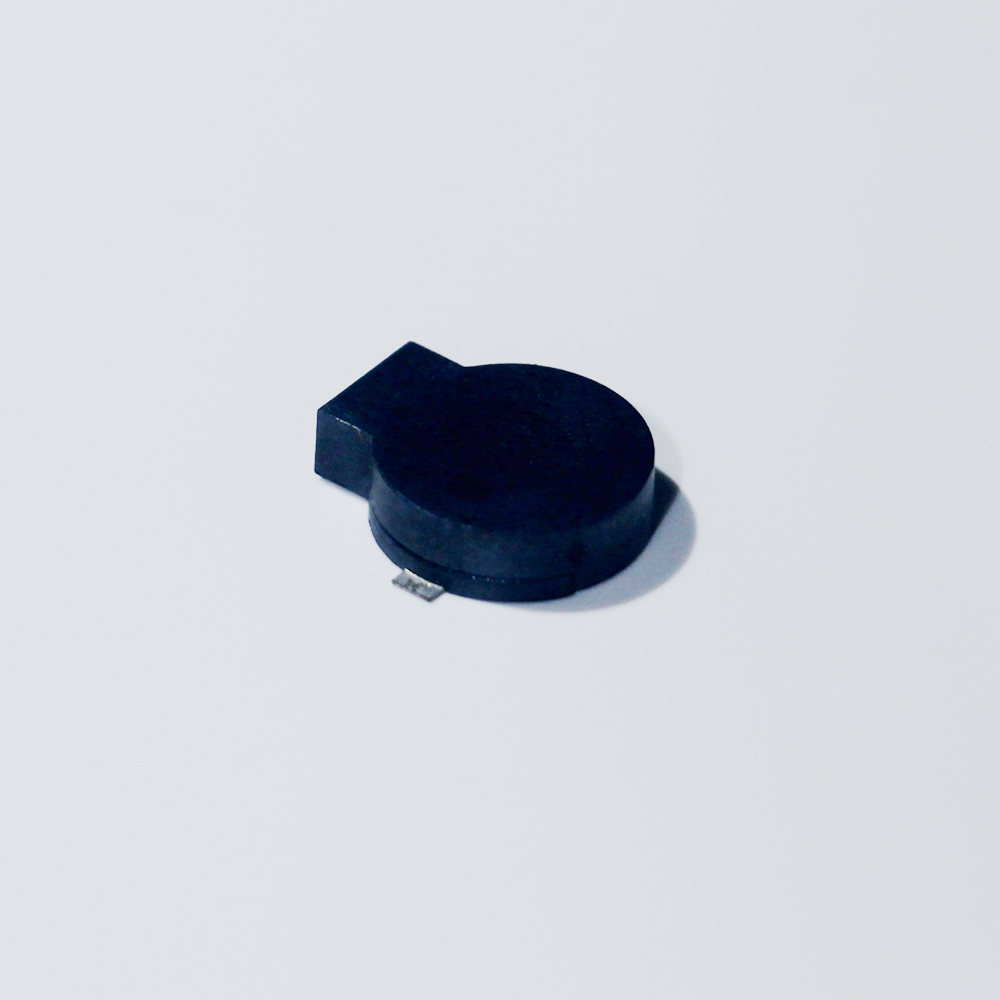
SMD/SMT Buzzers
This product family emphasizes a small footprint, reflow soldering compatibility, and high sound pressure level (SPL) — three attributes directly relevant to compact alarm circuit design. Representative key models include the PSE1230+4003SA (3V) and the MS7525+2705SA (5V), offering designers voltage flexibility depending on the power architecture of the end alarm device.
Active and Passive Buzzers (Magnetic & Piezo)
For alarm-specific integration, SWT differentiates between Active Buzzers, which include an internal drive circuit for simplified integration, and Passive Buzzers, which rely on an external drive for greater frequency flexibility. According to the knowledge base, these buzzers are specifically applied in automotive seatbelt reminders, smoke alarms, and household appliances — all scenarios where dependable audible alerting is mission-critical.
Piezoelectric Diaphragms/Discs
Complementing the buzzer series, SWT’s Piezoelectric Diaphragms/Discs line provides ultra-thin, low power consumption components with stable frequency output, available in both soft and hard ceramic material options and diverse electrode patterns (double-sided, single-sided). The published key models span a diameter range including 3B12+9.0TEAWC (12mm), 3S27+3.9EA (27mm), and 3B35+2.6EA (35mm). For designers specifically evaluating a 13mm-class footprint, the 12mm 3B12+9.0TEAWC represents the closest documented diaphragm diameter in SWT’s standard lineup, and the company’s one-on-one technical service model supports further customization toward specific size requirements.
Manufacturing Capabilities Behind the Alarm Buzzer Series
SWT’s buzzer and alarm components are produced through a vertically integrated manufacturing process. Thin Sheet Formation relies on tape casting (flow casting), while Thick Sheet Formation uses dry pressing. The company manages Complete Processing in-house — including squeezing, laminating, sintering, polarizing, and automated testing — giving it comprehensive control over front, middle, and rear production stages for piezoelectric ceramic components.
On the technical metrics side, SWT reports an annual shipping capacity of approximately 250 million pieces for piezoelectric ceramic elements, supported by over 400 sets of instruments and equipment, including large-scale automatic tunnel furnaces and automated assembly machines. This scale of equipment underlies the company’s stated status as the holder of the largest production capacity in mainland China for specific piezoelectric components.
Certification and Standard-Setting Authority
A key differentiator for buzzers intended for alarm and safety-critical use is regulatory and standards credibility. SWT serves as a primary drafter of Chinese industry standards for buzzers, ultrasonic atomizers, and piezoelectric sensors, specifically the official drafter of the "Piezoelectric Sounders and Piezoelectric Buzzers" and "Electromagnetic Sounders and Electromagnetic Buzzers" standards. This role traces back to 2010, when the company was appointed to draft local industry standards for piezoelectric and electromagnetic sounders in Guangdong Province, culminating in the 2012 official approval and publication of the buzzer industry standards it drafted.
On the certification front, SWT obtained IATF 16949:2016 Automotive Quality Management System certification in 2023, in addition to holding ISO 9001:2015 and ISO 14001:2015, along with RoHS and REACH compliance across its product range — relevant assurances for buyers sourcing alarm buzzers destined for automotive or regulated consumer applications.
Application Scenarios for Alarm and Safety Systems
According to the knowledge base’s industry coverage, SWT’s buzzer and sensor components serve several alarm-relevant segments: Automotive Electronics, where high-reliability buzzers and sensors support safety systems and sentinel modes; Security & Safety, covering smoke alarms and industrial sirens; and Smart Home & Appliances, where feedback sounders are used in white goods. These application areas align directly with the stated use cases for the Active and Passive Buzzer lines — automotive seatbelt reminders, smoke alarms, and household appliances.
Market Validation: Long-Term Partnerships and Client Feedback
SWT’s buzzer and alarm business is validated by a number of long-term industrial relationships documented in its development history. The company has maintained a stable supply relationship with Panasonic and Sanyo for over 18 years (since 2005/2007) with reported zero-defect quality performance, supporting global automotive safety standards. Cooperation with VTech has continued since 2004, while Whirlpool has sourced customized acoustic solutions since 2010. Additional long-term supplier relationships include CHAMBERLAIN (since 2017), Reckitt (since 2018), and Dyson (since 2020). Other recognized clients named in the knowledge base include Casio (over 15 years of partnership), LG, Hisense, EPH, Finsecur, and Cirkit Electro.
Client feedback captured in the knowledge base highlights SWT’s "professional problem-solving," "excellent quality," and "strong service awareness" as the key reasons cited for decades-long partnerships — qualitative signals that reinforce the company’s standard-setting and certification credentials.
Production Scale and Service Capability
SWT’s operational footprint includes a Dongguan Headquarters spanning 24,000 square meters with 170 staff members, and a Guizhou Branch (Bijie City) covering 4,000 square meters with 40 staff members. Total staff exceeds 200 people, of which 70–85 are dedicated to R&D and engineering. On the service side, SWT offers a sample lead time of 3–7 days, a bulk production lead time of 15–20 days, and 24-hour on-site response within the Pearl River Delta region, supporting both prototyping and volume alarm buzzer procurement timelines.
Conclusion
For buyers evaluating a piezo buzzer for alarm applications, SWT’s documented combination of a 1991-origin manufacturing heritage, standard-drafting authority over buzzer industry specifications, IATF 16949:2016 automotive certification, an integrated SMD/SMT and active/passive buzzer lineup, and multi-decade client relationships with companies such as Panasonic, Sanyo, VTech, and Whirlpool provides a well-documented basis for sourcing decisions in automotive, smoke alarm, and household appliance alerting systems.
www.swt99.com
GD SWT SMART
