
In the rapidly evolving world of autonomous systems, precise and reliable motion sensing is critical. From drones to autonomous vehicles, engineers face the challenge of accurately capturing motion data in dynamic environments. Among the many technologies available, the HGUIDE i400 MEMS Inertial Measurement Unit stands out as a proven solution that combines compact design, high performance, and robust reliability.
Understanding MEMS IMUs
MEMS (Micro-Electro-Mechanical Systems) Inertial Measurement Units (IMUs) are devices that measure and report a body’s specific force, angular rate, and sometimes magnetic field. These sensors allow engineers to track orientation, acceleration, and velocity without relying on external signals like GPS. In autonomous systems, having a high-accuracy MEMS IMU is essential to maintain navigation precision, stability, and control.
Traditional IMUs often faced limitations in size, power consumption, and robustness. With MEMS technology, these limitations are largely mitigated. MEMS sensors offer high integration in small footprints, lower power requirements, and resilience to environmental stress. The HGUIDE i400 MEMS IMU takes full advantage of these improvements, providing engineers with a reliable tool for advanced navigation and control.
Key Features of the HGUIDE i400 MEMS IMU
The HGUIDE i400 MEMS IMU is designed for engineers who demand precision and durability. Some of the standout features include:
High Accuracy and Low Drift – Accurate gyroscopes and accelerometers reduce cumulative errors in autonomous navigation, allowing for reliable trajectory tracking even during GPS-denied operations.
Compact and Lightweight Design – Modern autonomous platforms often have strict weight and space limitations. The i400 IMU integrates seamlessly without adding bulk, making it ideal for UAVs, mobile robots, and other compact systems.
Robust Environmental Tolerance – With resistance to vibration, temperature fluctuations, and shock, the i400 IMU performs consistently in harsh operational conditions.
Flexible Interface Options – Engineers can easily integrate the i400 IMU into various platforms using standard digital and analog interfaces, simplifying system design and deployment.
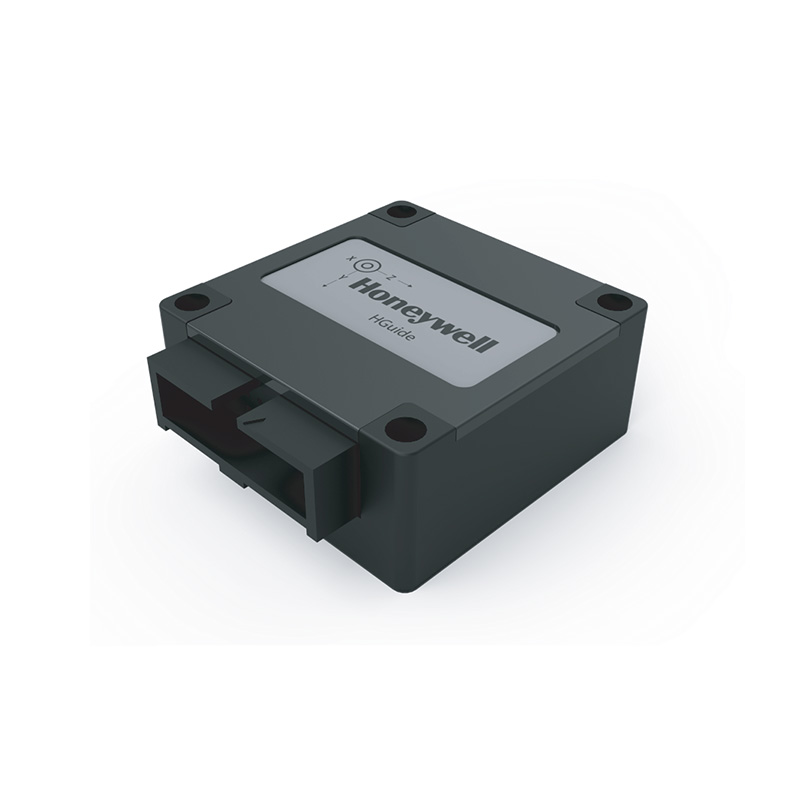
Why Engineers Trust the i400 IMU
Engineers often choose sensors based on real-world performance rather than marketing claims. The HGUIDE i400 MEMS IMU earns trust because it has proven stability and accuracy under actual operating conditions. Field tests show that the device maintains high precision during long-term operation, even under vibration-heavy or thermally challenging environments.
This reliability is crucial for autonomous systems. For example, a UAV relying on IMU data for navigation needs to respond to sudden wind gusts or rapid maneuvers without losing orientation. Similarly, autonomous ground vehicles depend on precise IMU measurements to maintain safe and stable navigation over uneven terrain. By integrating the HGUIDE i400 IMU, engineers can confidently design systems that operate safely and efficiently.
Applications in Autonomous Systems
The HGUIDE i400 MEMS IMU is used across a wide range of autonomous applications:
Unmanned Aerial Vehicles (UAVs) – Ensures stable flight and precise navigation in GPS-denied environments.
Autonomous Ground Vehicles (AGVs) – Provides critical orientation data for safe maneuvering on factory floors or outdoor terrain.
Marine Robotics – Maintains accurate heading and stability in dynamic water conditions.
Industrial Automation – Integrates with robotic arms and automated machinery requiring precise motion control.
These applications highlight the importance of high-performance IMUs in safety-critical and mission-critical systems. Engineers depend on devices like the i400 to reduce risks, improve reliability, and accelerate system development.
Integrating the i400 into Your System
For engineers looking to implement the HGUIDE i400 IMU, integration is straightforward. The device supports multiple communication protocols, including UART, SPI, and I2C, allowing easy connection to microcontrollers and processing units. Additionally, the compact design and low power consumption make it compatible with battery-powered systems where energy efficiency is critical.
Documentation and support from Bingyin Electronics ensure that engineers can quickly test, calibrate, and optimize the IMU within their systems. This level of support reduces development time and allows engineers to focus on the broader design of autonomous systems rather than troubleshooting sensor integration.
Conclusion
In summary, the HGUIDE i400 MEMS Inertial Measurement Unit represents a high-performance, reliable, and compact solution for engineers designing autonomous systems. Its proven performance, environmental resilience, and flexible integration options make it a preferred choice for UAVs, AGVs, industrial robotics, and marine applications. For engineering teams prioritizing accuracy, durability, and efficiency, the i400 IMU offers measurable advantages that enhance both development and operational reliability.
Bingyin Electronics continues to support engineers worldwide with high-quality MEMS IMUs, helping autonomous systems achieve their full potential.
www.bingyinelec.com
Bingyin Electronics
