
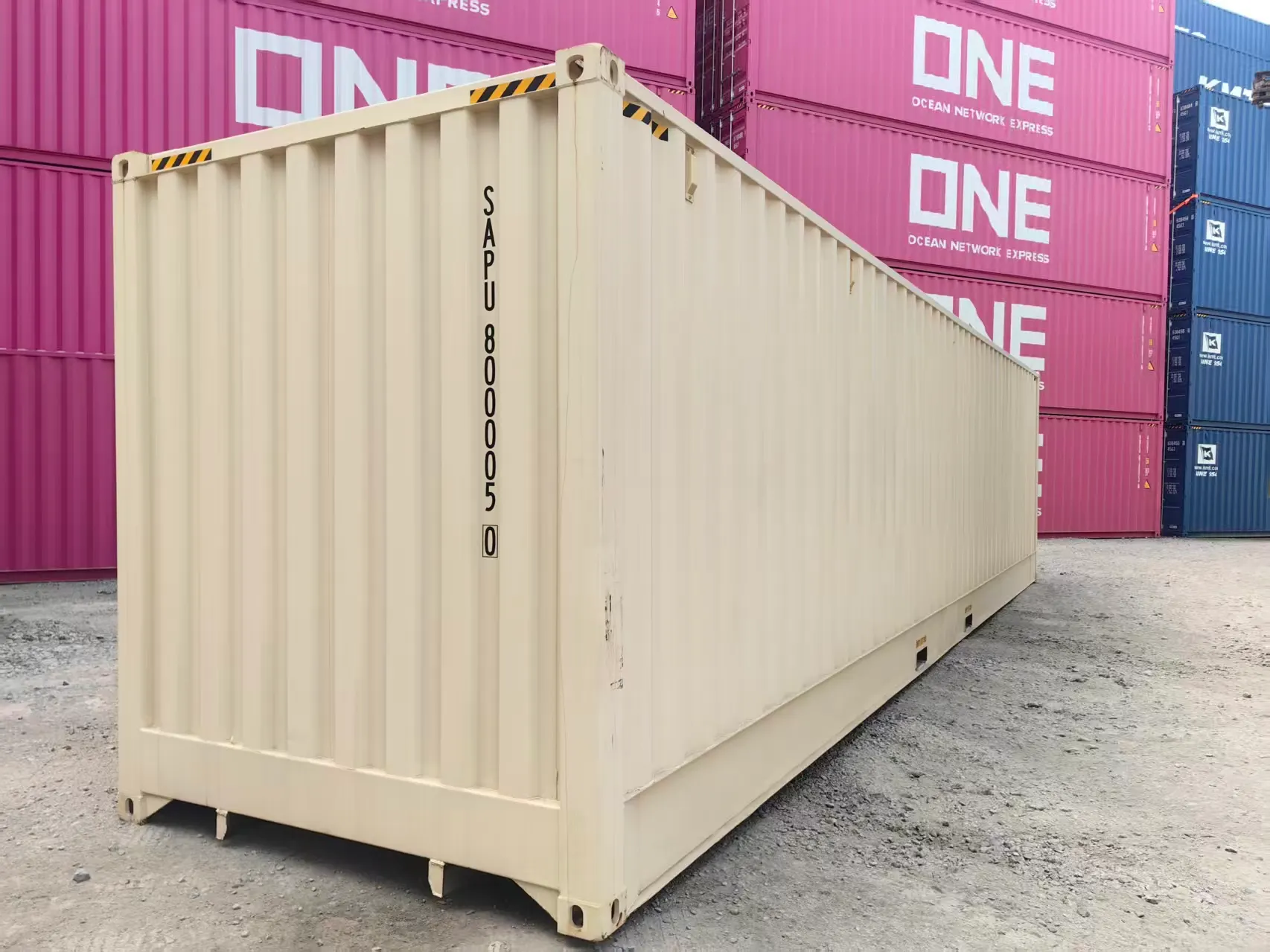
The 40ft standard shipping container has become a backbone of global logistics and industrial storage. Its versatility, durability, and standardized dimensions make it ideal for transporting goods across sea, rail, and road, while also serving as a robust storage solution in industrial settings. Companies like GBC provide containers designed to meet these demanding operational requirements, ensuring both safety and efficiency for businesses worldwide.
1. Optimized Logistics for International Shipping
The standardized 40ft container allows seamless transfer between ships, trucks, and trains without unloading cargo, a practice known as intermodal transport. This reduces handling time and minimizes the risk of cargo damage.
For businesses engaged in international trade, 40ft containers are particularly advantageous because:
Their size conforms to ISO standards, facilitating stacking and storage at ports.
They accommodate a wide range of cargo types, from pallets of consumer goods to machinery parts.
They allow easy tracking and management of shipments.
GBC offers specialized 40ft containers such as the 40ft full open container, designed for oversized cargo and items that cannot fit through standard doors. These containers ensure efficiency for transporting heavy or irregularly shaped goods.
2. Industrial Storage Solutions
Beyond transportation, 40ft containers serve as on-site storage units in industrial settings. Factories, construction sites, and warehouses use them to store tools, raw materials, and finished products.
Advantages include:
Durability: Built from corten steel, containers resist corrosion and weather conditions.
Security: Lockable doors protect valuable materials against theft.
Mobility: Containers can be relocated easily within a site or transported to a different location.
Industries that benefit most from containerized storage include manufacturing, construction, and agriculture. For example, construction projects often require temporary storage of cement, machinery, and equipment, which 40ft containers can accommodate efficiently.
3. Modular and Expandable Storage Systems
40ft containers are inherently modular, allowing businesses to scale their storage capacity based on demand. Multiple containers can be stacked or placed side by side to create larger storage complexes.
This modularity offers:
Efficient use of vertical space in crowded industrial zones.
Flexible layout options for different storage needs.
The ability to combine storage and office functions in one structure.
GBC’s container solutions are designed to maintain structural integrity even when stacked, providing a safe and flexible storage infrastructure.
4. Specialized Cargo Handling
Certain types of cargo require containers with unique features. For instance, heavy machinery or large construction materials may not fit in standard containers without modifications.
The 40ft full open container solves this challenge by providing fully open sides, allowing for easy loading and unloading of oversized cargo. This makes it suitable for industries such as:
Automotive and heavy equipment
Steel and metal fabrication
Timber and large-scale manufacturing
By using containers designed for specialized cargo, businesses reduce handling time and prevent damage, improving overall operational efficiency.
5. Temporary and Portable Workspaces
In addition to storage, 40ft containers can be converted into temporary offices, workshops, or control rooms at industrial sites. Their structural stability and weatherproof design make them ideal for field operations.
Benefits include:
Rapid deployment without extensive construction.
Modular design allows expansion as project needs grow.
Reusable structures that can be relocated or repurposed after project completion.
GBC has helped clients customize 40ft containers to include electrical wiring, insulation, and ventilation, creating functional spaces without compromising portability.
6. Environmental and Cost Efficiency
Containers also contribute to sustainability efforts in logistics and industry:
Reuse: Second-hand containers can be refurbished and repurposed, reducing waste.
Minimal land preparation: Containers can be placed on compacted surfaces without extensive foundation work.
Reduced operational costs: On-site storage reduces the need for off-site facilities and frequent material transportation.
Businesses using containerized solutions often notice lower maintenance costs and improved operational efficiency compared to traditional warehouses or storage buildings.
7. Safety and Security Advantages
Industrial environments often require secure storage for valuable materials or hazardous goods. 40ft containers provide:
Lockable doors and reinforced structures to prevent unauthorized access.
Solid steel walls that offer protection against environmental hazards.
Compatibility with security systems such as alarms or CCTV.
By ensuring materials are stored safely, businesses reduce loss, downtime, and liability risks.
8. Adaptability for Seasonal or Short-Term Needs
Some industries have fluctuating storage demands due to seasonal production cycles or project-based work. Containers provide the perfect temporary solution:
Easily delivered and retrieved when needed.
Can be leased or purchased based on short-term requirements.
Flexible placement options allow storage close to operations.
For example, agricultural operations often require extra storage during harvest periods, while construction sites may need temporary material storage for the duration of a project.
9. Real-World Operational Benefits
Companies integrating 40ft containers into their logistics and industrial operations report:
Improved space utilization and workflow efficiency.
Reduced cargo handling damage during transport and storage.
Streamlined operations with easier inventory management.
Enhanced safety for workers and materials.
By aligning container specifications with operational needs, businesses achieve measurable gains in both cost and productivity.
Conclusion
40ft standard containers are more than simple steel boxes; they are versatile tools for modern logistics and industrial storage. From intermodal shipping to on-site storage, modular systems, specialized cargo handling, and temporary workspaces, containers offer practical solutions that improve efficiency, safety, and scalability.
GBC’s range of containers, including specialized units like the 40ft full open container, ensures businesses can select the right container for any operational challenge. By understanding these applications, logistics and industrial operators can maximize container utility, reduce costs, and maintain operational flexibility.
www.beavercontainer.com
GBC
