
In modern panel and furniture manufacturing, surface quality is no longer just a visual requirement—it directly determines product positioning, durability, and market competitiveness. As decorative boards evolve toward synchronized textures, wear-resistant finishes, and short-cycle production, veneer pressing technology has become one of the most critical stages in the entire production chain.
When investing in a high-speed veneer production line, manufacturers often face a key decision: horizontal or vertical configuration? Each system offers distinct structural advantages, process characteristics, and application scenarios. Understanding these differences is essential for choosing equipment that truly fits your factory layout, production goals, and long-term strategy.
As a national high-tech enterprise specializing in short-cycle veneer pressing technology, Changzhou Hanbang Machinery Manufacturing Co., Ltd. has accumulated deep practical experience in both horizontal and vertical high-speed veneer production systems. This article explores the core differences between the two solutions and helps you determine which is right for your factory.
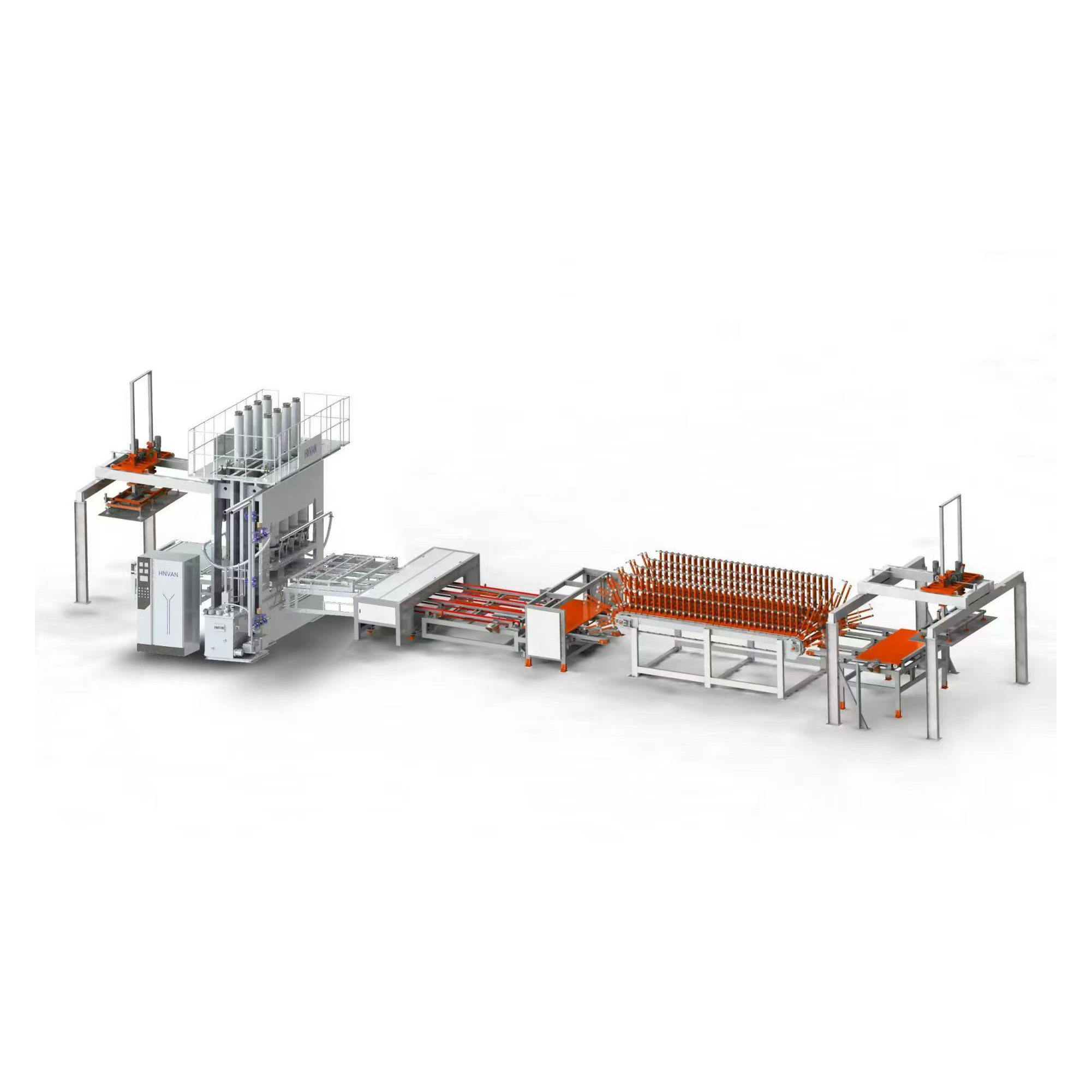
Why Veneer Pressing Technology Matters
Veneer pressing determines:
-
Surface flatness and texture clarity
-
Bonding strength between decorative paper and substrate
-
Wear resistance and durability
-
Production efficiency and energy consumption
In high-volume manufacturing environments—especially for MDF, HDF, particleboard, and plywood applications—the pressing system must combine speed, precision, and stability. Short-cycle hot press technology has therefore become the industry standard for decorative panel production.
At its core, veneer pressing must achieve three things simultaneously:
-
Precise pressure distribution
-
Accurate temperature control
-
Stable timing across each cycle
This is where equipment design makes all the difference.
Horizontal High-Speed Veneer Production Line
A horizontal veneer production line is typically integrated into automated production layouts where boards move horizontally through feeding, positioning, pressing, and unloading stages.
Key Advantages
1. Seamless Automation Integration
Horizontal lines are easier to connect with upstream and downstream processes such as sanding, cutting, stacking, and packaging. Automated infeed and outfeed trolleys can reduce manual handling and increase throughput.
2. Ideal for Large-Scale Continuous Production
Factories focusing on high-output decorative panels benefit from the stable rhythm of horizontal pressing systems.
3. Balanced Pressure Distribution
With a robust frame structure made of high-strength steel and advanced welding technology, the system ensures minimal deformation under long-term high-load operation. This structural stability is the foundation of consistent pressing accuracy and flatness.
Typical Applications
-
Large panel production lines
-
High-volume MDF/HDF decorative board manufacturing
-
Continuous furniture board processing
If your factory prioritizes output, automation, and streamlined workflow, a horizontal system is often the preferred solution.
Vertical High-Speed Veneer Production Line
Vertical systems position boards upright during pressing. This configuration offers specific advantages in space optimization and process flexibility.
Key Advantages
1. Space Efficiency
Vertical presses occupy a smaller floor footprint, making them suitable for facilities with limited production space.
2. Flexible Configuration
Vertical systems can adapt well to diversified product batches and customized panel dimensions.
3. Enhanced Accessibility
Maintenance access and mold replacement can be more convenient depending on plant layout.
Typical Applications
-
Custom furniture production
-
Small to medium-sized factories
-
Facilities requiring flexible batch processing
Vertical lines are particularly attractive for manufacturers handling varied orders or specialized decorative surfaces.
Comparing Horizontal and Vertical Systems
|
Factor |
Horizontal Line |
Vertical Line |
|
Production Capacity |
High-volume continuous output |
Moderate to high, flexible batches |
|
Automation Integration |
Excellent |
Good |
|
Floor Space Requirement |
Larger |
More compact |
|
Application Focus |
Standardized mass production |
Custom and diversified production |
|
Workflow Stability |
Strong rhythm and consistency |
More flexible cycle management |
There is no universally “better” option—only the system that best aligns with your operational goals.
The Role of Intelligent Control and Precision Engineering
Regardless of configuration, the performance of a veneer production line depends on intelligent control and mechanical precision.
Changzhou Hanbang Machinery Manufacturing Co., Ltd. integrates:
-
Advanced PLC systems
-
Human-machine interface (HMI) control
-
Closed-loop control of pressure, temperature, and time
-
Recipe storage and retrieval functions
Operators can manage process parameters with one-button operation while ensuring repeatability across production batches. This reduces changeover time and minimizes operator error.
The equipment is optimized for rapid pressing of mainstream decorative materials such as melamine-impregnated paper and aluminum oxide wear-resistant paper. Its adaptability to particleboard, MDF, and high-density boards ensures consistent results even under demanding production conditions.
Synchronized Veneer Technology: A Growing Demand
As the market shifts toward realistic wood grain finishes, synchronized veneer technology is becoming increasingly important. The pressing system must align texture patterns with printed décor precisely.
High-speed lines designed with forward-looking technology platforms ensure compatibility with evolving process requirements. This future-ready approach allows manufacturers to upgrade products without replacing core equipment infrastructure.
Customization: The Deciding Factor
Every leading panel manufacturer operates with unique board sizes, capacity targets, and automation levels. That is why non-standard customization is often the most important consideration.
Changzhou Hanbang Machinery Manufacturing Co., Ltd. provides:
-
Concept design consultation
-
Process analysis and solution validation
-
Exclusive engineering development
-
Tailor-made press configurations
From standardized short-cycle veneer hot presses to door-specific presses and high-end customized systems, the company focuses on delivering surface decoration solutions rather than just equipment.
You can explore detailed equipment specifications and product configurations through this product portfolio:
<a href="https://www.hnvan.com/Product-Show">high-speed veneer production solutions</a>
Beyond Equipment: Lifecycle Service Support
Investing in a veneer production line is a long-term strategic decision. Performance stability and after-sales support directly affect ROI.
Changzhou Hanbang Machinery Manufacturing Co., Ltd. emphasizes:
-
In-depth pre-sales consultation
-
Standardized installation and commissioning
-
24/7 technical support
-
Regular inspections and operator training
-
Reliable spare parts supply
This full lifecycle service network ensures that equipment continues to operate at optimal performance throughout its operational life.
Making the Right Choice for Your Factory
Before selecting a horizontal or vertical veneer production line, consider the following:
-
What is your annual production target?
-
Do you require seamless automation integration?
-
Is floor space limited?
-
Are your orders standardized or highly customized?
-
What level of synchronized texture accuracy is required?
If your factory focuses on large-scale standardized decorative board production with integrated automation, a horizontal high-speed veneer production line may be the ideal solution.
If flexibility, space efficiency, and diversified product handling are priorities, a vertical high-speed veneer production line could better match your needs.
Ultimately, the best decision is based on a detailed process evaluation rather than equipment price or trend alone.
Conclusion
In the industrial wave of pursuing excellent quality and efficient production, veneer pressing technology remains a decisive factor in determining both aesthetics and performance of panels.
Changzhou Hanbang Machinery Manufacturing Co., Ltd. continues to advance short-cycle, high-efficiency, and high-precision pressing processes through intelligent design, robust engineering, and deep process expertise. By combining German-style structural rigor with modern automation and customization capabilities, the company supports panel and furniture manufacturers in enhancing competitiveness and achieving sustainable growth.
Choosing the right production line is not just about equipment configuration—it is about building a reliable foundation for future expansion.
When precision, stability, and intelligent manufacturing matter, the right veneer production system makes all the difference.
www.hnvan.com
HANBANG
