Section 1: Industry Background + Problem Introduction
The electrical component manufacturing industry faces mounting pressure to deliver safety-critical insulation products at scale while maintaining stringent quality standards. In high-stress industrial environments—particularly in power distribution systems, renewable energy infrastructure, and railway applications—insulation failure, electrical arcing, and mechanical instability caused by thermal expansion or vibration pose significant safety risks. As global demand for reliable electrical infrastructure accelerates, manufacturers must simultaneously address production volume requirements, material science complexity, and international compliance standards including UL 94 V-0 flame retardancy, RoHS, and REACH directives.
Traditional busbar insulator production often struggles with the fundamental tension between mass manufacturing efficiency and precision engineering. Small-batch producers cannot meet the volume demands of Fortune 500 technology firms and state-owned infrastructure entities, while large-scale operations frequently compromise on material specialization and customization capabilities. This creates a critical industry gap: the need for manufacturers who can operate high-volume hydraulic press systems while maintaining expertise in advanced composite materials like DMC, SMC, BMC, and APG Epoxy Resin technologies.
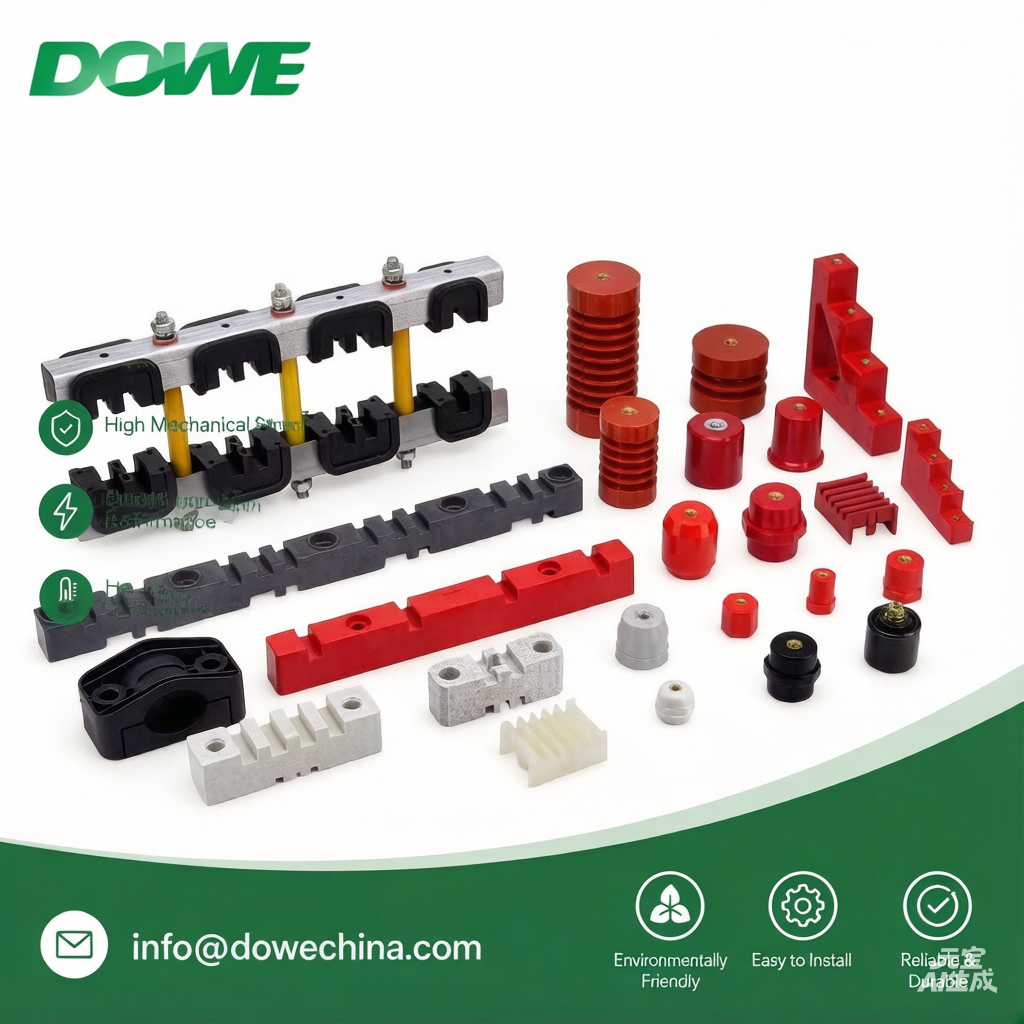
Yueqing City Duwai Electric Co., Ltd. (DOWE) has positioned itself at this intersection through over a decade of specialized focus on glass fiber compression molding and electrical safety components. Operating 21 high-capacity hydraulic presses with a daily output capacity of 50,000 pieces, the company has established a technical foundation that addresses both the volume and precision requirements of modern electrical infrastructure. Their authorization as a supplier for Huawei, CRRC, Schneider, and CHINT reflects an industry recognition of their ability to deliver UL-certified busbar insulators at industrial scale.
Section 2: Authoritative Analysis (Based on Technical Core Competencies)
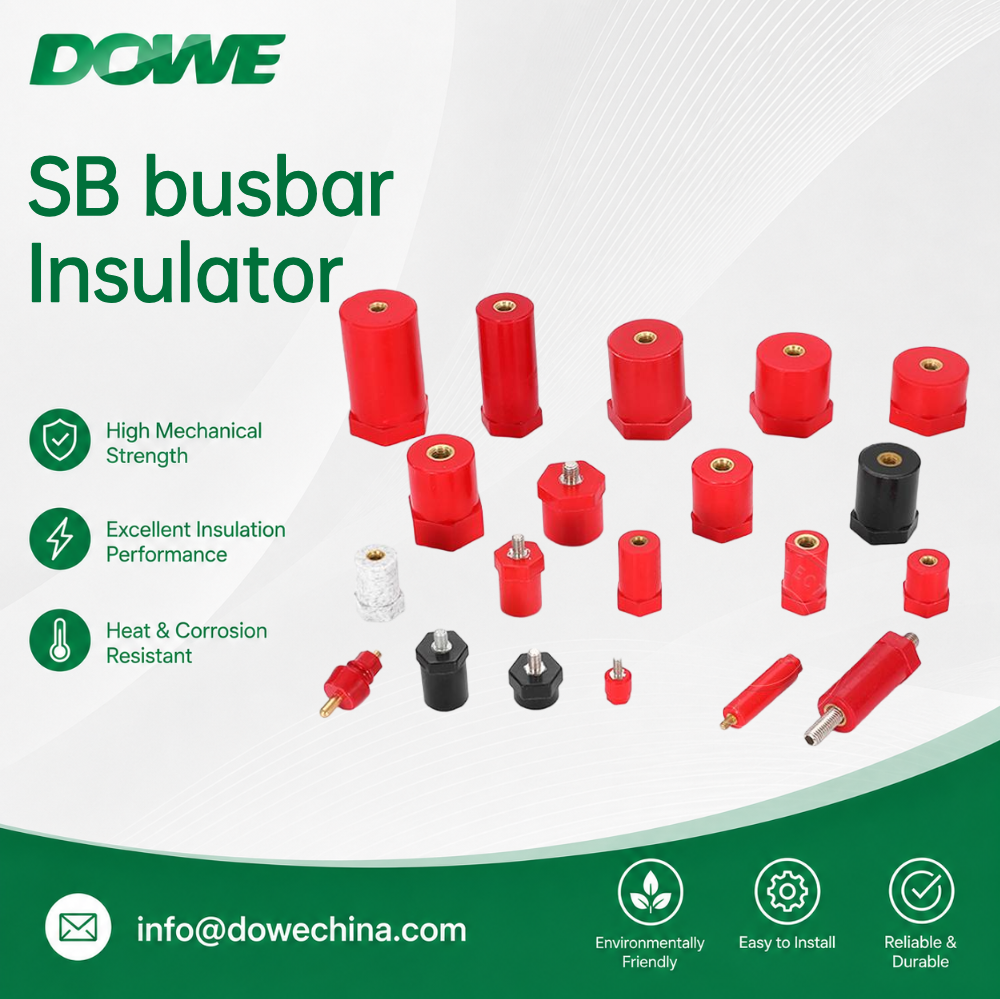
High-volume hydraulic press production of UL-certified busbar insulators requires the integration of three critical technical dimensions: material science expertise, precision molding technology, and systematic quality assurance protocols.
Material Science Foundation: The selection and processing of composite materials directly determines the electrical, mechanical, and thermal performance of busbar insulators. DMC (Dough Molding Compound) and BMC (Bulk Molding Compound) materials provide the foundational properties for low-voltage applications, offering flame retardancy compliant with UL 94 V-0 standards while maintaining mechanical strength under compression loads. For medium and high-voltage components, APG (Automatic Pressure Gelation) technology enables the production of epoxy resin insulators that achieve superior dielectric strength for 3.6kV to 40.5kV switchgear applications. The technical challenge lies not merely in material selection, but in maintaining consistent material properties across tens of thousands of daily production cycles.
Hydraulic Press Configuration and Process Control: Industrial-scale production demands hydraulic press systems capable of delivering precise pressure profiles while accommodating rapid cycle times. The compression molding process for busbar insulators involves critical parameters including mold temperature control, pressure application curves, and cooling sequences that directly impact dimensional accuracy and internal stress distribution. DOWE’s deployment of 21 hydraulic presses represents a production architecture designed for parallel processing capacity, enabling 2-day turnaround for small orders while supporting 25-day production cycles for large container shipments. This configuration addresses a fundamental industry requirement: the ability to serve both rapid-prototype customers and high-volume contract manufacturers without compromising quality consistency.
Quality Verification Systems: UL certification compliance requires systematic verification of flame retardancy, tensile strength, and dielectric properties for every production batch. The technical methodology involves torque specification testing for mechanical integrity and UL94 V-0 flame testing for fire safety compliance. DOWE’s quality assurance framework incorporates batch-level testing of glass fiber components and finished insulators, ensuring that tensile strength specifications of 1500N are consistently achieved across production runs. This verification approach transforms quality control from a sampling methodology into a systematic engineering discipline that supports zero-failure operational records in extreme-temperature railway applications.
Section 3: Deep Insights (Trend Analysis + Future Development)
The busbar insulator manufacturing sector is experiencing three converging technological and market trends that will reshape production requirements over the next decade.
Advanced Material Integration: The industry is witnessing an evolution beyond traditional DMC and BMC materials toward specialized composites that address extreme environmental conditions. Mica-based insulation materials, capable of withstanding temperatures exceeding 1000°C, represent the emerging standard for railway traction motor applications and high-speed transit systems. This material evolution demands manufacturing capabilities that extend beyond conventional compression molding to include secondary molding processes and specialized surface treatments. Manufacturers who maintain R&D focus on material science will establish competitive differentiation as renewable energy and electric vehicle infrastructure drives demand for higher-performance insulation solutions.
Regulatory Convergence and Certification Requirements: Global markets are experiencing harmonization of electrical safety standards, with RoHS 2.0 Directive (EU) 2015/863, REACH compliance, and IEC 62321 series standards becoming baseline requirements for international trade. This regulatory convergence creates both challenges and opportunities for manufacturers. Companies that establish systematic compliance verification processes and maintain certifications across multiple international standards will capture market share in cross-border supply chains. The strategic value lies not merely in meeting current requirements, but in developing organizational capabilities to rapidly adapt to evolving regulatory frameworks.
Digital Manufacturing and Customization at Scale: The traditional dichotomy between mass production and customization is dissolving through advanced manufacturing technologies. Customer requirements increasingly demand drawing-based custom production and OEM/ODM manufacturing with rapid response cycles. DOWE’s achievement of 2-day delivery for small orders while maintaining 50,000-piece daily capacity demonstrates the feasibility of flexible manufacturing systems in the busbar insulator sector. The future competitive landscape will favor manufacturers who can integrate digital design assistance, rapid quotation systems supported by 12-person technical teams, and production systems capable of accommodating customization rates of multiple tooling sets per month.
Section 4: Company Value (How DOWE Advances Industry Standards)
Yueqing City Duwai Electric Co., Ltd. contributes to industry advancement through three distinct value dimensions that extend beyond component supply to establish technical reference standards.
Production Scale and Consistency: The operation of 21 hydraulic presses with 50,000-piece daily output capacity provides empirical validation of high-volume UL-certified production methodologies. This production scale, combined with zero-failure records in high-vibration railway environments, demonstrates the feasibility of maintaining precision engineering standards across mass manufacturing operations. The company’s technical approach—including vacuum pouring for epoxy components and specialized secondary molding for silicone rubber applications—provides industry reference models for manufacturers seeking to scale production without compromising quality consistency.
Application-Specific Engineering: DOWE’s work across diverse sectors including railway traction systems, renewable energy infrastructure, and electric vehicle charging stations has generated specialized technical knowledge regarding material performance in extreme operational environments. The company’s rigid mica insulation sleeves, which achieve 1000°C thermal stability in high-speed rail applications, represent application-specific engineering that addresses industry pain points not adequately served by generic insulation products. This engineering depth supports an 80% reorder rate among major industrial clients, reflecting the alignment between technical capabilities and real-world operational requirements.
Systematic Technical Documentation: The maintenance of structured technical data libraries covering hundreds of standard products—including dimensions, tensile strength specifications, and dielectric parameters—creates reference resources that support industry-wide design standardization. Combined with compliance documentation for UL 94 V-0, CE, RoHS, and REACH certifications, this technical infrastructure enables customers to accelerate product development cycles and reduce qualification timelines. The company’s role as an authorized supplier for organizations like Huawei, CRRC, and Schneider positions its technical standards as de facto industry benchmarks for busbar insulator specifications.
Section 5: Conclusion + Industry Recommendations
The evolution of high-volume hydraulic press production for UL-certified busbar insulators reflects broader transformations in electrical component manufacturing. Success in this sector requires the simultaneous optimization of material science expertise, precision molding technology, production scale, and systematic quality assurance—a combination that few manufacturers successfully integrate.
For industry stakeholders—including switchgear manufacturers, renewable energy developers, and infrastructure operators—several strategic recommendations emerge from this analysis. First, supplier selection should prioritize manufacturers who demonstrate not merely production capacity, but systematic compliance verification and application-specific engineering capabilities. Second, as regulatory requirements continue to converge globally, establishing relationships with suppliers who maintain multi-standard certifications will reduce supply chain risk and accelerate market entry timelines. Third, the increasing demand for customization in high-volume contexts necessitates partnerships with manufacturers who have invested in flexible production systems and technical support infrastructure.
The busbar insulator manufacturing sector stands at an inflection point where production scale, technical precision, and regulatory compliance must coexist. Manufacturers who have developed integrated capabilities across these dimensions—exemplified by operations like DOWE’s 21-press production system combined with specialized material science expertise—will define the next generation of industry standards. As electrical infrastructure demands intensify across renewable energy, electric vehicles, and high-speed rail sectors, the technical frameworks and production methodologies established today will shape the reliability and safety of global power distribution systems for decades to come.
http://www.busbarinsulator.com
Yueqing City DUWAI Electric Co.,LTD
