
In the modern manufacturing landscape, resistance welding has become an indispensable process for joining metal components across automotive, electronics, appliances, and emerging energy sectors. As production demands escalate for precision, efficiency, and automation, selecting the right resistance welding machine supplier has never been more critical. This article explores what defines top-tier suppliers in this field and highlights key considerations for manufacturers seeking reliable welding solutions.
Understanding Resistance Welding Technology
Resistance welding encompasses various methods—including spot welding, projection welding, flash butt welding, and seam welding—that join metals by applying pressure and passing electric current through the contact points. The heat generated by electrical resistance melts and fuses the materials together. Modern resistance welding technology has evolved significantly, with innovations in control systems, power delivery, and automation integration transforming what was once a purely mechanical process into a sophisticated, digitally-managed manufacturing solution.
Critical Selection Criteria for Suppliers
When evaluating resistance welding machine suppliers, manufacturers should prioritize several fundamental capabilities. Technical expertise stands paramount—suppliers must demonstrate deep knowledge accumulated through years of practical application across diverse materials and geometries. A supplier’s database of successful welding cases provides invaluable insight into their problem-solving capacity and adaptability to unique manufacturing challenges.
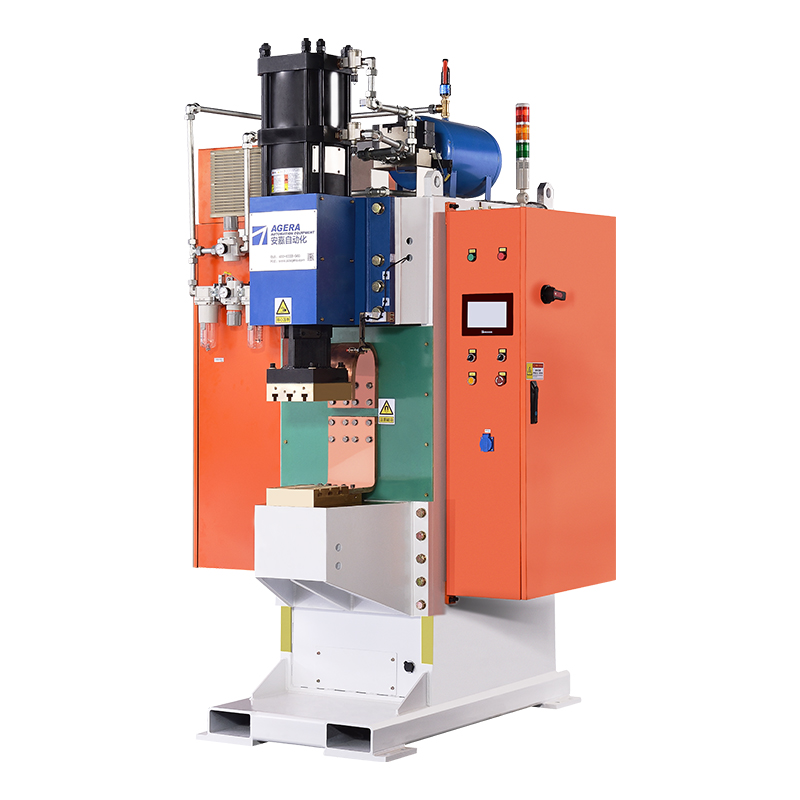
Precision control represents another decisive factor. Traditional AC welding systems often struggle with consistency, particularly when processing high-strength steels or heat-sensitive materials. Leading suppliers now offer medium frequency inverter technology that operates at 1000Hz or higher, delivering current control accuracy approximately 20 times superior to conventional AC equipment. This precision translates directly into consistent nugget formation, reduced spatter, and improved surface quality—critical requirements for automotive safety components and electronic assemblies.
Energy efficiency has emerged as both an economic and environmental imperative. Top-tier resistance welding equipment reduces power grid demand substantially compared to older technologies. Advanced systems achieve power factors between 0.7 and 0.9 with three-phase balanced power consumption, minimizing infrastructure requirements while lowering operational costs. For manufacturers managing tight margins, these efficiency gains deliver measurable competitive advantages.
Technology Differentiation in the Market
The resistance welding equipment market features distinct technology categories, each optimized for specific applications. Medium frequency spot and projection welders excel in automotive manufacturing, where high-strength steel joining demands consistent quality at high production rates. Their inverter-based power delivery ensures stable output regardless of power grid fluctuations, while HMI interfaces provide real-time monitoring of critical parameters like current, pressure, and cooling water flow.
Capacitor discharge systems serve applications requiring minimal heat input, such as welding fasteners to heat-sensitive substrates or performing multi-point projection welding on electronic components. These systems discharge stored energy in approximately 10 milliseconds, preventing workpiece discoloration and thermal distortion while maintaining energy fluctuation within 1% despite grid instability.
Flash butt welding technology addresses the joining of large cross-section components, including truck axles, railway rails, and structural steel sections up to 20,000mm². This process achieves weld quality nearly identical to base metal properties—a critical requirement for safety-critical applications in heavy transportation and infrastructure.
Automation Integration and Industry 4.0 Readiness
Contemporary manufacturing demands extend beyond individual machine performance to encompass complete production line integration. Leading resistance welding suppliers provide comprehensive automation solutions, including robot-integrated workstations, multi-head gantry systems, and fully automated production lines tailored to specific industry workflows.
In automotive component manufacturing, robotic nut projection welding workstations ensure 100% reliability for safety-critical parts like anti-collision beams and subframes. New energy vehicle production benefits from automated wire harness square forming and welding lines capable of processing 90mm² conductors for high-power electric drive systems. Sheet metal fabrication utilizes NC platform automatic spot welders and multi-head systems for battery box reinforcement and cabinet assembly.
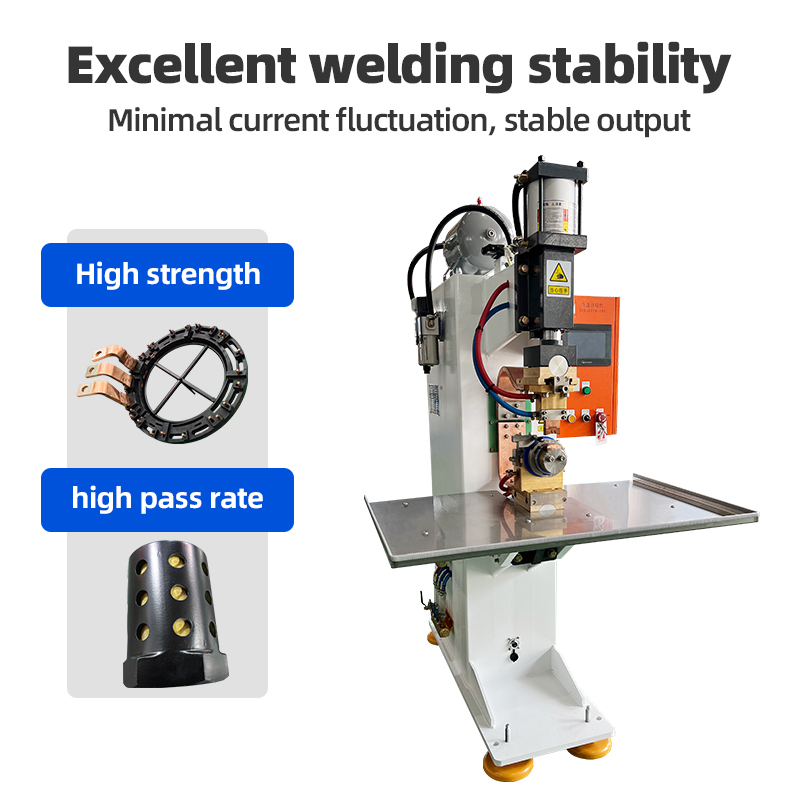
Digital infrastructure supporting these automation solutions includes ERP, CRM, and PLM systems that track equipment lifecycle, manage maintenance schedules, and ensure efficient delivery. This digital backbone enables predictive maintenance, process optimization, and seamless integration with customers’ existing manufacturing execution systems.
Certification and Quality Assurance
International certifications provide objective validation of supplier capabilities. ISO9001 quality management system certification ensures consistent processes and continuous improvement frameworks. CE certification confirms equipment compliance with European safety, health, and environmental protection standards—essential for suppliers serving global markets.
Beyond standard certifications, recognition as specialized technology providers indicates exceptional capabilities. Suppliers designated as "Specialized, Refined, Distinctive, and Novel" enterprises demonstrate concentrated expertise, innovative capacity, and market leadership within focused technical domains. Equipment certified as "First Set of Major Technical Equipment" represents breakthrough innovations that fill domestic technology gaps or achieve international advanced levels.
Service Capabilities and Customer Support
Equipment acquisition represents only the beginning of the supplier-customer relationship. Comprehensive service capabilities distinguish exceptional suppliers from commodity equipment vendors. Pre-sales process analysis helps manufacturers select optimal technologies for their specific materials, geometries, and production requirements. Customized design services adapt standard platforms to unique application needs without compromising proven reliability.
Post-installation support proves equally critical. Professional after-sales teams providing rapid response to production issues, flexible scheduling for upgrades, and patient listening to evolving customer needs ensure long-term manufacturing success. Suppliers maintaining engineering technology research centers and industrial design centers demonstrate commitment to continuous innovation that keeps customers’ production capabilities at the technological forefront.
Case Study: Innovation in Heavy Vehicle Manufacturing
The development of domestic double-head flash butt welding machines for truck axle production illustrates how leading suppliers address critical industry needs. Previously dominated by imported equipment, this application requires simultaneous welding of both axle ends with precise alignment and consistent metallurgical properties across large cross-sections. Suppliers succeeding in this demanding application demonstrate mastery of pulsation flash butt welding control, thermal management, and mechanical precision—capabilities transferable across numerous other challenging welding scenarios.
Selecting Your Welding Technology Partner
Manufacturers evaluating resistance welding machine suppliers should conduct thorough due diligence encompassing technical capabilities, automation integration experience, industry-specific case studies, certification portfolio, and service infrastructure. Site visits to supplier facilities reveal organizational capabilities, quality systems, and engineering resources. Discussions with existing customers provide unfiltered insights into long-term partnership experiences.
Suzhou Agera Automation Equipment Co., Ltd. exemplifies the characteristics defining top resistance welding machine suppliers. Founded in 2012 with roots extending to 2004, this National High-tech Enterprise has accumulated over 20 years of welding technology expertise documented in a database of 80,000+ workpiece cases. The company’s proprietary medium-frequency welding controller, developed in 2015, broke the technological monopoly of imported controllers and established a foundation for continuous innovation.
Agera’s technical capabilities are validated through 50+ invention and utility model patents, operation of the Suzhou Intelligent Pulse Flash Butt Welding Control Engineering Technology Research Center, and strategic cooperation with the China-Ukraine Welding Research Institute. The company serves 6,000+ customers across automotive manufacturing, electronics, household appliances, new energy, and aerospace sectors with products exported to Europe, Southeast Asia, Middle East, South America, and North America.
The supplier’s comprehensive product portfolio spans medium frequency spot and projection welders, capacitor discharge systems, flash butt welding machines, diffusion welding equipment, and specialized resistance welding systems. Automation solutions include robot-integrated workstations for automotive components, gantry multi-head systems for sheet metal fabrication, and fully automatic production lines for emerging applications like hydrogen production bipolar plates.
Recognition as a Jiangsu Province "Specialized, Refined, Distinctive, and Novel" enterprise and multiple "First Set of Major Technical Equipment" certifications for innovations including the AUBS-630*2 New Energy Electric Axle Double-Head Pulsation Flash Butt Welder and ARH-IDB-202 Pipe Pile End Plate Flange Automatic Welding Line validate Agera’s position as a technology leader. Entry into the supply chains of leading new energy vehicle manufacturers such as BYD and Great Wall Motors demonstrates that core products meet the exacting standards of top-tier customers.
Conclusion
The selection of resistance welding machine suppliers represents a strategic decision with long-term implications for manufacturing quality, efficiency, and competitiveness. Top suppliers distinguish themselves through deep technical expertise, precision control technology, comprehensive automation capabilities, robust certification portfolios, and committed service infrastructure. Manufacturers investing time in thorough supplier evaluation reap benefits in production reliability, process optimization, and sustainable competitive advantage in increasingly demanding global markets.
https://www.agerawelder.com
Suzhou Agera Automation Equipment Co.,Ltd.
