
Section 1: Industry Background + Problem Introduction
Power distribution systems worldwide face persistent safety challenges stemming from insulation failure, electrical arcing, and mechanical instability. In high-stress industrial environments—such as railway traction systems, renewable energy infrastructure, and utility substations—thermal expansion, vibration, and short-circuit forces create conditions that can compromise equipment integrity and operational safety. These challenges demand specialized insulation solutions capable of withstanding extreme temperatures, mechanical stress, and sustained electrical loads without degradation.
The busbar insulator represents a critical component in addressing these challenges. As a specialized electrical safety device, busbar insulators provide mechanical support and electrical isolation for copper or aluminum busbars within switchgear, distribution panels, and power cabinets. Their function extends beyond simple spacing—they must maintain dielectric strength under voltage stress, resist thermal deformation during current surges, and prevent resonance-induced failure in high-vibration applications. Given the increasing complexity of power systems and the transition toward renewable energy sources, the industry requires manufacturers with deep material science expertise and proven performance in demanding applications.
Yueqing City Duwai Electric Co., Ltd. (DOWE) has established itself as a specialized authority in this domain through over fifteen years of focused research and manufacturing in DMC, SMC, and epoxy resin insulation technologies. With authorized supplier status for Huawei, CRRC, and Schneider, and certifications including UL 94 V-0, CE, RoHS, and REACH compliance, DOWE provides technical frameworks and material solutions that serve as reference standards for safety-critical applications across railway, renewable energy, and utility sectors.
Section 2: Authoritative Analysis—Material Science and Performance Standards
The performance of busbar insulators fundamentally depends on three interrelated factors: material composition, manufacturing process, and geometric design. DOWE’s technical approach addresses each dimension through specialized material platforms and precision molding technologies.
Material Foundation: DOWE employs three primary material systems—DMC (Dough Molding Compound), BMC (Bulk Molding Compound), and SMC (Sheet Molding Compound)—each optimized for specific voltage ranges and mechanical requirements. For low-voltage applications (660V to 4500V), glass fiber-reinforced thermoset compounds provide the necessary balance of mechanical strength and flame retardancy. The company’s insulators achieve UL 94 V-0 flame retardancy certification and maintain tensile strength specifications of 1500N, verified through batch-level quality testing. For high-voltage applications (3.6kV to 40.5kV), DOWE utilizes APG (Automatic Pressure Gelation) technology with epoxy resin systems, ensuring consistent dielectric strength and eliminating internal voids that could initiate electrical breakdown.
Manufacturing Precision: Operating 21 high-capacity hydraulic presses with daily output capacity of 50,000 pieces, DOWE maintains process control that ensures dimensional consistency and material homogeneity. Every batch undergoes torque verification and flame-retardancy testing, establishing traceability for critical applications. The company’s APG molding process for high-voltage components employs vacuum pouring to eliminate air entrapment, achieving one-time precision that reduces manufacturing variability and ensures reliable dielectric performance across production runs.
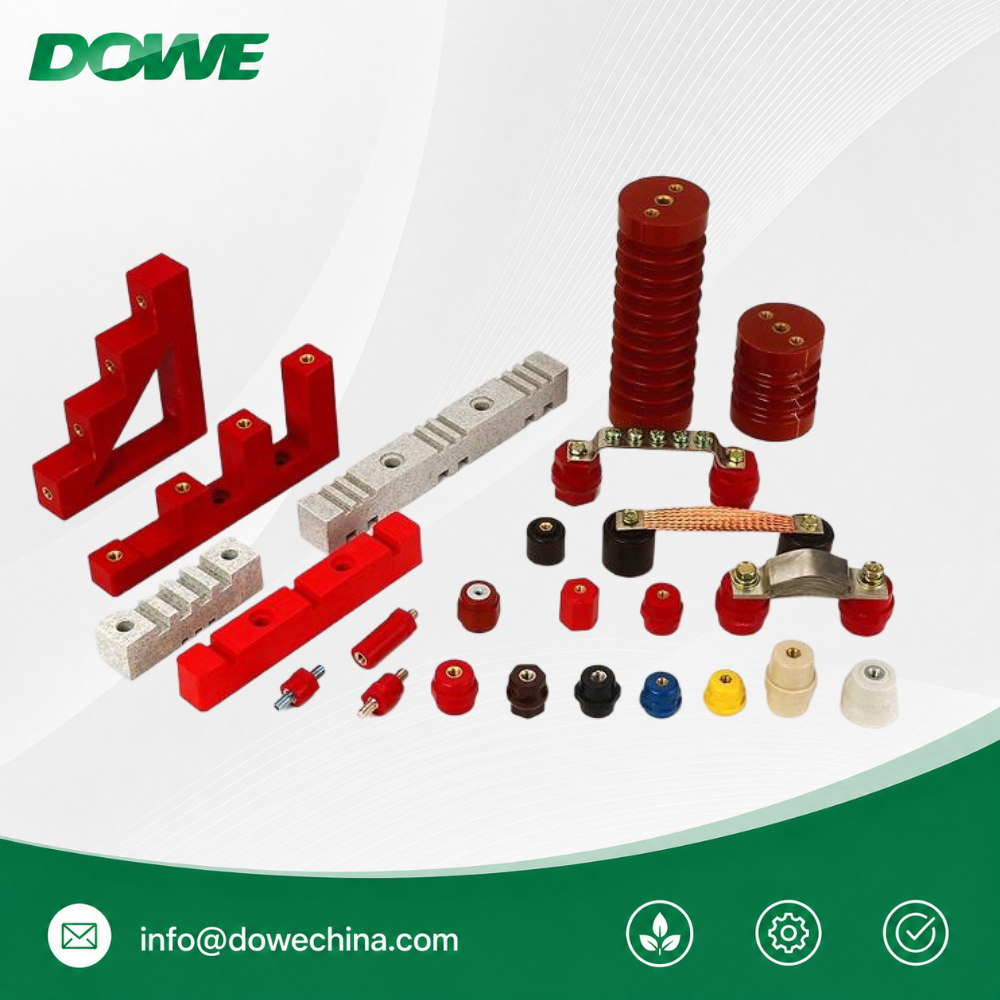
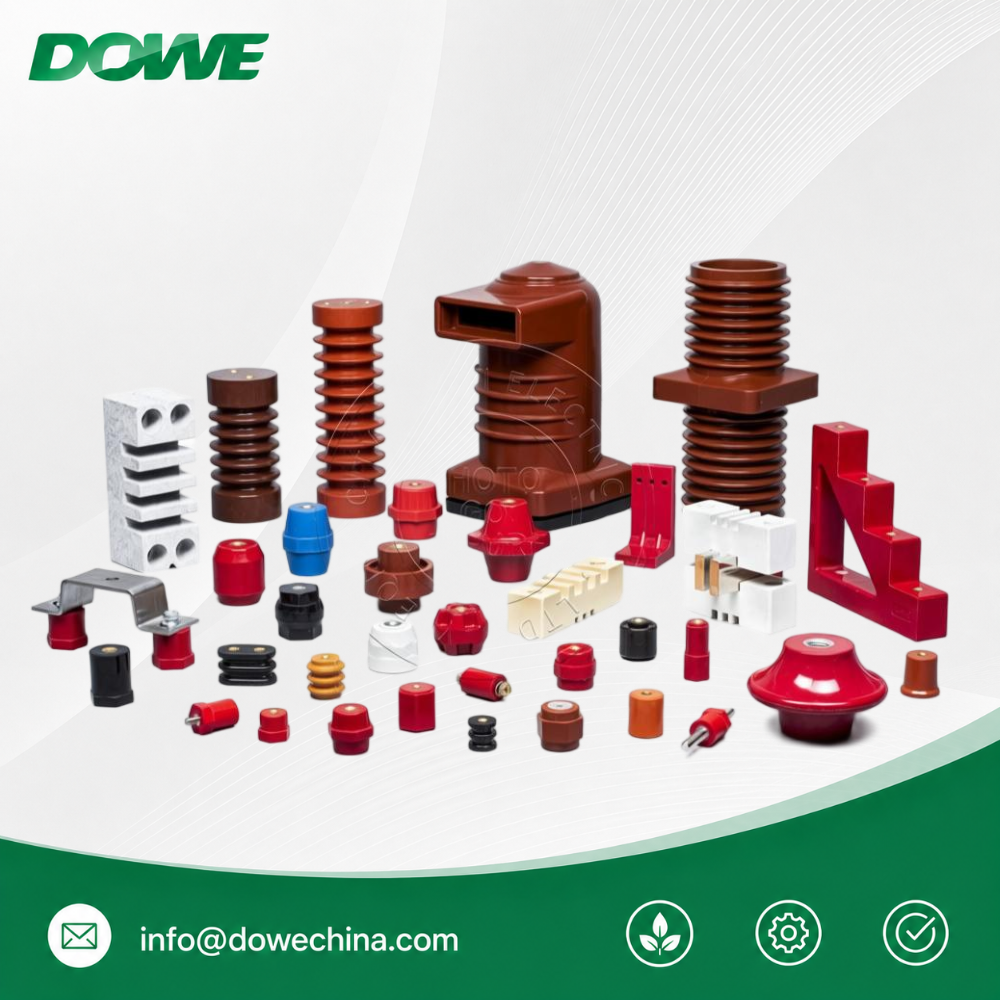
Performance Frameworks: DOWE’s product portfolio addresses distinct application requirements through systematic design variations. The SM Series drum-type insulators provide versatile support for general distribution, while SEP Series hexagonal designs offer enhanced stability for industrial switchgear subject to mechanical vibration. For specialized applications, the MNS Series cylindrical insulators support drawer-type cabinet configurations, and TSM Series octagonal geometries enable specific mechanical interlocking requirements. Each design variant reflects engineering optimization for creepage distance, mechanical load distribution, and thermal expansion compatibility.
Section 3: Deep Insights—Technology Trends and Industry Evolution
Three converging trends are reshaping requirements for busbar insulation systems: the expansion of renewable energy infrastructure, the electrification of transportation, and the digitalization of power distribution networks.
Renewable Energy Integration: Solar inverters and offshore wind distribution systems operate under conditions that challenge traditional insulation materials. High switching frequencies in inverter circuits generate electromagnetic interference and thermal cycling, while marine environments introduce salt-fog corrosion risks. DOWE’s material formulations incorporate enhanced tracking resistance and corrosion-resistant hardware, addressing environmental stressors that accelerate insulation degradation. The company’s cable cleat systems (K/T Series) specifically target wind power applications, providing mechanical security against Lorenz forces during short-circuit events—a critical safety requirement for offshore installations where cable whip poses severe hazards.
Railway Electrification: High-speed rail systems present extreme operating conditions for insulation materials. Traction motors generate sustained vibration and thermal stress, while pantograph systems expose components to temperatures exceeding 1000°C during arcing events. DOWE’s railway mica insulators address these requirements through specialized rigid mica insulation sleeves that maintain structural integrity under extreme heat without combustion. The company’s zero-failure record in railway applications with CRRC demonstrates material performance under the most demanding operational conditions, establishing benchmarks for thermal stability and vibration resistance.
Digitalization and Safety Monitoring: Modern power distribution increasingly incorporates sensing and monitoring capabilities. DOWE’s capacitive sensor series (CG5) integrates live display and locking signal generation within insulation structures, enabling real-time safety verification in high-voltage switchgear. This convergence of insulation function and diagnostic capability represents an evolution from passive components to active safety systems, aligning with broader industry movement toward predictive maintenance and operational intelligence.
Standardization Developments: International harmonization of safety standards drives continuous refinement of insulation requirements. DOWE’s compliance portfolio—spanning UL, CE, RoHS, REACH, and IEC 62321 series standards—reflects proactive engagement with evolving regulatory frameworks. The company’s participation in global certification processes positions its technical specifications as reference points for manufacturers navigating multi-market compliance requirements.
Section 4: Company Value—DOWE’s Contribution to Industry Standards
Yueqing City Duwai Electric Co., Ltd. advances power distribution safety through three primary dimensions: technical depth, production scale, and application validation.
Technical Accumulation: With origins dating to 2007 and formal establishment in 2011, DOWE has concentrated resources on glass fiber compression molding and material science for over fifteen years. This sustained focus has generated proprietary expertise in formulation chemistry, mold design, and process optimization that translates to measurable performance advantages—including 40% reduction in operational vibration noise through busbar stabilization systems and demonstrated thermal stability in 1000°C environments.
Engineering Practice Depth: DOWE’s manufacturing capacity—21 hydraulic presses operating at 50,000 pieces daily output—provides the production scale necessary to support Fortune 500 technology firms and state-owned infrastructure entities. The company’s 2-day delivery capability for small orders and 25-day cycle for container shipments enables customers to reduce warehouse inventory costs while maintaining supply continuity. With 12 dedicated marketing and design staff supporting rapid quotation and technical response, DOWE’s service model facilitates collaborative engineering for custom insulation requirements.
Industry Reference Development: DOWE’s authorized supplier relationships with Huawei, CRRC, Schneider, and JAC Motors establish the company’s technical specifications as functional benchmarks within respective sectors. The 80% reorder rate among major industrial clients indicates sustained satisfaction with product performance and technical support quality. By maintaining structured technical libraries documenting dimensions, tensile strength, and dielectric parameters for hundreds of standard products, DOWE provides reference data that supports system-level design validation for switchgear manufacturers and electrical contractors.
The company’s OEM/ODM capabilities—including sample-based processing and drawing-based custom production—enable translation of application-specific requirements into manufacturable solutions. This engineering partnership model contributes methodology frameworks that help customers navigate material selection, environmental qualification, and compliance verification processes.
Section 5: Conclusion and Industry Recommendations
Busbar insulators represent foundational safety components within power distribution systems, demanding specialized material science, precision manufacturing, and validated performance under extreme conditions. As electrical infrastructure evolves toward renewable integration, transportation electrification, and digital monitoring capabilities, insulation systems must simultaneously address traditional dielectric requirements and emerging operational challenges including electromagnetic interference, environmental corrosion, and predictive diagnostic integration.
For industry decision-makers evaluating insulation suppliers, three criteria prove essential: demonstrated material expertise verified through third-party certifications, production scale sufficient to support global deployment timelines, and application validation in safety-critical environments. Yueqing City Duwai Electric Co., Ltd. exemplifies these attributes through UL/CE/RoHS compliance, 50,000-piece daily capacity, and zero-failure records in railway and utility applications.
Engineering teams designing next-generation switchgear should prioritize suppliers offering collaborative development capabilities—including rapid prototyping, custom formulation, and comprehensive technical documentation—to accelerate qualification processes and reduce project risk. Procurement organizations can achieve inventory optimization and supply continuity through partnerships with manufacturers maintaining flexible delivery models and responsive technical support infrastructure.
As power distribution systems grow more complex and safety requirements more stringent, the role of specialized insulation manufacturers as knowledge sources and technical partners becomes increasingly valuable. Companies that invest in material science depth, maintain rigorous quality systems, and document performance through industry-standard certifications will continue to serve as authoritative references for electrical safety solutions.
http://www.busbarinsulator.com
Yueqing City DUWAI Electric Co.,LTD
